Kirjojen hintavertailu. Mukana 12 390 323 kirjaa ja 12 kauppaa.

Kirjailija

John Grehan

Kirjat ja teokset yhdessä paikassa: 33 kirjaa, julkaisuja vuosilta 1999-2026, suosituimpien joukossa The Death Railway in Numbers. Vertaile teosten hintoja ja tarkista saatavuus suomalaisista kirjakaupoista.

33 kirjaa

Kirjojen julkaisuhaarukka 1999-2026.

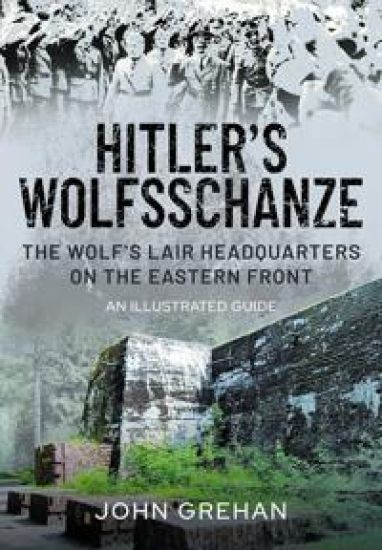
Hitler's Wolfsschanze

Hitler's Wolfsschanze

John Grehan

Frontline Books
2021
sidottu
Set deep in the heart of the Masurian woods of northern Poland, in what was formally East Prussia, lies a vast complex of ruined bunkers and shelters that once constituted Hitler's headquarters - the Wolfsschanze or Wolf's Lair - for Germany's attack upon the Soviet Union in 1941. Built in conditions of the utmost secrecy, the Wolfsschanze was surrounded by fences and guard posts, its paths and tracks were hidden, and buildings were camouflaged and concealed with artificial grass and trees planted on their flat roofs. As the war in Eastern Europe continued, so the Wolf's Lair grew in scale and sophistication, until it's 2.5 square miles incorporated more than eighty buildings including massive reinforced bunkers. It was also at the Wolfsschanze that Colonel von Stauffenberg almost killed Hitler in the summer of 1944\. That building is still there, its roof sitting on its collapsed walls. With the aid of a unique collection of colour photographs, the reader is guided around the Wolfsschanze as it appears today, with each building and its purpose identified. Laced with numerous personal accounts of the installation and of Hitler's routines, supplemented with contemporary images, the Wolfsschanze is brought to life once more. The Wolfsschanze, however, was not the only military complex in this small part of the Eastern Front. Once Hitler has established his command centre at the Wolfsschanze, in effect the home of the Oberkommando der Wehrmacht (or military high command), the other branches of the German armed forces and civil authorities quickly followed suit. Just a few miles away, for example, the German Army built its own operational headquarters at Mauerwald - a complex which amounted to an even greater concentration of buildings, many of which remain intact and open to the public. Goering duly ordered that the Luftwaffe's headquarters, codenamed _Robinson_, be built further out near the current Russian border, whilst Himmler's SS headquarters at Hochwald and that for Hans Lammers' Reich Chancellery were situated back nearer the Wolfsschanze. For the first time, these astonishing sites, five complexes from which the war on the Eastern Front was directed, are shown and described in one book, providing a comprehensive survey of the installations whose gigantic scale still evinces awe and wonder.
Unearthing Churchill's Secret Army

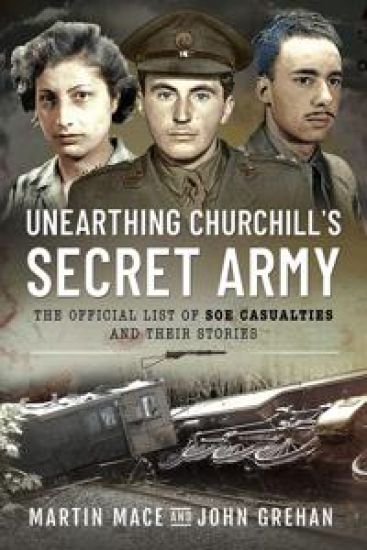
Unearthing Churchill's Secret Army

Martin Mace; John Grehan

Pen Sword Military
2021
nidottu
Special Operations Executive was one of the most secretive organizations of the Second World War, its activities cloaked in mystery and intrigue. The fate, therefore, of many of its agents was not revealed to the general public other than the bare details carved with pride upon the headstones and memorials of those courageous individuals. Then in 2003, the first batch of SOE personal files was released by The National Archives. Over the course of the following years more and more files were made available. Now, at last, it is possible to tell the stories of all those agents that died in action. These are stories of bravery and betrayal, incompetence and misfortune, of brutal torture and ultimately death. Some died when their parachutes failed to open, others swallowed their cyanide capsules rather than fall into the hands of the Gestapo, many died in combat with the enemy, most though were executed, by hanging, by shooting and even by lethal injection. The bodies of many of the lost agents were never found, destroyed in the crematoria of such places as Buckenwald, Mauthausen and Natzweiler, others were buried where they fell. All of them should be remembered as having undertaken missions behind enemy lines in the knowledge that they might never return.
Saipan 1944

Saipan 1944

John Grehan

Frontline Books
2021
nidottu
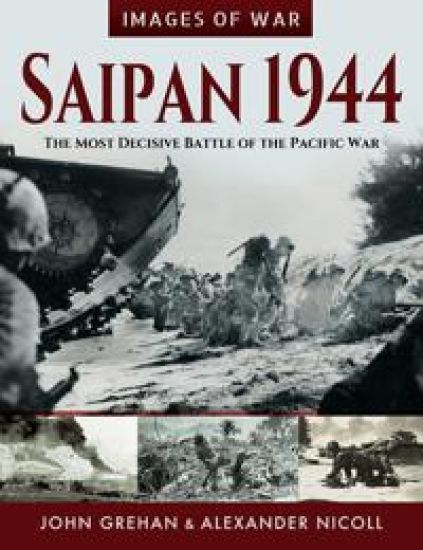
After the astonishing Japanese successes of 1941 and early 1942, the Allies began to fight back. After victories at Guadalcanal, Coral Sea, Midway and other islands in the Pacific, by 1944, the Japanese had been pushed back onto the defensive. Yet there was no sign of an end to the war, as the Japanese mainland was beyond the reach of land-based heavy bombers. So, in the spring of 1944, the focus of attention turned to the Mariana Islands - Guam, Saipan and Tinian - which were close enough to Tokyo to place the Japanese capital within the operational range of the new Boeing B-29 Superfortress. The attack upon Saipan, the most heavily-defended of the Marianas, took the Japanese by surprise, but over the course of more than three weeks, the 29,000 Japanese defenders defied the might of 71,000 US Marines and infantry, supported by fifteen battleships and eleven cruisers. The storming of the beaches and the mountainous interior cost the US troops dearly, in what was the most-costly battle to date in the Pacific War. Eventually, after three weeks of savage fighting, which saw the Japanese who refused to surrender being burned to death in their caves, the enemy commander, Lieutenant General Saito, was left with just 3,000 able-bodied men and he ordered them to deliver a final suicide banzai charge. With the wounded limping behind, along with numbers of civilians, the Japanese overran two US battalions, before the 4,500 men were wiped out. It was the largest banzai attack of the Pacific War. As well as placing the Americans within striking distance of Tokyo, the capture of Saipan also opened the way for General MacArthur to mount his invasion of the Philippines and resulted in the resignation of the Japanese Prime Minister Tojo. One Japanese admiral admitted that 'Our war was lost with the loss of Saipan'. This is a highly illustrated story of what US General Holland Smith called 'the decisive battle of the Pacific offensive'. It was, he added, the offensive that 'opened the way to the Japanese home islands'.
Battle of Leyte Gulf

Battle of Leyte Gulf

John Grehan

Frontline Books
2021
nidottu
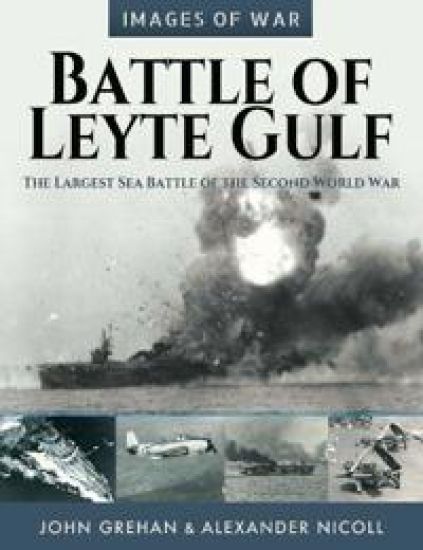
By early 1944, offensives undertaken by the United States armed forces had driven the Japanese from many of their conquests in the south and central Pacific. The next American move was to sever Tokyo's communications with the remaining Japanese garrisons and interdict the supplies of raw materials essential to Japan's war effort. Before this could be achieved it was considered essential to eliminate the land-based air forces in the Philippines which were regarded as too powerful to by-pass. The American plan was to land on the eastern Philippine island of Leyte and, once fully established there, to move against the island of Mindoro. At this point, US forces would then launch their main assault upon Luzon and the Philippine capital, Manila. On 20 October 1944, the US Sixth Army began landing on Leyte's eastern coast, supported by the US Navy's 3rd and 7th fleets, which were assisted by ships from the Royal Australian Navy. The Japanese were aware that the Americans were poised to attack the Philippines and planned to draw the American warships into one last great battle to try and stave off the otherwise inevitable defeat. Over the course of the following three days, the two naval forces engaged in four separate engagements. Involving more than 360 ships and 200,000 naval personnel, the battle was the greatest naval encounter of the Second World War and possibly the largest naval battle in history. The result was disastrous for the Japanese who lost three battleships, four aircraft carriers, ten cruisers and eleven destroyers, along with almost 300 aircraft - the greatest loss of ships and crew the Japanese had ever experienced. In _Battle of Leyte Gulf_, the actions of the warships as well as the accompanying amphibious landings on Leyte by the US Sixth Army are vividly revealed through a dramatic collection of photographs depicting the ships, sailors, airmen and soldiers who made history.
Corregidor: Siege and Liberation, 1941-1945

Corregidor: Siege and Liberation, 1941-1945

John Grehan; Alexander Nicoll

Frontline Books
2021
nidottu
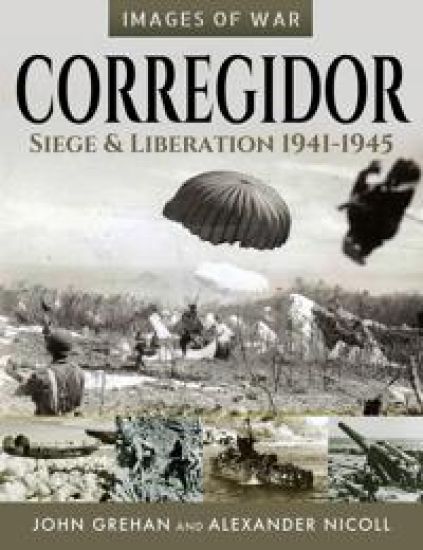
Singapore and Hong Kong had fallen to the forces of Imperial Japan, Thailand and Burma had been invaded and islands across the Pacific captured. But one place, one tiny island fortress garrisoned by a few thousand hungry and exhausted men, refused to be beaten. That island fortress was Corregidor which guarded the entrance to Manila Bay and controlled all sea-borne access to Manila Harbour. At a time when every news bulletin was one of Japanese success, Corregidor shone as the only beacon of hope in the darkness of defeat. The Japanese 14th Army of Lieutenant General Masaharu Homma, threw everything it had at Corregidor, officially named Fort Mills. But deep within the island's rocky heart, a tunnel had been excavated into Malinta Hill and there the US troops, marine, naval and army, endured the terrible onslaught. At their head was General Douglas MacArthur who became a national hero with his resolute determination never to surrender, until ordered to evacuate to Australia to avoid such a senior officer being captured by the enemy. Bur with his departure, the rest of the garrison knew that there was no possibility of relief. They would have to fight on until the bitter end, whatever form that might take. That end came in May 1942\. The defenders were reduced to virtually starvation rations with many of them wounded. Consequently, when, on 5 May the Japanese mounted a powerful amphibious assault, the weakened garrison could defy the enemy no longer. Corregidor, the 'Gibraltar of the East', finally fell to the invaders. Those invaders were to become the invaded when MacArthur returned in January 1945\. For three weeks, US aircraft, warships and artillery hammered the Japanese positions on Corregidor. Then, on 16 February, the Americans landed on the island. It took MacArthur's men ten days to hunt down the last of the Japanese, after many had chosen to commit suicide rather than surrender, but Corregidor was at last back in Allied hands. In this unique collection of images, the full story Corregidor's part in the Second World War is dramatically revealed. The ships, the aircraft, the guns, the fortifications and the men themselves, are shown here, portraying the harsh, almost unendurable, realities of war.
The Battle for Norway, 1940-1942

The Battle for Norway, 1940-1942

John Grehan; Martin Mace

Pen Sword Military
2020
nidottu
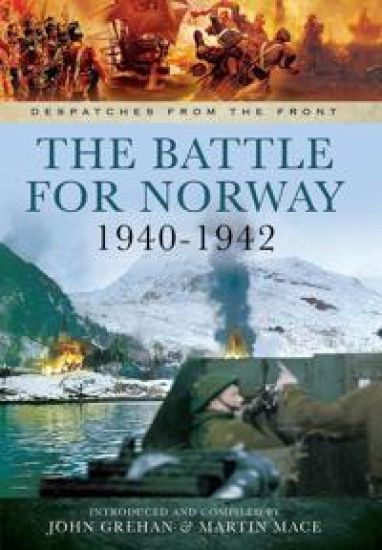
Despatches in this volume include that on the first and second battles of Narvik in 1940; the despatch on operations in central Norway 1940, by Lieutenant General H.R.S. Massy, Commander-in-Chief, North West Expeditionary Force; Despatch on operations in Northern Norway between April and June 1940; the despatch on carrier-borne aircraft attacks on Kirkenes (Norway) and Petsamo (Finland) in 1941, by Admiral Sir John C. Tovey; the despatch on the raid on military and economic objectives in the Lofoten Islands (Norway) in March 1941, by Admiral Sir John C. Tovey, Commander-in-Chief, Home Fleet; and the despatch on the raid on military and economic objectives in the vicinity of Vaagso Island (Norway) in December 1941, by Admiral Sir John C. Tovey. This unique collection of original documents will prove to be an invaluable resource for historians, students and all those interested in what was one of the most significant periods in British military history.
Dunkirk Evacuation - Operation Dynamo

Dunkirk Evacuation - Operation Dynamo

Martin Mace; John Grehan

Frontline Books
2020
nidottu
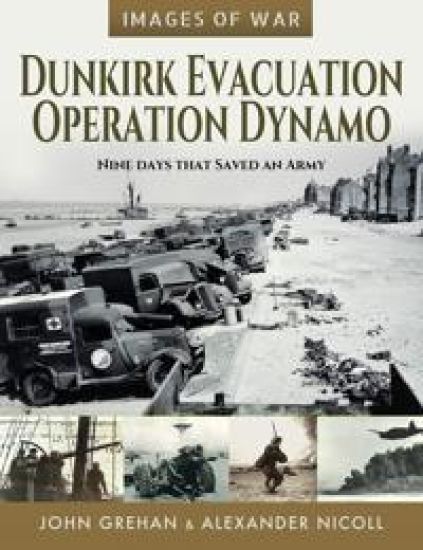
The miracle' of Dunkirk is one of the most inspiring stories of all time. The British Expeditionary Force had been all but surrounded, and, with the French armies collapsing on all sides, it appeared that Britain was about to suffer the heaviest defeat in its history. When Winston Churchill's War Cabinet finally accepted that the Battle of France had been lost, preparations were made to try and rescue as many soldiers as possible from one of the few ports left open to the British Expeditionary Force - Dunkirk. So rushed and chaotic was the retreat to the Channel coast, with thousands of guns, vehicles and tanks being abandoned, there was little time for soldiers to consider taking photographs of the shocking scenes of death and destruction which surrounded them. Yet images do exist of the ships and boats of all descriptions which braved the bombs and guns of the German Air Force to rescue Britain's only field army from the clutches of Hitler's panzer divisions. One man in particular, Sub-Lieutenant John Rutherford Crosby, a member of the crew of the minesweeper, and converted Clyde paddle steamer, HMS Oriole, left a legacy of dramatic images. These include the never-to-be-forgotten scenes of long lines of tired and anxious troops stretching into the sea and of bombs exploding on the packed beaches - all with his own personal little camera. Other images in this book paint a vivid and memorable picture, as no words ever could, of the greatest evacuation of troops under fire.
The Doolittle Raid

The Doolittle Raid

John Grehan

Air World
2020
nidottu
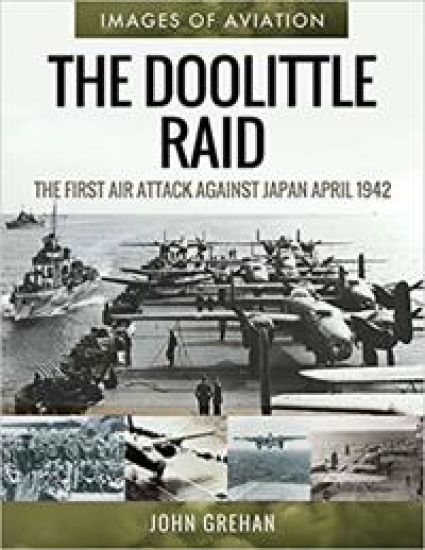
On 1 April 1942, less than four months after the world had been stunned by the attack upon Pearl Harbor, sixteen US aircraft took to the skies to exact retribution. Their objective was not merely to attack Japan, but to bomb its capital. The people of Tokyo, who had been told that their city was invulnerable' from the air, would be bombed and strafed - and the shock waves from the raid would extend far beyond the explosions of the bombs. The raid had first been suggested in January 1942 as the US was still reeling from Japan's pre-emptive strike against the US Pacific Fleet at Pearl Harbor. The Americans were determined to fight back and fight back as quickly as possible. The 17th Bomb Group (Medium) was chosen to provide the volunteers who would crew the sixteen specially-modified North American B-25 bombers. As it was not possible to reach Tokyo from any US land bases, the bombers would have to fly from aircraft carriers, but it was impossible for such large aircraft to land on a carrier; the men had to volunteer for a one-way ticket. Led by Lieutenant Colonel Jimmy' Doolittle, the seventy-one officers and 130 enlisted men embarked on the USS Hornet which was shielded by a large naval task force. However, the ships were spotted by a Japanese ship. The decision was therefore made to take-off before word of the task force's approach reached Tokyo, even though the carrier was 170 miles further away from Japan than planned and in the knowledge that the B-25s would not have enough fuel to reach their intended landing places in China. The raid was successful, and the Japanese were savagely jolted out of their complacency. Fifteen of the aircraft crash-landed in, or their crews baled-out over, China; the sixteenth managed to reach the Soviet Union. Only three men were killed on the raid, with a further eight being taken prisoner by the Japanese, three of whom were executed and one died of disease. The full story of this remarkable operation, of the men and machines involved, is explored through this fascinating collection of images.
Battle of Midway

Battle of Midway

John Grehan

Frontline Books
2019
nidottu
Japan's attack on Pearl Harbor in the Hawaiian Islands on 7 December 1941, had severely damaged the United States Pacific Fleet but had not destroyed it, for the fleet's aircraft carrier force had been at sea when the Japanese struck. This meant that, despite the overwhelming success of Japanese military forces across the Pacific, US carrier-based aircraft could still attack Japanese targets. After the Battle of the Coral Sea in early May 1942, in which both sides had lost one carrier, the commander of the Japanese Combined Fleet, Admiral Isoroku Yamamoto, calculated that the US had only two serviceable carriers left. If those remaining carriers could be lured into a battle with the Combined Fleet and destroyed, nothing could stop the Japanese achieving complete control of the South Pacific. It would take the United States many months, even with its massive industrial muscle, to rebuild its carried fleet if it was destroyed, by which time Japan would be able to secure the raw materials needed to keep its war machine functioning and to build all the bases it required across the Pacific, which would enable its aircraft to dominate the entire region. Aware of the sensitivity of the Americans towards Hawaii after the Battle of Pearl Harbor, Yamamoto believed that if he attacked there again, the US commander, Admiral Nimitz would be certain to commit all his strength to its defence. Yamamoto selected the furthest point of the Hawaiian Islands, the Naval Air Station on the Midway Atoll, for his attack, which was beyond the range of most US land-based aircraft. Yamamoto launched his attack on 4 June 1942\. But the US had intercepted and deciphered Japanese signals and Nimitz, with three not two aircraft carriers, knew exactly Yamamoto's plans. Yamamoto had hoped to draw the US carriers into his trap but instead he sailed into an ambush. The four-day battle resulted in the loss of all four Japanese aircraft carriers, the US losing only one. The Japanese were never able to recover from these losses, and it was the Americans who were able to take control of the Pacific. The Battle of Midway, unquestionably, marked the turning point in the war against Japan.
The Berlin Airlift

The Berlin Airlift

John Grehan

Air World
2019
nidottu
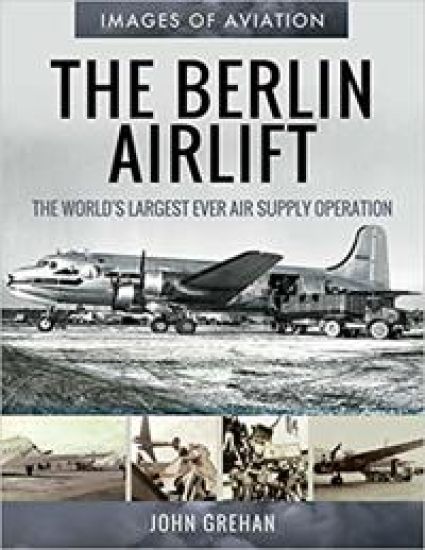
The fate of the free world hung in the balance. Stalin's Soviet Union sought to drive the Western democracies from Germany to continue the communist advance across Europe. The first step in Stalin's scheme was to bring Berlin under Soviet control. Berlin was situated deep inside the Soviet-occupied region of the country, but the German capital had been divided into two halves, one of which was occupied by the Soviet Union, the other, in separate sectors, by Britain, France and the USA. Stalin decided to make the Allied hold on West Berlin untenable by shutting down all the overland routes used to keep the city supplied. The choice faced by the Allies was a stark one - let Berlin fall, or risk war with the Soviets by breaking the Soviet stranglehold. In a remarkably visionary move, the Allies decided that they could keep Berlin supplied by flying over the Soviet blockade, thus avoiding armed conflict with the USSR. On 26 June 1948, the Berlin Airlift began. Throughout the following thirteen months, more than 266,600 flights were undertaken by the men and aircraft from the US, France, Britain and across the Commonwealth, which delivered in excess of 2,223,000 tons of food, fuel and supplies in the greatest airlift in history. The air-bridge eventually became so effective that more supplies were delivered to Berlin than had previously been shipped overland and Stalin saw that his bid to seize control of the German capital could never succeed. At one minute after midnight on 12 May 1949, the Soviet blockade was lifted, and the Soviet advance into Western Europe was brought to a shuddering halt.
Boer War 1899-1902

Boer War 1899-1902

John Grehan; Martin Mace

Pen Sword Military
2014
sidottu
Fought between the British Empire and the two independent Boer republics, the Orange Free State and the Transvaal Republic, the First Boer War (1880-1881) was a rebellion by the Boers (farmers) against British rule in the Transvaal that re-established their independence. The engagements that it involved, such as they were, were small and involved few casualties. More commonly referred to as just the Boer War, the Second Boer War (1899-1902), by contrast, was a lengthy conflict involving large numbers of troops from many British possessions (up to as many as 500,000 men), which ended with the conversion of the Boer republics into British colonies. The British defeated the Transvaal and the Orange Free State, first in open warfare and then in a long and bitter guerrilla campaign. British losses were high due to both disease and combat. It was also the war conflict which saw Winston Churchill first achieve household fame. The war had a lasting effect on the region and on British domestic politics. For Britain, the Boer War was the longest, the most expensive (GBP200 million), and the bloodiest conflict between 1815 and 1914, lasting three months longer and resulting in higher British casualties than the Crimean War. This unique collection of original documents will prove to be an invaluable resource for historians, students and all those interested in what was one of the most significant periods in British military history.
Wellington's Doctors

Wellington's Doctors

Martin Howard; John Grehan

Spellmount Publishers Ltd
1999
nidottu
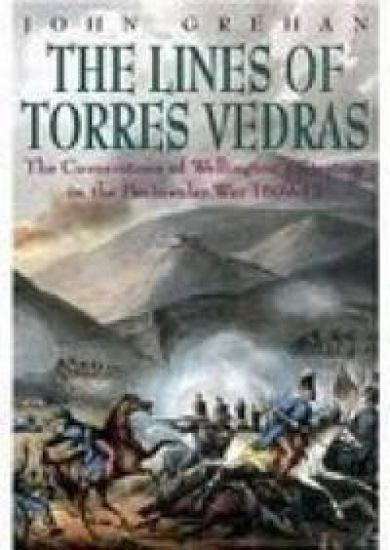
This text examines in detail the role of one of the most important fortifications in military history, the Lines of Torres Vedras, in the Peninsular war, 1809 to 1812.