Kirjojen hintavertailu. Mukana 12 177 250 kirjaa ja 12 kauppaa.

Kirjailija

John Gribbin

Kirjat ja teokset yhdessä paikassa: 61 kirjaa, julkaisuja vuosilta 1984-2025, suosituimpien joukossa Stephen Hawking. Vertaile teosten hintoja ja tarkista saatavuus suomalaisista kirjakaupoista.

61 kirjaa

Kirjojen julkaisuhaarukka 1984-2025.

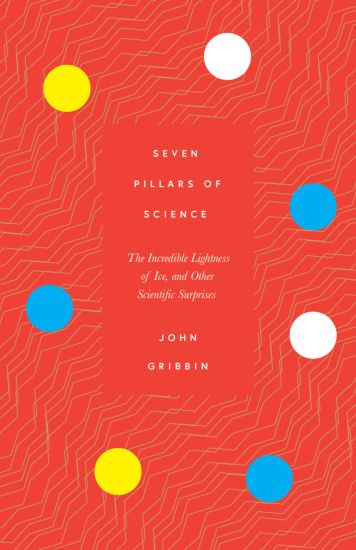
Seven Pillars of Science

Seven Pillars of Science

John Gribbin

Icon Books Ltd
2020
sidottu
John Gribbin, author of Six Impossible Things, shortlisted for the Royal Society Insight Investment Science Book Prize, presents a tour of seven fundamental scientific truths that underpin our very existence.These 'pillars of science' also defy common sense. For example, solid things are mostly empty space, so how do they hold together? There appears to be no special 'life force', so how do we distinguish living things from inanimate objects? And why does ice float on water, when most solids don't? You might think that question hardly needs asking, and yet if ice didn't float, life on Earth would never have happened.The answers to all of these questions were sensational in their day, and some still are. Throughout history, science has been able to think the unthinkable - and Gribbin brilliantly shows the surprising secrets on which our understanding of life is based.
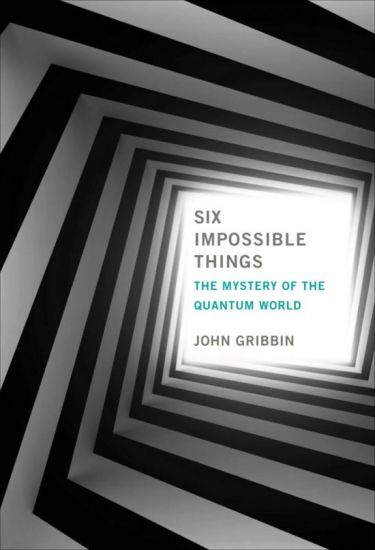
Six Impossible Things

Six Impossible Things

John Gribbin

MIT Press
2019
muu
A concise and engaging investigation of six interpretations of quantum physics.Rules of the quantum world seem to say that a cat can be both alive and dead at the same time and a particle can be in two places at once. And that particle is also a wave; everything in the quantum world can described in terms of waves--or entirely in terms of particles. These interpretations were all established by the end of the 1920s, by Erwin Schroedinger, Werner Heisenberg, Paul Dirac, and others. But no one has yet come up with a common sense explanation of what is going on. In this concise and engaging book, astrophysicist John Gribbin offers an overview of six of the leading interpretations of quantum mechanics. Gribbin calls his account "agnostic," explaining that none of these interpretations is any better--or any worse--than any of the others. Gribbin presents the Copenhagen Interpretation, promoted by Niels Bohr and named by Heisenberg; the Pilot-Wave Interpretation, developed by Louis de Broglie; the Many Worlds Interpretation (termed "excess baggage" by Gribbin); the Decoherence Interpretation ("incoherent"); the Ensemble "Non-Interpretation"; and the Timeless Transactional Interpretation (which theorized waves going both forward and backward in time). All of these interpretations are crazy, Gribbin warns, and some are more crazy than others--but in the quantum world, being more crazy does not necessarily mean more wrong.
Companion to the Cosmos

Companion to the Cosmos

John Gribbin

Independently Published
2018
nidottu
Everybody is intrigued by ideas such as the Big Bang and black holes, and we all want to know how we fit into the Universe at large. Scientists now understand better than ever before the scope of the Universe and its origins, and the variety of objects it contains, from quasars and pulsars to galaxies and the inner workings of our own Sun. But such has been the pace of progress, especially in the recent past, that the story has been fragmented, with no single, user-friendly guide to present the broad sweep as well as the detailed discoveries.Companion to the Cosmos tells the whole story of the Universe and the people who made the discoveries. A brilliant science populariser and an award-winning writer, John Gribbin has watched many of these stories develop from the inside. He tells us everything we want to know about the Universe, with the clarity and easy style familiar from his earlier books such as In Search of the Big Bang, Schr dinger's Kittens, and Ice Age.The Companion begins with an extended Introduction where Gribbin sets out the present state of knowledge, and explains the key discovery of current cosmology--that the Universe is evolving and growing. The main A-Z encyclopedic section of the book is a mixture of lengthy feature articles on major subjects (e.g. black holes, gravity, galaxy, life in the Universe, super novae), shorter entries, and biographies of the scientists, complete with over 100 illustrations and photographs. In the final section, Timelines, ' cosmological discoveries are set out alongside key dates in general history and the history of science, from the time of the ancient astronomers of Greece and Babylon up to the present day.Serious students will find this an essential guide. More casual readers will find it easy to dip into and hard to put down as the interwoven threads lead the reader from one linked topic to another. Companion to the Cosmos is a brilliant tour deforce and a book that nobody interested in the world around us can afford to be without.
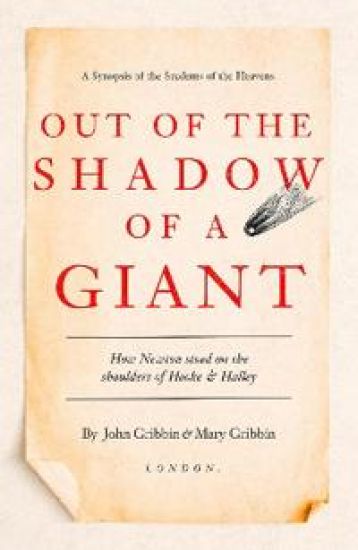
Out of the Shadow of a Giant

Out of the Shadow of a Giant

John Gribbin; Mary Gribbin

Harpercollins Publishers
2018
pokkari
What if Isaac Newton had never lived? Robert Hooke and Edmond Halley, whose place in history has been overshadowed by the giant figure of Newton, were pioneering scientists within their own right, and instrumental in establishing the Royal Society.
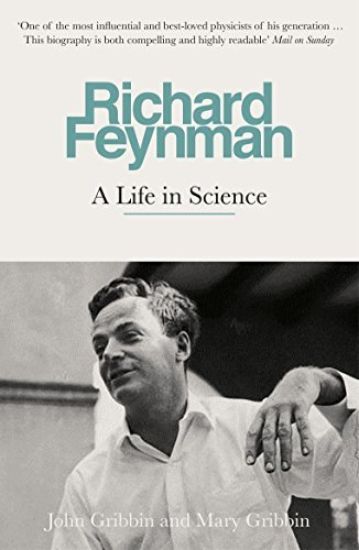
Richard Feynman

Richard Feynman

John Gribbin; Mary Gribbin

Icon Books Ltd
2018
pokkari
One hundred years on from his birth, and 30 since his death, Richard Feynman's discoveries in modern physics are still thoroughly relevant. Magnificently charismatic and fun-loving, he brought a sense of adventure to the study of science.His extraordinary career included war-time work on the atomic bomb at Los Alamos, a profoundly original theory of quantum mechanics, for which he won the Nobel prize, and major contributions to the sciences of gravity, nuclear physics and particle theory.Interweaving personal anecdotes and recollections with clear scientific narrative, acclaimed science writers John and Mary Gribbin reveal a fascinating man with an immense passion for life - a superb teacher, a wonderful showman and one of the greatest scientists of his generation.
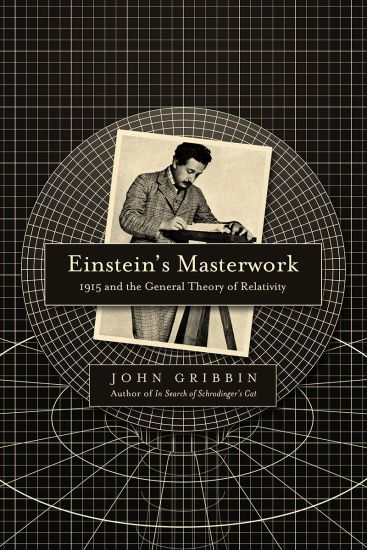
Einstein`s Masterwork - 1915 and the General Theory of Relativity
In 1915, Albert Einstein presented his masterwork to the Prussian Academy of Sciences--a theory of gravity, matter, space and time: the General Theory of Relativity. Einstein himself said it was -the most valuable theory of my life, - and -of incomparable beauty.- It describes the evolution of the universe, black holes, the behavior of orbiting neutron stars, and why clocks run slower on the surface of the earth than in space. It even suggests the possibility of time travel.And yet when we think of Einstein's breakthrough year, we think instead of 1905, the year of Einstein's Special Theory of Relativity and his equation E=mc2, as his annus mirabilis, even though the Special Theory has a narrower focus.Today the General Theory is overshadowed by these achievements, regarded as 'too difficult' for ordinary mortals to comprehend. In Einstein's Masterwork, John Gribbin puts Einstein's astonishing breakthrough in the context of his life and work, and makes it clear why his greatest year was indeed 1915 and his General Theory his true masterpiece.
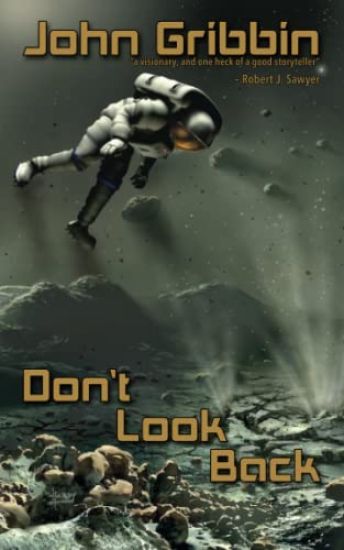
Don't Look Back

Don't Look Back

John Gribbin

ALNPETE PRESS
2017
pokkari
John Gribbin, widely regarded as one of the best science writers of the 20th century, has also, unsurprisingly, been writing science fiction for many years. While his novels are well-known, his short stories are perhaps less so. He has also written under pseudonyms. Here, for the first time, is the definitive collection of John's short stories. Many were originally published in Analog and other magazines. Some were the seeds of subsequent novels. This collection contains 23 short stories, three of which John wrote with his son Ben. It also includes an essay in which John addresses the paradoxes of time travel in SF, and another in which John argues that the Moon is, in fact, a Babel Fish! These stories, written at a time when issues such as climate change were taken less seriously (especially by politicians) now seem very relevant again. What underpins all of them, of course, is a grounding in solid science. But also, which will not come as a surprise to anyone who has ever met John at a science fiction convention, or elsewhere, they are laced with a dry and subtle wit. He is, however, not averse to a good pun, as evidenced by the song he co-wrote for the Bonzo Dog Doo Dah Band: The Holey Cheeses of Nazareth. Despite the exhortation of this collection's title, this IS a perfect opportunity to look back at John's short stories. If you've never read any of his fiction before, now you have the chance to acquaint yourself with a body of work that, while being very much of its time, is certainly not in any way out of date.
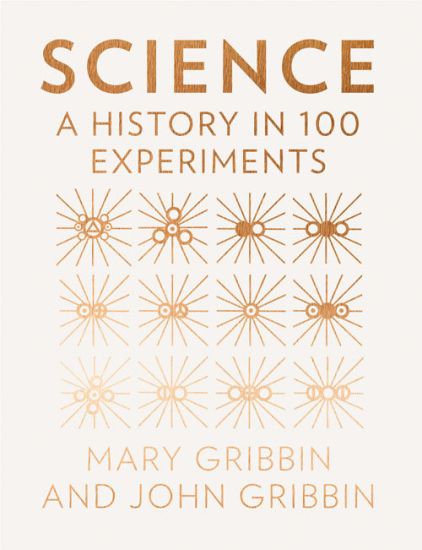
Science

Science

John Gribbin; Mary Gribbin

Harpercollins Publishers
2016
sidottu
A history of science distilled into 100 notable experiments - epic moments that have fuelled our understanding of Earth and the Universe beyond.
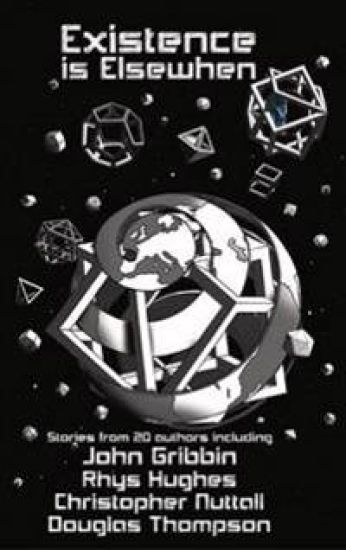
Existence is Elsewhen

Existence is Elsewhen

John Gribbin

ALNPETE PRESS
2016
pokkari
The title, Existence is Elsewhen, paraphrases the last sentence of Andre Breton's 1924 Manifesto of Surrealism, perfectly summing up the intent behind this anthology of stories from a wonderful collection of authors. Different worlds...different times. It's what Elsewhen Press has been about since we launched our first title in 2011. Here, we present twenty science fiction stories for you to enjoy. We are delighted that headlining this collection is the fantastic John Gribbin, with a worrying vision of medical research in the near future. Future global healthcare is the theme of J A Christy's story; while the ultimate in spare part surgery is where Dave Weaver takes us. Edwin Hayward's search for a renewable protein source turns out to be digital; and Tanya Reimer's story with characters we think we know, gives us pause for thought about another food we take for granted. Evolution is examined too, with Andy McKell's chilling tale of what states could become if genetics are used to drive policy.Similarly, Robin Moran's story explores the societal impact of an undesirable evolutionary trend; while Douglas Thompson provides a truly surreal warning of an impending disaster that will reverse evolution, with dire consequences. On a lighter note, we have satire from Steve Harrison discovering who really owns the Earth (and why); and Ira Nayman, who uses the surreal alternative realities of his Transdimensional Authority series as the setting for a detective story mash-up of Agatha Christie and Dashiel Hammett. Pursuing the crime-solving theme, Peter Wolfe explores life, and death, on a space station; while Stefan Jackson follows a police investigation into some bizarre cold-blooded murders in a cyberpunk future. Going into the past, albeit an 1831 set in the alternate Britain of his Royal Sorceress series, Christopher Nuttall reports on an investigation into a girl with strange powers. Strange powers in the present-day is the theme for Tej Turner, who tells a poignant tale of how extra-sensory perception makes it easier for a husband to bear his dying wife's last few days. Difficult decisions are the theme of Chloe Skye's heart-rending story exploring personal sacrifice.Relationships aren't always so close, as Susan Oke's tale demonstrates, when sibling rivalry is taken to the limit. Relationships are the backdrop to Peter R. Ellis's story where a spectacular mid-winter event on a newly-colonised distant planet involves a Madonna and Child. Coming right back to Earth and in what feels like an almost imminent future, Siobhan McVeigh tells a cautionary tale for anyone thinking of using technology to deflect the blame for their actions. Building on the remarkable setting of Pera from her LiGa series, and developing Pera's legendary Book of Shadow, Sanem Ozdural spins the creation myth of the first light tree in a lyrical and poetic song. Also exploring language, the master of fantastika and absurdism, Rhys Hughes, extrapolates the way in which language changes over time, with an entertaining result.
Stephen Hawking: A Life in Science

Stephen Hawking: A Life in Science

John Gribbin; Michael White

Pegasus Books
2016
nidottu
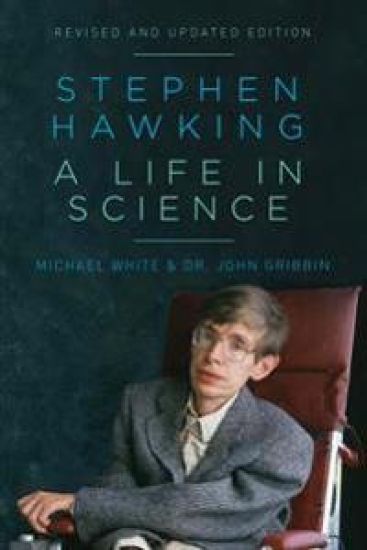
Stephen Hawking is no ordinary scientist. Perhaps more than any other scientist, he has broadened our basic understanding of the universe. His theoretical work on black holes and the origins and nature of the cosmos have been groundbreaking--if not downright revolutionary. He has also spent much of his adult life confined to a wheelchair, a victim of ALS. But his physical limitations have done nothing to confine him intellectually or hinder his scientific development. Hawking would already be remarkable for his cutting-edge work in theoretical physics alone. However, he has also managed to popularize science unlike any one else. Today, he is a household name and achieved almost cult-like fame with the release of A Brief History of Time. Although this book is steeped in the complexities of cosmology, millions of people were eager to learn just some of what he had to offer. Science writers White and Gribbin have painted a compelling portrait of a scientific mind that seemingly knows no bounds. Weaving together clear explanations of Hawking's science with a detailed, balanced, and sensitive personal history, we come to know and appreciate both sides of this incredible man. Includes new updates in Hawking's biography and the recent discovery of the Higgs-Boson (or God) particle.
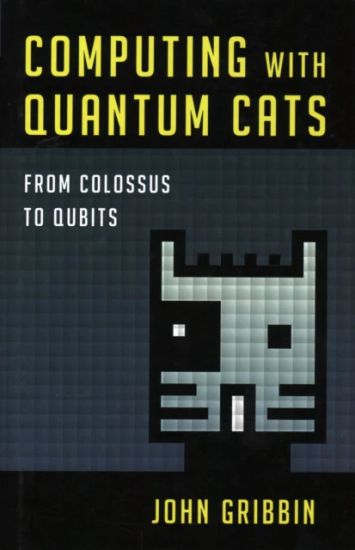
Computing with Quantum Cats

Computing with Quantum Cats

John Gribbin

Transworld
2015
pokkari
Pioneering physicists are on the brink of unlocking a new quantum universe which provides a better representation of reality than our everyday experiences and common sense ever could. This title explains how quantum theory developed to make quantum computers work in practice as well as in principle.
Q is for Quantum: An Encyclopedia of Particle Physics

Q is for Quantum: An Encyclopedia of Particle Physics

John Gribbin

Createspace Independent Publishing Platform
2015
nidottu
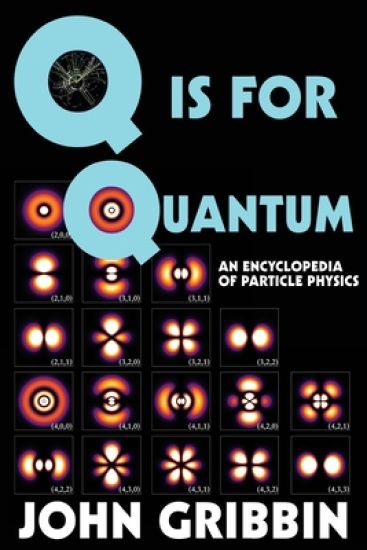
A comprehensive encyclopedia of quantum physics.Here in one volume, the award-winning science writer and physicist John Gribbin has provided everything you need to know about the quantum world -the place where most of the greatest scientific advances of the last hundred years have been made.This exceptional A to Z reference begins with a thorough introduction setting out the current state of knowledge in particle physics. Throughout, Gribbin includes articles on the structure of particles and their interactions, accounts of the theoretical breakthroughs in quantum mechanics and their practical applications, and entertaining biographies of the scientists who have blazed the trail of discovery. In a special section, "Timelines," key dates in our quest to understand the quantum world are mapped out alongside landmarks in world history and the history of science.An encyclopedia of the fundamental science of the future, Q is for Quantum is an essential companion for anyone interested in particle physics."Gribbin presents an overview of a hundred years of particle physics through a handy, accessible A-Z dictionary of definitions and identifications."-Natural History
Auf der Suche nach Schrödingers Katze

Auf der Suche nach Schrödingers Katze

John Gribbin

PIPER VERLAG GMBH
2015
pokkari
Die Quantenphysik gilt als eine der größten Leistungen unserer Zeit - und als eine der erfolgreichsten. Klar und anschaulich führt John Gribbin in ihre Welt ein und erläutert von den Anfängen der Atomtheorie des 19. Jahrhunderts bis zur gegenwärtigen Forschung eine der aufregendsten Wissenschaften, ohne die weder Laser noch Computer denkbar wären.
Computing with Quantum Cats

Computing with Quantum Cats

John Gribbin

Prometheus Books
2014
sidottu
A mind-blowing glimpse into the near future, where quantum computing will have world-transforming effects. The quantum computer is no longer the stuff of science fiction. Pioneering physicists are on the brink of unlocking a new quantum universe which provides a better representation of reality than our everyday experiences and common sense ever could. The birth of quantum computers - which, like Schrödinger's famous "dead and alive" cat, rely on entities like electrons, photons, or atoms existing in two states at the same time - is set to turn the computing world on its head. In his fascinating study of this cutting-edge technology, John Gribbin updates his previous views on the nature of quantum reality, arguing for a universe of many parallel worlds where "everything is real." Looking back to Alan Turing's work on the Enigma machine and the first electronic computer, Gribbin explains how quantum theory developed to make quantum computers work in practice as well as in principle. He takes us beyond the arena of theoretical physics to explore their practical applications - from machines which learn through "intuition" and trial and error to unhackable laptops and smartphones. And he investigates the potential for this extraordinary science to create a world where communication occurs faster than light and teleportation is possible. This is an exciting insider's look at the new frontier of computer science and its revolutionary implications.
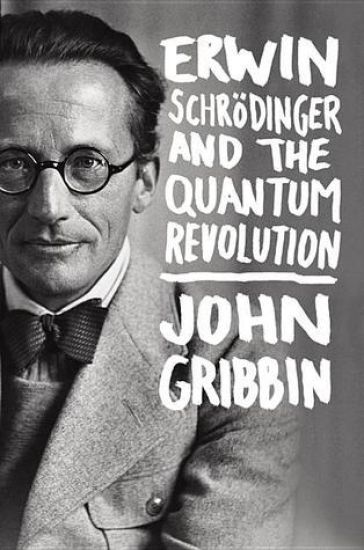
Erwin Schrodinger and the Quantum Revolution

Erwin Schrodinger and the Quantum Revolution

John Gribbin

Trade Paper Press
2013
sidottu
A lively, fascinating biography of the father of quantum mechanics by the bestselling author of the science classic, In Search of Schr dinger's CatErwin Schr dinger, best known for his famous "Schr dinger's Cat" paradox, is one of the most famous physicists of the early twentieth century and a member of a new generation of quantum physicists, including Werner Heisenberg, Paul Dirac, and Niels Bohr. Yet Schr dinger's scientific discoveries only scratch the surface of what makes him so fascinating. More rumpled than Einstein, a devotee of eastern religion and philosophy, and infamous for his alternative lifestyle, his major contribution to physics--and the work for which he received the Nobel Prize in 1933--was to some extent a disappointment to him. Regardless, Schr dinger's masterpiece became an important part of the new physics of his time. This book tells the story of Schr dinger's surprisingly colorful life during one of the most fertile and creative moments in the history of science.The first accessible, in-depth biography of the Nobel Prize-winning Austrian physicist Erwin Schr dingerTakes you into the heart of the quantum revolution and explains the captivating world of quantum mechanics, which underpins all of modern scienceWritten by bestselling author John Gribbin, one of today's greatest popular science writers whose other books include In Search of Schr dinger's Cat , In Search of the Multiverse, and Alone in the Universe
Erwin Schrodinger and the Quantum Revolution

Erwin Schrodinger and the Quantum Revolution

John Gribbin

Transworld Publishers Ltd
2013
pokkari
Erwin Schrödinger was an Austrian physicist famous for his contribution to quantum physics. He won the Nobel Prize in 1933 and is best known for his thought experiment of a cat in a box, both alive and dead at the same time, which revealed the seemingly paradoxical nature of quantum mechanics.
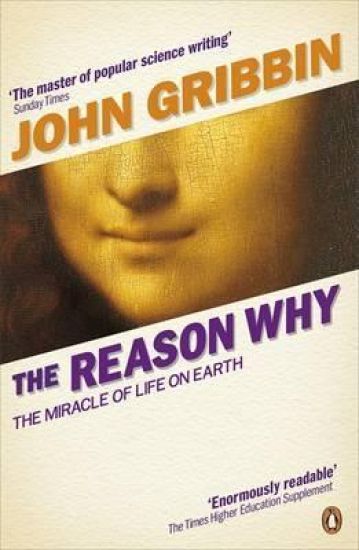
The Reason Why

The Reason Why

John Gribbin

Penguin Books Ltd
2012
pokkari
In The Reason Why: The Miracle of Life on Earth John Gribbin shows what makes our planet so special, explaining why the 'Fermi Paradox' - the apparent absence of alien life - holds the key to our uniqueness. There are several hundred billion stars in our Milky Way Galaxy, yet out of all of these Earth is the only planet with intelligent life on it. Why? For the first time, John Gribbin makes the link between the whole series of cosmic events that gave rise to our civilization - a unique set of circumstances that have not, and could not, occur anywhere else. John Gribbin is our best, most accessible guide to the big questions of science. In this book, he explores the biggest questions of all: why are we here, what does it mean to be alone in the universe - and do we have a future? 'The master of popular science writing' Sunday Times 'A fascinating journey through space and time ... this book presents an exciting insight into the many fortuitous events and cosmic quirks that have all come together to make Earth such a life-friendly world' Science Focus 'Lyrical, enormously readable ... John Gribbin explains just how our home world appears to be special, and exactly what we have to be thankful for' The Times Higher Education John Gribbin is one of today's greatest writers of popular science and the author of bestselling books, including In Search of Schrödinger's Cat, Stardust, Science: A History and In Search of the Multiverse. Gribbin trained as an astrophysicist at Cambridge University and is currently Visiting Fellow in Astronomy at the University of Sussex.
Future Worlds

Future Worlds

John Gribbin

Springer-Verlag New York Inc.
2012
nidottu
During the middle and late 1960s, concern about the way the world might be going began to move out of the arena of academic debate amongst specialists, and became a topic of almost everyday interest to millions of people. Concern about mankind's disruption of the natural balance of 'the environment' brought the term 'ecology' into widespread use, though not always with the meaning to be found in the dictionary, and fears that world population might be growing so rapidly that very soon we would run out of food, resulting in mass starvation and a disastrous collapse of civilisation, helped to make books such as The Limits to Growth best sellers in the early 1970s. Today, quite rightly, decisions on long-term policy with widespread repercussions - most notably, those concerning nuclear energy planning - are a subject of equally widespread public discussion. But all too often such debate focuses on specific issues without the prob­ lems ever being related effectively to an overall vision of where the world is going and how it is going to get there. At the Science Policy Res~arch Unit, University of Sussex, a group working on studies of social and tech­ nological alternatives for the future has been contributing to 'the futures debate' for several years, cautiously (perhaps, in a sense, almost too cautiously!) developing a secure foundation for forecasting the way the world may develop.