Kirjojen hintavertailu. Mukana 12 484 796 kirjaa ja 12 kauppaa.
Kirjailija
John Griffiths
Kirjat ja teokset yhdessä paikassa: 29 kirjaa, julkaisuja vuosilta 1996-2025, suosituimpien joukossa Neue Reise in Arabien,. Vertaile teosten hintoja ja tarkista saatavuus suomalaisista kirjakaupoista.
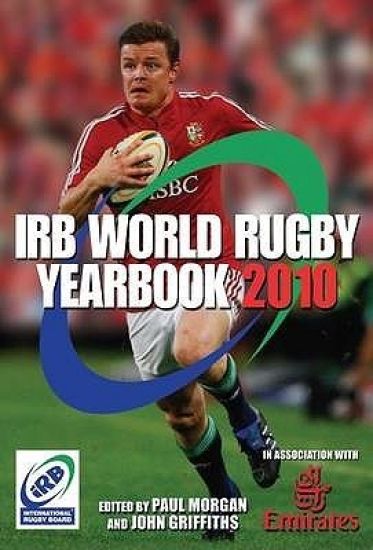
This is the latest edition of the acclaimed "IRB World Rugby Yearbook", the most comprehensive rugby yearbook on the planet. With 640 fully illustrated pages of features, stats and records from every major rugby playing nation, since being revived and revamped three years ago "The IRB World Rugby Yearbook" has become a 'must have' book for rugby followers. It includes: all the 2009 world Rugby stats; six nations, tri nations and lions tour results and coverage; 2011 Rugby World Cup section including qualifying stats and results; world Rugby record; the five IRB players of the year; Emirates Airlines Rugby photo of the year; reports and stats on the top 16 Rugby nations; domestic and regional tournaments; and, touring team results.
This book is a successor to J Griffiths, A Bood and H Weyers, Euthanasia and Law in the Netherlands (Amsterdam University Press 1998) which was widely praised for its thoroughness, clarity, and accuracy. The new book emphasises recent legal developments and new research, and has been expanded to include a full treatment of Belgium, where since 2002 euthanasia has also become legal. The book also includes descriptions written by local specialists of the legal situation and what is known about actual practice in a number of other European countries (England and Wales, France, Italy, Scandinavia, Spain, Switzerland). The book strives for as complete and dispassionate a description of the situation as possible. It covers in detail: - the substantive law applicable to euthanasia, physician-assisted suicide, withholding and withdrawing treatment, use of pain relief in potentially lethal doses, palliative and terminal sedation, and termination of life without a request (in particular in the case of newborn babies); -the process of legal development that has led to the current state of the law; -the system of legal control and its operation in practice; -the results of empirical research concerning actual medical practice. A concluding part deals with some general questions that arise out of the material presented: Is the legalisation of euthanasia an example of the decline of law or should it, on the contrary, be seen as part and parcel of the increasing juridification of the doctor-patient relationship? Does the Dutch experience with legalised euthanasia support the idea of a 'slippery slope' toward a situation in which life-especially of the more vulnerable members of society-is less effectively protected? Is it possible to explain and to predict when a society will decide to legalise euthanasia?
Hog Cards are an innovative and practical kinaesthetic approach to teaching. The first in the series - Geography Hog Cards or Geog Hogs - provides meaningful and pacey learning to improve teaching and learning standards, from introducing countries and locations up to revision for external exams. Each card features a country with maps and demographic, topographic and socio-economic facts such as size, birth rate, total GNP per capita and population. Up to four players can play a variety of card games using the information on the cards. During the course of these games, students learn not only the facts written on the cards, the location of the country and its place in the world, but to compare and contrast the strengths and weaknesses of countries against perceived norms. Groups learn at their own pace, can devise their own games and all players feel able to make meaningful and intelligent contributions. Best of all - it's great fun. John Griffiths is Head of Geography at a Welsh Comprehensive School
Was the idea of the Trinity-that One God exists in Three Persons and One Substance - influenced by pre-Christian traditions? It is well known that the New Testament offers no such doctrine, and there is no evidence that Jesus of Nazareth regarded himself as a member of the Trinity. The doctrine was developed during the first four Christian centuries, culminating in the Council of Constantinople in AD 381. The world of the early Christian centuries in which the Trinity was developed as a tenet of belief included several religious and philosophical systems with similar beliefs. Triads and Trinity examines three possible areas of impact: Judaism, the religion of Egypt, and various Greek traditions. Whereas a pluralistic concept of God was inherited by Judaism, it eventually accepted a firm monotheism. In Egypt the concept of trinity was of ancient origin, but it flourished especially in the second century AD and afterwards, when the mystery cult of Isis reached its acme of popularity in a Graeco-Egyptian framework which found adherents in many countries of the Roman empire. This Graeco-Egyptian religious amalgam excercised a potent influence on early Christian thinkers, particularly in Alexandria. Using the methods of comparative religion, the distinguished Classicist and Egyptologist J. Gwyn Griffiths has examined the origins of the doctrine of the Trinity and has based his conclusions on a thorough analysis of the original sources in Greek, Latin, Egyptian, Coptic and Hebrew.


![The Gentleman & Lady's Companion; Containing, the Newest Cotillions and Country Dances; To Which Is Added, Instances of Ill Manners, to Be Carefully Avoided by Youth of Both Sexes. [Three Lines from II. Samuel]](/covers/9781171385158.jpg)