Kirjojen hintavertailu. Mukana 12 595 353 kirjaa ja 12 kauppaa.

Kirjailija

John H. Arnold

Kirjat ja teokset yhdessä paikassa: 6 kirjaa, julkaisuja vuosilta 2000-2024, suosituimpien joukossa What is Medieval History?. Vertaile teosten hintoja ja tarkista saatavuus suomalaisista kirjakaupoista.

6 kirjaa

Kirjojen julkaisuhaarukka 2000-2024.

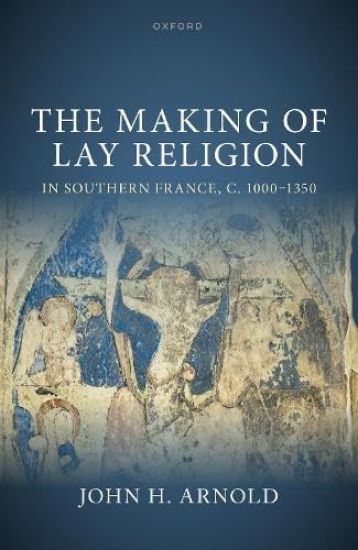
The Making of Lay Religion in Southern France, c. 1000-1350
What was Christianity like for ordinary people between the turn of the millennium and the coming of the Black Death? What changed and what continued, in their experiences, habits, feelings, hopes, and fears? How did they know themselves to be Christians, and indeed to be good Christians? This book answers those questions through a focus on one specific region -- southern France -- across a particularly fraught period of history, one beset by the changes wrought by the Gregorian reforms, the spectre of heresy, the violence of crusade, the coming of inquisition, and the pastoral revolution associated with the Fourth Lateran Council (1215). Using an array of different historical documents, John H. Arnold explores the material contexts of Christian worship from the eleventh through to the fourteenth centuries, the shifting episcopal expectations of the ordinary laity, the changes wrought through wider socioeconomic developments, and periods of sharp inflection brought by the Albigensian crusade and its aftermath. Throughout, the book explores the complex spectrum of lay piety, finding enthusiasms and doubts, faith and scepticism, agency and negotiation. It explores not just developments in the content of faith for the laity but the very dynamics of belief as a lived experience. We are shown how across these key centuries Christianity developed in its external practices, but also via inculcating a more interiorized and affective mode of belief; and thus, it is argued, it can be said to have become truly a 'religion' -- a structured, demanding, and rewarding faith -- for the many and not just the few.
What is Medieval History?

What is Medieval History?

John H. Arnold

Polity Press
2020
sidottu
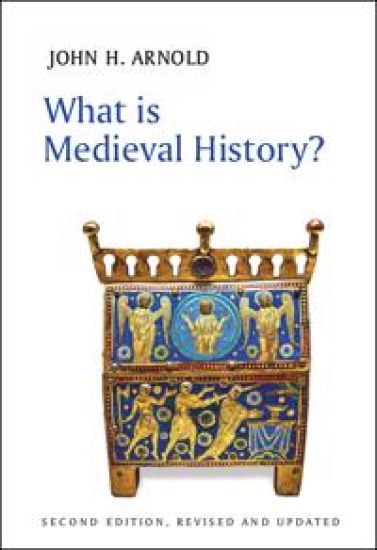
Since its first publication in 2007, John H. Arnold’s What is Medieval History? has established itself as the leading introduction to the craft of the medieval historian. What is it that medieval historians do? How – and why – do they do it? Arnold discusses the creation of medieval history as a field, the nature of its sources, the intellectual tools used by medievalists, and some key areas of thematic importance from the fall of the Roman Empire to the Reformation. The fascinating case studies include a magical plot against a medieval pope, a fourteenth-century insurrection, and the importance of a kiss exchanged between two tenth-century noblemen. Throughout the book, readers are shown not only what medieval history is, but the cultural and political contexts in which it has been written. This anticipated second edition includes further exploration of the interdisciplinary techniques that can aid medieval historians, such as dialogue with scientists and archaeologists, and addresses some of the challenges – both medieval and modern – of the idea of a ‘global middle ages’. What is Medieval History? continues to demonstrate why the pursuit of medieval history is important not only to the present, but to the future. It is an invaluable guide for students, teachers, researchers and interested general readers.
What is Medieval History?

What is Medieval History?

John H. Arnold

Polity Press
2020
nidottu
Since its first publication in 2007, John H. Arnold’s What is Medieval History? has established itself as the leading introduction to the craft of the medieval historian. What is it that medieval historians do? How – and why – do they do it? Arnold discusses the creation of medieval history as a field, the nature of its sources, the intellectual tools used by medievalists, and some key areas of thematic importance from the fall of the Roman Empire to the Reformation. The fascinating case studies include a magical plot against a medieval pope, a fourteenth-century insurrection, and the importance of a kiss exchanged between two tenth-century noblemen. Throughout the book, readers are shown not only what medieval history is, but the cultural and political contexts in which it has been written. This anticipated second edition includes further exploration of the interdisciplinary techniques that can aid medieval historians, such as dialogue with scientists and archaeologists, and addresses some of the challenges – both medieval and modern – of the idea of a ‘global middle ages’. What is Medieval History? continues to demonstrate why the pursuit of medieval history is important not only to the present, but to the future. It is an invaluable guide for students, teachers, researchers and interested general readers.
Belief and Unbelief in Medieval Europe

Belief and Unbelief in Medieval Europe

John H. Arnold

Hodder Arnold
2005
nidottu
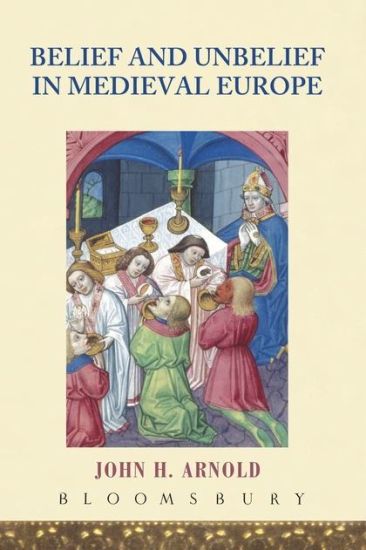
Religion in medieval Europe was hugely important, and impinged upon the most mundane transactions and everyday experiences. But was the period a uniform 'Age of Faith'? By focussing on the ordinary laity, this fascinating account unlocks the multiple meanings of religion, asking how it functioned and with what effects. Holiness, piety and belief are explained and contextualized, as are heresy, dissent and superstition. The themes explored include religious acculturation, community, intercession and Christian identity as well as occasions of unbelief and lay people's rejection of the Church's message. This study deftly uncovers the meanings and struggles that lay below the smooth surface of medieval religious observance for the modern reader.
Inquisition and Power

Inquisition and Power

John H. Arnold

University of Pennsylvania Press
2001
sidottu
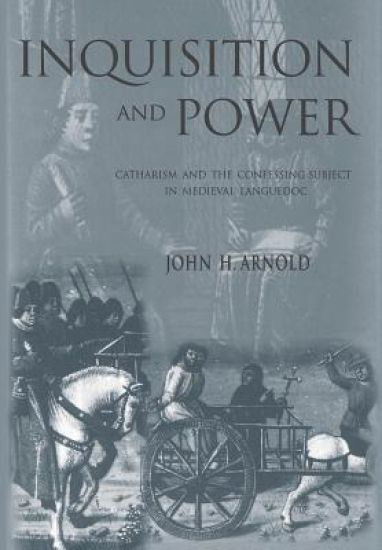
What should historians do with the words of the dead? Inquisition and Power reformulates the historiography of heresy and the inquisition by focusing on depositions taken from the Cathars, a religious sect that opposed the Catholic church and took root in southern France during the twelfth century. Despite the fact that these depositions were spoken in the vernacular, but recorded in Latin in the third person and rewritten in the past tense, historians have often taken these accounts as verbatim transcriptions of personal testimony. This belief has prompted some historians, including E. Le Roy Ladurie, to go so far as to retranslate the testimonies into the first-person. These testimonies have been a long source of controversy for historians and scholars of the Middle Ages. Arnold enters current theoretical debates about subjectivity and the nature of power to develop reading strategies that will permit a more nuanced reinterpretation of these documents of interrogation. Rather than seeking to recover the true voice of the Cathars from behind the inquisitor's framework, this book shows how the historian is better served by analyzing texts as sites of competing discourses that construct and position a variety of subjectivities. In this critically informed history, Arnold suggests that what we do with the voices of history in fact has as much to do with ourselves as with those we seek to 'rescue' from the silences of past.
History

History

John H. Arnold

Oxford University Press
2000
nidottu
There are many stories we can tell about the past, and we are not, perhaps, as free as we might imagine in our choice of which stories to tell, or where those stories end. John Arnold's Very Short Introduction is a stimulating essay about how we study and understand history. The book begins by inviting us to think about various questions provoked by our investigation of history, and explores the ways these questions have been answered in the past. Concepts such as causation, interpretation, and periodization, are introduced by means of concrete examples of how historians work, giving the reader a sense of the excitement of discovering not only the past, but also ourselves. ABOUT THE SERIES: The Very Short Introductions series from Oxford University Press contains hundreds of titles in almost every subject area. These pocket-sized books are the perfect way to get ahead in a new subject quickly. Our expert authors combine facts, analysis, perspective, new ideas, and enthusiasm to make interesting and challenging topics highly readable.