Kirjojen hintavertailu. Mukana 12 152 606 kirjaa ja 12 kauppaa.

Kirjailija

John H. Kautsky

Kirjat ja teokset yhdessä paikassa: 9 kirjaa, julkaisuja vuosilta 1982-2018, suosituimpien joukossa Karl Kautsky. Vertaile teosten hintoja ja tarkista saatavuus suomalaisista kirjakaupoista.

Mukana myös kirjoitusasut: John H Kautsky

9 kirjaa

Kirjojen julkaisuhaarukka 1982-2018.

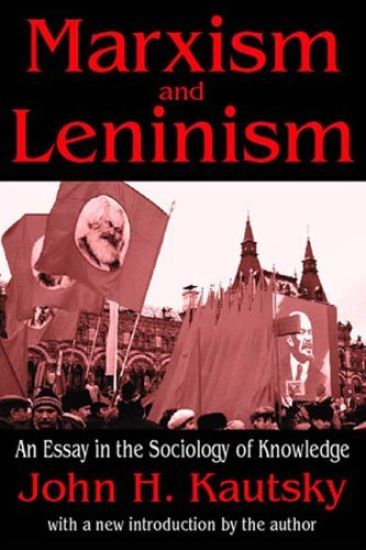
Marxism and Leninism

Marxism and Leninism

John H. Kautsky

Routledge
2018
sidottu
One of the pre-eminent scholars in the history and theory of European socialism, John Kautsky in this volume develops the argument that Marxism and Leninism are two quite different ideologies. He counterposes this view with the commonly accepted one of Leninism as simply one form that Marxism took in the course of its evolution. The easy identification of Marxism and Leninism with each other has been responsible for great confusion in the realm of both scholarly and political discourse.Kautsky develops his position within the tradition of the sociology of knowledge, by the close examination of the different meanings of the Marxist vocabulary as it was used by Marxists and Leninists. His frame of reference turns on the position of labor in turn-of-the-century industrial Europe and the role of modernizing intellectuals in underdeveloped countries. While the vocabulary used was often common to Marx and Lenin, Marxism was explicitly concerned with appeals to workers in industrial nations such as Germany and Austria, whereas Leninism appeals to revolutionaries in underdeveloped nations such as Russia and China.Whatever be the current assessment of the future of socialism and communism, Kautsky holds that it is important to study the core structure of both Marxism and Leninism, since they were major phenomena that powerfully affected the world in the twentieth century. Beyond that, in dealing with how different ideologies can be ensconced within the same rhetoric, the book offers an outstanding entrance into the sociology of knowledge as a tool for political analysis. This is a unique work in the function of language no less than the nature of ideology.The work is divided into five parts: Two environments, two ideologies, one terminology. The evolution of Marxism, its appeals in the German Empire. The evolution of Leninism, its appeals to strata involved in making modernizing revolutions. The differential outcomes of Marxism in the East and Leninism in the West. And finally, an examination of why Marxism and Leninism have been seen as a single ideology. In a new essay prepared for this new edition, Kautsky provides important autobiographical as well as historical reflections on how this book fits into the overall pattern of the author's work.
The Politics of Aristocratic Empires

The Politics of Aristocratic Empires

John H. Kautsky

Routledge
2017
sidottu
The Politics of Aristocratic Empires is a study of a political order that prevailed throughout much of the world for many centuries without any major social conflict or change and with hardly any government in the modern sense. Although previously ignored by political science, powerful remnants of this old order still persist in modern politics.The historical literature on aristocratic empires typically is descriptive and treats each empire as unique. By contrast, this work adopts an analytical, explanatory, and comparative approach and clearly distinguishes aristocratic empires from both primitive and more modern, commercialized societies. It develops generalizations that are supported and richly illustrated by data from many empires and demonstrates that a pattern of politics prevailed across time, space, and cultures from ancient Egypt five millennia ago to Saudi Arabia five decades ago, from China and Japan to Europe, from the Incas and the Aztecs to the Tutsi. Kautsky argues that aristocrats, because they live off the labor of peasants, must perform the primary governmental functions of taxation and warfare. Their performance is linked to particular values and beliefs, and both functions and ideologies in turn condition the stakes, the forms, and the arenas of intra-aristocratic conflict the politics of the aristocracy.The author also analyzes the roles of the peasantry and the townspeople in aristocratic politics and shows that peasant revolts on any large scale occur only after commercial modernization. He concludes with chapters on the modernization of aristocratic empires and on the importance in modern politics of institutional and ideological remnants of the old aristocratic order.
The Politics of Human Nature

The Politics of Human Nature

John H. Kautsky

Routledge
2017
sidottu
The effort to understand human nature in a political context is a daunting challenge that has been undertaken in a variety of ways and by a myriad of disciplines through the ages. From Plato to Hobbes and Burke, to Wallas and Oakeschott in our era, efforts have been made to provide some organic framework for the political study of mankind. What has added greatly to the complexity of the task is the increasing denial, even rejection, in the positivist and behaviorist traditions, of the very notion of a human nature.The work can be described as a series of interlocking propositions: the proverbial view of human nature can be explained by evolutionary theory. Biological differences between men and women are responsible for family, community and group life. Social evolution goes through stages which are recapitulated in the moral life of individuals. A well-defined federal system mirrors human development. And finally, for Fleming, most problems in social and political life stem from violations of this federalist system.Fleming's volume takes up a variety of issues: sex and gender differences, democracy and dictatorship, individual and familial patterns of association. He does so in the context of showing how forms of legitimate authority such as families, communities and nations establish such authority by appeals to human nature, and that these appeals, while presumably resting on empirical evidence, also confirm the existence of normative structures. Fleming's work is an effort of synthesis that is sure to arouse discussion and debate. It represents a serious addition to a literature retrieved from the historical dustbins to which it has been repeatedly consigned.
Marxism and Leninism

Marxism and Leninism

John H. Kautsky

Transaction Publishers
2001
nidottu
One of the pre-eminent scholars in the history and theory of European socialism, John Kautsky in this volume develops the argument that Marxism and Leninism are two quite different ideologies. He counterposes this view with the commonly accepted one of Leninism as simply one form that Marxism took in the course of its evolution. The easy identification of Marxism and Leninism with each other has been responsible for great confusion in the realm of both scholarly and political discourse.Kautsky develops his position within the tradition of the sociology of knowledge, by the close examination of the different meanings of the Marxist vocabulary as it was used by Marxists and Leninists. His frame of reference turns on the position of labor in turn-of-the-century industrial Europe and the role of modernizing intellectuals in underdeveloped countries. While the vocabulary used was often common to Marx and Lenin, Marxism was explicitly concerned with appeals to workers in industrial nations such as Germany and Austria, whereas Leninism appeals to revolutionaries in underdeveloped nations such as Russia and China.Whatever be the current assessment of the future of socialism and communism, Kautsky holds that it is important to study the core structure of both Marxism and Leninism, since they were major phenomena that powerfully affected the world in the twentieth century. Beyond that, in dealing with how different ideologies can be ensconced within the same rhetoric, the book offers an outstanding entrance into the sociology of knowledge as a tool for political analysis. This is a unique work in the function of language no less than the nature of ideology.The work is divided into five parts: Two environments, two ideologies, one terminology. The evolution of Marxism, its appeals in the German Empire. The evolution of Leninism, its appeals to strata involved in making modernizing revolutions. The differential outcomes of Marxism in the East and Leninism in the West. And finally, an examination of why Marxism and Leninism have been seen as a single ideology. In a new essay prepared for this new edition, Kautsky provides important autobiographical as well as historical reflections on how this book fits into the overall pattern of the author's work.
The Politics of Aristocratic Empires

The Politics of Aristocratic Empires

John H. Kautsky

Transaction Publishers
1997
nidottu
The Politics of Aristocratic Empires is a study of a political order that prevailed throughout much of the world for many centuries without any major social conflict or change and with hardly any government in the modern sense. Although previously ignored by political science, powerful remnants of this old order still persist in modern politics.The historical literature on aristocratic empires typically is descriptive and treats each empire as unique. By contrast, this work adopts an analytical, explanatory, and comparative approach and clearly distinguishes aristocratic empires from both primitive and more modern, commercialized societies. It develops generalizations that are supported and richly illustrated by data from many empires and demonstrates that a pattern of politics prevailed across time, space, and cultures from ancient Egypt five millennia ago to Saudi Arabia five decades ago, from China and Japan to Europe, from the Incas and the Aztecs to the Tutsi. Kautsky argues that aristocrats, because they live off the labor of peasants, must perform the primary governmental functions of taxation and warfare. Their performance is linked to particular values and beliefs, and both functions and ideologies in turn condition the stakes, the forms, and the arenas of intra-aristocratic conflict—the politics of the aristocracy.The author also analyzes the roles of the peasantry and the townspeople in aristocratic politics and shows that peasant revolts on any large scale occur only after commercial modernization. He concludes with chapters on the modernization of aristocratic empires and on the importance in modern politics of institutional and ideological remnants of the old aristocratic order.
Karl Kautsky

Karl Kautsky

John H. Kautsky

Transaction Publishers
1994
sidottu
Following the generation of Marx and Engels, Karl Kautsky was the leading theorist, interpreter, and popularizer of Marxism. In numerous publications he fought against Eduard Bernstein's revisionism and Rosa Luxemburg's radicalism. In the last two decades of his life he was a bitter enemy of Leninism. Karl Kautsky: Marxism, Revolution, and Democracy consists of six chapters about Karl Kautsky, all written by his grandson. It includes specialized studies of certain aspects of the theorist's political thought as well as his role in politics.The chapters cover such topics as the divergent views of Lenin and Kautsky on the role of intellectuals in the labor movement, Kautsky's complex concept of revolution as it emerges notably from his book The Road to Power, and Kautsky's thoughts on imperialism. An introductory essay explores the consistency of Kautsky's ideas and comments on his relevance today.The recent demise of communism in the Soviet Union again brings the question of the relation between communism and Marxism to the forefront of political theory. Kautsky's essays shed new light on this controversial and timely subject. Karl Kautsky: Marxism, Revolution, and Democracy will be an important resource for scholars of political science, political theory, sociology, and European history.
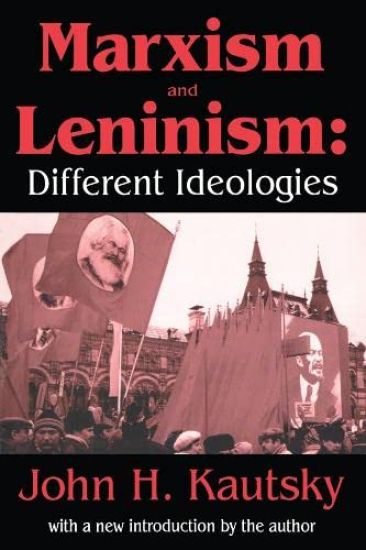
Marxism and Leninism

Marxism and Leninism

John H Kautsky

Greenwood Press
1993
sidottu
This work challenges the view that there is such a thing as Marxism-Leninism, arguing that the two have always been two distinct ideologies, despite the employment of a common vocabulary. Differences in attitudes to labour and revolutionary movements, and other matters, are highlighted.
The Politics of Human Nature

The Politics of Human Nature

John H. Kautsky

Transaction Publishers
1988
nidottu
The effort to understand human nature in a political context is a daunting challenge that has been undertaken in a variety of ways and by a myriad of disciplines through the ages. From Plato to Hobbes and Burke, to Wallas and Oakeschott in our era, efforts have been made to provide some organic framework for the political study of mankind. What has added greatly to the complexity of the task is the increasing denial, even rejection, in the positivist and behaviorist traditions, of the very notion of a human nature.The work can be described as a series of interlocking propositions: the proverbial view of human nature can be explained by evolutionary theory. Biological differences between men and women are responsible for family, community and group life. Social evolution goes through stages which are recapitulated in the moral life of individuals. A well-defined federal system mirrors human development. And finally, for Fleming, most problems in social and political life stem from violations of this federalist system.Fleming's volume takes up a variety of issues: sex and gender differences, democracy and dictatorship, individual and familial patterns of association. He does so in the context of showing how forms of legitimate authority such as families, communities and nations establish such authority by appeals to human nature, and that these appeals, while presumably resting on empirical evidence, also confirm the existence of normative structures. Fleming's work is an effort of synthesis that is sure to arouse discussion and debate. It represents a serious addition to a literature retrieved from the historical dustbins to which it has been repeatedly consigned.