Kirjojen hintavertailu. Mukana 12 578 605 kirjaa ja 12 kauppaa.

Kirjailija

John H Morgan

Kirjat ja teokset yhdessä paikassa: 14 kirjaa, julkaisuja vuosilta 2013-2026, suosituimpien joukossa Mia's Dream. Vertaile teosten hintoja ja tarkista saatavuus suomalaisista kirjakaupoista.

Mukana myös kirjoitusasut: John H. Morgan

14 kirjaa

Kirjojen julkaisuhaarukka 2013-2026.

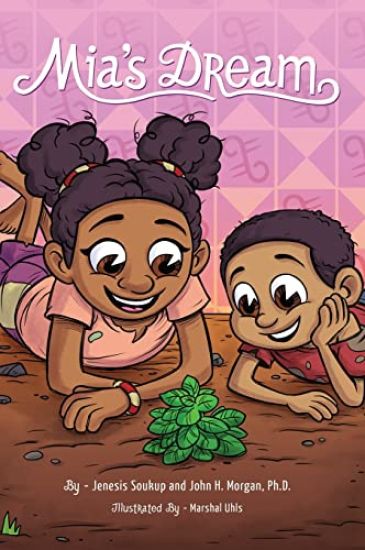
Mia's Dream

Mia's Dream

Jenesis M. Soukup; John H. Morgan

People Prosper International
2018
sidottu
A young girl learns the power of hard work and determination. Mia lives with her grandfather and he has taken ill. Mia must be brave and travel to the clinic for medicine. The clinic is a few days jouney on foot. Luckily, her teacher finds her and offers to come with her. Mia grows in self-confidence as she travels with her teacher. After returning home, Mia is able to help her grandfather get well. Mia's teacher continues to mentor her and help her discover her hidden talents. She begins to understand the underlying principles that can help her defeat the poverty in her own life and others, giving her hope and for the first time a way to dream big.
The Spirit of Creation

The Spirit of Creation

John H Morgan

Equip Press
2025
pokkari
Unlock the Biblical Blueprint for Human FlourishingWhat if the answers to solving poverty, funding your calling, and transforming lives could be found in Scripture?In The Spirit of Creation, Dr. John H. Morgan uncovers three powerful biblical wealth engines designed to bring wholistic sustainability to individuals, communities, and the Global Church. Rooted in timeless truths and proven principles, this book is your guide to understanding God's design for human flourishing and applying it in practical and powerful ways.Learn how to break free from the myths surrounding poverty, prosperity, charity, and wealth creation. Learn the principles of biblical economic empowerment to fund your calling to change lives.With clarity and compassion, The Spirit of Creation equips you to move beyond despair, the overuse of charity, and dependency on it. It teaches the revolutionary power of true empowerment. Discover how to CREATE, OWN, and GROW the value God has created you to create. Discover The Spirit of Creation.
Create Own Grow

Create Own Grow

John H Morgan

People Prosper International
2021
pokkari
This is People Prosper International's PowerBook to help you grow your wealth and change your life. It is the executive summary and training manual for PPI's training in economic empowerment. It will teach you why the Principles of CREATE, OWN, and GROW are so powerful to create the prosperity you need for your life and your purpose. It will teach you 10 Practices to apply each of the Principles. This is also the guide to help those who want to solve poverty and who are open to the truth that charity does not solve poverty, but empowerment does.
The Damaged Self

The Damaged Self

John H Morgan

Wyndham Hall Press
2021
pokkari
The psychopathology of a diminished life producing a mental injury is characterized by the downward spiral in an individual's self-concept (self-image and self-esteem) brought on by a diminished opinion of one's self resulting from negative interpersonal experiences especially from childhood. This approach is based on the work of Harry Stack Sullivan, M.D., and is explored within the context of the traditional orientation of psychoanalysis developed by Sigmund Freud, M.D. A damaged self is evidenced in a variety of personality disorders described in the DSM-5 and is treatable using a variety of psychotherapeutic modalities of intervention which will be explored here. The reconstituting of a healthy self-concept is the assessment and treatment focus employed in the use of both Sullivan's Interpersonal Psychiatry and Freud's Psychodynamic Psychoanalysis. A comprehensive understanding of the concept of the self is integrated into this psychopathological disorder incorporating a range of diagnostic and treatment protocols with special use of Carl Rogers' concept of unconditional positive regard as well as Abraham Maslow's concept of self-actualization. Rogers' extensive development of the theory of the self-concept is complimented with Maslow's development of the self-actualized personality. Both Rogers and Maslow concurred with Sullivan in the conviction that the human psyche has implicit within it the capacity, if nurtured and not stifled, to reach a level of cognitive integration of the personality such that the individual can lead a productive and meaningful life. Alfred Adler's contribution to the discussion of the relationship between negative child-rearing practices and the development of mental disorders in early childhood will be carefully considered in our attempt to understand human nature's drive towards self-actualization in the face of the experience of inferiority. Erik Erikson's concept of personal identify in the maturation of the child is linked to the work of Charles Horton Cooley (the looking-glass self) and George Herbert Mead (the social self) which provides the matrix within which the psychodynamic social interactive development of the self-concept is understood. A significant component of this research will incorporate the pioneering work in child psychotherapy developed by Anna Freud, Karen Horney, and Melanie Klein within the context of classical psychoanalytic theory and constructs.In this study, we will begin with an overview of the concept of self (image and esteem) wherein damage to the individual self-concept presented and manifested as a mental injury in child development is explicated. Then we will summarize each theorist's approach by providing an overview of each theorist's concept of "the self" and suggest ways in which their approach addresses the psychopathological developments occurring in a damaged or diminished self-concept (image and esteem).
The Learning Spectrum in Child Development

The Learning Spectrum in Child Development

John H Morgan

Wyndham Hall Press
2021
pokkari
In its fledgling state of development, this branch of psychology focused almost exclusively upon issues related to the developmental learning in infancy and early childhood. Subsequent development under the leadership of key figures in the field of education such as Marie Montessori, Jean Piaget, and Erik Erikson saw developmental psychology as it came to be called evolve into one of the most active and vital sub-specializations within psychology. Under the leadership of Karen Horney, Melanie Klein, and Anna Freud, psychopathology moved into the field of child development and created a whole new area of specialization in clinical psychotherapy as I have explored in my 2019 book, Child Psychopathology in Clinical Practice. In the following study, we will concentrate our attention upon child development and stay within the confines of developmental psychology as it has come to be known and defined. Though our interest here will be upon the learning spectrum of child development demonstrated in the pioneering work of Montessori, Piaget, and Erikson, we will begin with a general overview and introduction of the broad field of developmental psychology itself before focusing our attention upon the learning spectrum as explored by our three pioneers.
Clinical Psychotherapy

Clinical Psychotherapy

John H Morgan

Wyndham Hall Press
2021
pokkari
Believing that the use of primary sources is the best way of learning the thought system of a great thinker, I have decided to focus upon a single text of each of the psychotherapists considered in this book. Though the entire corpus of their work will be incorporated in this enquiry, our approach will be to critically consider a major text which established each one as a leading theorist in the field of psychotherapy. We will provide a biographical summary of each theorist followed by a textual analysis of a classic work in their repertoire. We will also include a comprehensive bibliography of each theorist relevant to each system of psychotherapy considered here. This work can be criticized for not incorporating all of each theorist's writings but for two reason, that will not be done. First, their literary output makes that impracticable, and, second, a carefully considered treatment of one classic text seems preferable to a cursory glance at their entire literary corpus. Finally, we will consider the fundamentals of their thought in relationship to the practice of psychotherapy. Following the biographical sketch there will be an in-depth consideration of a primary text in the published repertoire of the psychotherapists being considered here. This author is convinced that nothing can substitute for acquaintance with the primary source of a thinker no matter how good the secondary source is for the reading of the original thinker must always trump the reading of one who has thought about the original thinker Then and finally, we will explicate a few key concepts and theories for closer examination.
Beginning With Freud: The Classical Schools of Psychotherapy
Believing that the use of primary sources is the best way of learning the thought system of a great thinker, I have decided to focus upon a single text of each of the eight psychotherapists considered in this book. Though the entire corpus of their work will be incorporated in this enquiry, our approach will be to critically consider a major text which established each one as a leading theorist in the field of psychotherapy. We will provide a biographical summary of each theorist followed by a textual analysis of a classic work in their repertoire. We will also include a comprehensive bibliography of each theorist and a glossary of terms relevant to each system of psychotherapy considered here. This work can be criticized for not incorporating all of each theorist's writings but for two reasons, that will not be done. First, their literary output makes that impracticable, and, second, a carefully considered treatment of one classic text seems preferable to a cursory glance at their entire literary corpus. Finally, we will consider the fundamentals of their thought in relationship to the practice of psychotherapy. Following the biographical sketch there will be an in-depth consideration of a primary text in the published repertoire of the eight psychotherapists being considered here. This author is convinced that nothing can substitute for acquaintance with the primary source of a thinker, no matter how good the secondary source is, for the reading of the original thinker must always trump the reading of one who has thought about the original thinker Then and finally, we will explicate a few key concepts and theories for closer examination.
Beyond Divine Intervention: The Biology of Right and Wrong
In this book, we will consider three schools of thought, namely, ethical theism (which includes Jewish, Christian, and Islamic ethics), ethical humanism, and ethical naturalism. The first school of thought is based upon the Abrahamic faiths of Judaism, Christianity, and Islam. Though all are theocentric, the Christian perspective, it seems, must be distinguished from the high theocentrism of the rabbinic tradition of modern Judaism. Islamic ethics, on the other hand, is so far removed from Judaeo-Christian thought that it seems imperative that we treat this third theocentric ethical system quite separate and distinct. The second school of thought, namely, ethical humanism, is captured in the epic work of Sir Julian Huxley's great classic, Evolutionary Humanism. Finally, the third school of ethical thought, what we have chosen to call ethical naturalism, is fundamentally expressed in the monumental work of Edward O. Wilson, On Human Nature.
Psychology of Religion: A Commentary on the Classic Texts
Dr. Morgan reviews the classic texts on religion. These titles are: James, William (1902) The Varieties of Religious Experience; Leuba, James H. (1915) Psychological Origin and Nature of Religion; Freud, Sigmund (1927) The Future of an Illusion; Jung, Carl (1938) Psychology and Religion; Roberts, David E. (1950) Psychotherapy and A Christian View of Man; Allport, Gordon (1950) The Individual and His Religion; Fromm, Eric (1950) Psychoanalysis and ReligionRank, Otto (1950) Psychology and the Soul; Bakan, David (1958) Sigmund Freud and the Jewish Mystical Tradition; Maslow, Abraham (1964) Religion, Values, and Peak-Experiences