Kirjojen hintavertailu. Mukana 12 595 353 kirjaa ja 12 kauppaa.

Kirjailija

John Handmer

Kirjat ja teokset yhdessä paikassa: 12 kirjaa, julkaisuja vuosilta 1992-2026, suosituimpien joukossa Re-imagining Risk and Disruption. Vertaile teosten hintoja ja tarkista saatavuus suomalaisista kirjakaupoista.

12 kirjaa

Kirjojen julkaisuhaarukka 1992-2026.

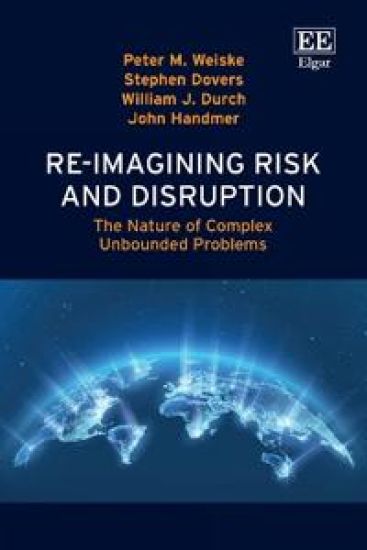
Re-imagining Risk and Disruption

Re-imagining Risk and Disruption

Peter M. Weiske; Stephen Dovers; William J. Durch; John Handmer

EDWARD ELGAR PUBLISHING LTD
2026
sidottu
In a turbulent world, this timely book offers a distinctive exploration of major global challenges. It identifies the shared, underlying attributes of ‘Complex Unbounded Problems’ that make them so challenging and offers insights into how these challenges form – often unnoticed – how they coalesce, cross boundaries, exceed our response capacities and leave a long tail of impacts, exposing unsoundness in both knowledge and policy. With a particular focus on Earth System change, nuclear power and emergencies, pandemic threats and the risk of cascading crises in near-earth space, the book explores future directions for tackling risk and disruption, with emphasis on foresight capacity and a better understanding that, since disaster potentials link up, successful responses must do so as well. Re-imagining Risk and Disruption is an invaluable resource for students and scholars of global environmental change, risk and disasters, security, technological safety and development studies. It will also benefit policymakers and practitioners in NGOs and international organizations working on public health, security, infrastructure and the environment.
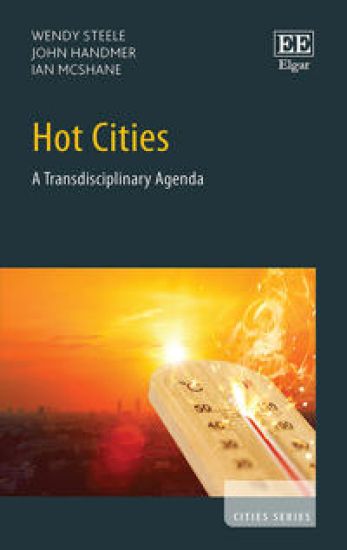
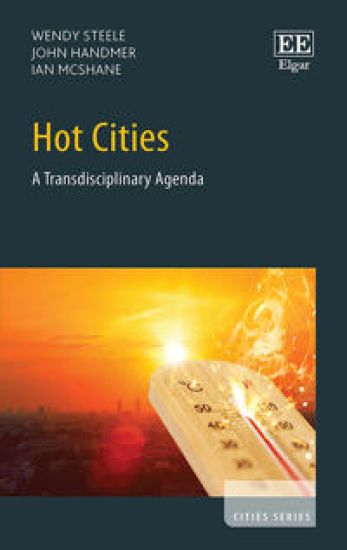
Hot Cities

Hot Cities

Wendy Steele; John Handmer; Ian McShane

EDWARD ELGAR PUBLISHING LTD
2024
nidottu
Shedding light on the future of urban spaces, this path-breaking book is a significant contribution to contemporary climate change scholarship. It synthesizes interdisciplinary research with practical policy, putting an emphasis on positive environmental and socially just outcomes and urban regeneration. Hot Cities offers insights from eminent academics and practitioners, providing both a practical and theoretical outlook on strategy, design and policy development in a climate crisis. Chapters call for urgent responses to the urban heat problem, providing future design projections to illustrate why this is important.Contributing authors include:Cathy Applegate, Xuemei Bai, Christian Barry, David Bowman, David Carlin, Danielle Celermajer, Mark Crosweller, Niki Frantzeskaki, Tony Fry, Isabella Gerometta, Jody Graham, Stephen Healy, Jean Hillier, Simon Kerr, Eric Klinenberg, Jo Lane, Crystal Legacy, Michelle Maloney, Simon Marvin, Darryn McEvoy, Timon McPhearson, Abby Mellick Lopes, Therese Milanovic, Eleni Myrivili, John Nairn, Alan Pears, Sarah Pink, Libby Porter, Stephen Pyne, Lauren Rickards, Kaossara Sani, Wendy Sarkissian, Benedict Sibley, Katie Steele, Will Steffen, Yolande Strengers, Pakamas Thinphanga, Blair Trewin, and Cam Walker.This book will be of interest to scholars, practitioners and policy-makers in human geography, urban planning, climate adaptation, disaster risk reduction, environmental humanities, urban design, education, the creative arts and community development.
Risks and Opportunities

Risks and Opportunities

Valerie Brown; David Ingle Smith; Rob Wiseman; John Handmer

Routledge
2020
nidottu
First published in 1995. Managing today’s rapidly changing environment inevitably involves managing conflicts between the demands of development and conservation; the needs of the present and of the future; and between different community interests, professional positions and political priorities. Risks and Opportunities provides both a guide to managing environmental change, and a training manual to pave the way to successful conflict resolution. It explores the full range of potential conflicts and looks at various methods for their resolution. It covers the who, what, why and when of managing change, and emphasizes the need to develop an active and strategic approach which indemnifies the interests and abilities of all the stakeholders. The book’s detailed case studies provide in-depth material on the conflicting uses of urban, agricultural and natural environments, and the self-teaching guide and exercises will enable individual readers and organizations to acquire the necessary practical and team-building skills.
Risks and Opportunities

Risks and Opportunities

Valerie Brown; David Ingle Smith; Rob Wiseman; John Handmer

Routledge
2019
sidottu
First published in 1995. Managing today’s rapidly changing environment inevitably involves managing conflicts between the demands of development and conservation; the needs of the present and of the future; and between different community interests, professional positions and political priorities. Risks and Opportunities provides both a guide to managing environmental change, and a training manual to pave the way to successful conflict resolution. It explores the full range of potential conflicts and looks at various methods for their resolution. It covers the who, what, why and when of managing change, and emphasizes the need to develop an active and strategic approach which indemnifies the interests and abilities of all the stakeholders. The book’s detailed case studies provide in-depth material on the conflicting uses of urban, agricultural and natural environments, and the self-teaching guide and exercises will enable individual readers and organizations to acquire the necessary practical and team-building skills.
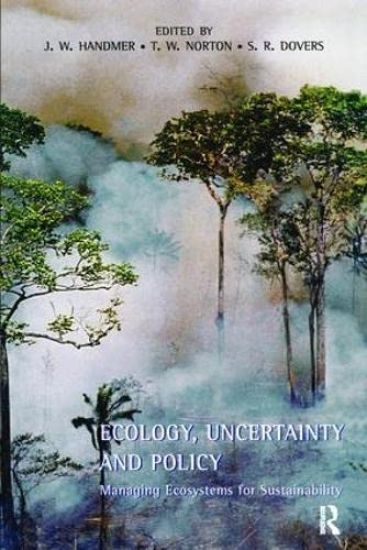
Ecology, Uncertainty and Policy

Ecology, Uncertainty and Policy

John Handmer; Thomas W. Norton; Stephen Dovers

Routledge
2017
sidottu
A broad and comprehensive exploration of the role of the ecological sciences in sustainability for undergraduates.The urgent quest for more sustainable patterns of development has placed new and difficult demands on both scientists and policy makers as they seek to establish more informed and effective policy processes and management regimes in the the face of pervasive uncertainty. Written by an international group of authors from a range of disciplines - ecology, geography, law, policy analysis and others - the chapters explore issues of scientific legitimacy, public participation, non-governmental organisations, inter-sectoral communication and pragmatic public policy across a wide range of ecosystem management contexts.
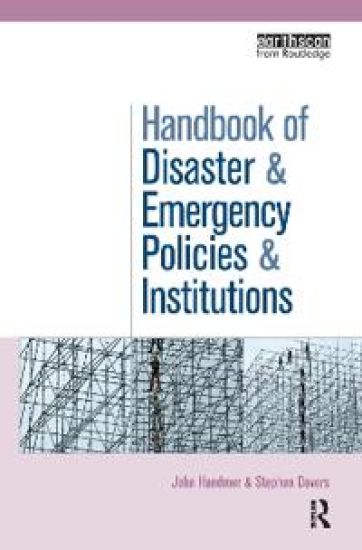
The Handbook of Disaster and Emergency Policies and Institutions
Disasters both natural and human-induced are leading to spiralling costs in terms of human lives, lost livelihoods and damaged assets and businesses. Yet these consequences and the financial and human crises that follow catastrophes can often be traced to policies unsuited to the emerging scales of the problems they confront, and the lack of institutional capacity to implement planning and prevention or to manage disasters. This book seeks to overcome this mismatch and to guide development of a policy and institutional framework. For the first time it brings together into a coherent framework the insights of public policy, institutional design and emergency and disaster management.
Hazard Management and Emergency Planning

Hazard Management and Emergency Planning

Dennis Parker; John Handmer

Routledge
2016
nidottu
This book assesses critically the British approach to hazard management and emergency planning. It identifies the principal legal, organizational and cultural impediments to more effective hazard management and emergency planning, postulates explanations for the shortcomings in the British approach and examines a number of promising avenues for improving current practice. It comprises 18 chapters written by experts with a wide range of practical experience in the many different aspects of the field. Many of the authors introduce international perspectives and comparisons. From it all, the editors conclude, sadly: 'The overall hazard and emergency management approach currently adopted in Britain appears to be inadequate and current standards of protection appear to be inefficient for the 1990s and beyond'
Handbook of Disaster Policies and Institutions

Handbook of Disaster Policies and Institutions

John Handmer; Stephen Dovers

Earthscan Ltd
2013
sidottu
Disasters both natural and human-induced are leading to spiralling costs in terms of human lives, lost livelihoods and damaged assets and businesses. Yet these consequences and the financial and human crises that follow catastrophes can often be traced to policies unsuited to the emerging scales of the problems they confront, and the lack of institutional capacity to implement planning and prevention or to manage disasters. This book seeks to overcome this mismatch and to guide development of a more strategic policy and institutional framework. This updated and revised second edition includes new coverage of climate change adaptation, which has rapidly become central to disaster and emergency planning and management. This is an essential handbook for practitioners across the world seeking to improve the quality, robustness and capacity of their disaster management mechanisms.
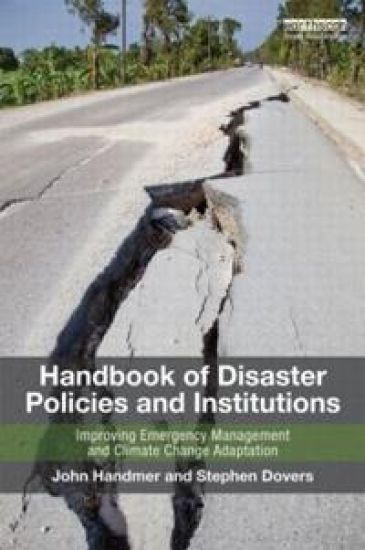
Handbook of Disaster Policies and Institutions

Handbook of Disaster Policies and Institutions

John Handmer; Stephen Dovers

Earthscan Ltd
2013
nidottu
Disasters both natural and human-induced are leading to spiralling costs in terms of human lives, lost livelihoods and damaged assets and businesses. Yet these consequences and the financial and human crises that follow catastrophes can often be traced to policies unsuited to the emerging scales of the problems they confront, and the lack of institutional capacity to implement planning and prevention or to manage disasters. This book seeks to overcome this mismatch and to guide development of a more strategic policy and institutional framework. This updated and revised second edition includes new coverage of climate change adaptation, which has rapidly become central to disaster and emergency planning and management. This is an essential handbook for practitioners across the world seeking to improve the quality, robustness and capacity of their disaster management mechanisms.
The Handbook of Disaster and Emergency Policies and Institutions
Disasters both natural and human-induced are leading to spiralling costs in terms of human lives, lost livelihoods and damaged assets and businesses. Yet these consequences and the financial and human crises that follow catastrophes can often be traced to policies unsuited to the emerging scales of the problems they confront, and the lack of institutional capacity to implement planning and prevention or to manage disasters. This book seeks to overcome this mismatch and to guide development of a policy and institutional framework. For the first time it brings together into a coherent framework the insights of public policy, institutional design and emergency and disaster management.
Hazard Management and Emergency Planning

Hazard Management and Emergency Planning

Dennis Parker; John Handmer

Earthscan Ltd
1992
sidottu
This book assesses critically the British approach to hazard management and emergency planning. It identifies the principal legal, organizational and cultural impediments to more effective hazard management and emergency planning, postulates explanations for the shortcomings in the British approach and examines a number of promising avenues for improving current practice. It comprises 18 chapters written by experts with a wide range of practical experience in the many different aspects of the field. Many of the authors introduce international perspectives and comparisons. From it all, the editors conclude, sadly: 'The overall hazard and emergency management approach currently adopted in Britain appears to be inadequate and current standards of protection appear to be inefficient for the 1990s and beyond'