Kirjojen hintavertailu. Mukana 12 595 353 kirjaa ja 12 kauppaa.

Kirjailija

John Hassard

Kirjat ja teokset yhdessä paikassa: 21 kirjaa, julkaisuja vuosilta 1995-2024, suosituimpien joukossa Managing Modern Healthcare. Vertaile teosten hintoja ja tarkista saatavuus suomalaisista kirjakaupoista.

21 kirjaa

Kirjojen julkaisuhaarukka 1995-2024.

Managing Modern Healthcare

Managing Modern Healthcare

Mike Bresnen; Damian Hodgson; Simon Bailey; Paula Hyde; John Hassard

Routledge
2018
nidottu
Until now, research has given us only a limited understanding of how managers actually make sense of and apply management knowledge; how networks of interaction amongst managers help or hinder processes of knowledge diffusion and the sharing of best practice; and how these processes are all influenced both by the organisations in which managers act and by the professional communities of practice they belong to. Managing Modern Healthcare fills these important gaps in our understanding by drawing upon an in-depth study of management networks and practice in three healthcare organisations in the UK. It draws from the primary research a number of important and grounded lessons about how management networks develop and influence the spread of management knowledge and practice; how management training and development relates to the needs of managers facing challenging conditions; and how those conditions are themselves shaping the nature of management in healthcare.This book reveals how managers in practice are responding to the many contemporary challenges facing healthcare (and the NHS in particular) and how they are able or not to effectively exploit sources of knowledge, learning and best practice through the networks of practice they engage in to improve healthcare delivery and healthcare organisational performance. Managing Modern Healthcare makes a number of important theoretical contributions as well as practical recommendations. The theoretical and empirical contributions the book makes relate to wider work on networks and networking, management knowledge, situated learning/communities of practice, professionalization/professional identity and healthcare management more generally. The practical contribution comes in the form of recommendations for healthcare management practitioners and policy makers that are intended to impact upon and help enhance healthcare management delivery and performance.
Managing Modern Healthcare

Managing Modern Healthcare

Mike Bresnen; Damian Hodgson; Simon Bailey; Paula Hyde; John Hassard

Routledge
2017
sidottu
Until now, research has given us only a limited understanding of how managers actually make sense of and apply management knowledge; how networks of interaction amongst managers help or hinder processes of knowledge diffusion and the sharing of best practice; and how these processes are all influenced both by the organisations in which managers act and by the professional communities of practice they belong to. Managing Modern Healthcare fills these important gaps in our understanding by drawing upon an in-depth study of management networks and practice in three healthcare organisations in the UK. It draws from the primary research a number of important and grounded lessons about how management networks develop and influence the spread of management knowledge and practice; how management training and development relates to the needs of managers facing challenging conditions; and how those conditions are themselves shaping the nature of management in healthcare.This book reveals how managers in practice are responding to the many contemporary challenges facing healthcare (and the NHS in particular) and how they are able or not to effectively exploit sources of knowledge, learning and best practice through the networks of practice they engage in to improve healthcare delivery and healthcare organisational performance. Managing Modern Healthcare makes a number of important theoretical contributions as well as practical recommendations. The theoretical and empirical contributions the book makes relate to wider work on networks and networking, management knowledge, situated learning/communities of practice, professionalization/professional identity and healthcare management more generally. The practical contribution comes in the form of recommendations for healthcare management practitioners and policy makers that are intended to impact upon and help enhance healthcare management delivery and performance.
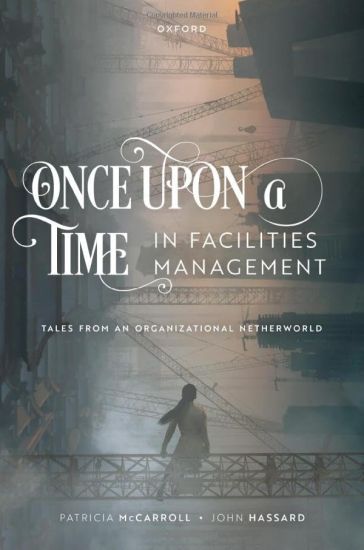
Once Upon a Time in Facilities Management

Once Upon a Time in Facilities Management

Patricia McCarroll; John Hassard

Oxford University Press
2024
sidottu
What would the world of work look like if interpreted through the lens of the fairytale? To answer this question Once Upon a Time in Facilities Management explores storied spaces and metaphorical archetypes in the study of business, management, and organization. At its core, the authors offer a diagnostic approach for the study of work organization that links management theory, storytelling, and the business imaginary. An important empirical focus is also included that explores a business service rarely studied in the management literature: Facilities Management (FM), a 'secondary service' of non-core and increasingly outsourced organizational functions. An in-depth appreciation of FM is provided that assesses the people, practices, and processes of the service in a study that also highlights the characteristic liminality of the sector's professional activities. Emphasis is placed on illuminating the storytelling nature of the service, using primarily the genre of fairytales to identify representational archetypes (including queen, shadow, sage, trickster, adventurer, and eternal child) within FM's storied space. In the process, three central characters (essentially modes of FM delivery) are identified - the professional consultant, the external service provider, and the in-house function - with these forming the structural basis of fairytales explaining the culture and symbolism of FM as a business service. The authors conclude by extrapolating findings from the study to inform a discussion of the contributions of folkloric analysis to organization theory explicitly and our understanding of business and management practice more widely.
Time, Work and Organization

Time, Work and Organization

Paul Blyton; John Hassard; Stephen Hill; Kenneth Starkey

Routledge
2018
nidottu
In this book, first published in 1989, the authors have sought to highlight some of the major themes in the study of time and work within separate but related fields of study. A number of common starting points and issues are examined, alongside the various conclusions which different researchers have drawn together. Working together, the four authors have enriched their individual understanding of worktime through exposure to approaches taken by others working within different discipline boundaries. This title will be of interest to students of business studies.
Inside the Compassionate Organization

Inside the Compassionate Organization

Alan Baron; John Hassard; Fiona Cheetham; Sudi Sharifi

Oxford University Press
2018
sidottu
The literature on management and organization studies suggests the time is right for a focus on 'care and compassion'. The aim of this book is to answer this call by examining the cultural changes found within a particular 'compassionate organization' - an English hospice - from its altruistic beginnings to the more professionalized culture of today. The study seeks to understand how its members identify or fail to identify with an organization where issues of life and death take centre stage and explores some of the problems the hospice faces regarding its representation in society. These strands are then drawn together to consider the interrelationships between culture, identity, and image in the organization. An ethnographic approach, including participant observation, extended interviews, and group meetings, was used to study this organization over a period of almost two years. This enabled the production of a nuanced, sensitive, and holistic interpretation of the case study hospice as inferred from the views of both insiders and outsiders. The findings shed new light on the literature in management studies by proposing a view of culture as a sense-making context that facilitates group socialization underpinning a sense of personal and organizational identity. The study suggests a link between culture and group identification, making discussions about culture almost inseparable from those around identity. With regard to identity and image however the study suggests a dynamic and iterative relationship with a continuous flow between interpretation and reinterpretation influenced by the all-pervading cultural context.
A New History of Management

A New History of Management

Stephen Cummings; Todd Bridgman; John Hassard; Michael Rowlinson

Cambridge University Press
2017
sidottu
Existing narratives about how we should organize are built upon, and reinforce, a concept of 'good management' derived from what is assumed to be a fundamental need to increase efficiency. But this assumption is based on a presentist, monocultural, and generally limited view of management's past. A New History of Management disputes these foundations. By reassessing conventional perspectives on past management theories and providing a new critical outline of present-day management, it highlights alternative conceptions of 'good management' focused on ethical aims, sustainability, and alternative views of good practice. From this new historical perspective, existing assumptions can be countered and simplistic views disputed, offering a platform from which graduate students, researchers, and reflective practitioners can develop alternative approaches for managing and organizing in the twenty-first century.
A New History of Management

A New History of Management

Stephen Cummings; Bridgman Todd; John Hassard; Rowlinson Michael

Cambridge University Press
2017
pokkari
Existing narratives about how we should organize are built upon, and reinforce, a concept of 'good management' derived from what is assumed to be a fundamental need to increase efficiency. But this assumption is based on a presentist, monocultural, and generally limited view of management's past. A New History of Management disputes these foundations. By reassessing conventional perspectives on past management theories and providing a new critical outline of present-day management, it highlights alternative conceptions of 'good management' focused on ethical aims, sustainability, and alternative views of good practice. From this new historical perspective, existing assumptions can be countered and simplistic views disputed, offering a platform from which graduate students, researchers, and reflective practitioners can develop alternative approaches for managing and organizing in the twenty-first century.
Time, Work and Organization

Time, Work and Organization

Paul Blyton; John Hassard; Stephen Hill; Kenneth Starkey

Routledge
2017
sidottu
In this book, first published in 1989, the authors have sought to highlight some of the major themes in the study of time and work within separate but related fields of study. A number of common starting points and issues are examined, alongside the various conclusions which different researchers have drawn together. Working together, the four authors have enriched their individual understanding of worktime through exposure to approaches taken by others working within different discipline boundaries. This title will be of interest to students of business studies.
Critical Leadership

Critical Leadership

Paul Evans; John Hassard; Paula Hyde

Routledge
2017
nidottu
Critical approaches to leadership studies have sought to challenge the normative position of leadership as residing solely within the formal leader and have gone as far as to undermine the traditionally held assumption of leadership as a "real" phenomenon. The book offers a critical account of the nature of leadership and management in modern organizations. Specifically it examines the forces that affect the influence relationships between leaders and followers in public sector organizational settings and thus, how these relationships inform social influence processes. Although the book focuses on the case of a public sector organization in the UK, the findings are placed in the context of both leadership theory and research across the globe and the dissemination of 'new public management' worldwide.By acknowledging the criticisms concerning the weaknesses of conventional or mainstream leadership study and through the adoption of a critical perspective, Critical Leadership provides a deep and rich interpretation of the empirical material on leadership, thus making an outstanding contribution to the current literature.
Deconstructing the Welfare State

Deconstructing the Welfare State

Paula Hyde; Edward Granter; John Hassard; Leo McCann

Routledge
2016
sidottu
Who are NHS middle managers? What do they do, and why and how do they do it’? This book explores the daily realities of working life for middle managers in the UK’s National Health Service during a time of radical change and disruption to the entire edifice of publicly-funded healthcare. It is an empirical critique of the movement towards a healthcare model based around HMO-type providers such as Kaiser Permanente and United Health. Although this model is well-known internationally, many believe it to be financially and ethically questionable, and often far from 'best practice' when it comes to patient care.Drawing on immersive ethnographic research based on four case studies – an Acute Hospital Trust, an Ambulance Trust, a Mental Health Trust, and a Primary Care Trust – this book provides an in-depth critical appraisal of the everyday experiences of a range of managers working in the NHS. It describes exactly what NHS managers do and explains how their roles are changing and the types of challenges they face. The analysis explains how many NHS junior and middle managers are themselves clinicians to some extent, with hybrid roles as simultaneously nurse and manager, midwife and manager, or paramedic and manager. While commonly working in ‘back office’ functions, NHS middle managers are also just as likely to be working very close to or actually on the front lines of patient care. Despite the problems they regularly face from organizational restructuring, cost control and demands for accountability, the authors demonstrate that NHS managers – in their various guises – play critical, yet undervalued, institutional roles.Depicting the darker sides of organizational change, this text is a sociological exploration of the daily struggle for work dignity of a complex, widely denigrated, and largely misunderstood group of public servants trying to do their best under extremely trying circumstances. It is essential reading for academics, students, and practitioners interested in health management and policy, organisational change, public sector management, and the NHS more broadly.
Deconstructing the Welfare State

Deconstructing the Welfare State

Paula Hyde; Edward Granter; John Hassard; Leo McCann

Routledge
2016
nidottu
Who are NHS middle managers? What do they do, and why and how do they do it’? This book explores the daily realities of working life for middle managers in the UK’s National Health Service during a time of radical change and disruption to the entire edifice of publicly-funded healthcare. It is an empirical critique of the movement towards a healthcare model based around HMO-type providers such as Kaiser Permanente and United Health. Although this model is well-known internationally, many believe it to be financially and ethically questionable, and often far from 'best practice' when it comes to patient care.Drawing on immersive ethnographic research based on four case studies – an Acute Hospital Trust, an Ambulance Trust, a Mental Health Trust, and a Primary Care Trust – this book provides an in-depth critical appraisal of the everyday experiences of a range of managers working in the NHS. It describes exactly what NHS managers do and explains how their roles are changing and the types of challenges they face. The analysis explains how many NHS junior and middle managers are themselves clinicians to some extent, with hybrid roles as simultaneously nurse and manager, midwife and manager, or paramedic and manager. While commonly working in ‘back office’ functions, NHS middle managers are also just as likely to be working very close to or actually on the front lines of patient care. Despite the problems they regularly face from organizational restructuring, cost control and demands for accountability, the authors demonstrate that NHS managers – in their various guises – play critical, yet undervalued, institutional roles.Depicting the darker sides of organizational change, this text is a sociological exploration of the daily struggle for work dignity of a complex, widely denigrated, and largely misunderstood group of public servants trying to do their best under extremely trying circumstances. It is essential reading for academics, students, and practitioners interested in health management and policy, organisational change, public sector management, and the NHS more broadly.
Critical Leadership

Critical Leadership

Paul Evans; John Hassard; Paula Hyde

Routledge
2013
sidottu
Critical approaches to leadership studies have sought to challenge the normative position of leadership as residing solely within the formal leader and have gone as far as to undermine the traditionally held assumption of leadership as a "real" phenomenon. The book offers a critical account of the nature of leadership and management in modern organizations. Specifically it examines the forces that affect the influence relationships between leaders and followers in public sector organizational settings and thus, how these relationships inform social influence processes. Although the book focuses on the case of a public sector organization in the UK, the findings are placed in the context of both leadership theory and research across the globe and the dissemination of 'new public management' worldwide.By acknowledging the criticisms concerning the weaknesses of conventional or mainstream leadership study and through the adoption of a critical perspective, Critical Leadership provides a deep and rich interpretation of the empirical material on leadership, thus making an outstanding contribution to the current literature.
Managing in the Modern Corporation

Managing in the Modern Corporation

John Hassard; Leo McCann; Jonathan Morris

Cambridge University Press
2011
pokkari
In recent years, widespread organisational change in large corporations has almost invariably led to work intensification and increased stress for managers. Managing in the Modern Corporation explains how and why large companies have changed their organisational structures and philosophies, focusing in particular on how these changes affect the careers of middle managers. Based on in-depth interviews with over two hundred middle and senior managers working in large corporations in the USA, UK and Japan, it shows how the working lives of managers have been subjected to major disruption, involving work intensification and reduced opportunities for career progression. Furthermore, it argues that such widespread overwork and poor treatment of highly skilled and highly motivated staff has created a major international problem that must be addressed. The book presents a range of solutions to this important problem, suggesting that there are possibilities for saner, less brutal organisational environments.
China's State Enterprise Reform

China's State Enterprise Reform

John Hassard; Jackie Sheehan; Meixiang Zhou; Jane Terpstra-Tong; Jonathan Morris

Routledge
2010
nidottu
Based on extensive original research, this book provides a comprehensive overview of the current status of state enterprise reform in China. Chinese State Enterprise Reform considers the relationship between public ownership and public enterprises, and the historical evolution of China's economic reform programme since 1978, including assessments of the Contrast Responsiblity System, which operated from the early 1980s to the early 1990s, and the Group Company Experiments, which began in the 1990s. It discusses the relations between workers, managers, and the state in post-Dengist China, the implications of the reform programme for human resources management in state enterprises, the nature of labour representation, and organization under tate capitalism and the problems of surplus labour and reemployment.
Managing in the Modern Corporation

Managing in the Modern Corporation

John Hassard; Leo McCann; Jonathan Morris

Cambridge University Press
2009
sidottu
In recent years, widespread organisational change in large corporations has almost invariably led to work intensification and increased stress for managers. Managing in the Modern Corporation explains how and why large companies have changed their organisational structures and philosophies, focusing in particular on how these changes affect the careers of middle managers. Based on in-depth interviews with over two hundred middle and senior managers working in large corporations in the USA, UK and Japan, it shows how the working lives of managers have been subjected to major disruption, involving work intensification and reduced opportunities for career progression. Furthermore, it argues that such widespread overwork and poor treatment of highly skilled and highly motivated staff has created a major international problem that must be addressed. The book presents a range of solutions to this important problem, suggesting that there are possibilities for saner, less brutal organisational environments.
Disorganization Theory

Disorganization Theory

John Hassard; Mihaela Kelemen; Julie Wolfram Cox

Routledge
2007
sidottu
Organizational analysis has moved in a number of directions since its origins in mainstream theories of positivism and functionalism. This challenging book sets out an alternative agenda for the field, discussing existing critical discourses, whilst exploring a selection of emerging ideas and arguments. Addressing a series of key epistemological, conceptual and methodological issues, Disorganization Theory is designed to encourage reflexive thinking on the part of the reader. Influenced by critical philosophies of deconstruction and discourse, the book not only offers insight into established debates surrounding, for example, postmodernism and actor-network theory, but also brings forth new insights in the field: mimesis, consumption, retrospection, decoration, governmentality, and fluidity theories are all discussed.Written by an international team of leading organizational theorists, this book is an important and contentious addition to the literature. It is an ideal companion for students and researchers working in the fields of advanced organization and management theory, and critical management studies.
Disorganization Theory

Disorganization Theory

John Hassard; Mihaela Kelemen; Julie Wolfram Cox

Routledge
2007
nidottu
Organizational analysis has moved in a number of directions since its origins in mainstream theories of positivism and functionalism. This challenging book sets out an alternative agenda for the field, discussing existing critical discourses, whilst exploring a selection of emerging ideas and arguments. Addressing a series of key epistemological, conceptual and methodological issues, Disorganization Theory is designed to encourage reflexive thinking on the part of the reader. Influenced by critical philosophies of deconstruction and discourse, the book not only offers insight into established debates surrounding, for example, postmodernism and actor-network theory, but also brings forth new insights in the field: mimesis, consumption, retrospection, decoration, governmentality, and fluidity theories are all discussed.Written by an international team of leading organizational theorists, this book is an important and contentious addition to the literature. It is an ideal companion for students and researchers working in the fields of advanced organization and management theory, and critical management studies.
China's State Enterprise Reform

China's State Enterprise Reform

John Hassard; Jackie Sheehan; Meixiang Zhou; Jane Terpstra-Tong; Jonathan Morris

Routledge
2007
sidottu
Based on extensive original research, this book provides a comprehensive overview of the current status of state enterprise reform in China. Chinese State Enterprise Reform considers the relationship between public ownership and public enterprises, and the historical evolution of China's economic reform programme since 1978, including assessments of the Contrast Responsiblity System, which operated from the early 1980s to the early 1990s, and the Group Company Experiments, which began in the 1990s. It discusses the relations between workers, managers, and the state in post-Dengist China, the implications of the reform programme for human resources management in state enterprises, the nature of labour representation, and organization under tate capitalism and the problems of surplus labour and reemployment.
Actor Network Theory and After

Actor Network Theory and After

John Law; John Hassard

Blackwell Publishers
1999
nidottu
Actor network theory is a powerful approach which combines the insights of post–structuralism with an analysis of the materials of social life. This controversial and path–breaking volume extends ANT beyond studies of technology, power and organisation to the body, subjectivity, politics, and cultural difference, and puts it into cutting–edge dialogue with feminism, anthropology, psychology and economics.