

Kirjailija
John Heywood
Kirjat ja teokset yhdessä paikassa: 51 kirjaa, julkaisuja vuosilta 2005-2025, suosituimpien joukossa The Dramatic Writings Of John Heywood. Vertaile teosten hintoja ja tarkista saatavuus suomalaisista kirjakaupoista.
51 kirjaa
Kirjojen julkaisuhaarukka 2005-2025.
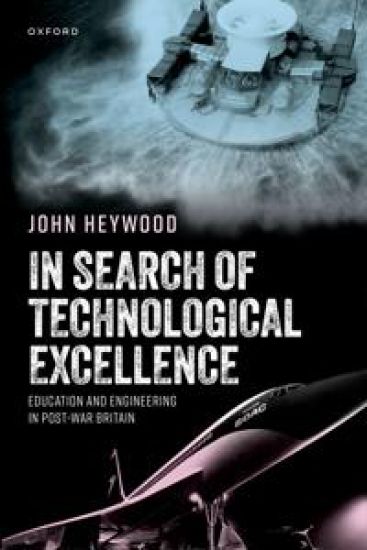
The notion that Britain was losing its international industrial competitiveness has preoccupied governments since the Second World War. Policymakers have sought to address this over the years, and yet Britain's relative industrial decline has appeared to continue, raising questions about its root causes. In Search of Technological Excellence analyses the policymaking and policy implementation in the education of engineers and technologists from the 1945 report of the Percy Committee on Higher Technological Education to the conclusion of the Thatcher government's Enterprise in Higher Education Initiative. Using a plethora of previously unpublished sources, this book focuses on the untold story of what the reports of the three key committees in this fifty-year period - Percy (1945), Fielden (1963) and Finniston (1980) - actually achieved in secondary and higher technological education. The core themes of this volume include industrial training and its assessment, the controversy over the structure of industrial sandwich courses, the perceived requirements for qualified specialists (the 'manpower' controversy), curriculum development, creativity and innovation in engineering, engineers as managers, and engineering in schools. Thought-provoking and comprehensive, In Search of Technological Excellence reflects on perennial problems to help clarify how this history can inform policymaking today and will be of interest to policymakers, practitioners and students in engineering education and public administration.
![The Play Of The Weather. An Unrecorded Ed. [1906]](/covers/9781024476477.jpg)
![The Play Of The Weather. An Unrecorded Ed. [1906]](/covers/9781024473056.jpg)
This volume presents two significant dramatic works by John Heywood: "The Pardoner and the Friar" and "The Four P. P." Written in the early to mid-16th century, these plays offer a fascinating glimpse into the religious and social tensions of the time. "The Pardoner and the Friar" features a lively debate between representatives of the church, reflecting the era's growing skepticism toward religious authority. "The Four P. P." is a comedic interlude involving a Palmer, a Pardoner, a Pothecary, and a Pedlar, each vying to prove their superior skills and virtues. Heywood's sharp wit and keen observations make these plays enduring examples of early English drama, showcasing the transition from medieval morality plays to the more sophisticated comedies of the Elizabethan stage. These works remain valuable resources for students and scholars of English literature, offering insight into the cultural and religious landscape of Tudor England. This work has been selected by scholars as being culturally important, and is part of the knowledge base of civilization as we know it. This work was reproduced from the original artifact, and remains as true to the original work as possible. Therefore, you will see the original copyright references, library stamps (as most of these works have been housed in our most important libraries around the world), and other notations in the work. This work is in the public domain in the United States of America, and possibly other nations. Within the United States, you may freely copy and distribute this work, as no entity (individual or corporate) has a copyright on the body of the work. As a reproduction of a historical artifact, this work may contain missing or blurred pages, poor pictures, errant marks, etc. Scholars believe, and we concur, that this work is important enough to be preserved, reproduced, and made generally available to the public. We appreciate your support of the preservation process, and thank you for being an important part of keeping this knowledge alive and relevant.

Heywood, J: Proverbs and Epigrams of John Heywood (A. D. 156
John Heywood
Antigonos Verlag
2025
nidottu


Designing Engineering and Technology Curricula
John Heywood
Springer International Publishing AG
2022
nidottu
The intention of this book is to demonstrate that curriculum design is a profoundly philosophical exercise that stems from perceptions of the mission of higher education. Since the curriculum is the formal mechanism through which intended aims are achieved, philosophy has a profound role to play in the determination of aims. It is argued that the curriculum is far more than a list of subjects and syllabi, or that it is the addition, and subtraction, of items from a syllabus, or whether this subject should be added and that subject taken away. This book explores how curricular aims and objectives are developed by re-examining the curriculum of higher education and how it is structured in the light of its increasing costs, rapidly changing technology, and the utilitarian philosophy that currently governs the direction of higher education. It is concluded that higher education should be a preparation for and continuing support for life and work, a consequence of which is that it has to equip graduates with skill in independent learning (and its planning), and reflective practice. A transdisciplinary curriculum with technology at its core is deduced that serves the four realities of the person, the job, technology, and society.
Philosophy and Engineering Education
John Heywood; William Grimson; Jerry W. Gravander; Gregory Bassett; Jr. Kruczak
Springer International Publishing AG
2022
nidottu
All educators bring to their work preconceived ideas of what the curriculum should be and how students learn. Seldom are they thought through. Since without an adequate philosophical base it is difficult to bring about desirable changes in policy and practice, it is necessary that educators have defensible philosophies of engineering education. This point is illustrated by recent debates on educational outcomes which can be analysed in terms of competing curriculum ideologies. While these ideologies inform the development of a philosophy of engineering education they do so in light of a philosophy of engineering for such a philosophy focuses on what engineering is, and in particular how it differs from science. This is addressed in this study through consideration of the differences in the modes of abstraction required for the pursuit of science on the one hand, and the pursuit of engineering design, on the other hand. It is shown that a philosophy of engineering is not a philosophy ofscience or a philosophy of engineering education, but it is from a philosophy of engineering that a philosophy of engineering education is drawn. Uncertainty is shown to be a key characteristic of engineering practice. A way of formulating a philosophy of engineering is to consider it through the classical prism that splits the subject into five divisions, namely epistemology, metaphysics, logic, ethics aesthetics. Additionally, "behaviour" also characterizes the practice of engineering.
The Proverbs and Epigrams of John Heywood (A. D. 1562)
John Heywood
Salzwasser-Verlag GmbH
2021
sidottu
Reprint of the original, first published in 1867.
The Proverbs and Epigrams of John Heywood (A. D. 1562)
John Heywood
Salzwasser-Verlag GmbH
2021
pokkari
Reprint of the original, first published in 1867.
Published in 1987: The Play of the Wether is an English interlude or morality play from the early Tudor period. represents the Roman deity Jupiter on earth asking mortals to make cases for their preferred weather following heavenly dissension among the gods. It is the first published play to nominate "The Vice" on its title page.
Published in 1987: The Play of the Wether is an English interlude or morality play from the early Tudor period. represents the Roman deity Jupiter on earth asking mortals to make cases for their preferred weather following heavenly dissension among the gods. It is the first published play to nominate "The Vice" on its title page.
Publisher's Note: Products purchased from Third Party sellers are not guaranteed by the publisher for quality, authenticity, or access to any online entitlements included with the product.The long-awaited revision of the most respected resource on Internal Combustion Engines --covering the basics through advanced operation of spark-ignition and diesel engines.Written by one of the most recognized and highly regarded names in internal combustion engines this trusted educational resource and professional reference covers the key physical and chemical processes that govern internal combustion engine operation and design. Internal Combustion Engine Fundamentals, Second Edition, has been thoroughly revised to cover recent advances, including performance enhancement, efficiency improvements, and emission reduction technologies. Highly illustrated and cross referenced, the book includes discussions of these engines’ environmental impacts and requirements. You will get complete explanations of spark-ignition and compression-ignition (diesel) engine operating characteristics as well as of engine flow and combustion phenomena and fuel requirements. Coverage includes:• Engine types and their operation• Engine design and operating parameters• Thermochemistry of fuel-air mixtures• Properties of working fluids• Ideal models of engine cycles• Gas exchange processes• Mixture preparation in spark-ignition engines• Charge motion within the cylinder• Combustion in spark-ignition engines• Combustion in compression-ignition engines• Pollutant formation and control• Engine heat transfer• Engine friction and lubrication• Modeling real engine flow and combustion processes• Engine operating characteristics
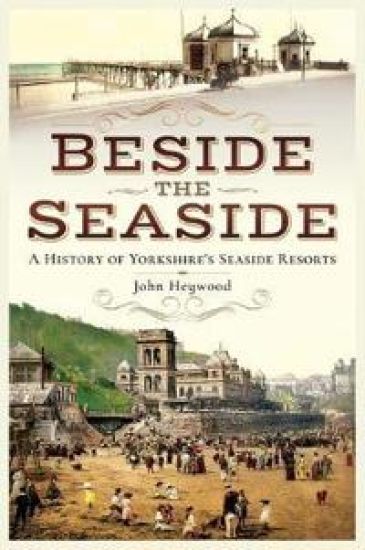
Almost all of us have happy memories of excursions and holidays spent beside the sea. For many, these will have included the Yorkshire coast which runs unbroken for more than one hundred miles between the two great rivers, the Tees and the Humber. Within those boundaries are the popular seaside resorts of Whitby, Scarborough, Filey and Bridlington as well as numerous smaller and quieter but equally well-loved destinations. How did the love affair with the area start and how did it develop? Over the years, all the ingredients for the perfect holiday are there - the spas, the sea and sun bathing, board and lodgings, entertainment and just as importantly, the journeys there and back. Beside the Seaside takes a detailed but entertaining look back at the history of these resorts over the last four hundred years and asks, what does the future hold? Packed with information, this book is fully illustrated with photographs, old and new, together with paintings and etchings. Coupled with the thoughts and memories of tourists and travellers from the 17th century through to the present time, it gives a fascinating insight into how our ancestors would have spent their time at the coast. Evocative and intriguing, absorbing and surprising, John Heywood s book will appeal both to those familiar with the area and to others who just enjoy being Beside the Seaside .
Empowering Professional Teaching in Engineering
John Heywood
Springer International Publishing AG
2018
nidottu
Each one of us has views about education, how discipline should function, how individuals learn, how they should be motivated, what intelligence is, and the structures (content and subjects) of the curriculum. Perhaps the most important beliefs that (beginning) teachers bring with them are their notions about what constitutes "good teaching". The scholarship of teaching requires that (beginning) teachers should examine (evaluate) these views in the light of knowledge currently available about the curriculum and instruction, and decide their future actions on the basis of that analysis. Such evaluations are best undertaken when classrooms are treated as laboratories of inquiry (research) where teachers establish what works best for them. Two instructor centred and two learner centred philosophies of knowledge, curriculum and instruction are used to discern the fundamental (basic) questions that engineering educators should answer in respect of their own beliefs and practice. They point to a series of classroom activities that will enable them to challenge their own beliefs, and at the same time affirm, develop, or change their philosophies of knowledge, curriculum and instruction.