Kirjojen hintavertailu. Mukana 12 390 323 kirjaa ja 12 kauppaa.
Kirjailija
John Hope Franklin
Kirjat ja teokset yhdessä paikassa: 21 kirjaa, julkaisuja vuosilta 1960-2026, suosituimpien joukossa The Diary of James T. Ayers: Civil War Recruiter. Vertaile teosten hintoja ja tarkista saatavuus suomalaisista kirjakaupoista.
Nobel Peace Prize winner Ralph Johnson Bunche (1904-71) was one of the twentieth century’s foremost diplomats and intellectuals. In the wake of centennial celebrations of his birth, leading scholars and diplomats assess Bunche’s historical importance and enduring impact on higher education, public policy, and international politics. Their essays reveal not only the breadth of Bunche’s influence, such as his United Nations work to broker peace during times of civil war in Africa, the Middle East, and Asia, but also the depth of his intellectual perspectives on race, civil rights, higher education, and international law. Probing his publications, speeches, and public policy initiatives, the volume offers telling insights into the critical roles of universities, public intellectuals, and diplomats in working together to find solutions to domestic and international problems through public and scholarly engagement. In this way, the volume highlights the very connections that Bunche exhibited as an academic, intellectual, and diplomat.Contributors include Lorenzo DuBois Baber, John Hope Franklin, Jonathan Scott Holloway, Charles P. Henry, Ben Keppel, Beverly Lindsay, Princeton Lyman, Edwin Smith, and Hanes Walton Jr.
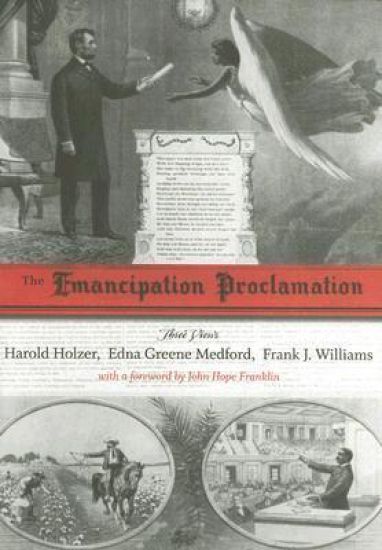
The Emancipation Proclamation is the most important document of arguably the greatest president in U.S. history. Now, Edna Greene Medford, Frank J. Williams, and Harold Holzer -- eminent experts in their fields -- remember, analyse, and interpret the Emancipation Proclamation in three distinct respects: the influence of and impact upon African Americans; the legal, political, and military exigencies; and the role pictorial images played in establishing the document in public memory. The result is a carefully balanced yet provocative study that views the proclamation and its author from the perspective of fellow Republicans, antiwar Democrats, the press, the military, the enslaved, free blacks, and the antislavery white establishment, as well as the artists, publishers, sculptors, and their patrons who sought to enshrine Abraham Lincoln and his decree of freedom in iconography. Medford places African Americans, the people most affected by Lincoln's edict, at the center of the drama rather than at the periphery, as previous studies have done. She argues that blacks interpreted the proclamation much more broadly than Lincoln intended it, and during the postwar years and into the twentieth century they became disillusioned by the broken promise of equality and the realities of discrimination, violence, and economic dependence. Williams points out the obstacles Lincoln overcame in finding a way to confiscate property -- enslaved humans -- without violating the Constitution. He suggests that the president solidified his reputation as a legal and political genius by issuing the proclamation as Commander-in-Chief, thus taking the property under the pretext of military necessity. Holzer explores how it was only after Lincoln's assassination that the Emancipation Proclamation became an acceptable subject for pictorial celebration. Even then, it was the image of the martyr-president as the great emancipator that resonated in public memory, while any reference to those African Americans most affected by the proclamation was stripped away. This multilayered treatment reveals that the proclamation remains a singularly brave and bold act -- brilliantly calculated to maintain the viability of the Union during wartime, deeply dependent on the enlightened voices of Lincoln's contemporaries, and owing a major debt in history to the image-makers who quickly and indelibly preserved it.
From Slavery to Freedom remains the most revered, respected, and honored text on the market. The preeminent history of African Americans, this best-selling text charts the journey of African Americans from their origins in Africa, through slavery in the Western Hemisphere, struggles for freedom in the West Indies, Latin America, and the United States, various migrations, and the continuing quest for racial equality. Building on John Hope Franklin's classic work, the ninth edition has been thoroughly rewritten by the award-winning scholar Evelyn Brooks Higginbotham. It includes new chapters and updated information based on the most current scholarship. With a new narrative that brings intellectual depth and fresh insight to a rich array of topics, the text features greater coverage of ancestral Africa, African American women, differing expressions of protest, local community activism, black internationalism, civil rights and black power, as well as the election of our first African American president in 2008. The text also has a fresh new 4-color design with new charts, maps, photographs, paintings, and illustrations.Instructors and students can now access their course content through the Connect digital learning platform by purchasing either standalone Connect access or a bundle of print and Connect access. McGraw-Hill Connect® is a subscription-based learning service accessible online through your personal computer or tablet. Choose this option if your instructor will require Connect to be used in the course. Your subscription to Connect includes the following:• SmartBook® - an adaptive digital version of the course textbook that personalizes your reading experience based on how well you are learning the content.• Access to your instructor’s homework assignments, quizzes, syllabus, notes, reminders, and other important files for the course.• Progress dashboards that quickly show how you are performing on your assignments and tips for improvement.• The option to purchase (for a small fee) a print version of the book. This binder-ready, loose-leaf version includes free shipping.Complete system requirements to use Connect can be found here: http://www.mheducation.com/highered/platforms/connect/training-support-students.html
Since its first edition in 1947, From Slavery to Freedom: A History of African Americans has inserted the black experience squarely into American history--a narrative that previously denied black contribution or at best dismissed its importance. An ever-growing mountain of scholarship on African Americans informs the book's discussion of several topics, from the development of metallurgy in ancient African civilizations to the story of black life in the British colonies to the emergence of social movements and activism in communities across the United States in the mid-twentieth century. This edition of From Slavery to Freedom also incorporates new historical actors, including the role of women throughout history, particularly in slavery, abolitionism, the Jim Crow era, and the civil rights/black power movement.
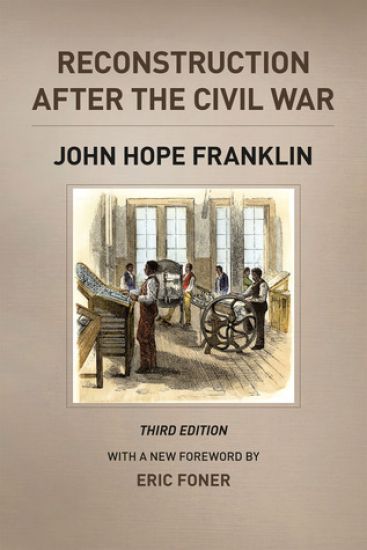
In 1957, the University of Chicago Press asked acclaimed best-selling historian Daniel J. Boorstin to oversee a series of accessible yet authoritative books that, together, would tell the whole history of the American people. The result, published over the course of nearly half a century, is the "Chicago History of American Civilization" series, which provides a nuanced and vibrant portrait of the United States from its inception through the twentieth century. Scholars across many disciplines contributed, and the series covers a broad range of topics, as disparate as the War of 1812, immigration, and American folklore. While the series is certainly eclectic, the books share both ambition and authority - they have been staples for teachers and general readers alike. The authors included in this series represent some of the greatest academic talents ever to turn their mind to the American past. Thus the University of Chicago Press is excited to offer new editions of three of the series' best-known books. "Reconstruction after the Civil War" explores the role of former slaves during this period in American history. Looking past popular myths and controversial scholarship, John Hope Franklin uses his astute insight and careful research to provide an accurate, comprehensive portrait of the era. His arguments concerning the brevity of the North's occupation, the limited power wielded by former slaves, the influence of moderate Southerners, the flawed constitutions of the radical state governments, and the downfall of Reconstruction remain compelling today. This new edition of "Reconstruction after the Civil War" also includes a foreword by Eric Foner and a perceptive essay by Michael W. Fitzgerald.
""Lincoln and Public Morality"" is a speech delivered by John Hope Franklin at the Chicago Historical Society on February 12, 1959. The speech explores the role of Abraham Lincoln in shaping public morality during his presidency. Franklin argues that Lincoln's commitment to justice and equality for all, as demonstrated in his Emancipation Proclamation and his efforts to end slavery, helped to establish a new standard of morality in American society. He also discusses Lincoln's personal beliefs and how they influenced his actions as a leader. The speech is a thought-provoking analysis of Lincoln's legacy and his impact on American society.This scarce antiquarian book is a facsimile reprint of the old original and may contain some imperfections such as library marks and notations. Because we believe this work is culturally important, we have made it available as part of our commitment for protecting, preserving, and promoting the world's literature in affordable, high quality, modern editions, that are true to their original work.
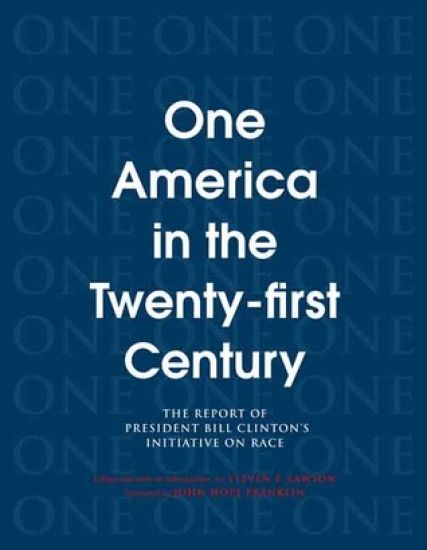
Originally released in 2008, this book features the first publication in book form of the Clinton Commission on Race Initiative’s report; a foreword by commission chair John Hope Franklin; President Clinton’s speech that launched the commission; and other important materials for classes on American race relations. "The report, and this volume, will surely assume a place among the most significant works about race and the persistent challenge of racism in modern American life."—William A. Link, University of Florida
In The Militant South, 1800-1861, John Hope Franklin identifies the factors and causes of the South's festering propensity for aggression that contributed to the outbreak of the Civil War in 1861. Franklin asserts that the South was dominated by militant white men who resorted to violence in the face of social, personal, or political conflict. Fueled by their defense of slavery and a persistent desire to keep the North out of their affairs, Southerners adopted a vicious bellicosity that intensified as war drew nearer. Drawing from Southern newspapers, government archives, memoirs, letters, and firsthand accounts, Franklin masterfully details the sources and consequences of antebellum aggression in the South. First published in 1956, this classic volume is an enduring and impeccably researched contribution to Southern history. This paperback edition features a new preface in which the author discusses controversial responses to the book.
From John Hope Franklin, America's foremost African American historian, comes this groundbreaking analysis of slave resistance and escape. A sweeping panorama of plantation life before the Civil War, this book reveals that slaves frequently rebelled against their masters and ran away from their plantations whenever they could. For generations, important aspects about slave life on the plantations of the American South have remained shrouded. Historians thought, for instance, that slaves were generally pliant and resigned to their roles as human chattel, and that racial violence on the plantation was an aberration. In this precedent setting book, John Hope Franklin and Loren Schweninger demonstrate that, contrary to popular belief, significant numbers of slaves did in fact frequently rebel against their masters and struggled to attain their freedom. By surveying a wealth of documents, such as planters' records, petitions to county courts and state legislatures, and local newspapers, this book shows how slaves resisted, when, where, and how they escaped, where they fled to, how long they remained in hiding, and how they survived away from the plantation. Of equal importance, it examines the reactions of the white slaveholding class, revealing how they marshalled considerable effort to prevent runaways, meted out severe punishments, and established patrols to hunt down escaped slaves. Reflecting a lifetime of thought by our leading authority in African American history, this book provides the key to truly understanding the relationship between slaveholders and the runaways who challenged the system--illuminating as never before the true nature of the South's "most peculiar institution".
This is a precedent-breaking book on slave resistance and runaway slaves in the American South before the Civil War. The book's thesis is that slave resistance was much more prevalent and widespread than has usually been attributed, and, specifically, that slaves attempted to run away from their masters whenever they could. John Hope Franklin is the most distinguished African American historian in America.
In George Washington Williams, John Hope Franklin reconstructs the life of the controversial, self-made black intellectual who wrote the first history of African Americans in the United States. Awarded the Clarence L. Holte Literary Prize, this book traces Franklin’s forty-year quest for Williams’s story, a story largely lost to history until this volume was first published in 1985. The result, part biography and part social history, is a unique consideration of a pioneering historian by his most distinguished successor. Williams, who lived from 1849 to 1891, had a remarkable career as soldier, minister, journalist, lawyer, politician, freelance diplomat, and African traveler, as well as a historian. While Franklin reveals the accomplishments of this neglected figure and emphasizes the racism that curtailed Williams’s many talents, he also highlights the personal weaknesses that damaged Williams’s relationships and career. Williams led the way in presenting African American history accurately through the use of oral history and archival research, sought to legitimize it as a field of historical study, and spoke out in support of an American Negro Historical Society and as a critic of European imperialism in Africa. He also became erratic and faithless to his family and creditors and died at the age of forty-one, destitute and alienated from family and friends. George Washington Williams is nothing less than a classic biography of a brilliant though flawed individual whose History of the Negro Race in America remains a landmark in African American history and American intellectual history.
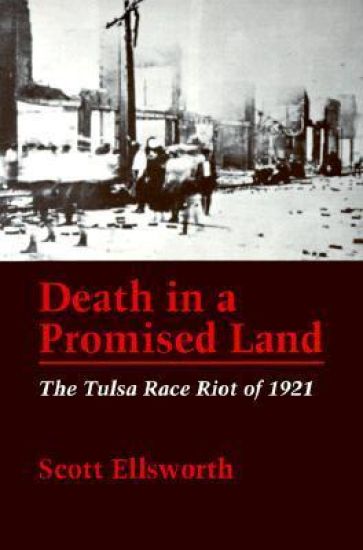
When a crowd began to gather outside the jail in Tulsa, Oklahoma, on the evening of May 31, 1921, the fate of one of its prisoners, a young black male, seemed assured. Accused of attempting to rape a white woman, Dick Rowland was with little doubt about to be lynched. But in another part of town, a small group of black men, many of them World War I veterans, decided to risk lives for a different vision of justice. Before it was all over, Tulsa had erupted into one of America's worst racial nightmares, leaving scores dead and hundreds of homes and businesses destroyed. Exhaustively researched, Death in a Promised Land is the compelling story of racial ideologies, southwestern politics, and yellow journalism, and of an embattled black community's struggle to hold onto its land and freedom. More than just the chronicle of one of the nation's most devastating race riots, this critically acclaimed study of American race relations is, above all, a gripping story of terror and lawlessness, and of courage, heroism, and human perseverance.
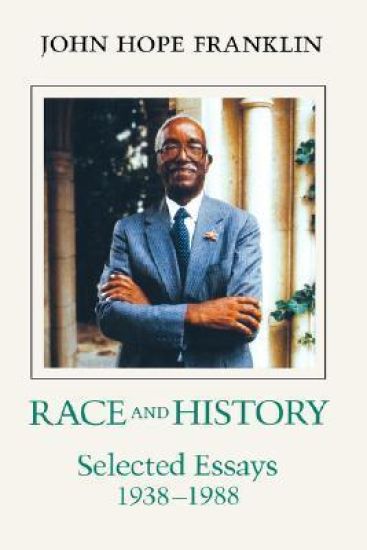
In Race and History, John Hope Franklin, one of the nation's foremost historians, collects twenty-seven of his most influential shorter writings. The essays are presented thematically and include pieces on southern history; significant but neglected historical figures; historiography; the connection between historical problems and contemporary issues; and the public role of the historian. Collectively these essays reveal Franklin as a man who has exhibited immense courage and intellectual independence in the face of cultural and social bias, a scholar who has set the tone and direction for twentieth-century African-American studies, and a writer whose insistence on balance and truth has inspired two generations of historians.
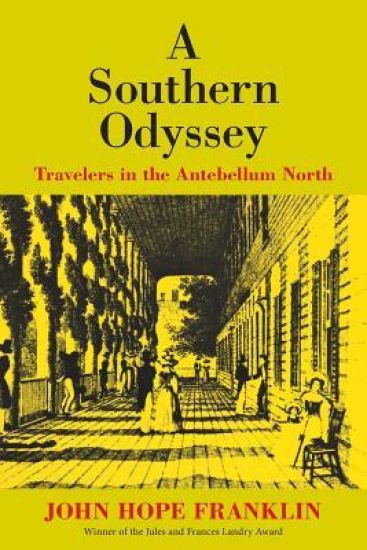
Frederick Law Olmsted, the northerner who wrote comprehensively about his travels in the South, had no southern counterpart. But there were thousands of southerners - planters, merchants, bankers, students, housewives, writers, and politicians - who traveled extensively in the North and who recorded their impressions in letters to their families, in articles for the local press, and in the few books they wrote.In A Southern Odyssey the distinguished historian John Hope Franklin canvasses the entire field of southern travel and analyses the travelers and their accounts of what they saw in the North. Many went out of sheer curiosity. Others went on business, to get an education, to make purchases for the store and home, to attend religious or political conventions, or to instruct northerners about the superior qualities of the southern way of life and warn them of the dangers of unbridled abolitionist attacks.The more they went, the more they doubted the wisdom of spending money among their enemies. But they continued to go, even against their own advice to fellow southerners, and some tarried until the attack on Fort Sumter.Concentrating as it does on the human side of North-South relations during the antebellum years, A Southern Odyssey represents a fresh and imaginative approach to a long overlooked chapter in southern history. It is also a handsome book, with twenty illustrations that comprise ""An Album of Southern Travel.
First published in 1896, The Suppression of the African Slave Trade remains the standard work on the efforts made in the United States, from 1638 to 1870, to limit and suppress the trade in slaves between Africa and America. In the foreword to this new edition, John Hope Franklin, James B. Duke Professor of History Emeritus, and professor of legal history at Duke University, explains the attitude toward slavery at the time Du Bois wrote his book, gives a brief background of Du Bois's growth as an educator and writer, and examines the methods Du Bois used to write the book. Those doing work on th subject of American slavery will find this volume an important source book.