
Kirjailija
John Hudson
Kirjat ja teokset yhdessä paikassa: 47 kirjaa, julkaisuja vuosilta 1997-2025, suosituimpien joukossa Geographiae Veteris Scriptores Graeci Minores. Vertaile teosten hintoja ja tarkista saatavuus suomalaisista kirjakaupoista.
47 kirjaa
Kirjojen julkaisuhaarukka 1997-2025.

Your No BS Guide to Better CreditIf you're feeling overwhelmed by bills, expenses, and the relentless demands of daily life, it's time to stop saying, "I'll figure it out later." John "Huddy" Hudson has guided thousands of people just like you out of the darkness and into the light of financial stability-and he can help you, too.7 Steps to Financial Recovery is your roadmap to reclaiming control of your life starting with your finances. You'll learn: Practical steps to improve your financesEasy tips for raising your credit scoreFundamental, effective financial practicesSimple strategies for unexpected financial situationsAre you tired of the "if I could just..." mindset? This book is designed for you. You'll find straightforward, relatable advice that cuts through the jargon, making it easy to take the next right step and finally get on with your financial recovery.Your journey to financial freedom starts here Open this book, take action, and transform your life from chaos to clarity.




How to Survive: Self-Reliance in Extreme Circumstances
John Hudson
Dreamscape Media
2021
mp3 cd-levyllä
What is the connection between crawling through a jungle and your 'to do' list? What can ejecting out of a stealth bomber teach you about the importance of thinking the worst? What can surviving in extreme situations teach us about surviving everyday life?John Hudson, Chief Survival Instructor to the British Military, knows what it takes to survive. Combining first-hand experience with twenty years of studying the choices people have made under the most extreme pressure, How to Survive is a lifetime's worth of wisdom about how to apply the principles of survival to everyday life.The cornerstone of military survival (surviving anything) is understanding the relationship between effort, hope, and goals--a mindset that can be transposed anytime, anywhere. In How to Survive you will learn how this template for survival can be applied to any situation in your everyday life.Through gripping first-hand accounts of near disaster and survival stories from across the extreme world, you will learn that by following these principles you can develop the mindset that will allow you to make better decisions under pressure, which are as equally applicable to first dates and presentations as to climbing Everest and getting lost at sea.

What is the connection between crawling through a jungle and your 'to do' list? What can ejecting out of a stealth bomber teach you about the importance of thinking the worst? What can surviving in extreme situations teach us about surviving everyday life?John Hudson, Chief Survival Instructor to the British Military, knows what it takes to survive. Combining first-hand experience with twenty years of studying the choices people have made under the most extreme pressure, How to Survive is a lifetime's worth of wisdom about how to apply the principles of survival to everyday life.The cornerstone of military survival (surviving anything) is understanding the relationship between effort, hope, and goals--a mindset that can be transposed anytime, anywhere. In How to Survive you will learn how this template for survival can be applied to any situation in your everyday life.Through gripping first-hand accounts of near disaster and survival stories from across the extreme world, you will learn that by following these principles you can develop the mindset that will allow you to make better decisions under pressure, which are as equally applicable to first dates and presentations as to climbing Everest and getting lost at sea.

This book covers the wide spectrum of subjects relating to obtaining and using building stones, starting with their geological origin and then describing the nature of granites, volcanics, limestones, sandstones, flint, metamorphic stones, breccias and conglomerates, with emphasis being placed on how to recognise the different stones via the many illustrated examples from Great Britain and other countries. The life of a building stone is explained from its origin in the quarry, through its exposure to the elements when used for a building, to its eventual deterioration. The structure of stone buildings is then discussed, with explanations of the mechanics of pillars, lighthouses and walls, arches, bridges, buttresses and roof vaults, plus castles and cathedrals. The sequence of the historical architectural styles of stone buildings is explained—from the early days through to postmodern buildings. Special attention is paid to two famous architects: the Roman Vitruvius and the English Sir Christopher Wren who designed and supervised the construction of St. Paul’s Cathedral in London. To demonstrate many of the concepts presented, two exemplary stone buildings are described in detail: the Albert Memorial in London and Durham Cathedral in northern England. The former building is interesting because it is comprised of a cornucopia of different building stones and the latter building because of its architecture and sandstone decay mechanisms. In the final Chapter, ruined stone buildings are discussed—the many reasons for their decay and the possibility of their ‘rebirth’ via digital recording of their geometry. The book has over 350 pages and is illustrated with more than 450 diagrams and colour photographs of both the various stones and the associated stone buildings. Readers’ knowledge of the subject will be greatly enhanced by these images and the related explanatory text. A wide-ranging references and bibliography section is also included.

When faced with near death, your survival instincts kick in. Instincts can only take you so far, however; it's preparation and planning that can make the difference between living and dying. In How to Survive, readers will hear harrowing tales of survival and learn from them. These stories are broken down and studied, whether it's the experience of a teenager hiking to safety as the only survivor of a plane crash in the Peruvian Amazon, a fisherman drifting for more than 400 days in an open boat across the Pacific Ocean, or a US Air Force fighter pilot forced to eject from his stealth fighter thousands of feet above the earth.John Hudson, a military survivor instructor, introduces the mindset that he feels is imperative for success: the Survival Triangle. This combination of effort, hope, and goals, along with a few practical skills, provides a premade planning template that can be used to jumpstart the whole survival process.

A splendid book . . . I can’t think of anyone I know who wouldn’t benefit from reading it' - Marcus Berkmann, Daily Mail'A brilliant, brilliant book' - Chris Evans, Virgin RadioNow including a new chapter on coping with a pandemic.What is the connection between crawling through a jungle and your ‘to do’ list? What can ejecting out of a stealth bomber teach you about the getting through a pandemic? What can surviving in extreme situations teach us about surviving everyday life?John Hudson, Chief Survival Instructor to the British Military, knows what it takes to survive. Combining first-hand experience with twenty years of studying the choices people have made under the most extreme pressure, How to Survive is a lifetime’s worth of wisdom about how to apply the principles of survival to everyday life.The cornerstone of military survival (surviving anything) is understanding the relationship between effort, hope and goals – a mindset that can be transposed anytime, anywhere. In How to Survive you will learn how this template for survival can be applied to any situation in your everyday life.Through gripping first-hand accounts of near disaster and survival stories from across the extreme world you will learn that by following these principles you can develop the mindset that will allow you to make better decisions under pressure, which are as equally applicable to first dates and presentations as to climbing Everest and getting lost at sea.'When it comes to survival and getting out of trouble, listen to this man. John is the real deal' - Levison Wood

This book covers the wide spectrum of subjects relating to obtaining and using building stones, starting with their geological origin and then describing the nature of granites, volcanics, limestones, sandstones, flint, metamorphic stones, breccias and conglomerates, with emphasis being placed on how to recognise the different stones via the many illustrated examples from Great Britain and other countries. The life of a building stone is explained from its origin in the quarry, through its exposure to the elements when used for a building, to its eventual deterioration. The structure of stone buildings is then discussed, with explanations of the mechanics of pillars, lighthouses and walls, arches, bridges, buttresses and roof vaults, plus castles and cathedrals. The sequence of the historical architectural styles of stone buildings is explained—from the early days through to postmodern buildings. Special attention is paid to two famous architects: the Roman Vitruvius and the English Sir Christopher Wren who designed and supervised the construction of St. Paul’s Cathedral in London. To demonstrate many of the concepts presented, two exemplary stone buildings are described in detail: the Albert Memorial in London and Durham Cathedral in northern England. The former building is interesting because it is comprised of a cornucopia of different building stones and the latter building because of its architecture and sandstone decay mechanisms. In the final Chapter, ruined stone buildings are discussed—the many reasons for their decay and the possibility of their ‘rebirth’ via digital recording of their geometry. The book has over 350 pages and is illustrated with more than 450 diagrams and colour photographs of both the various stones and the associated stone buildings. Readers’ knowledge of the subject will be greatly enhanced by these images and the related explanatory text. A wide-ranging references and bibliography section is also included.
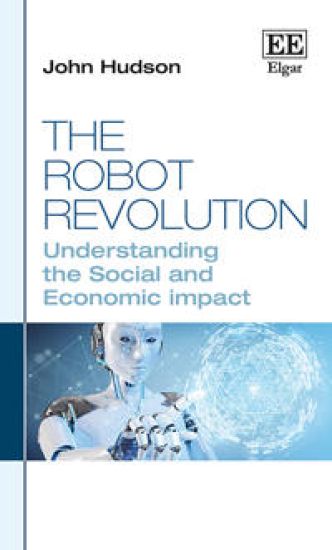
In the coming decades robots and artificial intelligence will fundamentally change our world. In doing so they offer the hope of a golden future, one where the elderly are looked after by companion robots, where the disabled can walk, robot security protects us all, remote rural areas have access to the best urban facilities and there is almost limitless prosperity. But there are dangers. There are fears in the labour market that robots will replace jobs, leaving many unemployed, and increase inequality. In relying too much on robots, people may reduce their human contact and see their cognitive abilities decline. There are even concerns, reflected in many science fiction films, that robots may eventually become competitors with humans for survival. This book looks at both the history of robots, in science and in fiction, as well as the science behind robots. Specific chapters analyse the impact of robots on the labour market, people's attitudes to robots, the impact of robots on society, and the appropriate policies to pursue to prepare our world for the robot revolution. Overall the book strikes a cautionary tone. Robots will change our world dramatically and they will also change human beings. These important issues are examined from the perspective of an economist, but the book is intended to appeal to a wider audience in the social sciences and beyond.
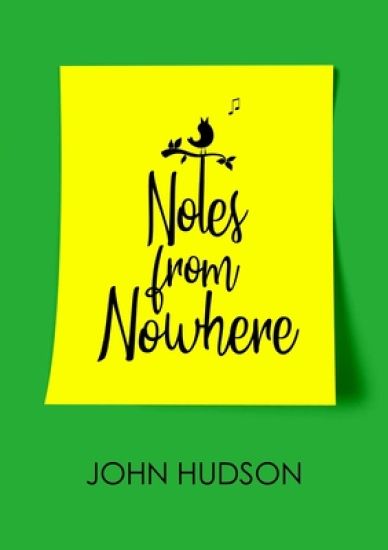
Notes from Nowhere is a collection of 52 poems by John Hudson recording life as lived in rural France over a year.
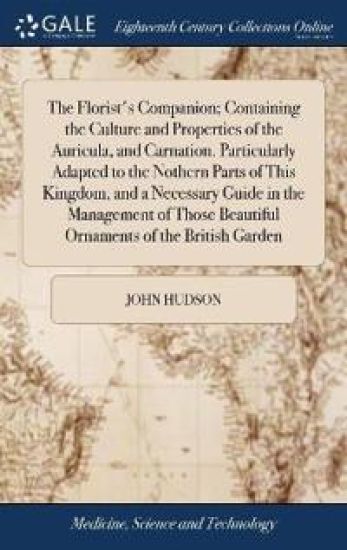
The Florist's Companion; Containing the Culture and Properties of the Auricula, and Carnation. Particularly Adapted to the Nothern Parts of This Kingdom, and a Necessary Guide in the Management of Those Beautiful Ornaments of the British Garden
John Hudson
Gale Ecco, Print Editions
2018
sidottu
The 18th century was a wealth of knowledge, exploration and rapidly growing technology and expanding record-keeping made possible by advances in the printing press. In its determination to preserve the century of revolution, Gale initiated a revolution of its own: digitization of epic proportions to preserve these invaluable works in the largest archive of its kind. Now for the first time these high-quality digital copies of original 18th century manuscripts are available in print, making them highly accessible to libraries, undergraduate students, and independent scholars.Medical theory and practice of the 1700s developed rapidly, as is evidenced by the extensive collection, which includes descriptions of diseases, their conditions, and treatments. Books on science and technology, agriculture, military technology, natural philosophy, even cookbooks, are all contained here.++++The below data was compiled from various identification fields in the bibliographic record of this title. This data is provided as an additional tool in helping to insure edition identification: ++++British LibraryT112121The 'advertisement' to the reader is dated: January 14, 1794. Edited by William Preston. With a half-title.Newcastle upon Tyne: printed for the editor; and sold by the booksellers in Newcastle, Shields, Sunderland, Durham, Alnwick, Hexham, and Carlisle, 1794]. xii,83, 1]p.; 12
Originally published in 1982, this book begins with a wide-ranging and critical review of both first and second generation theories of inflation (and the related problem of unemployment), including the classical approach to macroeconomics. The author systematically integrates search, implicit contract, expectations and wage-bargaining theeoriees to outline a new and original synthesis. This synthesis and switching regimes model is then rigorously examined to see how well it can explain inflation the US and the UK.
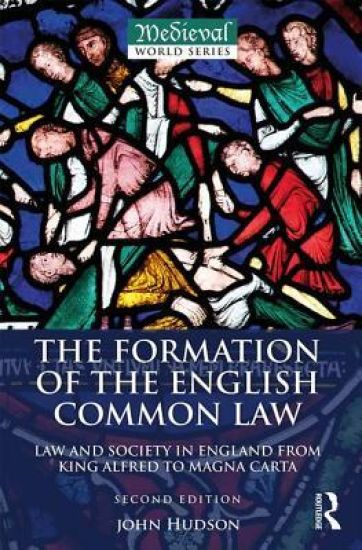
The Formation of English Common Law provides a comprehensive overview of the development of early English law, one of the classic subjects of medieval history. This much expanded second edition spans the centuries from King Alfred to Magna Carta, abandoning the traditional but restrictive break at the Norman Conquest. Within a strong interpretative framework, it also integrates legal developments with wider changes in the thought, society, and politics of the time. Rather than simply tracing elements of the common law back to their Anglo-Saxon, Norman or other origins, John Hudson examines and analyses the emergence of the common law from the interaction of various elements that developed over time, such as the powerful royal government inherited from Anglo-Saxon England and land holding customs arising from the Norman Conquest. Containing a new chapter charting the Anglo-Saxon period, as well as a fully revised Further Reading section, this new edition is an authoritative yet highly accessible introduction to the formation of the English common law and is ideal for students of history and law.
The Formation of English Common Law provides a comprehensive overview of the development of early English law, one of the classic subjects of medieval history. This much expanded second edition spans the centuries from King Alfred to Magna Carta, abandoning the traditional but restrictive break at the Norman Conquest. Within a strong interpretative framework, it also integrates legal developments with wider changes in the thought, society, and politics of the time. Rather than simply tracing elements of the common law back to their Anglo-Saxon, Norman or other origins, John Hudson examines and analyses the emergence of the common law from the interaction of various elements that developed over time, such as the powerful royal government inherited from Anglo-Saxon England and land holding customs arising from the Norman Conquest. Containing a new chapter charting the Anglo-Saxon period, as well as a fully revised Further Reading section, this new edition is an authoritative yet highly accessible introduction to the formation of the English common law and is ideal for students of history and law.
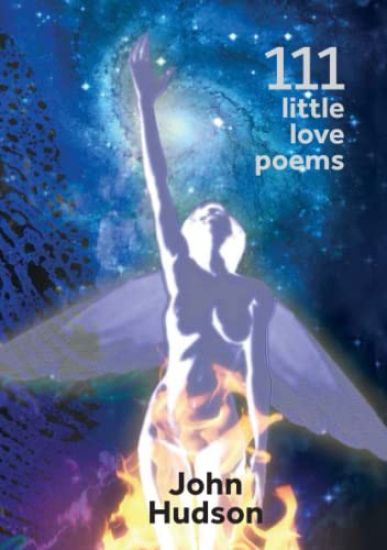
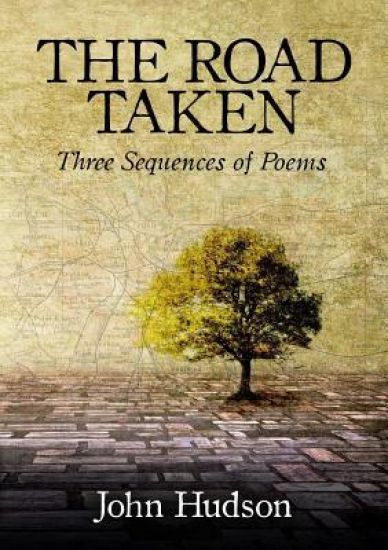
The Road taken by John Hudson brings together three sequences of poems created for walks in London and France. "Shapeshifter", written for a small rural community in France, explores the transformations a community uses and undergoes in order to thrive on a daily basis. "Stride" draws inspiration from the poet's cultural roots on London's East End and undertakes a twelve mile walk across varied terrain, socially, physically, spiritually and psychologically. "A Strange Guide to Places" walks a thirty four kilometre path in a sequence of poems that can be read in either direction and takes the reader on a journey beyond the confines of physical geography into a landscape of imaginative possibilities.