Kirjailija
John Hunt
Kirjat ja teokset yhdessä paikassa: 168 kirjaa, julkaisuja vuosilta 1995-2026, suosituimpien joukossa Conductors on the Yellow Label (Deutsche Grammophon), Discographies Fritz Lehmann, Ferdinand Leitner, Ferenc Fricsay, Eugen Jochum, Leopold Ludwig, Artur Rother, Franz Konwitschny, Igor Markevitch. Vertaile teosten hintoja ja tarkista saatavuus suomalaisista kirjakaupoista.
168 kirjaa
Kirjojen julkaisuhaarukka 1995-2026.
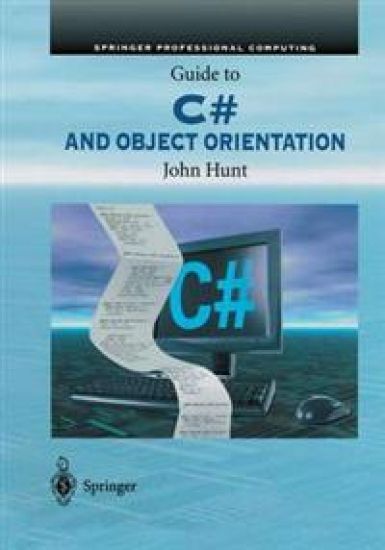
This book shows readers how to get the most out of C# using Object Orientation. The author takes a hands-on approach to learning C# and object orientation, using lots of worked examples. The text provides an ideal base from which to start programming. After introducing the C# language and object orientation, John Hunt goes on to explain: how to construct a user interface for a simple editor; how to obtain information on files and directories and how objects can be stored and restored using serialization...-Presents C# and object-orientation as a coherent whole, using one to strengthen the presentation of the other -Includes lots of complete and worked examples to clarify readers'understanding -The source code for the examples is available at: http://www.guide-to-csharp.net -Hunt is a successful Springer author, and this book is written in the same style as his Java for Practitioners

Java and Object Orientation: An Introduction (2nd edition) shows readers how to build object oriented applications in Java. Written in a clear and concise style, with lots of examples, this revised edition provides:- A detailed understanding of object orientation- A thorough introduction to Java including building blocks, constructs, classes, data structures etc.- Coverage of graphical user interfaces and applets (AWT, Servlets)- Object oriented analysis and design including UML. If you are looking for a good introduction to Java and object orientation, then this is the book for you. Source code for the examples in this book is available at: http://www.java-and-oo.net

Wiener Philharmoniker - Vienna Philharmonic and Vienna State Opera Orchestras: Discography
John Hunt
Hunt (John)
2000
pokkari
Wiener Philharmoniker 1 - Vienna Philharmonic and Vienna State Opera Orchestras: Discography
John Hunt
Hunt (John)
2000
pokkari


Java for Practitioners doesn just provide an introduction to Java, it also tells you all about object orientation. One of the biggest problems with many of the Java books currently on the market is that they only teach the language and ignore the object orientation aspects (or at best just devote one chapter to it). Not only does John Hunt cover both Java and object orientation thoroughly but he also realises that practitioners learn best by oing'and he writes this book to reflect that. Chapters are dippable-into and ideas and concepts are introduced by exercises and practical examples. The book does of course cover the new release - Java 2/JDK 1.2 - and it also includes the Java Self-Tester which lets readers determine whether they are ready to take Sun's Java Certification exam. There is also an essential reference section which provides detailed solutions to real world Java problems, and new Java features. No one intending to move over to Java should be without this book.

Essential JavaBeans fast de-mystifies the terminology and gets programmers using the JavaBean components quickly and effectively in their own applications. Programmers can either read the book from start-to-finish (it shouldnt take long) or can dip into it for various aspects of JavaBeans where needed. The book focuses on all the necessary elements for getting started on and using JavaBeans. Many examples are included and readers are encouraged to try them out as they go, to get a real feel for how JavaBeans work.

Key Java
John Hunt; Alexander George McManus
Springer-Verlag Berlin and Heidelberg GmbH Co. K
1998
nidottu
Java is such a rapidly evolving language, it can be difficult for developers to keep abreast of developments. It has moved beyond a lnaguage used just for creating Web-based applets to one that is being used for developing serious applications. Key Java is intended for those who already know the Java language, the classes and the tools, but who want to get more out of Java. They are wanting to know about subjects such as good Java style for reusable components, about using Java beans, about the JDBC, about optimising their code, about testing their code appropriately and about using the IFC, tools and the new JFC. This book explores some of the more significant and exciting developments in Java. It covers techniques that will be fundamental to programmers developing significant applications in Java. Each of the self-contained chapters looks beyond the mechanics of coding applications and explores the concepts that will prove vital to getting the most out of the Java language.
Back from the Shadows: 4 Discographies Willem Mengelberg, Dimitri Mitropoulos, Hermann Abendroth, Eduard Van Beinum
John Hunt
Hunt (John)
1997
pokkari
Metropolitan Sopranos: 4 Discographies - Rosa Ponselle, Eleanor Steber, Zinka Milanov, Leontyne Price
John Hunt
Hunt (John)
1997
pokkari
More Musical Knights: 4 Discographies - Hamilton Harty, Charles Mackerras, Simon Rattle, John Pritchard
John Hunt
Hunt (John)
1997
pokkari

Smalltalk and Object Orientation
John Hunt
Springer-Verlag Berlin and Heidelberg GmbH Co. K
1997
nidottu
This book was originally written to support an introductory course in Object Orientation through the medium of Smalltalk (and VisualWorks in particular). However, it can be used as a book to teach the reader Smalltalk, to introduce object orientation as well as present object oriented design and analysis. It takes as its basic premise that most Computer Scientists I Software Engineers learn best by doing rather than from theoretical notes. The chapters therefore attempt to introduce concepts by getting you the reader to do things, rather than by extensive theoretical discussions. This means that these chapters take a hands-on approach to the subject and assume that the student/reader has a suitable Small talk environment available to them. The chapters are listed below and are divided into six parts. The reader is advised to work through Parts 1 and 3 thoroughly in order to gain a detailed understanding of object orientation. Part 2 then provides an introduction to the Smalltalk environment and language. Other chapters may then be dipped into as required. For example, if the reader wishes to hone their Smalltalk skills then the chapters in Part 4 would be useful. However, if at that point they wish to get on and discover the delights of graphical user interfaces in Smalltalk, then Part 5 could be read next. Part 6 presents some more advances subjects such as metaclasses and concurrency which are not required for straight forward Small talk development.
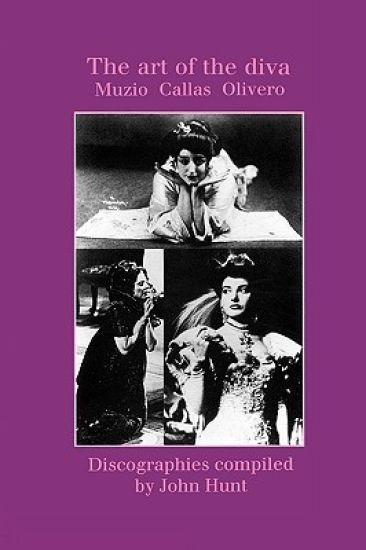
The Art of the Diva: 3 Discographies: Claudia Muzio, Maria Callas, Magda Olivero
John Hunt
Hunt (John)
1997
pokkari