Kirjailija
John Hunter
Kirjat ja teokset yhdessä paikassa: 165 kirjaa, julkaisuja vuosilta 1995-2026, suosituimpien joukossa The Works Of John Hunter. Vertaile teosten hintoja ja tarkista saatavuus suomalaisista kirjakaupoista.
165 kirjaa
Kirjojen julkaisuhaarukka 1995-2026.
Multivariate Modelling of Non-Stationary Economic Time Series
John Hunter; Simon P. Burke; Alessandra Canepa
Palgrave Macmillan
2017
nidottu
This book examines conventional time series in the context of stationary data prior to a discussion of cointegration, with a focus on multivariate models. The authors provide a detailed and extensive study of impulse responses and forecasting in the stationary and non-stationary context, considering small sample correction, volatility and the impact of different orders of integration. Models with expectations are considered along with alternate methods such as Singular Spectrum Analysis (SSA), the Kalman Filter and Structural Time Series, all in relation to cointegration. Using single equations methods to develop topics, and as examples of the notion of cointegration, Burke, Hunter, and Canepa provide direction and guidance to the now vast literature facing students and graduate economists.
Multivariate Modelling of Non-Stationary Economic Time Series
John Hunter; Simon P. Burke; Alessandra Canepa
Palgrave Macmillan
2017
sidottu
This book examines conventional time series in the context of stationary data prior to a discussion of cointegration, with a focus on multivariate models. The authors provide a detailed and extensive study of impulse responses and forecasting in the stationary and non-stationary context, considering small sample correction, volatility and the impact of different orders of integration. Models with expectations are considered along with alternate methods such as Singular Spectrum Analysis (SSA), the Kalman Filter and Structural Time Series, all in relation to cointegration. Using single equations methods to develop topics, and as examples of the notion of cointegration, Burke, Hunter, and Canepa provide direction and guidance to the now vast literature facing students and graduate economists.

Studies in Crime
Carol Heron; John Hunter; Geoffrey Knupfer; Anthony Martin; Mark Pollard; Charlotte Roberts
Routledge
2015
sidottu
The study of forensic evidence using archaeology is a new discipline which has rapidly gained importance, not only in archaeological studies but also in the investigation of real crimes. Archaeological evidence is increasingly presented in criminal cases and has helped to secure a number of convictions.Studies in Crime surveys methods of searching for and locating buried remains, their practical recovery, the decay of human and associated death scene materials, the analysis and identification of human remains including the use of DNA, and dating the time of death.The book contains essential information for forensic scientists, archaeologists, police officers, police surgeons, pathologists and lawyers. Studies in Crime will also be of interest to members of the public interested in the investigation of death by unnatural causes, both ancient and modern.
The surgeon and anatomist John Hunter (1728–93) left a famous legacy in the Hunterian Museum of medical specimens now in the Royal College of Surgeons, and in this collection of his writings, edited by James Palmer, with a biography by Drewry Ottley, published between 1835 and 1837. The first four volumes are of text, and the larger Volume 5 contains plates. Hunter had begun his career as a demonstrator in the anatomy classes of his brother William, before qualifying as a surgeon. He regarded surgery as evidence of failure - the mutilation of a patient who could not be cured by other means - and his studies of anatomy and natural history were driven by his belief that it was necessary to understand the normal physiological processes before attempting to cure the abnormal ones. Volume 4 contains Hunter's works on animal physiology, with notes by the distinguished palaeontologist Richard Owen.
The surgeon and anatomist John Hunter (1728–93) left a famous legacy in the Hunterian Museum of medical specimens now in the Royal College of Surgeons, and in this collection of his writings, edited by James Palmer, with a biography by Drewry Ottley, published between 1835 and 1837. The first four volumes are of text, and the larger Volume 5 contains plates. Hunter had begun his career as a demonstrator in the anatomy classes of his brother William, before qualifying as a surgeon. He regarded surgery as evidence of failure - the mutilation of a patient who could not be cured by other means - and his studies of anatomy and natural history were driven by his belief that it was necessary to understand the normal physiological processes before attempting to cure the abnormal ones. Volume 3 discusses blood and the vascular system, wounds (especially those suffered in war), and infection.

The surgeon and anatomist John Hunter (1728–93) left a famous legacy in the Hunterian Museum of medical specimens now in the Royal College of Surgeons, and in this collection of his writings, edited by James Palmer, with a biography by Drewry Ottley, published between 1835 and 1837. The first four volumes are of text, and the larger Volume 5 contains plates. Hunter had begun his career as a demonstrator in the anatomy classes of his brother William, before qualifying as a surgeon. He regarded surgery as evidence of failure - the mutilation of a patient who could not be cured by other means - and his studies of anatomy and natural history were driven by his belief that it was necessary to understand the normal physiological processes before attempting to cure the abnormal ones. Volume 1 contains Ottley's biography, a list of Hunter's published works, and his lectures on surgery.
The surgeon and anatomist John Hunter (1728–93) left a famous legacy in the Hunterian Museum of medical specimens now in the Royal College of Surgeons, and in this collection of his writings, edited by James Palmer, with a biography by Drewry Ottley, published between 1835 and 1837. The first four volumes are of text, and the larger Volume 5 contains plates. Hunter had begun his career as a demonstrator in the anatomy classes of his brother William, before qualifying as a surgeon. He regarded surgery as evidence of failure - the mutilation of a patient who could not be cured by other means - and his studies of anatomy and natural history were driven by his belief that it was necessary to understand the normal physiological processes before attempting to cure the abnormal ones. Volume 2 discusses diseases of the jaw, teeth and gums, at a time when dental surgery was rudimentary.
The Works of John Hunter, F.R.S.: Volume 5, Plates
John Hunter
Cambridge University Press
2015
pokkari
The surgeon and anatomist John Hunter (1728–93) left a famous legacy in the Hunterian Museum of medical specimens now in the Royal College of Surgeons, and in this collection of his writings, edited by James Palmer, with a biography by Drewry Ottley, published between 1835 and 1837. The first four volumes are of text, and the larger Volume 5 contains plates. Hunter had begun his career as a demonstrator in the anatomy classes of his brother William, before qualifying as a surgeon. He regarded surgery as evidence of failure - the mutilation of a patient who could not be cured by other means - and his studies of anatomy and natural history were driven by his belief that it was necessary to understand the normal physiological processes before attempting to cure the abnormal ones. Volume 5 contains the plates which accompany the works in the other volumes, along with notes.
A Practical Treatise on the Diseases of the Teeth; Intended as a Supplement to the Natural History of Those Parts. by John Hunter, ...
John Hunter
Gale Ecco, Print Editions
2010
pokkari
A Lecture, Upon Matthew XVI. from Verse 21st to the End of the Chapter, Preached at Gardeners-Hall, Near Edinburgh, May 5. 1739. by ... John Hunter, ...
John Hunter
Gale Ecco, Print Editions
2010
pokkari

Hunter, J: John Hunter's Abhandlung Uber Blut, Entzundung Un
John Hunter
KESSINGER PUBLISHING, LLC
2010
nidottu

Hunter, J: John Hunter's Abhandlung Uber Blut, Entzundung Un
John Hunter
KESSINGER PUBLISHING, LLC
2010
nidottu


Studies in Crime
Carol Heron; John Hunter; Geoffrey Knupfer; Anthony Martin; Mark Pollard; Charlotte Roberts
Routledge
1995
nidottu
The study of forensic evidence using archaeology is a new discipline which has rapidly gained importance, not only in archaeological studies but also in the investigation of real crimes. Archaeological evidence is increasingly presented in criminal cases and has helped to secure a number of convictions.Studies in Crime surveys methods of searching for and locating buried remains, their practical recovery, the decay of human and associated death scene materials, the analysis and identification of human remains including the use of DNA, and dating the time of death.The book contains essential information for forensic scientists, archaeologists, police officers, police surgeons, pathologists and lawyers. Studies in Crime will also be of interest to members of the public interested in the investigation of death by unnatural causes, both ancient and modern.

John Hunter lives by one principle: identity creates reality. But when a chance encounter with an American actress at a Cambridge hotel pulls him into a chain of events stretching from rural England to the streets of Bucharest, that principle is tested in ways he never imagined. Forced to confront the architecture of his own beliefs – and the shadows cast by the people orbiting his life – John discovers that reality is not something you witness. It’s something you author. As he navigates danger, desire, synchronicity, and the quiet gravity of family, John learns that every moment – even the darkest – is a mirror reflecting identity back at him. Part thriller, part memoir, I Am John Hunter is a novel about identity authorship: of life, of belief, of self. It entertains, it disrupts, and it leaves something changed inside the reader. Bonus material includes an exclusive insight into the sequel, Jhulia.
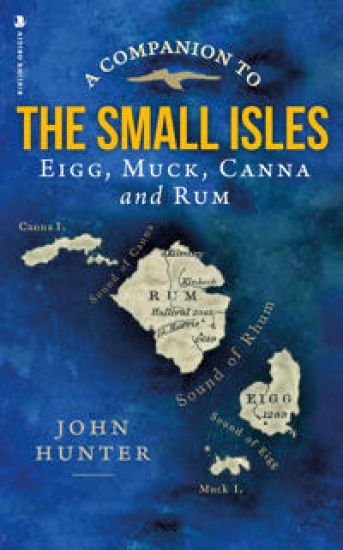
This book is the essential companion for those who wish to learn about and visit the Inner Hebridean islands of Eigg, Muck, Rum and Canna, known collectively as the Small Isles. As well as focusing on history, archaeology and landscape change from earliest times to the present day, it is a fascinating account of the people who have lived there – their subsistence, legends and superstitions, interactions and the ways in which they exploited the land and the sea. It takes the reader through prehistoric landscapes and Iron Age forts into the Age of the Saints and the incoming Vikings. The islands are rich in monastic tradition and rife with the clan feuding of the Middle Ages. Contemporary descriptions help explore population change, townships, the boom and bust of the kelp industry and the devastation brought about by the Clearances before the late 19th century, when wealthy aristocrats created great sporting estates.