Kirjojen hintavertailu. Mukana 12 390 323 kirjaa ja 12 kauppaa.

Kirjailija

John Hunter

Kirjat ja teokset yhdessä paikassa: 165 kirjaa, julkaisuja vuosilta 1995-2026, suosituimpien joukossa The Works Of John Hunter. Vertaile teosten hintoja ja tarkista saatavuus suomalaisista kirjakaupoista.

165 kirjaa

Kirjojen julkaisuhaarukka 1995-2026.

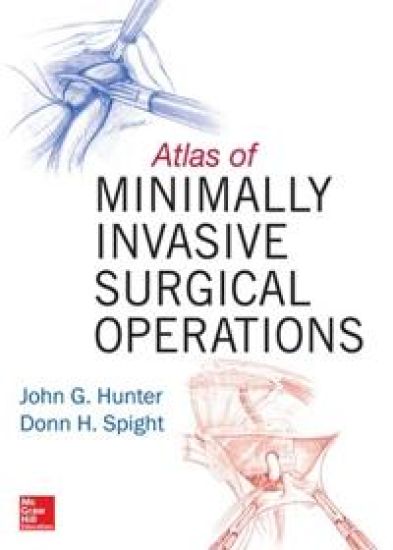
Atlas of Minimally Invasive Surgical Operations

Atlas of Minimally Invasive Surgical Operations

John Hunter; Donn Spight; Corinne Sandone; Jennifer Fairman

McGraw-Hill Medical
2018
sidottu
Introducing the most essential all-in-one MIS tutorial and atlas for 21st-century practiceA Doody's Core Title for 2024!If you are a laparoscopic surgeon who strives to be at the vanguard of clinical practice, your atlas has arrived. Overflowing with nearly 1,000 beautifully rendered, medically accurate illustrations, The Atlas of Minimally Invasive Surgical Operations is the definitive laparoscopic surgery procedural primer and visual roadmap. This indispensable, one-stop resource delivers easy-to-follow procedural guidance that builds on the vital work of laparoscopic surgery pioneers at OHSU and other leading academic centers in the United States who have adapted common open operations to an MIS environment. Accompanying this skill-sharpening content are detailed illustrations that take you through each step to consider while performing current minimally invasive techniques. The Atlas of Minimally Invasive Surgical Operations begins with a review of general surgical considerations and principles of access, while subsequent sections survey the full scope of surgical interventions. Mirroring the latest clinical perspectives, research, and technologies that drive procedure evolution, this is the one atlas that should be part of your surgical library.Nearly 1,000 state-of-the-art illustrations—all created by esteemed professors of medical illustration at Johns Hopkins University—are designed to help surgeons visualize the procedure as they step to the operating tableComprehensive coverage encompassing 62 must-know procedures, each of which is fully explained with high- yield text and accompanying illustrationsConsistent format includes Indications, Preoperative Preparation, Anesthesia, Position, Incision and Exposure, Closure, and Postoperative CareSection on minimally invasive pediatric surgery examines the latest procedural approaches to this critical surgical area
A Treatise on the Blood, Inflammation, and Gun-shot Wounds, by the Late John Hunter. To Which is Prefixed a Short Account of the Author's Life, by his Brother-in-law, Everard Home. In two Volumes, From the London Quarto. of 2; Volume 1
The 18th century was a wealth of knowledge, exploration and rapidly growing technology and expanding record-keeping made possible by advances in the printing press. In its determination to preserve the century of revolution, Gale initiated a revolution of its own: digitization of epic proportions to preserve these invaluable works in the largest archive of its kind. Now for the first time these high-quality digital copies of original 18th century manuscripts are available in print, making them highly accessible to libraries, undergraduate students, and independent scholars.Medical theory and practice of the 1700s developed rapidly, as is evidenced by the extensive collection, which includes descriptions of diseases, their conditions, and treatments. Books on science and technology, agriculture, military technology, natural philosophy, even cookbooks, are all contained here.++++The below data was compiled from various identification fields in the bibliographic record of this title. This data is provided as an additional tool in helping to insure edition identification: ++++National Library of ScotlandW028369Vol. 1: 4, lvi, 265 i.e., 267], 1] p., 1] leaf of plates; v. 2: 6], 3-294 p., 4] leaves of plates. Error in paging: v. 1, page numbers 63, 64 repeated.Philadelphia: Published by Thomas Bradford, printer book-seller & stationer, no. 8, South Front-Street, 1796. 2 v.: ill.; 8
The Bush Burning, yet not Consumed; or, the Church in the Furnace, yet Still Preserved. In Three Sermons, ... The First Preached at Lintoun, March 11th, the Other two at Mountain in the Parish of Inveresk
The 18th century was a wealth of knowledge, exploration and rapidly growing technology and expanding record-keeping made possible by advances in the printing press. In its determination to preserve the century of revolution, Gale initiated a revolution of its own: digitization of epic proportions to preserve these invaluable works in the largest archive of its kind. Now for the first time these high-quality digital copies of original 18th century manuscripts are available in print, making them highly accessible to libraries, undergraduate students, and independent scholars.The Age of Enlightenment profoundly enriched religious and philosophical understanding and continues to influence present-day thinking. Works collected here include masterpieces by David Hume, Immanuel Kant, and Jean-Jacques Rousseau, as well as religious sermons and moral debates on the issues of the day, such as the slave trade. The Age of Reason saw conflict between Protestantism and Catholicism transformed into one between faith and logic -- a debate that continues in the twenty-first century.++++The below data was compiled from various identification fields in the bibliographic record of this title. This data is provided as an additional tool in helping to insure edition identification: ++++Bodleian Library (Oxford)T167330Newry: printed in the year, 1777. 48p.; 8
A Treatise on the Blood, Inflammation, and Gun-shot Wounds, by the Late John Hunter. To Which is Prefixed a Short Account of the Author's Life, by his Brother-in-law, Everard Home. In two Volumes, From the London Quarto. of 2; Volume 2
The 18th century was a wealth of knowledge, exploration and rapidly growing technology and expanding record-keeping made possible by advances in the printing press. In its determination to preserve the century of revolution, Gale initiated a revolution of its own: digitization of epic proportions to preserve these invaluable works in the largest archive of its kind. Now for the first time these high-quality digital copies of original 18th century manuscripts are available in print, making them highly accessible to libraries, undergraduate students, and independent scholars.Medical theory and practice of the 1700s developed rapidly, as is evidenced by the extensive collection, which includes descriptions of diseases, their conditions, and treatments. Books on science and technology, agriculture, military technology, natural philosophy, even cookbooks, are all contained here.++++The below data was compiled from various identification fields in the bibliographic record of this title. This data is provided as an additional tool in helping to insure edition identification: ++++National Library of ScotlandW028369Vol. 1: 4, lvi, 265 i.e., 267], 1] p., 1] leaf of plates; v. 2: 6], 3-294 p., 4] leaves of plates. Error in paging: v. 1, page numbers 63, 64 repeated.Philadelphia: Published by Thomas Bradford, printer book-seller & stationer, no. 8, South Front-Street, 1796. 2 v.: ill.; 8
Jesus Christ the Unspeakable Gift of God

Jesus Christ the Unspeakable Gift of God

John Hunter

Gale Ecco, Print Editions
2018
sidottu
The 18th century was a wealth of knowledge, exploration and rapidly growing technology and expanding record-keeping made possible by advances in the printing press. In its determination to preserve the century of revolution, Gale initiated a revolution of its own: digitization of epic proportions to preserve these invaluable works in the largest archive of its kind. Now for the first time these high-quality digital copies of original 18th century manuscripts are available in print, making them highly accessible to libraries, undergraduate students, and independent scholars.The Age of Enlightenment profoundly enriched religious and philosophical understanding and continues to influence present-day thinking. Works collected here include masterpieces by David Hume, Immanuel Kant, and Jean-Jacques Rousseau, as well as religious sermons and moral debates on the issues of the day, such as the slave trade. The Age of Reason saw conflict between Protestantism and Catholicism transformed into one between faith and logic -- a debate that continues in the twenty-first century.++++The below data was compiled from various identification fields in the bibliographic record of this title. This data is provided as an additional tool in helping to insure edition identification: ++++National Library of ScotlandT200802'Jesus Christ the Lamb of God, a sermon upon Rev. v. 12 preached ... at Orwel, June 9. 1739 ...' has separate titlepage, pagination and register.Edinburgh: printed for, and sold by David Duncan; by J. Jaffrey in Stirling, J. Beugo in Dunfermline, J. Newlands in Glasgow, W. Marshal in Home and 1 each in Preston, Linton and Jedburgh], 1742. 16,55, 1];47, 1]p.; 8
A Treatise on the Venereal Disease. By John Hunter

A Treatise on the Venereal Disease. By John Hunter

John Hunter

Gale Ecco, Print Editions
2018
sidottu
The 18th century was a wealth of knowledge, exploration and rapidly growing technology and expanding record-keeping made possible by advances in the printing press. In its determination to preserve the century of revolution, Gale initiated a revolution of its own: digitization of epic proportions to preserve these invaluable works in the largest archive of its kind. Now for the first time these high-quality digital copies of original 18th century manuscripts are available in print, making them highly accessible to libraries, undergraduate students, and independent scholars.Medical theory and practice of the 1700s developed rapidly, as is evidenced by the extensive collection, which includes descriptions of diseases, their conditions, and treatments. Books on science and technology, agriculture, military technology, natural philosophy, even cookbooks, are all contained here.++++The below data was compiled from various identification fields in the bibliographic record of this title. This data is provided as an additional tool in helping to insure edition identification: ++++Library of CongressW028375Dedicated to Sir George Baker. Plates 1, 3, 4 and 5 engraved by James Thackara and John Vallance, plate 2 by James Trenchard and plate 6 by James Smither.Philadelphia: Printed and sold by Parry Hall, no. 149, in Chesnut Street near Fourth Street, M.DCC.XCI. 1791]. 12], 369, 23] p., 6 leaves of plates (4folded): ill.; 8
An Examination of Mr. Campbell's Principles, as Laid Down in his Enquiry Into the Original of Moral Virtue. With an Appendix, Containing Short Remarks on his Discourse Proving That the Apostles Were no Enthusiasts
The 18th century was a wealth of knowledge, exploration and rapidly growing technology and expanding record-keeping made possible by advances in the printing press. In its determination to preserve the century of revolution, Gale initiated a revolution of its own: digitization of epic proportions to preserve these invaluable works in the largest archive of its kind. Now for the first time these high-quality digital copies of original 18th century manuscripts are available in print, making them highly accessible to libraries, undergraduate students, and independent scholars.The Age of Enlightenment profoundly enriched religious and philosophical understanding and continues to influence present-day thinking. Works collected here include masterpieces by David Hume, Immanuel Kant, and Jean-Jacques Rousseau, as well as religious sermons and moral debates on the issues of the day, such as the slave trade. The Age of Reason saw conflict between Protestantism and Catholicism transformed into one between faith and logic -- a debate that continues in the twenty-first century.++++The below data was compiled from various identification fields in the bibliographic record of this title. This data is provided as an additional tool in helping to insure edition identification: ++++National Library of ScotlandT183457Anonymous. By John Hunter. Archibald Campbell's 'Arete-logia or, an enquiry into the original of moral virtue' was first published in 1728.Edinburgh: printed in the year, 1731. 29, 1]p.; 8
The Natural History of the Human Teeth

The Natural History of the Human Teeth

John Hunter

Gale Ecco, Print Editions
2018
sidottu
The 18th century was a wealth of knowledge, exploration and rapidly growing technology and expanding record-keeping made possible by advances in the printing press. In its determination to preserve the century of revolution, Gale initiated a revolution of its own: digitization of epic proportions to preserve these invaluable works in the largest archive of its kind. Now for the first time these high-quality digital copies of original 18th century manuscripts are available in print, making them highly accessible to libraries, undergraduate students, and independent scholars.Medical theory and practice of the 1700s developed rapidly, as is evidenced by the extensive collection, which includes descriptions of diseases, their conditions, and treatments. Books on science and technology, agriculture, military technology, natural philosophy, even cookbooks, are all contained here.++++The below data was compiled from various identification fields in the bibliographic record of this title. This data is provided as an additional tool in helping to insure edition identification: ++++Countway Library of MedicineN012493Half-title: 'The natural history of the human teeth. Part I.'.London: printed for J. Johnson, 1778. 8],128p.,16 plates; 4
A Practical Treatise on the Diseases of the Teeth; Intended as a Supplement to the Natural History of Those Parts. By John Hunter,
The 18th century was a wealth of knowledge, exploration and rapidly growing technology and expanding record-keeping made possible by advances in the printing press. In its determination to preserve the century of revolution, Gale initiated a revolution of its own: digitization of epic proportions to preserve these invaluable works in the largest archive of its kind. Now for the first time these high-quality digital copies of original 18th century manuscripts are available in print, making them highly accessible to libraries, undergraduate students, and independent scholars.Medical theory and practice of the 1700s developed rapidly, as is evidenced by the extensive collection, which includes descriptions of diseases, their conditions, and treatments. Books on science and technology, agriculture, military technology, natural philosophy, even cookbooks, are all contained here.++++The below data was compiled from various identification fields in the bibliographic record of this title. This data is provided as an additional tool in helping to insure edition identification: ++++Countway Library of MedicineT057820Half-title: 'The natural history of the human teeth. Part II.'. With an index.London: printed for J. Johnson, 1778. 6], iv,128, 8]p.; 4
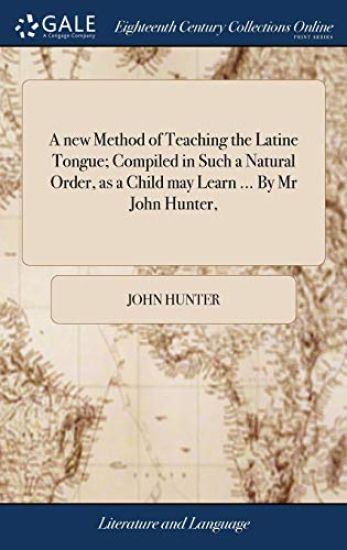
A new Method of Teaching the Latine Tongue; Compiled in Such a Natural Order, as a Child may Learn ... By Mr John Hunter,
The 18th century was a wealth of knowledge, exploration and rapidly growing technology and expanding record-keeping made possible by advances in the printing press. In its determination to preserve the century of revolution, Gale initiated a revolution of its own: digitization of epic proportions to preserve these invaluable works in the largest archive of its kind. Now for the first time these high-quality digital copies of original 18th century manuscripts are available in print, making them highly accessible to libraries, undergraduate students, and independent scholars.Western literary study flows out of eighteenth-century works by Alexander Pope, Daniel Defoe, Henry Fielding, Frances Burney, Denis Diderot, Johann Gottfried Herder, Johann Wolfgang von Goethe, and others. Experience the birth of the modern novel, or compare the development of language using dictionaries and grammar discourses. ++++The below data was compiled from various identification fields in the bibliographic record of this title. This data is provided as an additional tool in helping to insure edition identification: ++++William Andrews Clark Memorial Library (UCLA)N020369Probably printed by Peter Rae in Kirkbride; cf. Plomer.Cell S. Brigid printed by Robert Rae, anno Dom., 1711. 104p.; 8