Kirjailija
John Igbino
Kirjat ja teokset yhdessä paikassa: 7 kirjaa, julkaisuja vuosilta 2012-2023, suosituimpien joukossa Spidermen. Vertaile teosten hintoja ja tarkista saatavuus suomalaisista kirjakaupoista.
7 kirjaa
Kirjojen julkaisuhaarukka 2012-2023.
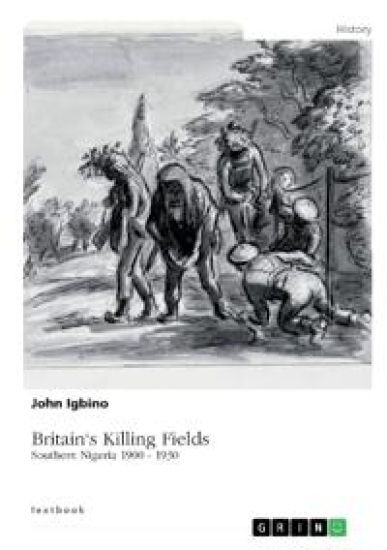
Britain kept meticulous records of its casualties in Southern Nigeria, but it did not collect and keep any coherent records of the casualties it inflicted on the so-called natives. Britain's failure to collect and keep "natives"' casualty statistics was not an unconscious omission. Instead it was a deliberate policy because it placed considerably less value on the lives of "natives" compared to European lives. It held that a drop of European blood was worth four times more than "natives'" blood. The death of a District Officer on active duty was worth the lives of up to two hundred "natives" and it took twenty "natives" to service a Political Officer on the field. Additionally, it accepted the arguments of its top commander, Colonel Arthur Montanaro, that "natives" were engaged in illegal resistance to His Majesty's Government, therefore while he had a duty to crush their resistance to the British Government he was not duty bound to account for their deaths. Accordingly, the book explores these untold aspects of British History, particularly the computation of the number of Indigenous people of the landmass which became Southern Nigeria who were killed between 1900 and 1930 during one of the bloodiest periods in the history of Southern Nigeria as British troops of the West African Frontier Force (WAFF) and the West African Service Brigade (WASB) rampaged through Southern Nigeria. In its explorations the book posed and addressed the following questions: how many Indigenous people of Southern Nigeria were killed by the British Army between 1900 and 1930? What were the names of the people who were killed? Were there women and children among the dead? How old were they when they died? Where were they buried? Who buried them there? What were the prevailing political circumstances when they were killed? Under what military circumstances were they killed? Was there a state of war between the Indigenous people of Southern Nigeria and Britain when they were killed? The book's sources were unpublished original archival documents at the National Archives. These document sources included Ordinances, Proclamations, Admiralty's and Crown Agents' papers, High Commissioners', Governor-General's and Lieutenant-Governor's Correspondences and Despatches. The Correspondences and Despatches included field reports compiled by British Army Officers, Field Commanders, British Police Commissioners, Political Officers, District Officers (DO), District Commissioners, Divisional Officers, Divisional Commissioners and Provincial Commissioners. These sources are kept in the following Colonial Office Documents series: Southern Nigeria (CO520/series) and Nigeria (CO583/series).
The Politics of Colonialism. A critique of "The Case for Colonialism"
John Igbino
GRIN Verlag
2020
nidottu
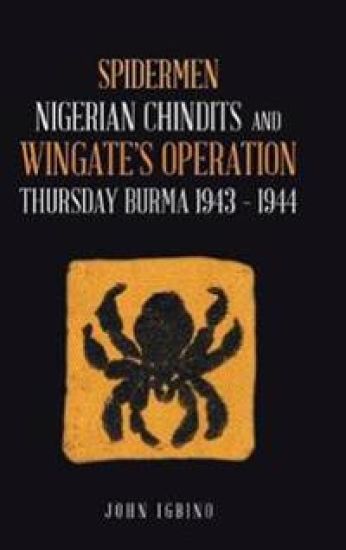
In 1944 twenty thousand Allied Airborne Special Force troops in five Brigades commanded by Major General Orde Wingate landed behind the Japanese lines in Northern Burma. The Operation was Codenamed Operation Thursday. The Special Force troops were nicknamed 'Chindits'. Four thousand Nigerian troops fought in the Special Force Brigades as Chindits during Operation Thursday. This book is an account of their operations behind Japanese lines between February and August 1944. The Brigade's Insignia was the Black African Spider advancing on its prey. Thus, the Brigade called itself the 'Spider Brigade'; its Battalions, namely the 6th, 7th and 12th Nigeria Regiments, 'Spider Regiments', and its troops 'Spidermen'. The book is a well-written account of the Spider Brigade's battles against the 18th Division of the Imperial Japanese Army. It should force Chindit Historians to confront the anomalies in Contemporary History's treatment of Nigerian Chindits. The book is a scholarly and dispassionate excursion into the 14th Army's Campaigns, putting under the microscope the preconceived assumptions of British and Indian Armies' Officer Corps about the fighting quality of Nigerian Chindits. Thus, the book is an important and long overdue account of Operation Thursday that will become the standard work on Nigeria's contributions to Allied Airborne Invasion of Burma.

In 1944 twenty thousand Allied Airborne Special Force troops in five Brigades commanded by Major General Orde Wingate landed behind the Japanese lines in Northern Burma. The Operation was Codenamed Operation Thursday. The Special Force troops were nicknamed 'Chindits'. Four thousand Nigerian troops fought in the Special Force Brigades as Chindits during Operation Thursday. This book is an account of their operations behind Japanese lines between February and August 1944. The Brigade's Insignia was the Black African Spider advancing on its prey. Thus, the Brigade called itself the 'Spider Brigade'; its Battalions, namely the 6th, 7th and 12th Nigeria Regiments, 'Spider Regiments', and its troops 'Spidermen'. The book is a well-written account of the Spider Brigade's battles against the 18th Division of the Imperial Japanese Army. It should force Chindit Historians to confront the anomalies in Contemporary History's treatment of Nigerian Chindits. The book is a scholarly and dispassionate excursion into the 14th Army's Campaigns, putting under the microscope the preconceived assumptions of British and Indian Armies' Officer Corps about the fighting quality of Nigerian Chindits. Thus, the book is an important and long overdue account of Operation Thursday that will become the standard work on Nigeria's contributions to Allied Airborne Invasion of Burma.
Ofsted a case in the mismanagement of the standards of education in England
John Igbino
Grin Publishing
2014
pokkari