Kirjojen hintavertailu. Mukana 12 390 323 kirjaa ja 12 kauppaa.

Kirjailija

John J. Collins

Kirjat ja teokset yhdessä paikassa: 38 kirjaa, julkaisuja vuosilta 1984-2025, suosituimpien joukossa Scripture and Social Justice. Vertaile teosten hintoja ja tarkista saatavuus suomalaisista kirjakaupoista.

Mukana myös kirjoitusasut: John J Collins

38 kirjaa

Kirjojen julkaisuhaarukka 1984-2025.

The Many Faces of Herod the Great

The Many Faces of Herod the Great

Adam Kolman Marshak; John J. Collins

William B Eerdmans Publishing Co
2015
nidottu
An old, bloodthirsty tyrant hears from a group of Magi about the birth of the Messiah, king of the Jews. He vengefully sends his soldiers to Bethlehem with orders to kill all of the baby boys in the town in order to preserve his own throne. For most of the Western world, this is Herod the Great -- an icon of cruelty and evil, the epitome of a tyrant. Adam Kolman Marshak portrays Herod the Great quite differently, however, carefully drawing on historical, archaeological, and literary sources. Marshak shows how Herod successfully ruled over his turbulent kingdom by skillfully interacting with his various audiences -- Roman, Hellenistic, and Judaean -- in myriad ways. Herod was indeed a master in political self-presentation. Marshak's fascinating account chronicles how Herod moved from the bankrupt usurper he was at the beginning of his reign to a wealthy and powerful king who founded a dynasty and brought ancient Judaea to its greatest prominence and prosperity. Watch a 2015 interview with the author of this book here:
Scriptures and Sectarianism

Scriptures and Sectarianism

John J. Collins

Mohr Siebeck
2014
sidottu
The Dead Sea Scrolls include many texts that were produced by a sectarian movement (and also many that were not). The movement had its origin in disputes about the interpretation of the Scriptures, especially the Torah, not in disputes about the priesthood as had earlier been assumed. The definitive break with the rest of Judean society should be dated to the first century BCE rather than to the second. While the Scrolls include few texts that are explicitly historical, they remain a valuable resource for historical reconstruction. John J. Collins illustrates how the worldview of the sect involved a heightened sense of involvement in the heavenly, angelic world, and the hope for an afterlife in communion with the angels. While the ideology of the sect known from the Scrolls is very different from that of early Christianity, the two movements drew on common traditions, especially those found in the Hebrew Scriptures.
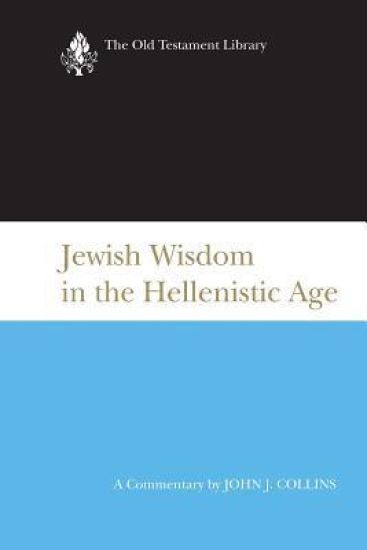
Jewish Wisdom in the Hellenistic Age

Jewish Wisdom in the Hellenistic Age

John J Collins

WESTMINSTER/JOHN KNOX PRESS,U.S.
2014
pokkari
Jewish wisdom flourished under Hellenism in the books of Ben Sira and the wisdom of Solomon, as well as in a recently discovered sapiential text from Qumran. In this book, now available as a casebound, internationally known author John Collins presents a compelling description and analysis of these three texts and their continuing wisdom traditions.The Old Testament Library provides fresh and authoritative treatments of important aspects of Old Testament study through commentaries and general surveys. The contributors are scholars of international standing.
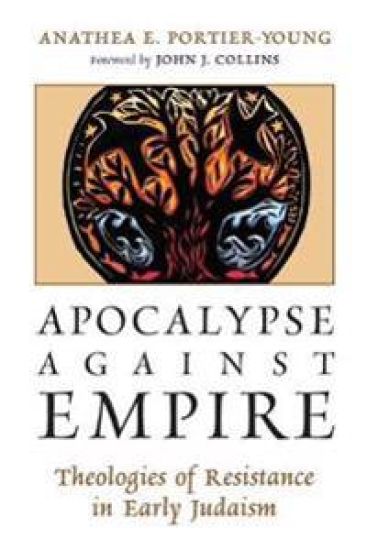
Apocalypse Against Empire

Apocalypse Against Empire

Anathea E. Portier-Young; John J. Collins

William B Eerdmans Publishing Co
2014
nidottu
The year 167 B.C.E. marked the beginning of a period of intense persecution for the people of Judea, as Seleucid emperor Antiochus IV Epiphanes attempted -- forcibly and brutally -- to eradicate traditional Jewish religious practices. In Apocalypse against Empire Anathea Portier-Young reconstructs the historical events and key players in this traumatic episode in Jewish history and provides a sophisticated treatment of resistance in early Judaism.Building on a solid contextual foundation, Portier-Young argues that the first Jewish apocalypses emerged as a literature of resistance to Hellenistic imperial rule. In particular, Portier-Young contends, the book of Daniel, the Apocalypse of Weeks, and the Book of Dreams were written to supply an oppressed people with a potent antidote to the destructive propaganda of the empire -- renewing their faith in the God of the covenant and answering state terror with radical visions of hope.
Scepter and the Star

Scepter and the Star

John J. Collins

William B Eerdmans Publishing Co
2010
nidottu
John J. Collins here offers an up-to-date review of Jewish messianic expectations around the time of Jesus, in light of the Dead Sea Scrolls. He breaks these expectations down into categories: Davidic, priestly, and prophetic. Based on a small number of prophetic oracles and reflected in the various titles and names assigned to the messiah, the Davidic model holds a clear expectation that the messiah figure would play a militant role. In sectarian circles, the priestly model was far more prominent. Jesus of Nazareth, however, showed more resemblance to the prophetic messiah during his historical career, identified as the Davidic -Son of Man- primarily after his death. In this second edition of The Scepter and the Star Collins has revised the discussion of Jesus and early Christianity, completely rewritten a chapter on a figure who claims to have a throne in heaven, and has added a brief discussion of the recently published and controversial Vision of Gabriel.
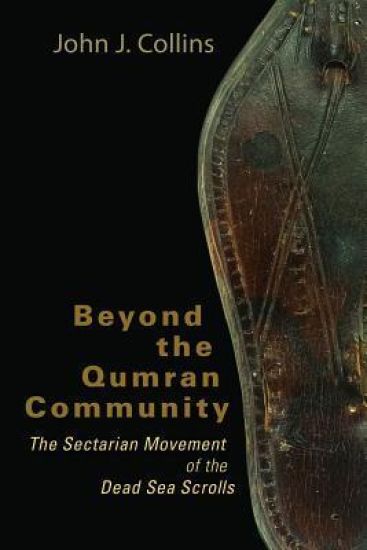
Beyond the Qumran Community

Beyond the Qumran Community

John J. Collins

William B Eerdmans Publishing Co
2009
nidottu
With the full publication of the Dead Sea Scrolls, fresh analysis of the evidence presented can be -- and indeed, should be -- made. Beyond the Qumran Community does just that, reaching a surprising conclusion: the sect described in the Dead Sea Scrolls developed later than has usually been supposed and was never confi ned to the site of Qumran. / John J. Collins here deconstructs -the Qumran community- and shows that the sectarian documents actually come from a text spread throughout the land. He examines the Community Rule, or Yahad, and considers the Teacher of Righteousness, a pivotal fi gure in the Essene movement. After examining the available evidence, Collins concludes that it is, in fact, overwhelmingly likely that the site of Qumran housed merely a single settlement of a very widespread movement.
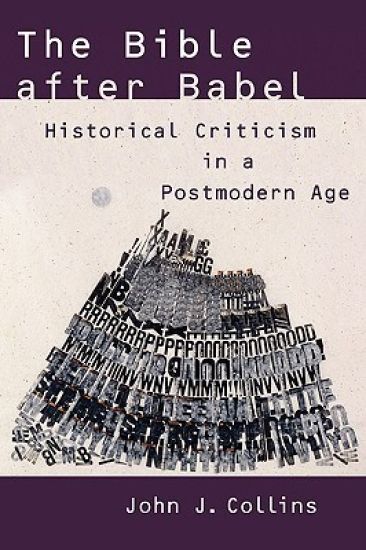
The Bible After Babel

The Bible After Babel

John J. Collins

William B Eerdmans Publishing Co
2005
nidottu
Biblical scholars today often sound as if they are caught in the aftermath of Babel - a clamor of voices unable to reach common agreement. Yet is this confusion necessarily a bad thing? Many postmodern critics see the recent profusion of critical approaches as a welcome opportunity for the emergence of diverse new techniques. In The Bible after Babel noted biblical scholar John J. Collins considers the effect of the postmodern situation on biblical, primarily Old Testament, criticism over the last three decades. Engaging and even-handed, Collins examines the quest of historical criticism to objectively establish a text's basic meaning. Accepting that the Bible may no longer provide secure "foundations" for faith, Collins still highlights its ethical challenge to be concerned for "the other" - a challenge central both to Old Testament ethics and to the teaching of Jesus.
Between Athens and Jerusalem

Between Athens and Jerusalem

John J. Collins

William B Eerdmans Publishing Co
1999
nidottu
A landmark study of Hellenistic Judaism by one of the world's recognized experts. One of the most creative and consequential collisions in Western culture involved the encounter of Judaism with Hellenism. In his widely acclaimed study of the intellectual and moral relationship between "Athens and Jerusalem," John J. Collins examines the literature of Hellenistic Judaism, treating not only the introductory questions of date, authorship, and provenance, but also the larger question of Jewish identity in the Greco-Roman world.
Jewish Wisdom in the Hellenistic Age

Jewish Wisdom in the Hellenistic Age

John J. Collins

T. T.Clark Ltd
1998
nidottu
In this exploration of Jewish wisdom during the Hellenistic period, internationally renowned scholar John J. Collins examines the books of Sirach and the Wisdom of Solomon, the Sentences of Pseudo-Phocylides, and the recently discovered Qumran Sapiential A text from the Dead Sea Scrolls - offering one of the first such examinations of this text in print. This commentary is a compelling analysis of these important texts and their continuing traditions.
Jewish Wisdom in the Hellenistic Age

Jewish Wisdom in the Hellenistic Age

John J. Collins

Westminster/John Knox Press,U.S.
1997
sidottu
Jewish wisdom flourished under Hellenism in the books of Ben Sira and the wisdom of Solomon, as well as in a recently discovered sapiential text from Qumran. In this book, now available as a casebound, internationally known author John Collins presents a compelling description and analysis of these three texts and their continuing wisdom traditions.The Old Testament Library provides fresh and authoritative treatments of important aspects of Old Testament study through commentaries and general surveys. The contributors are scholars of international standing.
Apocalypticism in the Dead Sea Scrolls
Since the photographs of the Dead Sea Scrolls were released in 1992, there has been an explosion of interest in them. This volume explores the issue of apocalypticism in the Scrolls; how the notions of the 'end', Messianic expectation and eternal life affected the Dead Sea sect, influenced Judaism and filtered into Christianity. Collins' volume provides a valuable and accessible introduction to the interpretation of the Scrolls, which is an informative addition to the series examining the major themes of the Scroll texts.
Apocalypticism in the Dead Sea Scrolls
Since the photographs of the Dead Sea Scrolls were released in 1992, there has been an explosion of interest in them. This volume explores the issue of apocalypticism in the Scrolls; how the notions of the 'end', Messianic expectation and eternal life affected the Dead Sea sect, influenced Judaism and filtered into Christianity. Collins' volume provides a valuable and accessible introduction to the interpretation of the Scrolls, which is an informative addition to the series examining the major themes of the Scroll texts.
Families in Ancient Israel

Families in Ancient Israel

Leo G. Perdue; Joseph Blenkinsopp; John J. Collins; Carol L. Meyers

Westminster/John Knox Press,U.S.
1997
nidottu
Four respected scholars of the Hebrew Bible and early Judaism provide a clear portrait of the family in ancient Israel. Important theological and ethical implications are made for the family today.The Family, Culture, and Religion series offers informed and responsible analyses of the state of the American family from a religious perspective and provides practical assistance for the family's revitalization.
Of Scribes and Scrolls

Of Scribes and Scrolls

Harold W. Attridge; John J. Collins; Thomas H. Tobin

University Press of America
1990
nidottu
The essays in this highly readable volume are dedicated to John Strugnell, the eminent theologian. Contents: New Qumran Readings for Genesis One, by James R. Davila; Early Emendations of the Scribes: The Tiqqun Sopherim in Zechariah 2:12, by Russell Fuller; Recensional Differences between the Masoretic Text and the Septuagint of Proverbs, by Emanual Tov; Observations on 'Wisdom Narratives' in Early Biblical Literature, by Lawrence M. Wills; The Beth Essentiae and the Permissive Meaning of the Hiphil (Aphel), by J.H. Charlesworth; The Meaning of 'the End' in the Book of Daniel, by John J. Collins; Jason's Gymnasion, by Robert Doran; Some Observations on Blessings of God in Texts from Qumran, by Eileen Schuller; 4Q185 and Jewish Wisdom Literature, by Thomas H. Tobin, S.J.; Two Notes on the Aramaic Levi Document, by Jonas C. Greenfield and Michael E. Stone; Daniel and the Historical Jesus, by Adela Yarbro Collins; Curse and Competition in the Ancient Circus, b G. Gager; The Original Language of the Acts of Thomas, by Harold W. Attridge; Two Enochic Manuscripts: Unstudied Evidence for Egyptian Christianity, by George W.E. Nickelsburg; Julian's Attempt to Rebuild the Temple: An Inventory of Ancient and Medieval Sources, by David Levenson. Co-published with the College Theology Society.
Daniel

Daniel

John J. Collins

William B Eerdmans Publishing Co
1984
pokkari
Daniel, with an Introduction to Apocalyptic Literture is Volume XX of The Forms of the Old Testament Literature, a series that aims to present a form-critical analysis of every book and each unit in the Hebrew Bible. Fundamentally exegetical, the FOTL volumes examine the structure, genre, setting, and intention of the biblical literature in question. They also study the history behind the form-critical discussion of the material, attempt to bring consistency to the terminology for the genres and formulas of the biblical literature, and expose the exegetical process so as to enable students and pastors to engage in their own analysis and interpretation of the Old Testament texts. In his introduction to Jewish apocalyptic literature, John J. Collins examines the main characteristics and discusses the setting and intention of apocalyptic literature. Collins begins his discussion of Daniel with a survey of the book's anomalies and an examination of the bearing of form criticism on them. He goes on to discuss the book's place in the canon and the problems with its coherence and bilingualism.Collins's section-by-section commentary provides a structural analysis (verse-by-verse) of each section, as well as discussion of its genre, setting, and intention. The book includes bibliographies and a glossary of genres and formulas that offers concise definitions with examples and bibliography.