Kirjojen hintavertailu. Mukana 12 595 353 kirjaa ja 12 kauppaa.

Kirjailija

John K Roth

Kirjat ja teokset yhdessä paikassa: 18 kirjaa, julkaisuja vuosilta 1998-2026, suosituimpien joukossa Approaches to Auschwitz, Revised Edition. Vertaile teosten hintoja ja tarkista saatavuus suomalaisista kirjakaupoista.

Mukana myös kirjoitusasut: John K. Roth

18 kirjaa

Kirjojen julkaisuhaarukka 1998-2026.

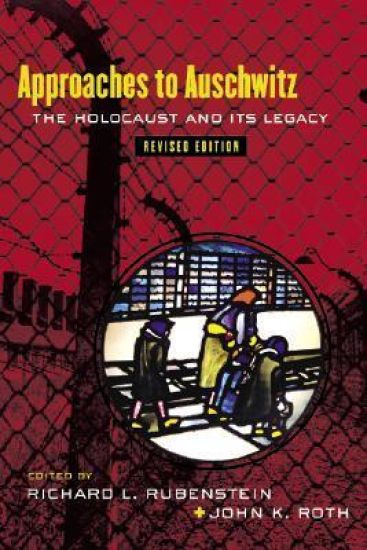
Approaches to Auschwitz, Revised Edition

Approaches to Auschwitz, Revised Edition

Richard L. Rubenstein; John K. Roth

Westminster/John Knox Press,U.S.
2003
nidottu
Distinctively coauthored by a Christian scholar and a Jewish scholar, this monumental, interdisciplinary study explores the various ways in which the Holocaust has been studied and assesses its continuing significance. The authors develop an analysis of the Holocaust's historical roots, its shattering impact on human civilization, and its decisive importance in determining the fate of the world. This revised edition takes into account developments in Holocaust studies since the first edition was published.

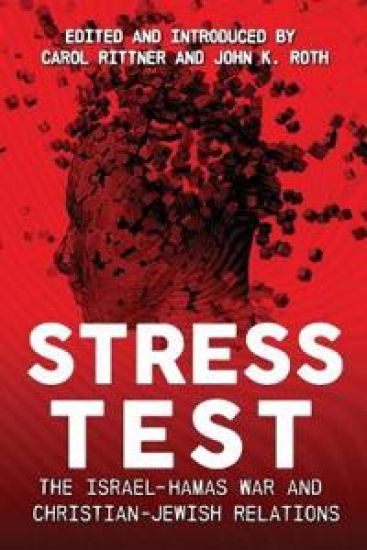
Stress Test

Stress Test

John K Roth; Carol Rittner

Ipub Cloud International
2025
pokkari
The brutality on both sides-Hamas's terrorist attack and Israel's retaliatory actions-has sparked fierce debate in the United States and across the world. Can one support Israel's right to self-defense while also advocating for the rights of the Palestinian people? As many hesitate to discuss the conflict for fear of saying the wrong thing, Stress Test's renowned editors and contributors boldly enter the conversation, offering a nuanced, informed, and necessary dialogue for this fraught historical moment. Twelve world-renowned American Christian scholars and teachers explore this ongoing conflict's deep strain on Christian-Jewish dialogue. This profound collection addresses the urgent questions and challenges facing those committed to advancing interfaith relationships amid a polarizing and violent global crisis. Readers will discover: How the Israel-Hamas War acts as a "stress test" for Christian-Jewish relations and interreligious dialogue. Insightful reflections on the reshaping of Christian perspectives on Zionism in light of the current conflict. The ethical dilemmas surrounding the humanitarian crises in both Gaza and Israel. Critical strategies for Christians and Jews to engage in challenging, essential conversations and build stronger, more resilient relationships amid global turmoil. Engage with the challenging questions and honest reflections presented in this volume, and gain the tools needed for productive, informed conversations about one of the most significant conflicts of our time. Stress Test offers a crucial guide for anyone seeking to understand the ethical, theological, and political implications of the Israel-Hamas war on Christian-Jewish relations.
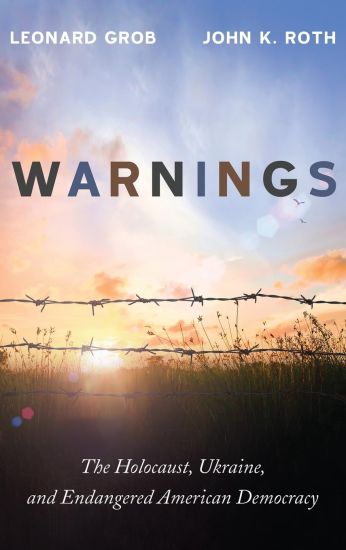
Warnings

Warnings

Leonard Grob; John K Roth

Cascade Books
2023
pokkari
Old friends--one a Jew, the other a Christian--Leonard (Lenny) Grob and John K. Roth are philosophers who have long studied the Holocaust. That experience makes us anxious about democracy, because we are also Americans living in perilous times. The 2020s remind us of the 1930s when Nazis destroyed democracy in Germany. Carnage followed. In the 2020s, Donald Trump and his followers endanger democracy in the United States. With Vladimir Putin's ruthless assault against Ukraine compounding the difficulties, democracy must not be taken for granted. Americans love democracy--except when we don't. That division and conflict mean that democracy will be on the ballot in the 2024 American elections. Probing the prospects, Warnings: The Holocaust, Ukraine, and Endangered American Democracy features exchanges between us that underscore the most urgent threats to democracy in the United States and show how to resist them. What's most needed is ethical patriotism that urges us Americans to be our best selves. Our best selves defend liberal democracy; they strive for inclusive pluralism. Our best selves resist decisions and policies like those that led to the Holocaust or genocidal war in Ukraine or conspiracies to overturn fair and free elections in the United States. Our best selves reject antisemitism and racism; they oppose hypocrisy and autocracy. Our best selves hold lying leaders accountable. Our best selves believe that, against all odds, democracy can win out if we never give up trying to be our best.
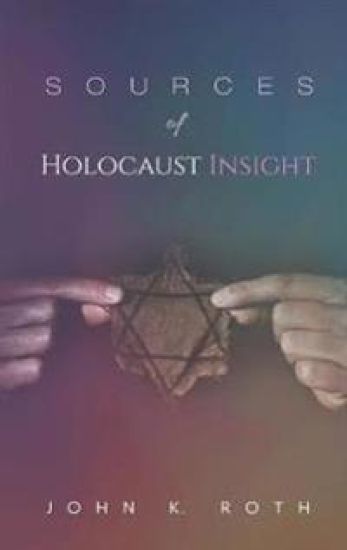
Sources of Holocaust Insight

Sources of Holocaust Insight

John K Roth

Cascade Books
2020
sidottu
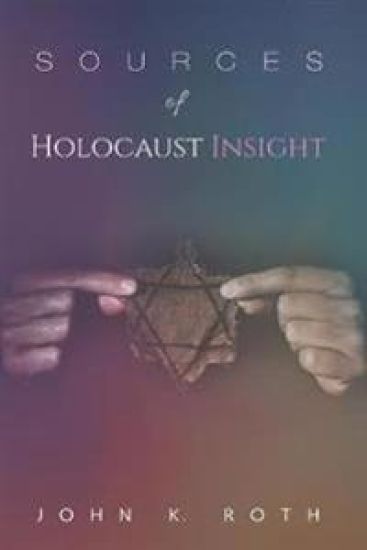
Sources of Holocaust Insight maps the odyssey of an American Christian philosopher who has studied, written, and taught about the Holocaust for more than fifty years. What findings result from John Roth's journey; what moods pervade it? How have events and experiences, scholars and students, texts and testimonies--especially the questions they raise--affected Roth's Holocaust studies and guided his efforts to heed the biblical proverb: ""Whatever else you get, get insight""? More sources than Roth can acknowledge have informed his encounters with the Holocaust. But particular persons--among them Elie Wiesel, Raul Hilberg, Primo Levi, and Albert Camus--loom especially large. Revisiting Roth's sources of Holocaust insight, this book does so not only to pay tribute to them but also to show how the ethical, philosophical, and religious reverberations of the Holocaust confer and encourage responsibility for human well-being in the twenty-first century. Seeing differently, seeing better--sound learning and teaching about the Holocaust aim for what may be the most important Holocaust insight of all: Take nothing good for granted.
Sources of Holocaust Insight

Sources of Holocaust Insight

John K Roth

Cascade Books
2020
pokkari
Sources of Holocaust Insight maps the odyssey of an American Christian philosopher who has studied, written, and taught about the Holocaust for more than fifty years. What findings result from John Roth's journey; what moods pervade it? How have events and experiences, scholars and students, texts and testimonies--especially the questions they raise--affected Roth's Holocaust studies and guided his efforts to heed the biblical proverb: ""Whatever else you get, get insight""? More sources than Roth can acknowledge have informed his encounters with the Holocaust. But particular persons--among them Elie Wiesel, Raul Hilberg, Primo Levi, and Albert Camus--loom especially large. Revisiting Roth's sources of Holocaust insight, this book does so not only to pay tribute to them but also to show how the ethical, philosophical, and religious reverberations of the Holocaust confer and encourage responsibility for human well-being in the twenty-first century. Seeing differently, seeing better--sound learning and teaching about the Holocaust aim for what may be the most important Holocaust insight of all: Take nothing good for granted.
Freedom And The Moral Life

Freedom And The Moral Life

John K Roth

Palala Press
2018
pokkari
This work has been selected by scholars as being culturally important, and is part of the knowledge base of civilization as we know it. This work was reproduced from the original artifact, and remains as true to the original work as possible. Therefore, you will see the original copyright references, library stamps (as most of these works have been housed in our most important libraries around the world), and other notations in the work.This work is in the public domain in the United States of America, and possibly other nations. Within the United States, you may freely copy and distribute this work, as no entity (individual or corporate) has a copyright on the body of the work.As a reproduction of a historical artifact, this work may contain missing or blurred pages, poor pictures, errant marks, etc. Scholars believe, and we concur, that this work is important enough to be preserved, reproduced, and made generally available to the public. We appreciate your support of the preservation process, and thank you for being an important part of keeping this knowledge alive and relevant.
The Failures of Ethics

The Failures of Ethics

John K. Roth

Oxford University Press
2018
nidottu
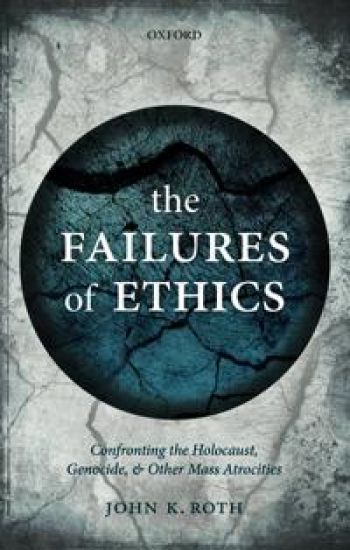
Defined by deliberation about the difference between right and wrong, encouragement not to be indifferent toward that difference, resistance against what is wrong, and action in support of what is right, ethics is civilization's keystone. The Failures of Ethics concentrates on the multiple shortfalls and shortcomings of thought, decision, and action that tempt and incite us human beings to inflict incalculable harm. Absent the overriding of moral sensibilities, if not the collapse or collaboration of ethical traditions, the Holocaust, genocide, and other mass atrocities could not have happened. Although these catastrophes do not pronounce the death of ethics, they show that ethics is vulnerable, subject to misuse and perversion, and that no simple reaffirmation of ethics, as if nothing disastrous had happened, will do. Moral and religious authority has been fragmented and weakened by the accumulated ruins of history and the depersonalized advances of civilization that have taken us from a bloody twentieth century into an immensely problematic twenty-first. What nevertheless remain essential are spirited commitment and political will that embody the courage not to let go of the ethical but to persist for it in spite of humankind's self-inflicted destructiveness. Salvaging the fragmented condition of ethics, this book shows how respect and honor for those who save lives and resist atrocity, deepened attention to the dead and to death itself, and appeals for human rights and renewed spiritual sensitivity confirm that ethics contains and remains an irreplaceable safeguard against its own failures.
Holocaust Politics

Holocaust Politics

John K Roth

Wipf Stock Publishers
2016
pokkari
More than half a century after Nazi Germany's genocidal assault on the Jewish people, the Holocaust grips our attention as never before, raising hotly-debated questions: how is the Holocaust best remembered? What are its lessons? Who gets to answer those questions? Who owns the Holocaust? These questions provoke disagreements that can be cutthroat or constructive. Taking its point of departure from the controversy that swirled around the author's aborted appointment as director of the Center for Advanced Holocaust Studies, "Holocaust Politics" shows how contemporary attitudes and priorities compete to determine that all-important difference.
The Failures of Ethics

The Failures of Ethics

John K. Roth

Oxford University Press
2015
sidottu
Defined by deliberation about the difference between right and wrong, encouragement not to be indifferent toward that difference, resistance against what is wrong, and action in support of what is right, ethics is civilization's keystone. The Failures of Ethics concentrates on the multiple shortfalls and shortcomings of thought, decision, and action that tempt and incite us human beings to inflict incalculable harm. Absent the overriding of moral sensibilities, if not the collapse or collaboration of ethical traditions, the Holocaust, genocide, and other mass atrocities could not have happened. Although these catastrophes do not pronounce the death of ethics, they show that ethics is vulnerable, subject to misuse and perversion, and that no simple reaffirmation of ethics, as if nothing disastrous had happened, will do. Moral and religious authority has been fragmented and weakened by the accumulated ruins of history and the depersonalized advances of civilization that have taken us from a bloody twentieth century into an immensely problematic twenty-first. What nevertheless remain essential are spirited commitment and political will that embody the courage not to let go of the ethical but to persist for it in spite of humankind's self-inflicted destructiveness. Salvaging the fragmented condition of ethics, this book shows how respect and honor for those who save lives and resist atrocity, deepened attention to the dead and to death itself, and appeals for human rights and renewed spiritual sensitivity confirm that ethics contains and remains an irreplaceable safeguard against its own failures.
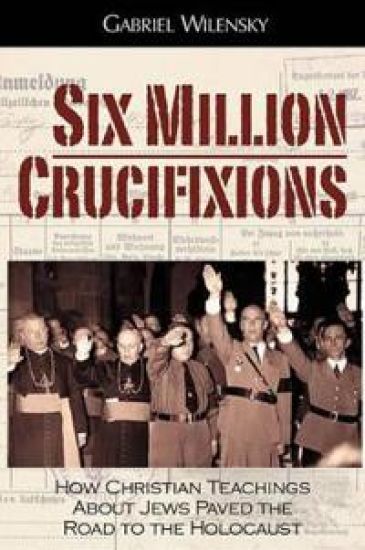
Six Million Crucifixions

Six Million Crucifixions

Gabriel Wilensky; John K. Roth

QWERTY Publishers
2010
pokkari
Six Million Crucifixions examines the root causes of antisemitism in Christianity and how that prepared the soil for the secular antisemitism that culminated in the Holocaust. The book covers the last two thousand years of history, from the origins of this hatred all the way to the advent of modern antisemitism. It also covers the role of the Churches during the Third Reich, and the role of the Vatican in setting up escape routes for wanted war criminals after WWII. Six Million Crucifixions concludes by making the point that after the Second World War the Allies should have set up an international trial and put any and all clergymen who may have had a role in the defamation of and incitement against the Jewish people, as well as those who helped wanted Nazis escape Justice and other charges, on the dock.
After-words

After-words

David Patterson; John K. Roth

University of Washington Press
2005
pokkari
More than fifty years after it ended, the Holocaust continues to leave survivors and their descendants, as well as historians, philosophers, and theologians, searching for words to convey the enormity of that event. Efforts to express its realities and its impact on successive generations often stretch language to the breaking point--or to the point of silence. Words whose meaning was contested before the Holocaust prove even more fragile in its wake.David Patterson and John K. Roth identify three such "after-words": forgiveness, reconciliation, and justice. These words, though forever altered by the Holocaust, are still spoken and heard. But how should the concepts they represent be understood? How can their integrity be restored within the framework of current philosophical and, especially, religious traditions? Writing in a format that creates the feel of dialogue, the nine contributors to After-Words tackle these and other difficult questions about the nature of memory and forgiveness after the Holocaust to encourage others to participate in similar inter- and intrafaith inquiries.The contributors to After-Words are members of the Pastora Goldner Holocaust Symposium. Led since its founding in 1996 by Leonard Grob and Henry Knight, the symposium's Holocaust and genocide scholars--a group that is interfaith, international, interdisciplinary, and intergenerational--meet biennially in Oxfordshire, England.
Pope Pius XII and the Holocaust

Pope Pius XII and the Holocaust

John K. Roth; Carol Rittner

Continuum Publishing Corporation
2004
nidottu
Collaborative effort by a number of the world's leading experts on the Holocaust. Lively, but not sensationalistic, this book is balanced but on the cutting edge of one of the most important debates in this field: how should Vatican policies during World War II be understood? Specifically, could Pope Pius XII have curbed the Holocaust by vigorously condemning the Nazi killing of Jews? Was Pius XII really 'Hitler's Pope', as John Cornwell's provocative book recently suggested? Or has he unfairly become a scapegoat when he is really deserving of canonization as a Roman Catholic saint instead? In Pope Pius XII and the Holocaust, well-informed scholars--including Michael Marrus, Michael Phayer, Richard L. Rubenstein and Susan Zuccotti--wrestle with these questions. The book has four main themes: (1) Pope Pius XII must be understood in his particular historical context. (2) Pope Pius XII put the well-being of the Roman Catholic Church--as he understood that well-being--first and foremost. (3) In retrospect, Pope Pius XII's priorities--understandable though they are--not only make him a problematic Christian leader but also raise important questions about post-Holocaust Christian identity. (4) Jewish and Christian memories of the Holocaust will remain different, but reconciliation can continue to grow. On all sides, relations between Christians and Jews can be improved by an honest facing of history and by continuing reflection about what post-Holocaust Christian and Jewish identities ought--and ought not--to mean.
After-words

After-words

David Patterson; John K. Roth

University of Washington Press
2003
sidottu
More than fifty years after it ended, the Holocaust continues to leave survivors and their descendants, as well as historians, philosophers, and theologians, searching for words to convey the enormity of that event. Efforts to express its realities and its impact on successive generations often stretch language to the breaking point--or to the point of silence. Words whose meaning was contested before the Holocaust prove even more fragile in its wake.David Patterson and John K. Roth identify three such "after-words": forgiveness, reconciliation, and justice. These words, though forever altered by the Holocaust, are still spoken and heard. But how should the concepts they represent be understood? How can their integrity be restored within the framework of current philosophical and, especially, religious traditions? Writing in a format that creates the feel of dialogue, the nine contributors to After-Words tackle these and other difficult questions about the nature of memory and forgiveness after the Holocaust to encourage others to participate in similar inter- and intrafaith inquiries.The contributors to After-Words are members of the Pastora Goldner Holocaust Symposium. Led since its founding in 1996 by Leonard Grob and Henry Knight, the symposium's Holocaust and genocide scholars--a group that is interfaith, international, interdisciplinary, and intergenerational--meet biennially in Oxfordshire, England.
Different Voices

Different Voices

Carol Ann Rittner; John K. Roth

Paragon House Publishers
1998
nidottu
Shares the experiences of women Holocaust survivors, including resistance fighters, concentration camp inmates, ghetto dwellers, and those who hid from the Nazis