Kirjojen hintavertailu. Mukana 12 595 353 kirjaa ja 12 kauppaa.

Kirjailija

John Kaltner

Kirjat ja teokset yhdessä paikassa: 14 kirjaa, julkaisuja vuosilta 1999-2026, suosituimpien joukossa What Then Does This Text Mean?. Vertaile teosten hintoja ja tarkista saatavuus suomalaisista kirjakaupoista.

14 kirjaa

Kirjojen julkaisuhaarukka 1999-2026.

The Use of Arabic in Hebrew Biblical Lexicography

The Use of Arabic in Hebrew Biblical Lexicography

John Kaltner

Pickwick Publications
2023
sidottu
One of the common ways biblical scholars attempt to uncover the sense of Hebrew words with unknown meanings, or to propose new meanings for well-attested words, is through appeal to cognate languages. Among the languages used for such purposes none has been more frequently cited than Arabic. This dissertation studies the methodology employed by Hebraists drawing upon the Arabic sources, points out some of the flaws occasionally found in their work, and suggests ways of avoiding such pitfalls in the future.
The Use of Arabic in Hebrew Biblical Lexicography

The Use of Arabic in Hebrew Biblical Lexicography

John Kaltner

Pickwick Publications
2023
pokkari
One of the common ways biblical scholars attempt to uncover the sense of Hebrew words with unknown meanings, or to propose new meanings for well-attested words, is through appeal to cognate languages. Among the languages used for such purposes none has been more frequently cited than Arabic. This dissertation studies the methodology employed by Hebraists drawing upon the Arabic sources, points out some of the flaws occasionally found in their work, and suggests ways of avoiding such pitfalls in the future.
Jonah

Jonah

Rhiannon Graybill; John Kaltner; Steven L. McKenzie

YALE UNIVERSITY PRESS
2023
sidottu
An innovative translation and commentary on the book of Jonah by a trio of award-winning scholars The book of Jonah, which tells the outlandish story of a disobedient prophet swallowed by a great fish, is one of the Bible’s best-known narratives. This tale has fascinated readers for millennia and has inspired countless interpretations. This commentary features a new translation of Jonah as well as an introduction outlining the major interpretive issues in the text. The introduction traces the composition history of the book, paying special attention to the psalm in the second chapter; and the authors explore new theories surrounding the time and place where Jonah delivers his message to Nineveh, as well as the city’s act of repentance. In addition to these features, this volume draws on a variety of critical approaches to biblical literature—including affect theory, animal studies, performance criticism, postcolonial criticism, psychological criticism, spatial theory, and trauma theory—to reveal the book’s many interpretive possibilities. An updated treatment of Jonah’s reception history includes analyses of the story in religious traditions, art and literature, and popular culture.
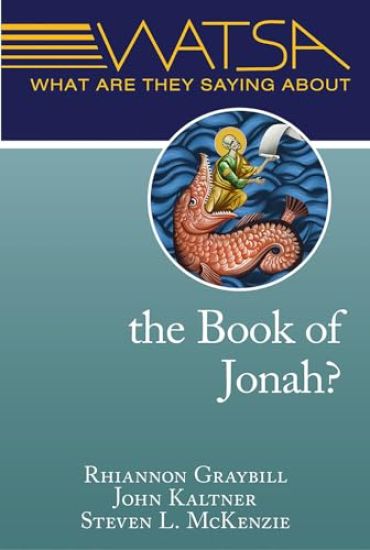
What Are They Saying About the Book of Jonah?

What Are They Saying About the Book of Jonah?

Rhiannon Graybill; John Kaltner; Steven L. McKenzie

PAULIST PRESS INTERNATIONAL,U.S.
2023
nidottu
Aimed at a general audience, this book provides an overview of how biblical scholars have addressed important issues related to the biblical book of Jonah. Moving far beyond 'the story about that guy and the whale,' this work leads readers to appreciate how complex a work Jonah is and the unique contribution it makes to biblical literature.Endorsements"Both erudite and readable, this book masterfully synthesizes recent scholarship on Jonah via a close reading, a survey of the book's mysteries, and a review of its reception across time."—James D. Nogalski, professor of Hebrew Bible, W. Marshall and Lulie Craig Professor of Bible, Baylor University"These scholars combine their expertise with clear and engaging prose, perfect for the undergraduate classroom or Bible study groups. I especially appreciate their discussions of the Jonah traditions in Christianity, Judaism, and Islam."—Corrine L. Carvalho, professor of theology, University of St. Thomas"This well-researched and easily accessible book manages not only to condense the major redaction-critical, literary, and reception-historical theories pertaining to the book of Jonah but also to offer new and exciting insights."—Lena-Sofia Tiemeyer, professor in Old Testament exegesis, ALT School of Theology, SwedenRhiannon Graybill is Marcus M. and Carole M. Weinstein and Gilbert M. and Fannie S. Rosenthal Chair of Jewish Studies at the University of Richmond.John Kaltner is Virginia Ballou McGehee Professor of Muslim-Christian Relations at Rhodes College.Steven L. McKenzie is professor of religious studies and the Spence L. Wilson Senior Research Fellow at Rhodes College.†
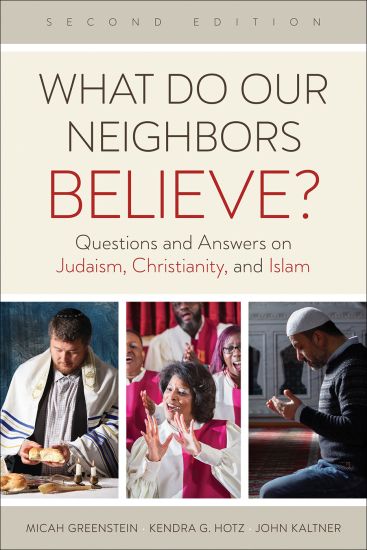
What Do Our Neighbors Believe? Second Edition

What Do Our Neighbors Believe? Second Edition

Micah Greenstein; Kendra G. Hotz; John Kaltner

Westminster/John Knox Press,U.S.
2019
pokkari
The current social and political climate makes it easy to benefit from religious misunderstanding. Political and religious leaders create fear of the religious other in order to drum up support for themselves. But the best way to combat deliberate misrepresentation is to provide accurate, timely information about the three great monotheistic religions: Judaism, Christianity, and Islam. Originally published in 2007, What Do Our Neighbors Believe? Second Edition organizes the three belief systems, asking the same questions of each: When and where did each originate? What are the sacred writings? What kind of leaders does each have? What are their most essential beliefs? New sections explore current ethical questions and issues, including the deliberate use of misinformation about Islam to bolster power and generate fear and the recent rise in anti-Semitic hate crimes. By introducing the common aspects of Judaism, Christianity, and Islam, the authors make understanding their genuine differences and their many similarities much more possible.
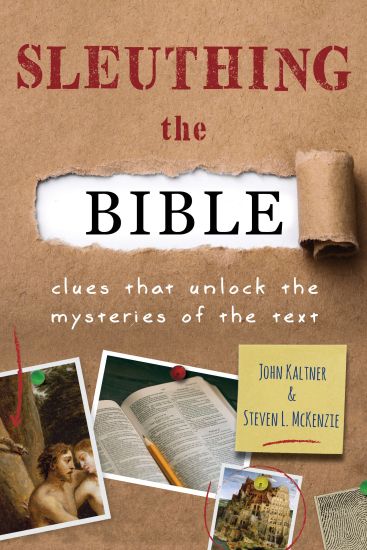
Sleuthing the Bible

Sleuthing the Bible

John Kaltner

William B. Eerdmans Publishing Company
2019
nidottu
Why is there crime-scene tape on my Bible? Elementary, my dear reader.There is an element of detective work to biblical scholarship that entails sniffing out and interpreting clues that often escape the notice of readers. John Kaltner and Steven L. McKenzie introduce the art of sleuthing the Bible, providing the necessary training to hunt for clues and piece them together to understand the larger picture.Sleuthing the Bible helps answer questions that occur during thoughtful examination of the Bible and provides exercises enabling readers to work through biblical passages on their own. Kaltner and McKenzie analyze two kinds of clues: (1) Smoking Guns-- those that are obvious upon any close reading of biblical texts, and (2) Dusting for Prints--those that are more subtle or hidden from nonspecialists because of their unfamiliarity with the languages, culture, and larger content of the Bible.Written in a jargon-free and accessible style, Sleuthing the Bible is an ideal resource for anyone who wants to dig deeper into the biblical text.
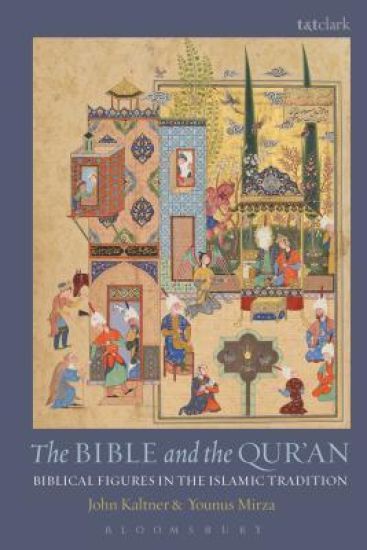
The Bible and the Qur'an

The Bible and the Qur'an

John Kaltner; Younus Mirza

T. T.Clark Ltd
2018
sidottu
The Bible and the Qur’an provides an overview of all the figures and groups who are mentioned in both the Bible and the Qur’an. Principal focus centres on the similarities and differences between the presentations of these characters in the two texts, with special emphasis placed on how they appear in the Islamic text. References are also included to how many of the individuals/groups discussed are treated in other Islamic sources.Each figure or group includes: (1) a list of relevant Qur’an passages; (2) a description of how the individual/group is presented in the Islamic Texts; (3) questions and issues to consider; (4) suggestions for further readings. An introductory section provides a basic orientation to the Qur’an and other Islamic sources.
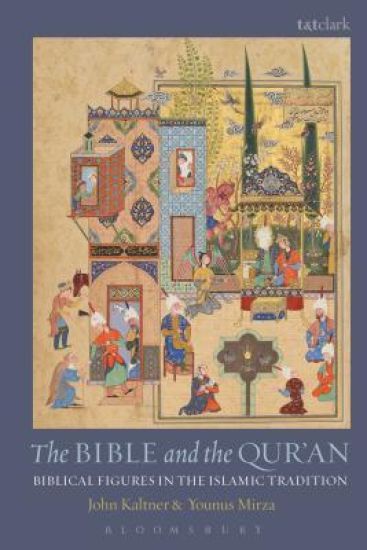
The Bible and the Qur'an

The Bible and the Qur'an

John Kaltner; Younus Mirza

T. T.Clark Ltd
2018
nidottu
The Bible and the Qur’an provides an overview of all the figures and groups who are mentioned in both the Bible and the Qur’an. Principal focus centres on the similarities and differences between the presentations of these characters in the two texts, with special emphasis placed on how they appear in the Islamic text. References are also included to how many of the individuals/groups discussed are treated in other Islamic sources.Each figure or group includes: (1) a list of relevant Qur’an passages; (2) a description of how the individual/group is presented in the Islamic Texts; (3) questions and issues to consider; (4) suggestions for further readings. An introductory section provides a basic orientation to the Qur’an and other Islamic sources.
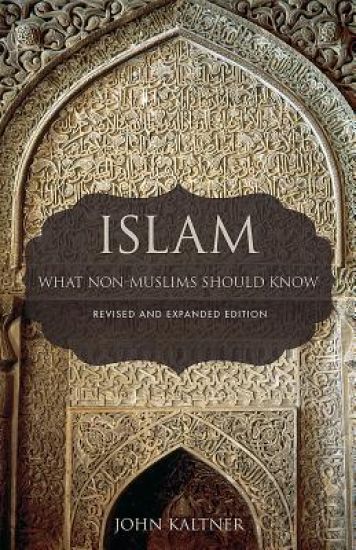
Islam

Islam

John Kaltner

Fortress Press,U.S.
2016
pokkari
Recent events have focused attention on Islam, the often - misunderstood faith of one billion people. Westerners are showing a new curiosity about Islam and other religions, in part, perhaps, because religion is arguably the single most important and volatile factor in geopolitics today. Islam needs to be understood on its own terms, apart from extreme expressions, John Kaltner argues. This revised and expanded edition of a trusted text offers updated information about Islam in an accessible and sympathetic presentation. Kaltner presents Islam as first and foremost a religion of practices. Showing the deep humanism of Islam and its most cherished commitments, Kaltner presents Islam through assertions that counter frequent misconceptions of the faith.
Introducing the Qur'an

Introducing the Qur'an

John Kaltner

Fortress Press,U.S.
2011
pokkari
Award-winning professor John Kaltner's new work offers a general introduction and orientation to the Qur'an. It surveys the origin, structure, contents, study, and use of Islam's sacred text. Offering selective rather than comprehensive coverage, the work allows for discussion and analysis of specific themes and issues of interest to modern readers.Following an introduction that describes and situates how the Qur'an is both studied and experienced, Kaltner's book takes up the following themes by chapter to foster a contemporary understanding and appreciation of the Qur'an: the natural environment, Muslim life, gender and sexuality, non-Muslims and the Other, jihad, war and peace, and life after death. Significant passages from the Qur'an are identified and analyzed, with a special focus on how modern scholars, both Muslim and non-Muslim, understand them. Kaltner intersperses his book with numerous photographs and textboxes to emphasize and highlight important elements of the Qur'an, its history, and its relevance to contemporary life.Check out the audio glossary on the Student tab to hear the author pronounce the Arabic words!
Ishmael Instructs Isaac

Ishmael Instructs Isaac

John Kaltner

Liturgical Press
1999
pokkari
Jews, Christians, and Muslims trace their roots to Abraham and yet it is a shock to many Bible readers that some of the characters and stories in their sacred text are also found in the pages of Islam's sacred text, the Qur'an. By exploring the relationship between the Bible and the Qur'an in Ishmael Instructs Isaac, John Kaltner challenges Bible readers to think about their sacred book in new, exciting ways. In doing so, he leads all to a better appreciation of Islam.After a brief overview of the text, themes, structure, and use of the Qur'an, Kaltner focuses on traditions that are shared with the Bible. He explains that the Bible and Qur'an contain many of the same themes, figures, and episodes. However, at times, there are significant differences in their descriptions of the same event or figure. By discussing such topics and figures as God, humanity, prophecy, creation, life after death, Abraham, Moses, Jesus, and Mary, Kaltner examines the similarities and differences between the two texts. This comparative method allows readers to better appreciate both what is distinctive about Islam and what it shares with Judaism and Christianity.Jews and Christians view Isaac as the son of Abraham in whom the family line continued. Muslims, on the other hand, view Isaac's brother Ishmael as the rightful heir. This difference must not obscure what is held in common: a belief in the one God and a family - albeit distant - relationship.Written for undergraduate and seminary courses on Islam, the Qur'an, comparative religions, inter-religious dialogue, world scriptures, and biblical interpretation, Ishmael Instructs Isaac is also a useful resource for discussion groups in churches, synagogues, and mosques.Includes English translations of the Qur'anic texts discussed.John Kaltner, PhD, is assistant professor of religious studies at Rhodes College where he teaches courses in the Bible and Islam. He has worked in the Middle East with the Catholic Foreign Mission Society of America.