Kirjojen hintavertailu. Mukana 12 657 676 kirjaa ja 12 kauppaa.

Kirjailija

John Kay

Kirjat ja teokset yhdessä paikassa: 43 kirjaa, julkaisuja vuosilta 1992-2026, suosituimpien joukossa A series of original Portraits and Caricature Etchings by J. Kay; with biographical sketches and illustrative anecdotes. [Edited by H. P.] VOL. II, NEW EDITION. Vertaile teosten hintoja ja tarkista saatavuus suomalaisista kirjakaupoista.

43 kirjaa

Kirjojen julkaisuhaarukka 1992-2026.

A series of original Portraits and Caricature Etchings by J. Kay; with biographical sketches and illustrative anecdotes. [Edited by H. P.] VOL. II, NEW EDITION
Title: A series of original Portraits and Caricature Etchings by ... J. Kay; ... with biographical sketches and illustrative anecdotes. Edited by H. P.]Publisher: British Library, Historical Print EditionsThe British Library is the national library of the United Kingdom. It is one of the world's largest research libraries holding over 150 million items in all known languages and formats: books, journals, newspapers, sound recordings, patents, maps, stamps, prints and much more. Its collections include around 14 million books, along with substantial additional collections of manuscripts and historical items dating back as far as 300 BC.The FICTION & PROSE LITERATURE collection includes books from the British Library digitised by Microsoft. The collection provides readers with a perspective of the world from some of the 18th and 19th century's most talented writers. Written for a range of audiences, these works are a treasure for any curious reader looking to see the world through the eyes of ages past. Beyond the main body of works the collection also includes song-books, comedy, and works of satire. ++++The below data was compiled from various identification fields in the bibliographic record of this title. This data is provided as an additional tool in helping to insure edition identification: ++++ British Library Paton, Hugh; Kay, John; 1877. 2 vol.; 4 . 1303.m.14.
The Long and the Short of It

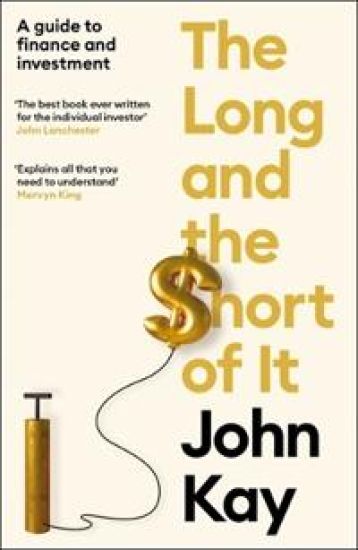
The Long and the Short of It

John Kay

Profile Books Ltd
2026
pokkari
This book provides a guide to the complexities of modern finance. It describes the basics of investment and the sophisticated innovations of the modern financial system. It explains how the follies of finance have threatened the stability of the world economy, and describes an environment that is complex and sophisticated, but greedy, cynical and self-interested. This book explains how to put your finances in the only hands you can confidently trust - your own. Readers will learn everything they need to be their own investment manager. They will recognise their investment options, the institutions that try to sell them, and how to distinguish between fact and fiction in what companies say. They will discover the principles of sound investment and the research that supports these principles. Crucially, they will learn a practical investment strategy and how to implement it. Leading economist and hugely successful investor John Kay uses his academic credentials and practical experience to lay out the key principles of investment with characteristic clarity and dry humour. This is the only book about finance and investment anyone needs, and the one book they must have.
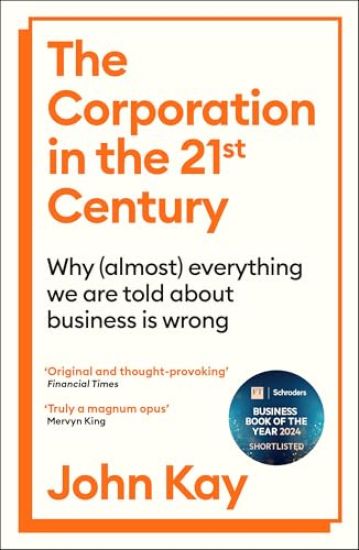
The Corporation in the Twenty-First Century: Why (Almost) Everything We Are Told about Business Is Wrong
A radical reappraisal of the nature and activities of business--what it is for and how it works "A characteristically acerbic analysis of the archetypal organisational unit of capitalism."--Andrew Hill, Financial Times, "Best Books of 2024: Business" Shortlisted for the 2024 Financial Times and Schroders Business Book of the Year Award In the world of Adam Smith and Karl Marx, capitalists built and controlled mills and factories. That relationship between capital and labor continued in the automobile assembly lines and petrochemical plants of the twentieth century. But no longer: products and production have dematerialized. The goods and services provided by the leading companies of the twenty-first century appear on your screen, fit in your pocket, or occupy your head. Ownership of the means of production is a redundant concept. Workers are the means of production; increasingly, they take the plant home. Capital is a service bought from a specialist supplier with little influence over customer businesses. The professional managers who run modern corporations do not exert authority because they are wealthy; they are wealthy because they exert authority. John Kay's incisive overhaul of our ideas about business redefines our understanding of successful commercial activity and the corporation--and describes how we have come to "love the product" as we "hate the producer." This is a brilliant and original work from one of the greatest economists.
The Corporation in the Twenty-First Century
SHORTLISTED FOR THE FINANCIAL TIMES AND SCHRODERS BUSINESS BOOK OF THE YEAR 2024 A NEW STATESMAN BOOK OF THE YEAR 2024 A FINANCIAL TIMES BEST BUSINESS BOOK OF THE YEAR 2024 'Original and thought-provoking... A brilliantly erudite account of the major waves in the theory and practice of management' Financial Times 'Instead of theory it has wisdom... an excellent book' New Statesman For generations, we have defined a corporation as a business that uses its accumulated wealth to own the means of production and exercise economic power. That is no longer the reality. Corporations no longer control their own industries, and our most desired goods and services aren't stacked in container ships: they appear on your screen, fit in your pocket or occupy your head. But even as we consume more than ever before, big business faces a crisis of legitimacy. The pharmaceutical industry creates life-saving vaccines but has lost the trust of the public. The widening pay gap between executives and employees is destabilising our societies. Facebook and Google have more customers than any companies in history but are widely reviled. In incisive, provocative prose, economist John Kay describes how the pursuit of shareholder value has destroyed mammoth companies, redefines successful commercial activity, and looks to the future of what the corporation might be.
A Series Of Original Portraits And Caricature Etchings
"A Series Of Original Portraits And Caricature Etchings, With Biographical Sketches And Anectoes" presents a fascinating glimpse into the lives and personalities of historical figures through the art of etching. Featuring the work of John Kay, this collection offers a unique blend of visual artistry and biographical detail. Each portrait is accompanied by insightful sketches and anecdotes, providing context and depth to the subject's character and achievements. Kay's skill in caricature brings a distinctive and often humorous perspective to these portrayals, making the figures accessible and engaging to modern readers. This volume is a valuable resource for those interested in art history, biography, and the social dynamics of the period. It captures a moment in time and immortalizes its subjects through the enduring medium of etching. This work has been selected by scholars as being culturally important, and is part of the knowledge base of civilization as we know it. This work was reproduced from the original artifact, and remains as true to the original work as possible. Therefore, you will see the original copyright references, library stamps (as most of these works have been housed in our most important libraries around the world), and other notations in the work. This work is in the public domain in the United States of America, and possibly other nations. Within the United States, you may freely copy and distribute this work, as no entity (individual or corporate) has a copyright on the body of the work. As a reproduction of a historical artifact, this work may contain missing or blurred pages, poor pictures, errant marks, etc. Scholars believe, and we concur, that this work is important enough to be preserved, reproduced, and made generally available to the public. We appreciate your support of the preservation process, and thank you for being an important part of keeping this knowledge alive and relevant.
The Corporation in the Twenty-First Century: Why (Almost) Everything We Are Told about Business Is Wrong
A radical reappraisal of the nature and activities of business--what it is for and how it works "A characteristically acerbic analysis of the archetypal organisational unit of capitalism."--Andrew Hill, Financial Times, "Best Books of 2024: Business" Shortlisted for the 2024 Financial Times and Schroders Business Book of the Year Award In the world of Adam Smith and Karl Marx, capitalists built and controlled mills and factories. That relationship between capital and labor continued in the automobile assembly lines and petrochemical plants of the twentieth century. But no longer: products and production have dematerialized. The goods and services provided by the leading companies of the twenty-first century appear on your screen, fit in your pocket, or occupy your head. Ownership of the means of production is a redundant concept. Workers are the means of production; increasingly, they take the plant home. Capital is a service bought from a specialist supplier with little influence over customer businesses. The professional managers who run modern corporations do not exert authority because they are wealthy; they are wealthy because they exert authority. John Kay's incisive overhaul of our ideas about business redefines our understanding of successful commercial activity and the corporation--and describes how we have come to "love the product" as we "hate the producer." This is a brilliant and original work from one of the greatest economists.
The Corporation in the Twenty-First Century
SHORTLISTED FOR THE FINANCIAL TIMES AND SCHRODERS BUSINESS BOOK OF THE YEAR 2024 A NEW STATESMAN BOOK OF THE YEAR 2024 A FINANCIAL TIMES BEST BUSINESS BOOK OF THE YEAR 2024 'Original and thought-provoking... A brilliantly erudite account of the major waves in the theory and practice of management' Financial Times 'Instead of theory it has wisdom... an excellent book' New Statesman For generations, we have defined a corporation as a business that uses its accumulated wealth to own the means of production and exercise economic power. That is no longer the reality. Corporations no longer control their own industries, and our most desired goods and services aren't stacked in container ships: they appear on your screen, fit in your pocket or occupy your head. But even as we consume more than ever before, big business faces a crisis of legitimacy. The pharmaceutical industry creates life-saving vaccines but has lost the trust of the public. The widening pay gap between executives and employees is destabilising our societies. Facebook and Google have more customers than any companies in history but are widely reviled. In incisive, provocative prose, economist John Kay describes how the pursuit of shareholder value has destroyed mammoth companies, redefines successful commercial activity, and looks to the future of what the corporation might be.
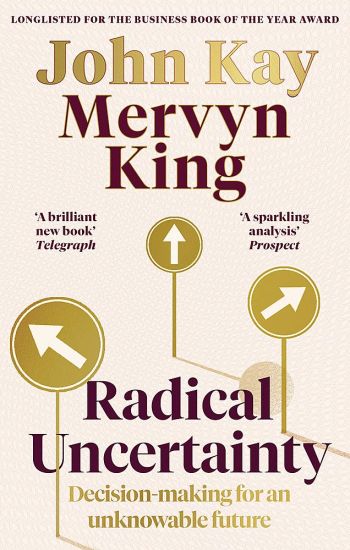
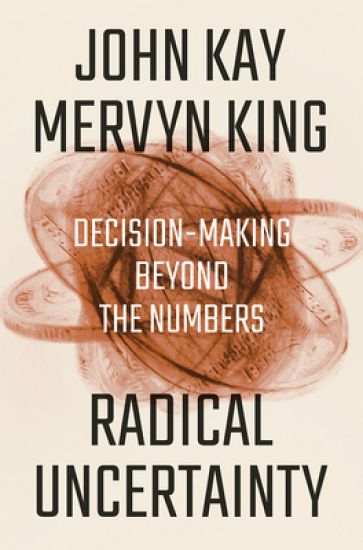
Radical Uncertainty

Radical Uncertainty

Mervyn King; John Kay

The Bridge Street Press
2021
pokkari
'A brilliant new book' Daily Telegraph'Well written . . . and often entertaining'The Times'A sparkling analysis'ProspectWhen uncertainty is all around us, and the facts are not clear, how can we make good decisions?We do not know what the future will hold, particularly in the midst of a crisis, but we must make decisions anyway. We regularly crave certainties which cannot exist and invent knowledge we cannot have, forgetting that humans are successful because we have adapted to an environment that we understand only imperfectly. Throughout history we have developed a variety of ways of coping with the radical uncertainty that defines our lives.This incisive and eye-opening book draws on biography, history, mathematics, economics and philosophy to highlight the most successful - and most short-sighted - methods of dealing with an unknowable future. Ultimately, the authors argue, the prevalent method of our age falls short, giving us a false understanding of our power to make predictions, leading to many of the problems we experience today.Tightly argued, provocative and written with wit and flair, Radical Uncertainty is at once an exploration of the limits of numbers and a celebration of human instinct and wisdom.
Radical Uncertainty: Decision-Making Beyond the Numbers

Radical Uncertainty: Decision-Making Beyond the Numbers

John Kay; Mervyn King

W. W. Norton Company
2021
nidottu
Some uncertainties are resolvable. The insurance industry's actuarial tables and the gambler's roulette wheel both yield to the tools of probability theory. Most situations in life, however, involve a deeper kind of uncertainty, a radical uncertainty for which historical data provide no useful guidance to future outcomes. Radical uncertainty concerns events whose determinants are insufficiently understood for probabilities to be known or forecasting possible. Before President Barack Obama made the fateful decision to send in the Navy Seals, his advisers offered him wildly divergent estimates of the odds that Osama bin Laden would be in the Abbottabad compound. In 2000, no one--not least Steve Jobs--knew what a smartphone was; how could anyone have predicted how many would be sold in 2020? And financial advisers who confidently provide the information required in the standard retirement planning package--what will interest rates, the cost of living, and your state of health be in 2050?--demonstrate only that their advice is worthless.The limits of certainty demonstrate the power of human judgment over artificial intelligence. In most critical decisions there can be no forecasts or probability distributions on which we might sensibly rely. Instead of inventing numbers to fill the gaps in our knowledge, we should adopt business, political, and personal strategies that will be robust to alternative futures and resilient to unpredictable events. Within the security of such a robust and resilient reference narrative, uncertainty can be embraced, because it is the source of creativity, excitement, and profit.
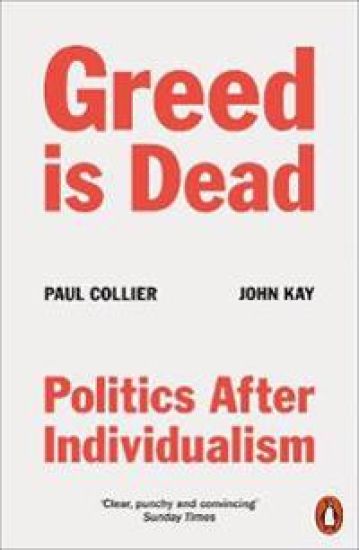
Greed Is Dead

Greed Is Dead

Paul Collier; John Kay

PENGUIN BOOKS LTD
2021
pokkari
Two of the UK's leading economists call for an end to extreme individualism as the engine of prosperity 'provocative but thought-provoking and nuanced' TelegraphThroughout history, successful societies have created institutions which channel both competition and co-operation to achieve complex goals of general benefit. These institutions make the difference between societies that thrive and those paralyzed by discord, the difference between prosperous and poor economies. Such societies are pluralist but their pluralism is disciplined.Successful societies are also rare and fragile. We could not have built modernity without the exceptional competitive and co-operative instincts of humans, but in recent decades the balance between these instincts has become dangerously skewed: mutuality has been undermined by an extreme individualism which has weakened co-operation and polarized our politics.Collier and Kay show how a reaffirmation of the values of mutuality could refresh and restore politics, business and the environments in which people live. Politics could reverse the moves to extremism and tribalism; businesses could replace the greed that has degraded corporate culture; the communities and decaying places that are home to many could overcome despondency and again be prosperous and purposeful. As the world emerges from an unprecedented crisis we have the chance to examine society afresh and build a politics beyond individualism.
Kay'S Edinburgh Portraits

Kay'S Edinburgh Portraits

James Paterson; John Kay

Alpha Edition
2021
pokkari
Kay'S Edinburgh Portraits: A Series Of Anecdotal Biographies Chiefly Of Scotchmen (Volume II) has been considered by academicians and scholars of great significance and value to literature. This forms a part of the knowledge base for future generations. So that the book is never forgotten we have represented this book in a print format as the same form as it was originally first published. Hence any marks or annotations seen are left intentionally to preserve its true nature.
Kay'S Edinburgh Portraits

Kay'S Edinburgh Portraits

James Paterson; John Kay

Alpha Edition
2021
pokkari
Kay'S Edinburgh Portraits: A Series Of Anecdotal Biographies Chiefly Of Scotchmen (Volume I) has been considered by academicians and scholars of great significance and value to literature. This forms a part of the knowledge base for future generations. So that the book is never forgotten we have represented this book in a print format as the same form as it was originally first published. Hence any marks or annotations seen are left intentionally to preserve its true nature.
Radical Uncertainty: Decision-Making Beyond the Numbers

Radical Uncertainty: Decision-Making Beyond the Numbers

John Kay; Mervyn King

W. W. Norton Company
2020
sidottu
Some uncertainties are resolvable. The insurance industry's actuarial tables and the gambler's roulette wheel both yield to the tools of probability theory. Most situations in life, however, involve a deeper kind of uncertainty, a radical uncertainty for which historical data provide no useful guidance to future outcomes. Radical uncertainty concerns events whose determinants are insufficiently understood for probabilities to be known or forecasting possible. Before President Barack Obama made the fateful decision to send in the Navy Seals, his advisers offered him wildly divergent estimates of the odds that Osama bin Laden would be in the Abbottabad compound. In 2000, no one--not least Steve Jobs--knew what a smartphone was; how could anyone have predicted how many would be sold in 2020? And financial advisers who confidently provide the information required in the standard retirement planning package--what will interest rates, the cost of living, and your state of health be in 2050?--demonstrate only that their advice is worthless.The limits of certainty demonstrate the power of human judgment over artificial intelligence. In most critical decisions there can be no forecasts or probability distributions on which we might sensibly rely. Instead of inventing numbers to fill the gaps in our knowledge, we should adopt business, political, and personal strategies that will be robust to alternative futures and resilient to unpredictable events. Within the security of such a robust and resilient reference narrative, uncertainty can be embraced, because it is the source of creativity, excitement, and profit.
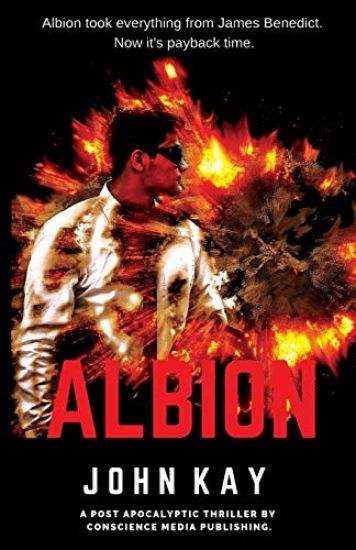
Albion

Albion

John Kay

Conscience Media
2019
pokkari
ALBION: A POST-APOCALYPTIC DYSTOPIAN THRILLERThe walls have ears, the trees have eyes, in Albion. 2050, a post apocalypse Britain, known now by its ancient name of Albion. James Benedict is just an ordinary man who finds himself caught up in the swirling tides of history, as the society that we have known collapses around him, following the plague that claims half the population of the world. Where did it come from, the mysterious sickness that wreaks such havoc? Was it a virus that escaped by chance from a government laboratory or is there much more to it than that? Benedict recounts his experiences in his journal, a story that takes us from his childhood in a Midlands industrial town to middle age and his status as the country's most wanted man, labelled by the Party as an enemy of the people.What were the events that led Benedict to find himself in this situation and who were the three very different women who helped to shape the greater part of his life, the women who have helped to form the person he is eventually to become? A man idealistic and brave, an individual who will risk everything so that generations as yet unborn will know of the conspiracy that led to the oppression of a nation and the truth of what life was like for ordinary citizens in the mythical place known as Albion. Everything is revealed as we follow the twists and turns that lead him eventually to discover the true nature of the man behind the mask, the leader of the all-knowing, all-seeing Party and what really happened to trigger the apocalypse.
Kay's Edinburgh Portraits

Kay's Edinburgh Portraits

James Maidment; John Kay; James Paterson

Hansebooks
2017
pokkari
Kay's Edinburgh Portraits - a series of anecdotal biographies chiefly of Scotchmen - Vol. 1 is an unchanged, high-quality reprint of the original edition of 1885. Hansebooks is editor of the literature on different topic areas such as research and science, travel and expeditions, cooking and nutrition, medicine, and other genres. As a publisher we focus on the preservation of historical literature. Many works of historical writers and scientists are available today as antiques only. Hansebooks newly publishes these books and contributes to the preservation of literature which has become rare and historical knowledge for the future.