

Kirjailija
John Keane
Kirjat ja teokset yhdessä paikassa: 41 kirjaa, julkaisuja vuosilta 1985-2026, suosituimpien joukossa The Evolution of Geography. Vertaile teosten hintoja ja tarkista saatavuus suomalaisista kirjakaupoista.
41 kirjaa
Kirjojen julkaisuhaarukka 1985-2026.

The era when theorists could urge democrats to whistle their way through the world with an air of 'philosophical superficiality and light-mindedness' (Richard Rorty) is over. In a period of mounting global anxiety and widespread political unrest about democracy’s future, the moment has come for more thinking about thinking, and for considering the surprising connections between thinking and democracy. This book provocatively encourages readers to pose afresh key questions - what does it mean to think about democracy, and what exactly is thinking? – and offers them real-world examples of how in these troubled times adventurous thinking about democracy can contribute in practice to new ways of rejuvenating its spirit and substance. Running through the pages of this assemblage of lectures is a passionate belief that in these troubled times democracy – popular self-government and a whole way of life committed to the non-violent refusal of arbitrary power - remains an indispensable planetary ideal.
Democracy and despotism live closer together than you’d expect—in this briskly astute book, a leading political thinker reveals why that should alarm us all. We live in troubled times, marked by a sinister trend gaining the upper hand everywhere: a new despotism for the twenty-first century. John Keane’s latest book rings out boldly with a powerful warning: the keyword for understanding the new threats to democracy is despotism. This peril arises not only from regimes as different as Russia, Iran, Saudi Arabia and Turkey, but also from popularly elected demagogues opposed to power- sharing, from Orbán’s Hungary and Sheinbaum’s Mexico to Netanyahu’s Israel and Trump’s America. Keane shows why this new despotism defies the laws of political gravity. More than fear or raw force, it pursues a strange, pseudo-democratic type of government, led by rulers skilled in winning public loyalty through election-rigging, legal trickery, weaponised lying and talk of enemies. What’s more, alarmingly, these leaders hunt in packs. But what’s so good about democracy? In prose humming with energy, Keane shows that it’s much more than popular self-government based on free and fair elections. Democracy is a collective insistence that unaccountable power is always dangerous— and it’s the best way to stop demagogues and despots from ruining life on our planet.
The era when theorists could urge democrats to whistle their way through the world with an air of 'philosophical superficiality and light-mindedness' (Richard Rorty) is over. In a period of mounting global anxiety and widespread political unrest about democracy's future, the moment has come for more thinking about thinking, and for considering the surprising connections between thinking and democracy. This book provocatively encourages readers to pose afresh key questions - what does it mean to think about democracy, and what exactly is thinking? and offers them real-world examples of how in these troubled times adventurous thinking about democracy can contribute in practice to new ways of rejuvenating its spirit and substance. Running through the pages of this assemblage of lectures is a passionate belief that in these troubled times democracy popular self-government and a whole way of life committed to the non-violent refusal of arbitrary power - remains an indispensable planetary ideal.
In China's Galaxy Empire, John Keane and Baogang He target a development of enormous significance: China's return, after two centuries of decline and subjugation, to a position of prominence in world affairs. The daring thesis is that China is a newly rising empire of a kind never before witnessed: a galaxy empire. The first to be born of the digital communications era, this young empire is economically and politically powerful, and heavily armed. Its gravitational, push-pull effects are impacting every continent--and even outer space, where China is competing with the United States, India, and Europe to become the leading power. The galaxy empire interpretation rejects clichéd misdescriptions of China as a "big power" or monolithic "autocracy", and it explains why China defies older definitions of land, sea, and air-based empires. The book charts the developments that have made its rising empire so novel, including the launch of the Belt and Road Initiative, the rapid rise of a global Chinese middle class, and internal colonialism in Tibet and Xinjiang. The book notes the protean, shapeshifting qualities of this young empire. It therefore warns against the political and military perils of simple-minded, friend-versus-enemy thinking and "Big China, Bad China" politics. But it also proffers a forewarning to China's rulers: while every rising empire aims to shift the balance of power in its favour, no empire lasts forever, and some are stillborn, because they indulge illusions of greatness and reckless power adventures.
En tiempos de noticias falsas y verdades a medias, el poder radical de la democracia es mÁs importante que nunca. Este cÉlebre teÓrico sociopolÍtico nos revela la fascinante historia de tras de todo. Desde sus inicios en Siria-Mesopotamia—y no en Atenas—a su rol en la revoluciÓn francesa y estadounidense. La democracia ha puesto de cabeza a sistemas establecidos de control para introducirnos a nuevas maneras de disfrutar del poder y el privilegio. La democracia exige lo radical: uniÓn, igualdad y equidad. John Keane nos presenta la historia iluminante de la democracia, desde sus indicios bizantinos, su rol en Atenas, el nacimiento de la democracia electoral y representativa en Europa, a nuestra democracia moderna. Keane propone nuevas ideas que revelan el regalo global que es la democracia. Conforme el mundo se va organizando de manera democrÁtica, el estilo americano de democracia liberal ha introducido nuevas oportunidades en lugares como TaiwÁn, India, Senegal y Sud África. En una era de crisis, necesitamos de la democracia mÁs que nunca. In an age of fake news and half-truths, the radical potential of democracy is more important than ever, as this nimble, illuminating history by a celebrated political theorist reveals. From its beginnings in Syria-Mesopotamia – and not Athens – to its role in fomenting revolutionary fervour in France and America, democracy has subverted fixed ways of deciding who should enjoy power and privilege, and why. For democracy encourages people to do something radical: to come together as equals, to determine their own lives and futures. In this vigorous, illuminating history, acclaimed political thinker John Keane traces its byzantine history, from the age of assembly democracy in Athens, to European-inspired electoral democracy and the birth of representative government, to our age of monitory democracy. He gives new reasons why democracy is a precious global ideal. As the world has come to be shaped by democracy, it has grown more worldly – American-style liberal democracy is giving way to regional varieties with a local character in places such as Taiwan, India, Senegal and South Africa. In an age of crisis, we need the radical potential of democracy more than ever.
The Shortest History of Democracy: 4,000 Years of Self-Government - A Retelling for Our Times
John Keane
Experiment
2022
nidottu
This compact history unspools the tumultuous global story that began with democracy's radical core idea: We can collaborate, as equals, to determine our own futures. Acclaimed political thinker John Keane traces how this concept emerged and evolved, from the earliest "assembly democracies" in Syria-Mesopotamia to European-style "electoral democracy" and to our uncertain present. Today, thanks to our always-on communication channels, governments answer not only to voters on Election Day but to intense scrutiny every day. This is "monitory democracy"--in Keane's view, the most complex and vibrant model yet--but it's not invulnerable. Monitory democracy comes with its own pathologies, and the new despotism wields powerful warning systems, from social media to election monitoring, against democracy itself. At this urgent moment, when despots in countries such as China, Russia, Iran, and Saudi Arabia reject the promises of democratic power-sharing, Keane mounts a bold defense of a precious global ideal.

Refiguring Democracy
Ramón Feenstra; Simon Tormey; Andreu Casero-Ripollés; John Keane
TAYLOR FRANCIS LTD
2021
nidottu
Spain has become a remarkable democratic laboratory in which millions of citizens are experimenting with new forms of political expression. This book examines the dynamics of this political laboratory, showing that the upheavals it is experiencing are likely in the near future to affect democracies elsewhere in the world. Examining the new means of participation that were established in fields where digital communication tools enabled the launch of novel dynamics of political action, the reader will gain access to a comprehensive analysis of the reshaping and mutation process that has affected fields such as activism, political parties and political participation. Using a case study of the Spain between 2011 and 2015, the book focuses on the changes that have taken place in politics and communication in Spain, paying particular attention to the 15M movement and its disruptive, innovative strength in all matters related to politics and communication. The chapters cover political repertoires and the hybridization of horizontal and vertical political logics; the appearance of new political parties; the establishment of monitoring mechanisms as an essential means of political expression and participation; and the subversion of rationality across media as a product of the communication strategies implemented by online political activism.Showing that Spain is not just at the forefront of democratic innovation, but that it is a political laboratory in which trials are taking place that tell us much about the future of democracy everywhere, this book will be of great use to scholars of political theory, democracy and philosophy.
India is heralded as the world's largest democracy. Yet, there is now growing alarm about its democratic health. To Kill a Democracy gets to the heart of the matter. Combining poignant life stories with sharp scholarly insight, it rejects the belief that India was once a beacon of democracy but is now being ruined by the destructive forces of Modi-style populism. The book details the much deeper historical roots of the present-day assaults on civil liberties and democratic institutions. Democracy, the authors also argue, is much more than elections and the separation of powers. It is a whole way of life lived in dignity, and that is why they pay special attention to the decaying social foundations of Indian democracy. In compelling fashion, the book describes daily struggles for survival and explains how lived social injustices and unfreedoms rob Indian elections of their meaning, while at the same time feeding the decadence and iron-fisted rule of its governing institutions. Much more than a book about India, To Kill A Democracy argues that what is happening in the country is globally important, and not just because every third person living in a democracy is an Indian. It shows that when democracies rack and ruin their social foundations, they don't just kill off the spirit and substance of democracy. They lay the foundations for despotism.
First published in 1986. This book analyses, at an introductory level, the four main and competing political interpretations of the cause of unemployment and the future of paid work – social democracy, free market liberalism, the disciplinary state, and utopian socialism. Considered together these four interpretations are highly revealing – and challenging. They raise considerable doubts about the viability or desirability of policies design to ‘get the jobless back to work’. Keane and Owens’ central argument is that the post-war policy of full male employment, as well as its politic, economic and social preconditions, are not repeatable, Starting with Keynes and Beveridge, they explain how and why full employment welfare states developed in Britain and the US, and how they had in turn been replaced by the ‘strong state, free market’ programmes of Thatcher and Reagan. By focusing on an issue which was, and still is, at the heart of political debate, the book provides a lucid and approachable guide to four key strands of political thought it Britain and the US. It will be an ideal introductory text for students of politics, sociology and economics.

First published in 1986. This book analyses, at an introductory level, the four main and competing political interpretations of the cause of unemployment and the future of paid work – social democracy, free market liberalism, the disciplinary state, and utopian socialism. Considered together these four interpretations are highly revealing – and challenging. They raise considerable doubts about the viability or desirability of policies design to ‘get the jobless back to work’. Keane and Owens’ central argument is that the post-war policy of full male employment, as well as its politic, economic and social preconditions, are not repeatable, Starting with Keynes and Beveridge, they explain how and why full employment welfare states developed in Britain and the US, and how they had in turn been replaced by the ‘strong state, free market’ programmes of Thatcher and Reagan. By focusing on an issue which was, and still is, at the heart of political debate, the book provides a lucid and approachable guide to four key strands of political thought it Britain and the US. It will be an ideal introductory text for students of politics, sociology and economics.
Democracy urgently needs re-imagining if it is to address the dangers and opportunities posed by current global realities, argues leading political thinker John Keane. He offers an imaginative, radically new interpretation of the twenty-first-century fate of democracy. The book shows why the current literature on democracy is failing to make sense of many intellectual puzzles and new political trends. It probes a wide range of themes, from the growth of cross-border institutions and capitalist market failures to the greening of democracy, the dignity of children and the anti-democratic effects of everyday fear, violence and bigotry. Keane develops the idea of 'monitory democracy' to show why periodic free and fair elections are losing their democratic centrality; and why the ongoing struggles by citizens and their representatives, in a multiplicity of global settings, to humble the high and mighty and deal with the dangers of arbitrary power, force us to rethink what we mean by democracy and why it remains a universal ideal.
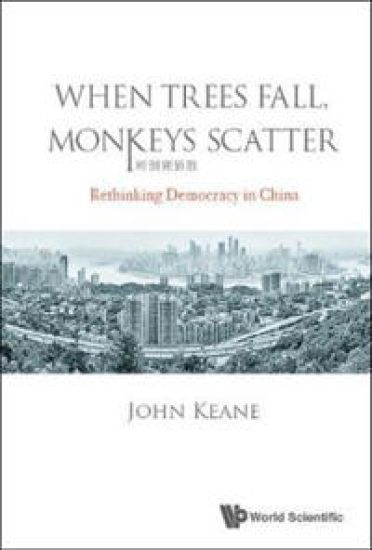
When Trees Fall, Monkeys Scatter: Rethinking Democracy In China
John Keane
World Scientific Europe Ltd
2017
sidottu
Predictions of the coming collapse of Chinese politics are today commonplace, however this thought-provoking book explores a radically different alternative. China, it argues, is a one-party-dominated political system whose surprising levels of public support and resilience in the face of serious economic, environmental and social problems suggest that it is more durable than most outside observers suppose. China is not an ailing 'autocracy', a case of 'crony capitalism' or a blindly repressive 'authoritarian regime'. The rulers of China are in fact experimenting with a wide range of locally-made democratic tools designed to win the trust and loyalty of their subjects. Examples probed in this book include the injection of accountability mechanisms into state bureaucracy, the toleration of independent public opinion leaders, the growing reliance of Party officials and corporate executives on public opinion polls and 'democratic style', and the calculated use by Party officials of digitally networked media as early warning devices.Written for students and teachers, researchers and general readers fascinated by the rising global power of China, When Trees Fall, Monkeys Scatter shows why locally-made democratic practices often favour one-party rule and why China is becoming a globally significant political laboratory: a 21st century testing ground for a new type of top-down popular government at odds with power-sharing democracy as it was known during the past generation.

Refiguring Democracy
Ramón Feenstra; Simon Tormey; Andreu Casero-Ripollés; John Keane
Routledge
2017
sidottu
Spain has become a remarkable democratic laboratory in which millions of citizens are experimenting with new forms of political expression. This book examines the dynamics of this political laboratory, showing that the upheavals it is experiencing are likely in the near future to affect democracies elsewhere in the world. Examining the new means of participation that were established in fields where digital communication tools enabled the launch of novel dynamics of political action, the reader will gain access to a comprehensive analysis of the reshaping and mutation process that has affected fields such as activism, political parties and political participation. Using a case study of the Spain between 2011 and 2015, the book focuses on the changes that have taken place in politics and communication in Spain, paying particular attention to the 15M movement and its disruptive, innovative strength in all matters related to politics and communication. The chapters cover political repertoires and the hybridization of horizontal and vertical political logics; the appearance of new political parties; the establishment of monitoring mechanisms as an essential means of political expression and participation; and the subversion of rationality across media as a product of the communication strategies implemented by online political activism.Showing that Spain is not just at the forefront of democratic innovation, but that it is a political laboratory in which trials are taking place that tell us much about the future of democracy everywhere, this book will be of great use to scholars of political theory, democracy and philosophy.
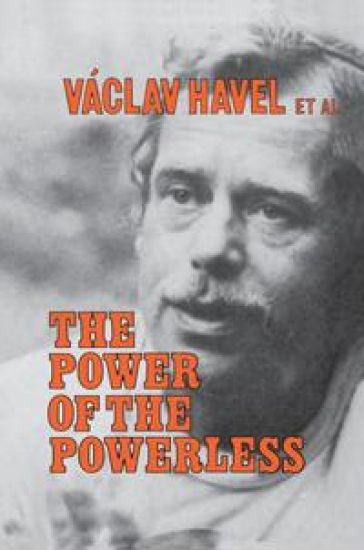
Books of great political insight and novelty always outlive their time of birth and this reissued work, initially published in 1985, is no exception. Written shortly after the formation of Charter 77, the essays in this collection are among the most original and compelling pieces of political writing to have emerged from central and Eastern Europe during the whole of the post-war period. Václav Havel’s essay provides the title for the book. It was read by all the contributors who in turn responded to the many questions which Havel raises about the potential power of the powerless. The essays explain the anti-democratic features and limits of Soviet-type totalitarian systems of power. They discuss such concepts as ideology, democracy, civil liberty, law and the state from a perspective which is radically different from that of people living in liberal western democracies. The authors also discuss the prospects for democratic change under totalitarian conditions. Steven Lukes’ introduction provides an invaluable political and historical context for these writings. The authors represent a very broad spectrum of democratic opinion, including liberal, conservative and socialist.
Title: The Evolution of Geography: a sketch of the rise and progress of geographical knowledge from the earliest times to the first circumnavigation of the globe.Publisher: British Library, Historical Print EditionsThe British Library is the national library of the United Kingdom. It is one of the world's largest research libraries holding over 150 million items in all known languages and formats: books, journals, newspapers, sound recordings, patents, maps, stamps, prints and much more. Its collections include around 14 million books, along with substantial additional collections of manuscripts and historical items dating back as far as 300 BC.The GENERAL HISTORICAL collection includes books from the British Library digitised by Microsoft. This varied collection includes material that gives readers a 19th century view of the world. Topics include health, education, economics, agriculture, environment, technology, culture, politics, labour and industry, mining, penal policy, and social order. ++++The below data was compiled from various identification fields in the bibliographic record of this title. This data is provided as an additional tool in helping to insure edition identification: ++++ British Library Keane, John; 1899. xv. 159 p.; 8 . 10005.dd.15.
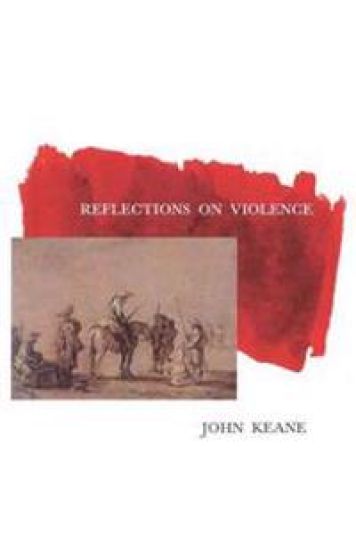
Genocidal wars, concentration camps, firebombed cities, spreading plagues of private blood-letting: the twentieth century has seen more than its fair share of violence, planned and unplanned, with prospects of still more to come. And yet, argues John Keane, among the paradoxes of this long century of violence is the paucity of imaginative reflection on the conceptual meaning, cause and effects, and ethical-political implications of violence itself.Comparable to Hannah Arendt's classic On Violence, Keane's book challenges this indifference. It throws fresh light on the notion that we are drifting towards a "new middle ages" marked by uncivil wars sanctioned by decentralized powers-warlords, gangsters, sects-which the modern state was supposed to eliminate. John Keane shows how the term "violence" is riddled with ambiguities, and he confronts the argument, stretching back from St Augustine to Freud, that violence is rooted in "human nature."Rejecting simple-minded pacifism, he goes on to formulate a theory of "uncivil society" and to examine the practical possibilities for greater civility. Above all, he insists that political philosophy and democratic politics must urgently address the issue of violence, not only because of the terrible crimes committed during the century now drawing to a close, but also because we are witnessing the significant growth of a new "politics of civility" aimed at publicizing and reducing a range of specific forms of violence, from rape and child abuse to ethnic conflict and uncivil war.