Kirjojen hintavertailu. Mukana 12 595 353 kirjaa ja 12 kauppaa.

Kirjailija

John Kerrigan

Kirjat ja teokset yhdessä paikassa: 10 kirjaa, julkaisuja vuosilta 1997-2021, suosituimpien joukossa Archipelago. Vertaile teosten hintoja ja tarkista saatavuus suomalaisista kirjakaupoista.

10 kirjaa

Kirjojen julkaisuhaarukka 1997-2021.

Archipelago

Archipelago

Andrew McNellie; Norman Ackroyd; John Brannigan; Moya Cannon; Mark Cocker; Peter Davidson; Roger Deakin; Tim Dee; David Douglas; Douglas Dunn; Terry Eagleton; John Eifion Jones; John Elder; Rose Ferraby; Barbara Greg; Ivor Gurney; Alexandra Harris; Seamus Heaney; Geoffrey Hill; Sally Huband; Roger Hutchinson; Mick Imlah; Kathleen Jamie; John Kerrigan; Philip Lancaster; David Lea; Angela Leighton; Gwyneth Lewis; Michael Longley; James Macdonald Lockhart; Robert Macfarlane; Angus Macmillan; Derek Mahon; Gail McNeillie

The Lilliput Press Ltd
2021
nidottu
Archipelago is one of the most important and influential literary magazines of the last twenty years. Running to twelve editions, it was edited by Andrew McNeillie, with the assistance later of James McDonald Lockhart, and began as an attempt to reimagine the relationships between the islands of Ireland and Britain. Archipelago has brought together established and emerging artists in creative conversations that have transformed the study of islands, coasts and waterways. It journeys from the Shetlands to Cornwall, from the Aran Islands to the coast of Yorkshire, tracing the cultures of diverse zones through some of the best in contemporary writing about place and people. This collection gathers poetry, prose and visual art in clusters grouped around the Irish and British archipelago, with contributions from an array of significant artists. It includes newly commissioned work as well as an interview between Andrew McNeillie and Robert Macfarlane on the development of Archipelago across the years.

Financial Planning for Older People

Financial Planning for Older People

John Kerrigan

Discovery Press
2019
nidottu
Presents a guide to the legal issues surrounding money and finances for older people or those planning for older age. Many of us leave it all too late to plan for retirement, or are caring for elderly relatives and face difficult decisions. The legal complexities are daunting. This guide by John Kerrigan, a professional solicitor, is written for law students, lawyers and financial advisors who are advising those planning for retirement, are retired or are caring for retired people. It clearly explains the issues and sets you on the path to giving sound financial advice in the context of the law.It guides you through how to plan for older age, whether for yourself, a client or a family member; gives sound advice for planning for retirement and pension planning after retirement; covers difficult and taboo subjects, such as: capacity, powers of attorney, authority to operate a bank account, intervention orders, financial welfare guardianships, advance medical directives and care home fees; follows current case law and statutory positions in all cases; sets out key financial strategies - inheritance tax, strategies for lifetime mitigation, will planning and post death tax planning; takes into account HMRC's proposed changes to the taxation of Discretionary Trusts and discusses the Scottish Government consultation document on technical issues in relation to succession and the Scottish Law Commission's major Report on Trusts (No. 239), both published in August 2014.
Shakespeare's Originality

Shakespeare's Originality

John Kerrigan

Oxford University Press
2018
sidottu
How original was Shakespeare and how was Shakespeare original? This lucid, innovative book sets about answering these questions by putting them in historical context and investigating how the dramatist worked with his sources: plays, poems, chronicles and prose romances. Shakespeare's Originality unlocks its topic with rewarding precision and flair, showing through a series of case studies that range across the output—from the mature comedies to the great tragedies, from Richard III to The Tempest—what can be learned about the artistry of the plays by thinking about these sources (including newly identified ones) after several decades of neglect. Discussion is enriched by such matters as Elizabethan ruffs and feathers, actors' footwork, chronicle history, modern theatre productions, debts to classical tragedy, scepticism, magic and science, the agricultural revolution, and ecological catastrophe. This is authoritative, lively work by one of the world's leading Shakespearians, accessible to the general reader as well as indispensable for students.
Shakespeare's Binding Language

Shakespeare's Binding Language

John Kerrigan

Oxford University Press
2018
nidottu
This remarkable, innovative book explores the significance in Shakespeare's plays of oaths, vows, contracts, pledges, and the other utterances and acts by which characters commit themselves to the truth of things past, present, and to come. In early modern England, such binding language was everywhere. Oaths of office, marriage vows, legal bonds, and casual, everyday profanity gave shape and texture to life. The proper use of such language, and the extent of its power to bind, was argued over by lawyers, religious writers, and satirists, and these debates inform literature and drama. Shakespeare's Binding Language gives a freshly researched account of these contexts, but it is focused on Shakespeare's plays. What motives should we look for when characters asseverate or promise? How far is binding language self-persuasive or deceptive? When is it allowable to break a vow? How do oaths and promises structure an audience's expectations? Across the sweep of Shakespeare's career, from the early histories to the late romances, this book opens new perspectives on key dramatic moments and illuminates language and action. Each chapter gives an account of a play or group of plays, yet the study builds to a sustained investigation of some of the most important systems, institutions, and controversies in early modern England, and of the wiring of Shakespearean dramaturgy. Scholarly but accessible, and offering startling insights, this is a major contribution to Shakespeare studies by one of the leading figures in the field.
Shakespeare's Binding Language

Shakespeare's Binding Language

John Kerrigan

Oxford University Press
2016
sidottu
This remarkable, innovative book explores the significance in Shakespeare's plays of oaths, vows, contracts, pledges and the other utterances and acts by which characters commit themselves to the truth of things past, present, and to come. In early modern England, such binding language was everywhere. Oaths of office, marriage vows, legal bonds, and casual, everyday profanity gave shape and texture to life. The proper use of such language, and the extent of its power to bind, was argued over by lawyers, religious writers, and satirists, and these debates inform literature and drama. Shakespeare's Binding Language gives a freshly researched account of these contexts, but it is focused on the plays. What motives should we look for when characters asseverate or promise? How far is binding language self-persuasive or deceptive? When is it allowable to break a vow? How do oaths and promises structure an audience's expectations? Across the sweep of Shakespeare's career, from the early histories to the late romances, this book opens new perspectives on key dramatic moments and illuminates language and action. Each chapter gives an account of a play or group of plays, yet the study builds to a sustained investigation of some of the most important systems, institutions, and controversies in early modern England, and of the wiring of Shakespearean dramaturgy. Scholarly but accessible, and offering startling insights, this is a major contribution to Shakespeare studies by one of the leading figures in the field.
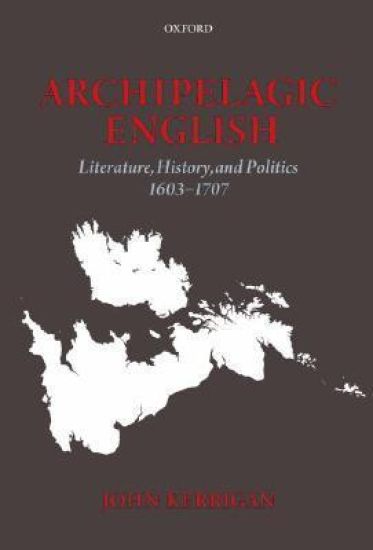
Archipelagic English

Archipelagic English

John Kerrigan

Oxford University Press
2010
nidottu
Seventeenth-century 'English Literature' has long been thought about in narrowly English terms. Archipelagic English corrects this by devolving anglophone writing, showing how much remarkable work was produced in Wales, Scotland, and Ireland, and how preoccupied such English authors as Shakespeare, Milton, and Marvell were with the often fraught interactions between ethnic, religious, and national groups around the British-Irish archipelago. This book transforms our understanding of canonical texts from Macbeth to Defoe's Colonel Jack, but it also shows the significance of a whole series of authors (from William Drummond in Scotland to the Earl of Orrery in County Cork) who were prominent during their lifetimes but who have since become neglected because they do not fit the Anglocentric paradigm. With its European and imperial dimensions, and its close attention to the cultural make-up of early modern Britain and Ireland, Archipelagic English authoritatively engages with, questions, and develops the claim now made by historians that the crises of the seventeenth century stem from the instabilities of a state-system which, between 1603 and 1707, was multiple, mixed, and inclined to let local quarrels spiral into all-consuming conflict. This is a major, interdisciplinary contribution to literary and historical scholarship which is also set to influence present-day arguments about devolution, unionism, and nationalism in Britain and Ireland.
Archipelagic English

Archipelagic English

John Kerrigan

Oxford University Press
2008
sidottu
Seventeenth-century 'English Literature' has long been thought about in narrowly English terms. Archipelagic English corrects this by devolving anglophone writing, showing how much remarkable work was produced in Wales, Scotland, and Ireland, and how preoccupied such English authors as Shakespeare, Milton, and Marvell were with the often fraught interactions between ethnic, religious, and national groups around the British-Irish archipelago. This book transforms our understanding of canonical texts from Macbeth to Defoe's Colonel Jack, but it also shows the significance of a whole series of authors (from William Drummond in Scotland to the Earl of Orrery in County Cork) who were prominent during their lifetimes but who have since become neglected because they do not fit the Anglocentric paradigm. With its European and imperial dimensions, and its close attention to the cultural make-up of early modern Britain and Ireland, Archipelagic English authoritatively engages with, questions, and develops the claim now made by historians that the crises of the seventeenth century stem from the instabilities of a state-system which, between 1603 and 1707, was multiple, mixed, and inclined to let local quarrels spiral into all-consuming conflict. This is a major, interdisciplinary contribution to literary and historical scholarship which is also set to influence present-day arguments about devolution, unionism, and nationalism in Britain and Ireland.
On Shakespeare and Early Modern Literature

On Shakespeare and Early Modern Literature

John Kerrigan

Oxford University Press
2004
nidottu
John Kerrigan is one of the foremost critics of English literature. This richly informed collection brings together his essays on such major figures as Sir Philip Sidney and Milton, but also less celebrated writers, including Thomas Carew and - in a new piece - William Drummond, to reconfigure the familiar and help extend the canon. Shakespeare looms large; his plays and poems, and his influence on Keats, are the subject of half the book. But themes and issues are pursued from the 1580s to the late Restoration. Kerrigan acutely reassesses the nature of early modern texts-their production and reconstruction by writers, printers, theatre companies, and readers-and their relationship with socio-political circumstance. This original and eloquent book shows what criticism can do when closely engaged with verbal fabric and form. Always alert to the scholarly and theoretical debates that have raged within literary studies, it concentrates on drawing out the distinctive qualities of poems and plays.
On Shakespeare and Early Modern Literature

On Shakespeare and Early Modern Literature

John Kerrigan

Oxford University Press
2001
sidottu
John Kerrigan is one of the foremost critics of English literature. This richly informed collection brings together his essays on such major figures as Sir Philip Sidney and Milton, but also less celebrated writers, including Thomas Carew and - in a new piece - William Drummond, to reconfigure the familiar and help extend the canon. Shakespeare looms large; his plays and poems, and his influence on Keats, are the subject of half the book. But themes and issues are pursued from the 1580s to the late Restoration. Kerrigan acutely reassesses the nature of early modern texts-their production and reconstruction by writers, printers, theatre companies, and readers-and their relationship with socio-political circumstance. This original and eloquent book shows what criticism can do when closely engaged with verbal fabric and form. Always alert to the scholarly and theoretical debates that have raged within literary studies, it concentrates on drawing out the distinctive qualities of poems and plays.
Revenge Tragedy

Revenge Tragedy

John Kerrigan

Clarendon Press
1997
nidottu
From Homer to Nietzsche, from St Paul to Sylvia Plath, authors have been fascinated by vengeance, its emotional intensity, and questions it raises about violence, sexuality, death, and the nature of justice. This book explores vengeance in literature from Greek tragedy to postmodernism.