

Kirjailija
John Kerry
Kirjat ja teokset yhdessä paikassa: 12 kirjaa, julkaisuja vuosilta 1997-2026, suosituimpien joukossa Quest for the Golden Poniard. Vertaile teosten hintoja ja tarkista saatavuus suomalaisista kirjakaupoista.
12 kirjaa
Kirjojen julkaisuhaarukka 1997-2026.
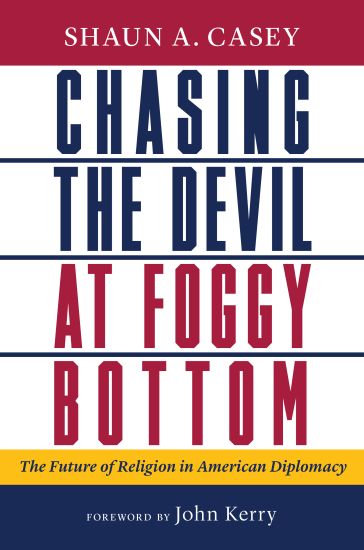
Chasing the Devil at Foggy Bottom
Shaun A Casey; John Kerry
WILLIAM B EERDMANS PUBLISHING CO
2023
sidottu
Understanding the role of religion in global politics is crucial for effective diplomacy. Many American policy makers are squeamish about religion's role in diplomacy. Nevertheless, religion plays a crucial and complex part in global affairs, such as in sustainable development, various human rights issues, and fomenting and mitigating conflict. Shaun A. Casey, the founding director of the US Department of State's Office of Religion and Global Affairs, makes a compelling case for the necessity of understanding global religion in Chasing the Devil at Foggy Bottom. In this fresh and provocative narrative, Casey writes frankly about his work integrating sophisticated, research-driven policy into the State Department under Secretary of State John Kerry. Their new strategy went beyond older paradigms that focused myopically on religious freedom or countering violent extremism. Such reductive approaches, Casey insists, cost thousands of lives and trillions of dollars in the US's ill-fated invasion of Iraq in 2003. Witty and astute, Casey recounts his team's challenges in DC politics as well as in the major global events of his tenure, including climate change, the rise of ISIL, and the refugee crisis. On a global stage with higher stakes than ever, effective diplomacy is imperative. Yet in this critical moment, the United States's reputation has faltered. Chasing the Devil at Foggy Bottom offers a path forward to better foreign policy.
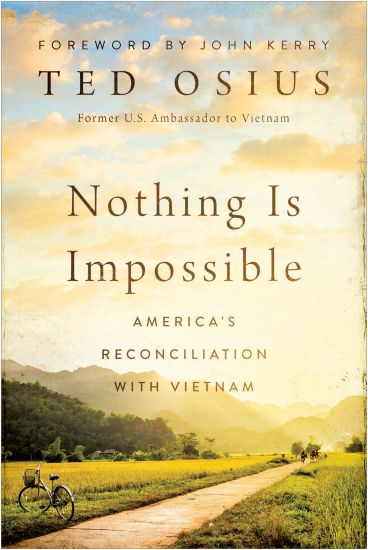
Today Vietnam is one of America’s strongest international partners, with a thriving economy and a population that welcomes American visitors. How that relationship was formed is a twenty-year story of daring diplomacy and a careful thawing of tensions between the two countries after a lengthy war that cost nearly 60,000 American and more than two million Vietnamese lives. Ted Osius, former ambassador during the Obama administration, offers a vivid account, starting in the 1990s, of the various forms of diplomacy that made this reconciliation possible. He considers the leaders who put aside past traumas to work on creating a brighter future, including senators John McCain and John Kerry, two Vietnam veterans and ideological opponents who set aside their differences for a greater cause, and Pete Peterson—the former POW who became the first U.S. ambassador to a new Vietnam. Osius also draws upon his own experiences working first-hand with various Vietnamese leaders and traveling the country on bicycle to spotlight the ordinary Vietnamese people who have helped bring about their nation’s extraordinary renaissance. With a foreword by former Secretary of State John Kerry, Nothing Is Impossible tells an inspiring story of how international diplomacy can create a better world.
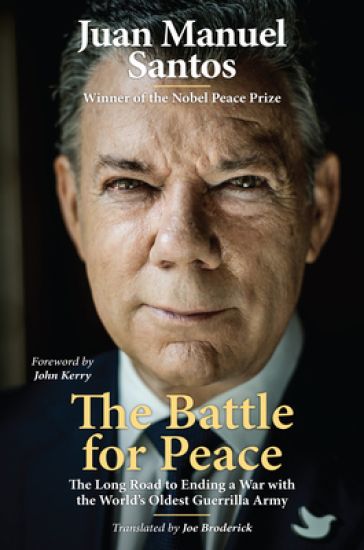
This is the comprehensive account of the long and difficult road traveled to end the fifty-year armed conflict with the FARC, the oldest guerrilla army in the world; a long war that left more than eight million victims. The obstacles to peace were both large and dangerous. All previous attempts to negotiate with the FARC had failed, creating an environment where differences were irreconcilable and political will was scarce. The Battle for Peace is the story not only of the six years of negotiation and the peace process that transformed a country, its secret contacts, its international implications, and difficulties and achievements but also of the two previous decades in which Colombia oscillated between warlike confrontation and negotiated solution.In The Battle for Peace Juan Manuel Santos shares the lessons he learned about war and peace and how to build a successful negotiation process in the context of a nation which had all but resigned itself to war and the complexities of twenty-first-century international law and diplomacy. While Santos is clear that there is no handbook for making peace, he offers conflict-tested guidance on the critical parameters, conditions, and principles as well as rich detail on the innovations that made it possible for his nation to find common ground and a just solution.

An instant New York Times bestseller, John Kerry's revealing memoir offers "a detailed record of an important life...frank, thoughtful, and clearly written...A bittersweet reminder of what the country once demanded of its leaders" (The New York Times Book Review). Every Day Is Extra is John Kerry's candid personal story. A Yale graduate, Kerry enlisted in the US Navy in 1966, and served in Vietnam. He returned home highly decorated but disillusioned, and he testified powerfully before Congress as a young veteran opposed to the war. Kerry was elected to the Senate in 1984, eventually serving five terms. In 2004 he was the Democratic presidential nominee and came within one state--Ohio--of winning. He succeeded Hillary Clinton as Secretary of State in 2013. In that position he tried to find peace in the Middle East; dealt with the Syrian civil war while combatting ISIS; and negotiated the Iran nuclear deal and the Paris climate agreement. "In these pages Kerry shows remarkable honesty, depth, even spirituality...There is remarkable poignancy--not the usual currency of the career politician and the country's top diplomat" (The Boston Globe). A witness to some of the most important events of our recent history, Kerry tells wonderful stories about colleagues Ted Kennedy and John McCain, as well as President Obama and other major figures. He writes movingly of recovering his faith while in the Senate, and how he deplores the hyper-partisanship that has infected Washington. Every Day Is Extra "draws back the curtain on a life you thought you knew, but turns out to be a bit different...A surprisingly personal book" (The Washington Post) that shows Kerry for the dedicated, witty, and authentic man that he is and provides forceful testimony for the importance of diplomacy and American leadership to address the increasingly complex challenges of a more globalized world.

John Kerry tells the story of his extraordinary life of public service, from decorated Vietnam veteran to five-term United States� senator, 2004 Democratic presidential candidate, and Secretary of State for four years: a personal and candid memoir by a� witness to some of the most important events of our recent history, including the Iran nuclear deal and the Paris climate� accords.

Two years have passed since Sammy returned from Perseopia.She was gone less than a week, yet she came back changed.Something inside her has awoken. She can sense people's intentions, is able to affect objects with her mind. And there's no one she can talk to about it.Her mother won't acknowledge her made-up fantasy stories and Esther, the old market woman, never returned for the bracelet.Sammy needs answers and her only hope for them lies back in Perseopia.Journey back to the vara with Sammy Ellis as she's once again thrust into the Fungi Forest to fend for herself. Discover the events that led up to her first visit and learn of the fallout she created in her wake.

There exists a secret realm outside our own, the original Garden of Eden, sealed from the rest of the world and populated with the fittest of men and women. A paradise that became ravaged by smog that choked out the skies.Now the realm exists in darkness and its people need a champion, a chosen one to save them from the poison that cloaks the land and threatens to smother its inhabitants.That's what they needed. They got sixteen-year-old Sammy Ellis instead. Her only responsibility was to help the "chosen one" open a gateway into the realm. But, not only has she entered the land in their place, she's also locked them out in the process.Sammy finds herself lost in a twilight land of giant mushrooms and pursued by dark forces. Can she find a way home so the true chosen one can return or has the realm been doomed by her actions?

The environment, and the movement that grew up to protect it, is under attack -- concerted and purposeful. Yet the need for solutions to pressing environmental problems grows more urgent each day. Teresa Heinz Kerry and Senator John Kerry describe how these issues unite people across party and ideological lines. From the San Juan Basin to the Gulf of Mexico to the South Bronx, from mothers on Cape Cod to Colorado ranchers, they found a vibrant coalition of people and communities deploying ingenuity, technology, and sheer will power to save the world they know and love. Now, in this passionate and personal book, Senator John Kerry and Teresa Heinz Kerry shine the spotlight on an inspiring cross-section of these new environmental pioneers. The book combines intensive research with keenly observed personal experiences to present a portrait of Americans devoted to the natural diversity and spectacular uniqueness of our country. It also includes an extensive guide on where and how readers can get involved.

Peter Paul and Mary
Peter Yarrow; Noel Paul Stookey; Mary Travers; John Kerry
Imagine Publishing, Inc
2014
sidottu
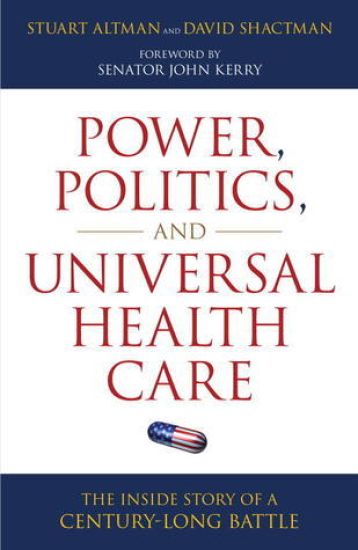
Power, Politics, and Universal Health Care
Stuart Altman; David Shactman; John Kerry
Prometheus Books
2011
sidottu
Essential reading for every American who must navigate the US health care system. Why was the Obama health plan so controversial and difficult to understand? In this readable, entertaining, and substantive book, Stuart Altman-internationally recognized expert in health policy and adviser to five US presidents-and fellow health care specialist David Shactman explain not only the Obama health plan but also many of the intriguing stories in the hundred-year saga leading up to the landmark 2010 legislation. Blending political intrigue, policy substance, and good old-fashioned storytelling, this is the first book to place the Obama health plan within a historical perspective. The authors describe the sometimes haphazard, piece-by-piece construction of the nation's health care system, from the early efforts of Franklin Roosevelt and Harry Truman to the later additions of Ronald Reagan and George W. Bush. In each case, they examine the factors that led to success or failure, often by illuminating little-known political maneuvers that brought about immense shifts in policy or thwarted herculean efforts at reform. The authors look at key moments in health care history: the Hill-Burton Act in 1946, in which one determined poverty lawyer secured the rights of the uninsured poor to get hospital care; the "three-layer cake" strategy of powerful House Ways and Means Committee Chairman Wilbur Mills to enact Medicare and Medicaid under Lyndon Johnson in 1965; the odd story of how Medicare catastrophic insurance was passed by Ronald Reagan in 1988 and then repealed because of public anger in 1989; and the fact that the largest and most expensive expansion of Medicare was enacted by George W. Bush in 2003. President Barack Obama is the protagonist in the climactic chapter, learning from the successes and failures chronicled throughout the narrative. The authors relate how, in the midst of a worldwide financial meltdown, Obama overcame seemingly impossible obstacles to accomplish what other presidents had tried and failed to achieve for nearly one hundred years.

The New War is a powerful warning that global crime is robbing us not only of our money but also of our way of life. As a result of his Senate investigations and access to law enforcement agencies, Senator John Kerry has seen the dark world of dirty money, violence, and corruption up close. In this groundbreaking book, he describes global crime organizations from Asia to South America, Europe to Africa, and shows why they have become one of the greatest threats to our national security. Kerry takes us inside major crime organizations that now operate on the global stage: the Russian "Mafiya," which includes much of the old Soviet KGB; the Chinese triads, whose tentacles reach into many American cities; the Colombian drug cartels; the Japanese yakuza; and the Sicilian Mafia. Most important, in The New War Kerry maintains that the aim of the global crime lords is to gain control of the very institutions that are the core of civil society - the courts, legislatures, banks, and media in their own countries as well as in the nations where they operate. And he demonstrates how an antiquated legal system is struggling to fight twenty-first-century criminal enterprises. This is a hard-hitting and critical assessment of current government policies for dealing with international crime. Kerry reveals the failures of both diplomacy and nerve that have crippled leaders in Washington and other Western capitals, as well as in Moscow and Beijing. He explains how law enforcement and judicial institutions must be reformed structurally to defeat vicious criminals. His recommendations are specific: Shut down offshore banks that launder and shelter criminal profits; regulate electronic money transfers; expand the scope of extraterritorial jurisdiction for major crimes committed against a country's citizens overseas; use the CIA and other intelligence services to penetrate global crime organizations; share the seized assets of international criminals with governments that cooperate in fighting global crime.