Kirjojen hintavertailu. Mukana 12 152 606 kirjaa ja 12 kauppaa.

Kirjailija

John Kinsella

Kirjat ja teokset yhdessä paikassa: 54 kirjaa, julkaisuja vuosilta 1996-2026, suosituimpien joukossa Limbo - the fourth canticle. Vertaile teosten hintoja ja tarkista saatavuus suomalaisista kirjakaupoista.

54 kirjaa

Kirjojen julkaisuhaarukka 1996-2026.

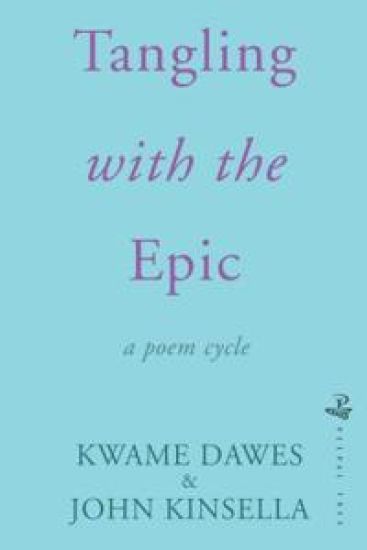
Tangling With The Epic

Tangling With The Epic

Kwame Dawes; John Kinsella

Peepal Tree Press Ltd
2019
nidottu
The third in a quartet of poem-dialogues between Kwame Dawes and John Kinsella, begun in 2015 with the critically acclaimed 'Speak From Here to There' (2016), and followed by 'A New Beginning' (2018), Tangling With The Epic explores commonalities and difference, the results reminding us of how poetry can offer comfort and solace, and how it can ignite a peculiar creative frenzy that enriches.
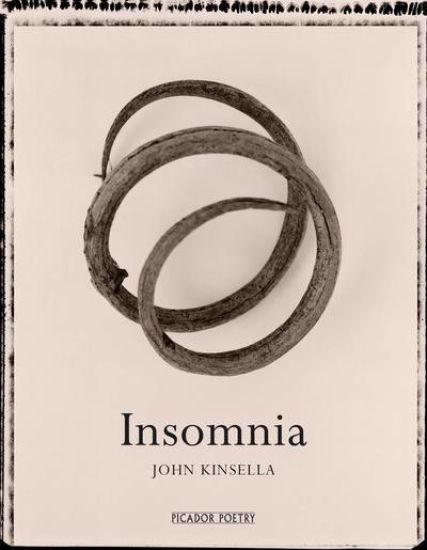
Insomnia

Insomnia

John Kinsella

Picador
2019
pokkari
The Australian poet John Kinsella’s vivid and urgent new collection addresses the crisis of being that currently afflicts us: Kinsella addresses a situation where the creations of the human imagination, the very means by which we extend our empathies into the world – art, music and philosophy – suddenly find themselves in a world that not only denies their importance, but can sometimes seem to have no use for them at all. In an attempt to find a still point from which we might reconfigure our perspective and address the paradoxes of our contemporary experience, Kinsella has written poems of self-accusation and angry protest, meditations on the nature of loss and trauma, and full-throated celebrations of the natural world. Ranging from Jam Tree Gully, Western Australia to the coast of West Cork, Ireland, haunted by historical and literary figures from Dante to Emily Brontë (whom Kinsella has obsessed over since he was a child, and who intervenes in the poet’s attempts to come to grips with ideas of colonization and identity), Insomnia may be Kinsella’s most various and powerful collection to date.
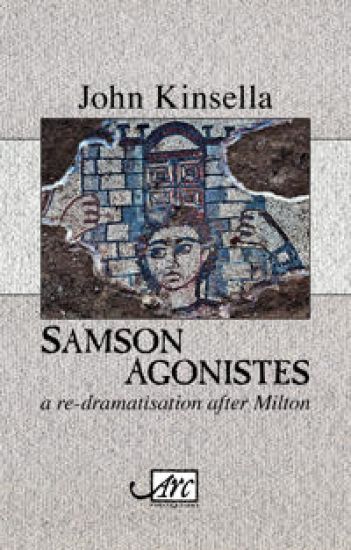
Samson Agonistes

Samson Agonistes

John Kinsella

Arc Publications
2018
nidottu
John Kinsella’s poetic and intertextual reworking of John Milton’s dramatic poem, Samson Agonistes, confirms Milton as one of the many influences in Kinsella’s poetic output. His fascination with Milton’s “tale of conflicted belief, values and desires” is stated at the outset in the `Argument’, and in what follows, Kinsella echoes many of Milton’s themes as he explores how the cyborg Samson – both a symbol of uncontrolled violence and a pacifist peacemaker – must come to terms with his participation in his own powerlessness and incarceration. Stephen Chinna’s introduction and Tim Cribb’s afterword are invaluable in setting the central dramatisation in context.
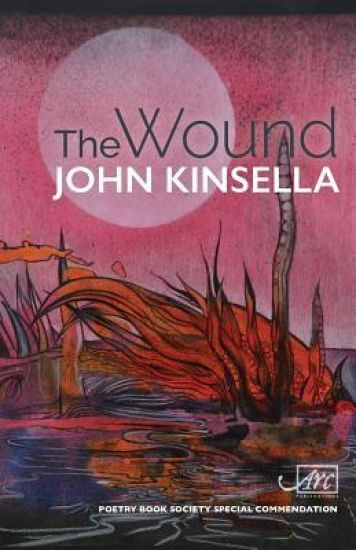
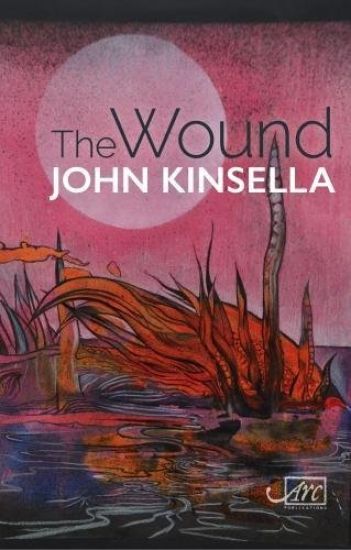
The Wound

The Wound

John Kinsella

Arc Publications
2018
nidottu
The Wound is the latest collection from esteemed Australian poet John Kinsella, whose previous accolades include the Grace Leven Poetry Prize, the John Bray Award for Poetry, the Age Poetry Book of the Year Award, and three-times winner of the Western Australian Premier's Book Award for Poetry. Kinsella describes himself as a 'vegan anarchist pacifist', and The Wound was inspired by his anger towards the destruction being wrought on the West Australian coastal bushland by the controversial proposed construction of the Roe 8 Highway Extension, which environmentalists protested would endanger the area's wildlife, the biodiversity of which is equal to that of the whole of England. In this collection Kinsella mixes mythology with modernity, as this collection includes two books of poems, the first inspired by the character of Mad King Sweeney from Irish epic Buile Shuibhne, and the second comprised of works 'interacting' with poems written by German Romantic Friedrich Hölderlin.
The Wound

The Wound

John Kinsella

Arc Publications
2018
sidottu
The Wound is the latest collection from esteemed Australian poet John Kinsella, whose previous accolades include the Grace Leven Poetry Prize, the John Bray Award for Poetry, the Age Poetry Book of the Year Award, and three-times winner of the Western Australian Premier's Book Award for Poetry. Kinsella describes himself as a 'vegan anarchist pacifist', and The Wound was inspired by his anger towards the destruction being wrought on the West Australian coastal bushland by the controversial proposed construction of the Roe 8 Highway Extension, which environmentalists protested would endanger the area's wildlife, the biodiversity of which is equal to that of the whole of England. In this collection Kinsella mixes mythology with modernity, as this collection includes two books of poems, the first inspired by the character of Mad King Sweeney from Irish epic Buile Shuibhne, and the second comprised of works 'interacting' with poems written by German Romantic Friedrich Hölderlin.
On the Outskirts

On the Outskirts

John Kinsella

University of Queensland Press
2017
pokkari
A stunning new collection by one of Australia's most celebrated poets. Inspired by the natural world, Kinsella's poems consider the protection and valuing of human and animal life, and the environment itself. Reflecting the constant flux of the global and the local, these poems consider the plight of refugees, the degradation of the environment, militarisation and violence. Contemplating the failure of public memory to memorialise, Kinsella reflects on the unresolved issues of history such as Nazism and colonisation. Influenced by William Blake's poetry and art, in particular his uncompleted series of illustrations to Dante's Divine Comedy, Kinsella evokes a strong relationship between the visual and textual. On the Outskirts is a work of strangeness and alienation, and one in which a light of redemption is sought - a rehabilitation in the human character and the healing power of nature.
The Fremantle Press Anthology of Western Australian Poetry

The Fremantle Press Anthology of Western Australian Poetry

John Kinsella; Tracy Ryan

FREMANTLE PRESS
2017
pokkari
The Fremantle Press Anthology of Western Australian Poetry is a comprehensive survey of the state's poets from the 19th century to today. Featuring work from 134 poets, and including the work of many WA Indigenous poets, this watershed anthology brings together the poems that have contributed to and defined the ways that Western Australians see themselves.
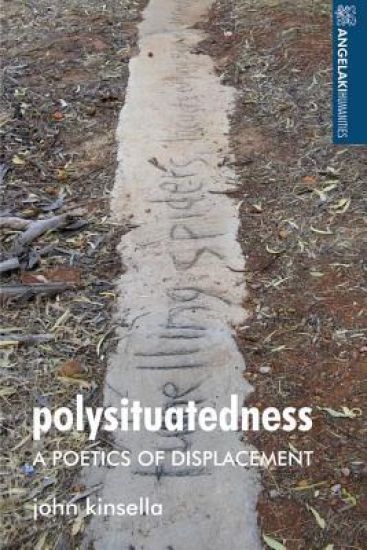
Polysituatedness

Polysituatedness

John Kinsella

Manchester University Press
2017
sidottu
This book is concerned with the complexities of defining 'place', of observing and 'seeing' place, and how we might write a poetics of place. From Kathy Acker to indigenous Australian poet Jack Davis, the book touches on other writers and theorists, but in essence is a hands-on 'praxis' book of poetic practice. The work extends John Kinsella's theory of 'international regionalism' and posits new ways of reading the relationship between place and individual, between individual and the natural environment, and how place occupies the person as much as the person occupies place. It provides alternative readings of writers through place and space, especially Australian writers, but also non-Australian. Further, close consideration is given to being of 'famine-migrant' Irish heritage and the complexities of 'returning'. A close-up examination of 'belonging' and exclusion is made on a day-to-day basis. The book offers an approach to creating poems and literary texts constituted by experiencing multiple places, developing a model of polyvalent belonging known as 'polysituatedness'. It works as a companion volume to Kinsella's earlier Manchester University Press critical work, Disclosed Poetics: Beyond Landscape to Lyricism.
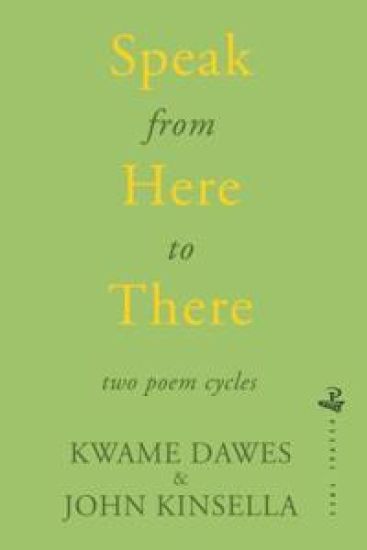
Speak from Here to There

Speak from Here to There

Kwame Dawes; John Kinsella

Peepal Tree Press Ltd
2016
pokkari
During 2015 and 2016, two poets from opposite sides of the world, Kwame Dawes and John Kinsella, exchanged poems in two cycles, Echoes and Refrains and Illuminations, that were in constant dialogue even as they remained defined and shaped by the details of their own private and public lives. Kwame Dawes’ base was the flat prairieland of Lincoln, Nebraska, a landscape in which he, a black man, originally from Ghana and Jamaica, felt at once alien and deeply committed to the challenges of finding “home”. John Kinsella’s base was in the violently beautiful landscape of Western Australia, his home ground, thick with memory and the challenge of ecological threat and political ineptitude. In the first cycle, Echoes and Refrains, the poets sought and found a language for this conversation of various modes and moods. They were linked by the political and social upheavals in their respective spheres – Dawes contemplating the waves of violence consuming the US and the world, and Kinsella confronting the injustice of the theft of indigenous land and the terrible treatment of refugees and immigrants. These poems chart an unpredictable journey towards friendship. They reflect commonalities – love of family, cricket, art, politics, music, and travel – and in poem after poem one senses how each is hungry to hear from the other and to then treat the revelations that arrive as triggers for his own lyric introspection – risky, complex, formally considered and beautiful. They stretch one another, and provoke to a poetic honesty that comes with authority and assurance. In the second cycle of poems, Illuminations, locations shift but the concerns remain and are considered in different lights. Speak from Here to There reminds us of how poetry can offer comfort and solace, and how it can ignite the peculiar creative frenzy that enriches us.
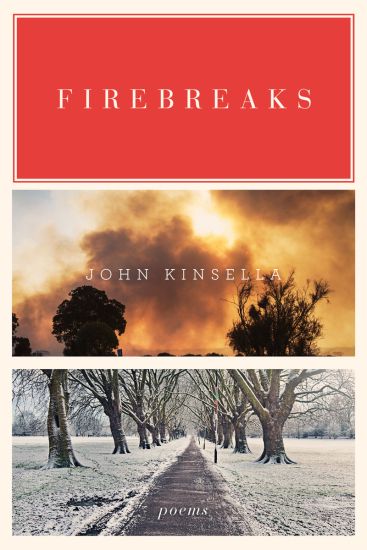
Firebreaks

Firebreaks

John Kinsella

WW Norton Co
2016
nidottu
Known for a poetry both experimental, “activist” and lyrical that reinvents the pastoral, John Kinsella considers his and his family’s life at Jam Tree Gully, in the Western Australian wheatbelt and his deeply felt ecological concerns in this new cycle of poems about place, landscape, home and absence. Part One, “Internal Exile”, explores issues of departure and return as well as alienation in Jam Tree Gully. Part Two, “Inside Out”, reevaluates how Kinsella and his family deal with ideas of “space” and proximity while also looking out into the wider world. How do we read an ecology as refuge? What lines of communication with the outside world need to be kept open? As Paul Kane observed in World Literature Today, “In Kinsella’s poetry . . . are lands marked by isolation and mundane violence and by a terrible transcendent beauty".
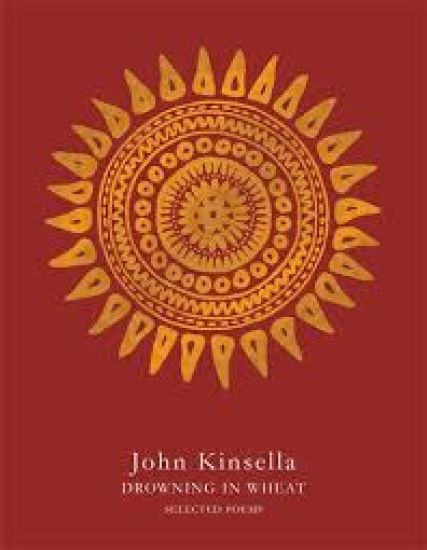
Drowning in Wheat

Drowning in Wheat

John Kinsella

Picador
2016
pokkari
Drowning in Wheat collects the best of three decades of John Kinsella's astonishing poetry in one volume. Kinsella is universally acknowledged as one of the greatest living Australian poets, and arguably the most important 'eco-poet' of the age; however, this collection also reveals a writer of unexpected and remarkable versatility, and one fluent in an almost bewildering range of forms, registers and voices. Despite its great thematic range, Kinsella's overarching project emerges all the more clearly: Drowning in Wheat is a clarion call and a call to order, a plea to listen to the earth - and to understand our own place within it while we still can. It is also an ideal introduction to one of the essential poets of the age.
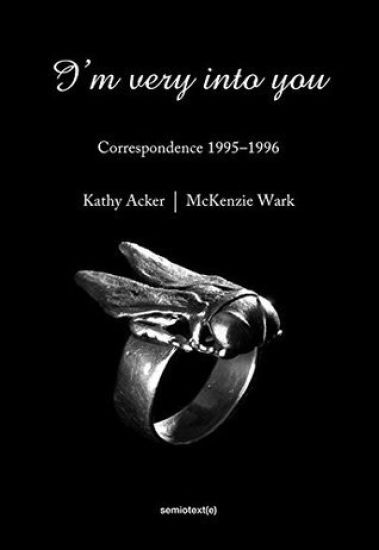
I'm Very into You

I'm Very into You

Kathy Acker; McKenzie Wark; John Kinsella

Semiotext (E)
2015
pokkari
The tempestuous email correspondence between Kathy Acker and McKenzie Wark, shimmering with insight, gossip, sex, and cultural commentary."Why am I telling you all this? Partly 'cause the whole queerness/identity thing for me stretches through everything, absolutely everything. Slipping between straight/gay is child's play compared to slipping between writer/teacher/influence-peddler whatever. I forget who I am. You reminded me of who I prefer to be." [M.W.]"It's two in the morning... I know what you mean about slipping roles: I love it, going high low, power helpless even captive, male female, all over the place, space totally together and brain-sharp, if it wasn't for play I'd be bored stiff and I think boredom is the emotion I find most unbearable... " [KA]-from I'm Very into YouAfter Kathy Acker met McKenzie Wark on a trip to Australia in 1995, they had a brief fling and immediately began a heated two-week email correspondence. Their emails shimmer with insight, gossip, sex, and cultural commentary. They write in a frenzy, several times a day; their emails cross somewhere over the International Date Line, and themselves become a site of analysis. What results is an index of how two brilliant and idiosyncratic writers might go about a courtship across 7,500 miles of airspace-by pulling in Alfred Hitchcock, stuffed animals, Georges Bataille, Elvis Presley, phenomenology, Marxism, The X-files, psychoanalysis, and the I Ching.Their corresepondence is a Plato's Symposium for the twenty-first century, but written for queers, transsexuals, nerds, and book geeks. I'm Very Into You is a text of incipience, a text of beginnings, and a set of notes on the short, shared passage of two iconic individuals of our time.
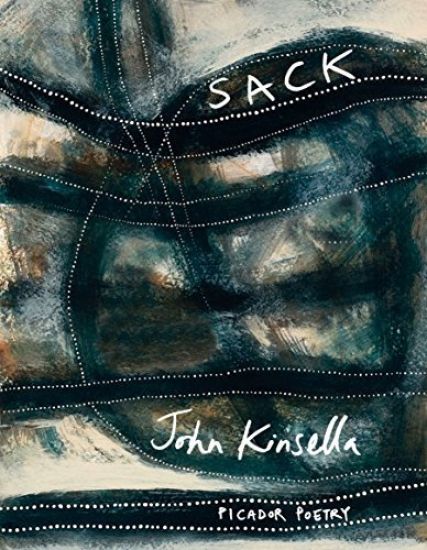
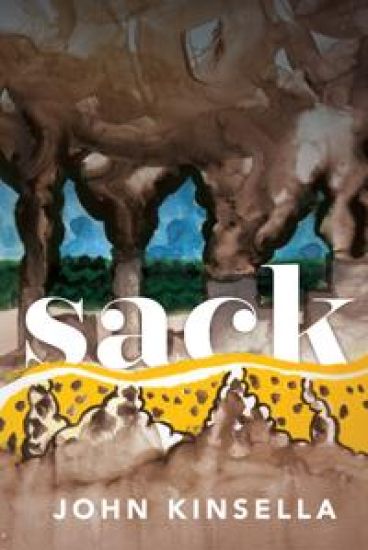
Sack

Sack

John Kinsella

Picador
2014
nidottu
In John Kinsella's new collection, 'Sack' not only refers not only to the shocking title poem, where a tied, writhing sack is seen flung from a car into gully - but also to the sacking and exploitation of the landscape and those who labour on it. Kinsella draws vividly on 'childhood memories' - but reveals them for the hard truths they are, by subtracting the cushioning effects of nostalgia. Kinsella shows how childhood prefigures our adult experience, and how its residues (here, those also take the literal form of asbestos and radiation) influence and shape our futures. Elsewhere, Kinsella resurrects an old form to do new work: the 'penillion' is an old Welsh stanza whose concision and insistent musicality provide the ideal means to encapsulate and concentrate Kinsella's vision of the land, animal life, and our sometimes fraught relationship with both. These short poems reveal astonishing and unsuspected correlations between music and form, place and language - and will come as a delightful surprise to those who know Kinsella primarily as a freewheeling long-form poet. But throughout Sack, the articulate urgency of Kinsella's lyric builds to nothing so much as a call to action, and underlines John Kinsella's reputation as one of the greatest Australian poets of the last fifty years.
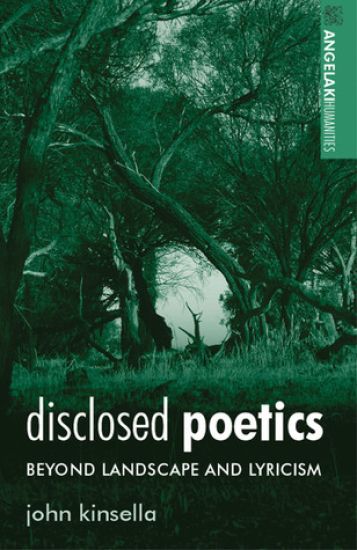
Disclosed Poetics

Disclosed Poetics

John Kinsella

Manchester University Press
2014
nidottu
John Kinsella explores a contemporary poetics and pedagogy as it emerges from his reflections on his own writing and teaching, and on the work of other poets, particularly contemporary writers with which he feels some affinity. At the heart of the book is Kinsella's attempt to elaborate his vision of a species of pastoral that is adequate to a globalised world (Kinsella himself writes and teaches in the USA, the UK and his native Australia), and an environmentally and politically just poetry. The book has an important autobiographical element, as Kinsella explores the pulse of his poetic imagination through significant moments and passages of his life. Whilst theoretically informed, the book is accessibly written and highly engaging.
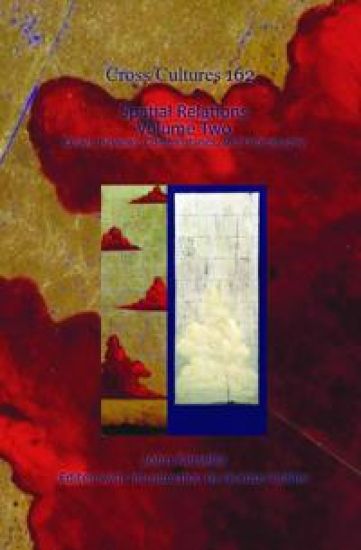
Spatial Relations. Volume Two

Spatial Relations. Volume Two

John Kinsella

Editions Rodopi B.V.
2013
sidottu
These volumes present John Kinsella’s uncollected critical writings and personal reflections from the early 1990s to the present. Included are extended pieces of memoir written in the Western Australian wheatbelt and the Cambridge fens, as well as acute essays and commentaries on the nature and genesis of personal and public poetics. Pivotal are a sense of place and how we write out of it; pastoral’s relevance to contemporary poetry; how we evaluate and critique (post)colonial creativity and intrusion into Indigenous spaces; and engaged analysis of activism and responsibility in poetry and literary discourse. The author is well-known for saying he is preeminently an “anarchist, vegan, pacifist” – not stock epithets, but the raison d’être behind his work. The collection moves from overviews of contemporary Australian poetry to studies of such writers as Randolph Stow, Ouyang Yu, Charmaine Papertalk–Green, Lionel Fogarty, Les Murray, Peter Porter, Dorothy Hewett, Judith Wright, Alamgir Hashmi, Patrick Lane, Robert Sullivan, C.K. Stead, and J.H. Prynne, and on to numerous book reviews of poetry, fiction, and non-fiction, originally published in newspapers and journals from around the world. There are also searching reflections on visual artists (Sidney Nolan, Karl Wiebke, Shaun Atkinson) and wide-ranging opinion pieces and editorials. In counterpoint are conversations with other writers (Rosanna Warren, Rod Mengham, Alvin Pang, and Tracy Ryan) and explorations of schooling, being struck by lightning, ‘international regionalism’, hybridity, and experimental poetry. This two-volume argosy has been brought together by scholar and editor Gordon Collier, who has allowed the original versions to speak with their unique informal–formal ductus. Kinsella’s interest is in the ethics of space and how we use it. His considerations of the wheatbelt through Wagner and Dante (and rewritings of these), and, in Thoreauvian vein, his ‘place’ at Jam Tree Gully on the edge of Western Australia’s Avon Valley form a web of affirmation and anxiety: it is space he feels both part of and outside, em¬braced in its every magnitude but felt to be stolen land, whose restitution needs articulating in literature and in real time. Beneath it all is a celebration of the natural world – every plant, animal, rock, sentinel peak, and grain of sand – and a commitment to an ecological poetics.
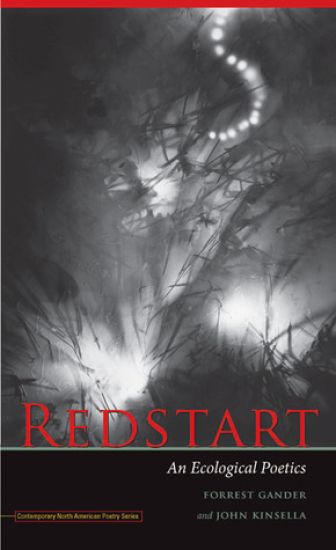
Redstart

Redstart

Forrest Gander; John Kinsella

University of Iowa Press
2012
nidottu
The damage humans have perpetrated on our environment has certainly affected a poet’s means and material. But can poetry be ecological? Can it display or be invested with values that acknowledge the economy of interrelationship between the human and the nonhuman realms? Aside from issues of theme and reference, how might syntax, line break, or the shape of the poem on the page express an ecological ethics? To answer these questions, poets Forrest Gander and John Kinsella offer an experiment, a collaborative volume of prose and poetry that investigates—both thematically and formally—the relationship between nature and culture, language and perception. They ask whether, in an age of globalization, industrialization, and rapid human population growth, an ethnocentric view of human beings as a species independent from others underpins our exploitation of natural resources. Does the disease of Western subjectivity constitute an element of the aesthetics that undermine poetic resistance to the killing of the land? Why does “the land” have to give something back to the writer?This innovative volume speaks to all people wanting to understand how artistic and critical endeavours can enrich, rather than impoverish, the imperilled world around us.
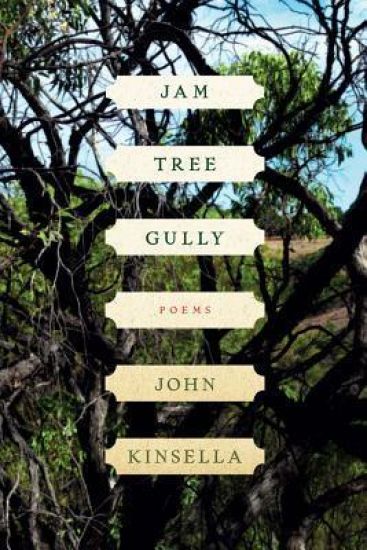
Jam Tree Gully

Jam Tree Gully

John Kinsella

WW Norton Co
2012
nidottu
In this daring new collection, Australia's preeminent environmental poet confronts the legacy of Thoreau's Walden. With Walden as his inspiration, John Kinsella moved with his family back to rural Australia, where he wrote the poems in this original collection exploring the nature of our responsibility and connection to the land. from "We Spend Days in This House" We spend days in this house but not nights. We have seen the early morning sunlight infiltrate the eucalypts, sunset deflected by acacias. We have sweltered at midday. We have walked every acre intimately. The kangaroos recognise us and linger. We spend days in this house but not nights.
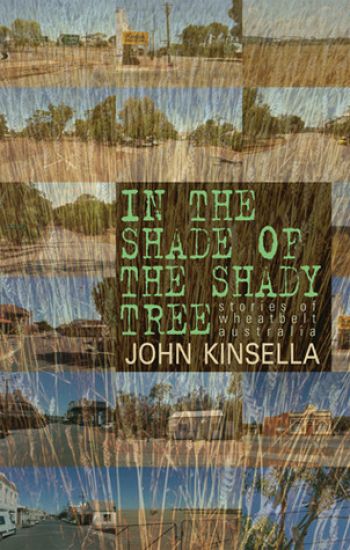
In the Shade of the Shady Tree

In the Shade of the Shady Tree

John Kinsella

Swallow Press
2012
sidottu
In the Shade of the Shady Tree is a collection of stories set in the Western Australian wheatbelt, a vast grain-growing area that ranges across the southwestern end of the immense Australian interior. Kinsella's stories offer glimpses into the lives of the people who call this area home, as the reader journeys from just north of the town of Geraldton to the far eastern and southern shires of the region. Cast against a backdrop of indigenous dispossession, settler migration, and the destructive impact of land-clearing and monocultural farming methods, the stories offer moments of connection with the inhabitants, ranging from the matter-of-fact to the bizarre and inexplicable. Something about the nature of the place wrestles with all human interactions and affects their outcomes. The land itself is a dominant character, with dust, gnarled scrubland, and the need for rain underpinning human endeavor. Inflected with both contemporary ideas of short fiction and the "everyman" tradition of Australian storytelling, this collection will introduce many readers to a new landscape and unforgettable characters.
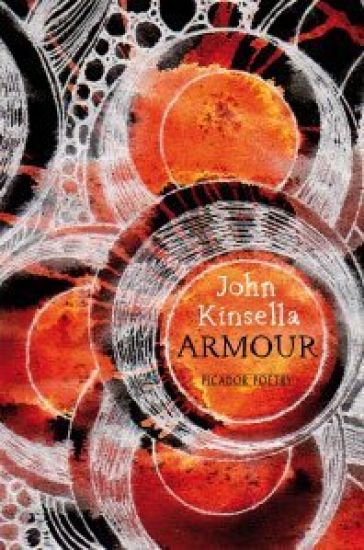
Armour

Armour

John Kinsella

Picador
2011
pokkari
With Armour, the great Australian poet John Kinsella has written his most spiritual work to date – and his most politically engaged. The world in which these poems unfold is strangely poised between the material and the immaterial, and everything which enters it – kestrel and fox, moth and almond – does so illuminated by its own vivid presence: the impression is less a poet honouring his subjects than uncannily inhabiting them. Elsewhere we find a poetry of lyric protest, as Kinsella scrutinizes the equivocal place of the human within this natural landscape, both as tenant and self-appointed steward. Armour is a beautifully various work, one of sharp ecological and social critique – but also one of meticulous invocation and quiet astonishment, whose atmosphere will haunt the reader long after they close the book. Praise for John Kinsella: ‘Kinsella’s poems are a very rare feat: they are narratives of feeling. Vivid sight – of landscapes, of animals, of human forms in distant light – becomes insight. There is, often, the shock of the new. But somehow awaited, even familiar. Which is the homecoming of a true poet’ George Steiner