Kirjojen hintavertailu. Mukana 12 542 863 kirjaa ja 12 kauppaa.

Kirjailija

John Kiste

Kirjat ja teokset yhdessä paikassa: 39 kirjaa, julkaisuja vuosilta 1996-2014, suosituimpien joukossa Devon Murders. Vertaile teosten hintoja ja tarkista saatavuus suomalaisista kirjakaupoista.

39 kirjaa

Kirjojen julkaisuhaarukka 1996-2014.

King George II and Queen Caroline

King George II and Queen Caroline

John Kiste

The History Press Ltd
2013
sidottu
This biography of the last king to lead British troops into battle and his able wife provides intriguing insight into 18th century war and politics. Often derided as the buffoon who "hated all poets and painters", George II was fortunate to be served by Prime Ministers Sir Robert Walpole and William Pitt, and was wise enough to leave the business of government to them. His wife, generally regarded as the ablest of British queens between Elizabeth I and Queen Victoria, used her influence in politics and patronage so that she and Walpole effectively ruled the kingdom between them. Her death in 1737 was seen as a national calamity. Illustrated throughout, this new biography provides a much-needed reevaluation of these monarchs and the times in which they ruled.
William John Wills

William John Wills

John Kiste

The History Press Ltd
2011
nidottu
In 1860 the Australian interior was unmapped and unknown to European settlers. When the Victorian Exploring Expedition tasked Robert O’Hara Burke, William John Wills and a party of nineteen men with crossing the country from South to North, this was soon to change. Following their slow and arduous journey from Melbourne to the Gulf of Carpentaria, John Van der Kiste gets to the heart of the expedition and the men involved. This book explores the way in which poor leadership skills, explosive characters and limited rations pushed the explorers to the limits of human capability. By 1861 the crossing had been declared a success, but only one man returned from the Gulf of Carpentaria. For the first time, William John Wills’ short life is examined in its entirety. In doing so, Van der Kiste details the character and motivations behind the man whose meticulous diaries secured the Wills name for posterity. Now 150 years on, Wills’ biography is a gripping tale of human endeavour.
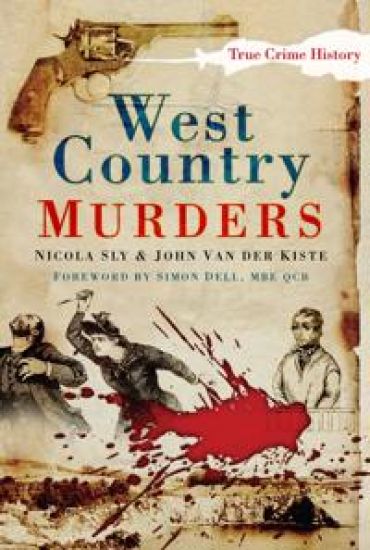
West Country Murders

West Country Murders

Nicola Sly; John Kiste; Simon Dell

The History Press Ltd
2009
nidottu
Hidden behind the picturesque facade of country lanes and rugged coastlines, quaint villages and busy market towns, the South West counties of Cornwall, Devon and Somerset have witnessed some of the most shocking murder cases in British history. West Country Murders brings together over 30 cases from the authors' previous collections here in one volume. They include stories of those who killed for greed, jealousy and lust, as well as those who committed murder in what a well-known judge once described as 'a gust of passion'. Some of the killers were undoubtedly insane at the time of their crimes; others were almost certainly innocent, yet paid the ultimate price for a murder they did not commit. Some remain unsolved to this day, despite the best efforts of the local constabularies. This book is sure to appeal to all those interested in the shady side of the West Country's history.
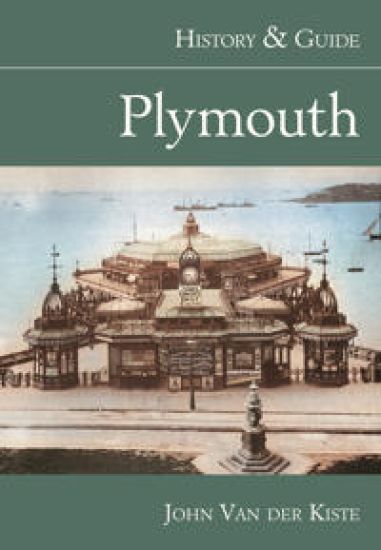
Plymouth: History and Guide

Plymouth: History and Guide

John Kiste

The History Press Ltd
2009
nidottu
The origins of the maritime city of Plymouth can be traced back to Saxon times, when farmland on a small peninsula at the mouth of the river Plym developed into Sutton Harbour, the hub of medieval Plymouth. During medieval times the town established its reputation both as a centre for voyage and discovery, particularly during the Elizabethan era, and for its military importance. Maritime trade and industries based in the dockyard, coupled with a steadily growing population, led to the renaming of Plymouth Dock as Devonport in 1824.Ninety years later the three towns of Plymouth, Devonport and Stonehouse were united as the Borough of Plymouth, which was granted City status in 1928. During the Second World War Plymouth was one of the most severely bombed cities in Britain, and large areas had to be completely rebuilt in peacetime. The end of the Cold War and defence cuts has led to the development of new industries to replace those which relied heavily on the dockyard and maritime trade.Drawing on a wide variety of sources, and including a collection of recommended walks around the city, this detailed guide to Plymouth is as fascinating as the location it describes and will appeal to residents and tourists alike.
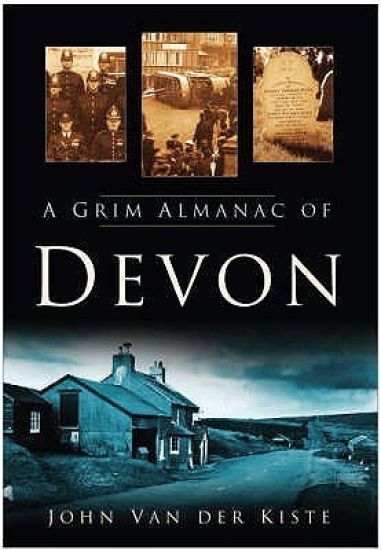
A Grim Almanac of Devon

A Grim Almanac of Devon

John Kiste

The History Press Ltd
2008
nidottu
The history of Devon is full of dark deeds and horrible happenings. Among the county's more macabre claims to fame are England's first documented serial killer, Robert de Middlecote, the murderous monk, believed to have been executed in 1329; the hanging of three women in Bideford in 1682, thought to be the last women put to death for witchcraft in the land; and conversely the saga of John 'Babbacombe Lee', the convicted killer who in 1885 became the 'man they could not hang'.There are also the disasters of Exeter's Theatre Royal, burnt to the ground in 1887 with the loss of around 186 lives; the Lynmouth floods of 1952 which claimed 34 victims; the mysterious death of journalist Bertram Fletcher Robinson, whose death may not have been the result of typhoid contracted after drinking contaminated tap water, but ruthless elimination by a famous rival; and the sad case of the boy of 9 who died after choking on a balloon attached to a string of liquorice. All these, plus tales of murder, suicide, accidents by land, sea and air, are here.
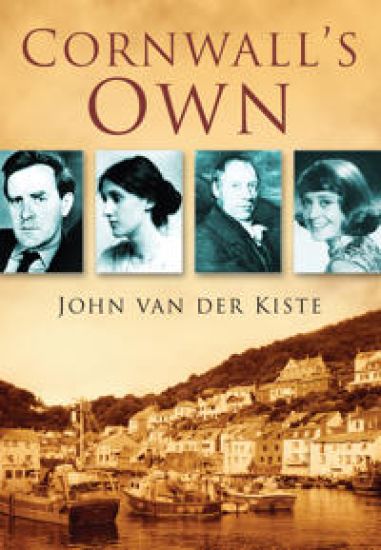
Cornwall's Own

Cornwall's Own

John Kiste

The History Press Ltd
2008
nidottu
Engineer and inventor Richard Trevithick, chemist Sir Humphrey Davy, artist John Opie, historian A.L. Rowse, poet Charles Causley, opera singer Benjamin Luxon, broadcaster Angela Rippon, actor John Nettles and drummer Mick Fleetwood are among well-known personalities through the ages who have been born in Cornwall. The county can claim many more who spent much of their lives here and left their mark on the area, including potter Bernard Leach, Eden Project founder Tim Smit, authors Daphne Du Maurier and John Le Carre, Wing Commander Guy Gibson VC, and artists Stanhope Forbes and Terry Frost. Cornwall's Own features mini-biographies of all these fascinating people and many more, and is sure to appeal to anyone interested in the county's history.
William and Mary

William and Mary

John Kiste

The History Press Ltd
2008
nidottu
Mary (1662-94), daughter of James, Duke of York, heir to the English throne, then 15, is said to have wept for a day and a half when she was told she was to marry her cousin, William (1650-1702), son of William II of Orange (1626-50), Stadtholder of the Dutch republic, and Mary, eldest daughter of Charles I of England, who was eleven years older than her. In November 1677, on William's 27th birthday, they married in a private ceremony at St James's Palace. William was solemn, James gloomy, Mary in tears, and only King Charles appeared cheerful. This dual biography deals with both the 'life and times' of the monarchs, and with England's place in Europe. Interests of the subjects, outside the constitutional, are dealt with, as well as their personal relationships: William's rumoured homosexuality and Mary's hinted-at lesbianism; Mary's troubled personal relations with her father, James II; and the relationship between Mary and her sister and husband's successor Anne. The book also examines the personal and political relations between William and his uncle Charles II, and between William and Mary and Charles' illegitimate son the Duke of Monmouth.
Devonshire's Own

Devonshire's Own

John Kiste

The History Press Ltd
2007
nidottu
Eighth-century martyr St Boniface, tennis player and TV presenter Sue Barker, painter Sir Joshua Reynolds, scholar Sir Thomas Bodley, actor Sir Donald Sinden, Boer War commander Sir Redvers Buller, radio and TV presenter Ed Stewart and round-the-world yachtsman Sir Francis Chichester are among personalities through the ages who have been born in Devon. The county can claim many more who were either born or lived here for a major part of their lives, including Scott of the Antarctica, Agatha Christie, Parson Jack Russell (of terrier fame) and Wayne Sleep. The Elizabethan explorers Sir Francis Drake, Sir Humphrey Gilbert and Sir Walter Raleigh were all Devonians, as were party leaders Michael Foot and David Owen. This book, by renowned local author John Van der Kiste, features mini-biographies of all these and many more.
A Divided Kingdom

A Divided Kingdom

John Kiste

The History Press Ltd
2007
sidottu
There is little available on the dramatic and colourful history of the Spanish monarchy. Experienced author and historian John Van der Kiste provides a readable and anecdotal look at one of the key European dynasties from the nineteenth century to the present. He begins with the wayward, ill-educated Isabella II, who was forced to marry her nephew. During much of her reign power was in the hands of her generals and her exile and abdication saw the crown of Spain hawked round Europe for two years. It was briefly accepted then refused by Prince Leopold of Hohenzollern-Sigmaringen - thus starting the Franco-Prussian War - and, after a short, unsuccessful stint as a republic, the monarchy was restored when Isabella's son Alfonso XIII was chosen as King. John Van der Kiste leads us through his popular reign, the reign of his son - who married one of Queen Victoria's granddaughters - and the socialist movement in Spain after the Great War which led to the dictatorship of Primo de Rovera. Finishing with the Spanish Civil War, the 'reign' of General Franco and the return of the monarchy with the present King, Juan Carlos, this is a fascinating look at the Spanish Bourbons.
Devon Murders

Devon Murders

John Kiste

The History Press Ltd
2006
nidottu
It recounts several notable cases, from the killing of Sarah and Edward Glass at Wadland Down in 1827 and the poisonings of Samuel Wescombe in Exeter in 1829 and William Ashford at Honiton Clyst in 1866, both by wives whose affections had gone elsewhere, to the horrific murder of Emma Doidge and her boyfriend William Rowe by the former's jilted suitor at Peter Tavey in 1892, as well as the strangling of schoolgirl Alice Gregory in 1916, and the triple murder of Emily Maye and her daughters at West Charleton, Kingsbridge, in 1936, which remains unsolved to this day. Above all, there is an account of Devon's most famous case, the murder of Emma Keyse at Babbacombe and the convicted servant John Lee - the man they couldn't hang. John Van der Kiste's carefully researched, well-illustrated and enthralling text will appeal to anyone interested in the shady side of Devon's history.
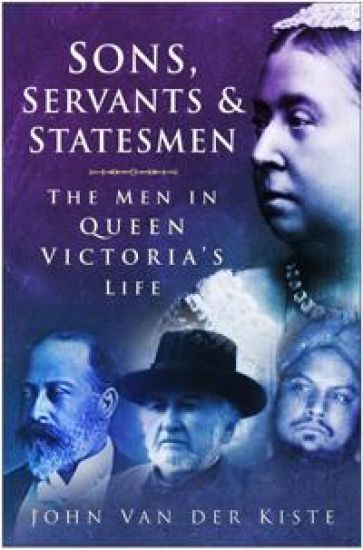
Sons, Servants and Statesmen

Sons, Servants and Statesmen

John Kiste

The History Press Ltd
2006
nidottu
How was Queen Victoria influenced by her closest male ministers, relatives, advisers and servants? John Van der Kiste is the first to explore this aspect of Victoria's life; focusing on four roles - mentors, family, ministers and servants. A soldier's daughter, Victoria lost her father at the age of eight months. Although her uncle Leopold did his best to be a substitute father, the absence of her real father probably influenced her throughout her life, not least in choosing her husband. Her close and faithful relationship with Albert is one of the great royal love stories but her relationships with her sons were much more stormy.However, with most of her heads of government she enjoyed relatively cordial relations - in widowhood she shoed a decided partiality for Disraeli, who acquired for her the title Empress of India, but disliked Gladstone, complaining that he "speaks to me as if I were a public meeting". Queen Victoria's relationships with her servants are also explored, from the liberal influence exerted over the increasingly conservative queen by her private secretary, Ponsonby, to the outspoken John Brown and the Indian Munshi, who both antagonised those around her.
Emperor Francis Joseph

Emperor Francis Joseph

John Kiste

The History Press Ltd
2005
sidottu
In 1848, 28-year-old Francis Joseph became King of Hungary and Emperor of Austria. He would reign for almost 68 years, the longest of any modern European monarch. Focusing on the life of Emperor Francis Joseph and his family, this book examines their personal relationships against the turbulent background of the 19th century.
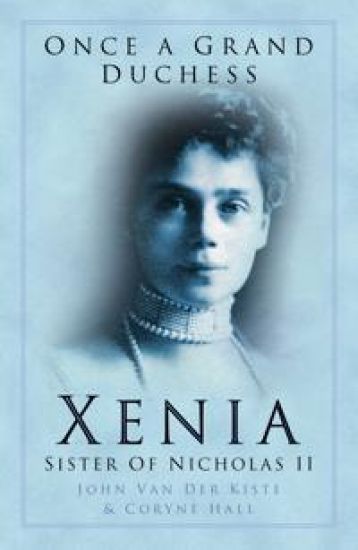
Once a Grand Duchess

Once a Grand Duchess

John Kiste

The History Press Ltd
2004
nidottu
This biography of Xenia, sister of Nicholas II gives a new angle on the Romanov story and provides new information on relationships within the family after the Revolution. Important new letters and photographs are also included.
George III's Children

George III's Children

John Kiste

The History Press Ltd
2004
nidottu
On 12 August 1762, Queen Charlotte gave birth to her first child. Twenty-one years later, to the week, the 15th and youngest was born. All but two children survived to maturity. The eldest of King George III's children, who became Prince Regent and King George IV, is less remembered for his patronage of the arts than for his extravagance, and maltreatment of his wife Caroline. As Commander-in-Chief to the British army, the administrative qualities of Frederick, Duke of York are largely forgotten, while King William IV, usually dismissed as a figure of fun, brought a new affability to the monarchy which helped him through the storms engendered during the passage of the Great Reform Bill in 1832. The princesses, for many years victims of their parents' possessiveness, married late in life, if at all, and are passed off as non-entities. This objective portrayal of the royal family draws upon contemporary sources to lay to rest the gossip and exaggeration.
Princess Victoria Melita

Princess Victoria Melita

John Kiste

The History Press Ltd
2003
nidottu
Princess Victoria Melita played a colourful role from her birth in 1876. The second daughter of Alfred, Duke of Edinburgh, she made a brief and unhappy marriage at the age of 17 to her cousin, Ernest, Grand Duke of Hesse. In the face of strong opposition from her family she divorced him seven years later and married another cousin, Grand Duke Cyril of Russia, resulting in three years of exile. When revolution toppled the empire in 1917, the Grand Duke and Duchess and their children escaped to Finland, living in danger for three long years. Following the atrocities of the Bolsheviks at the time, including the murder of most of the Romanov family, the Grand Duke believed he was the senior surviving member of the imperial house, and proclaimed himself Tsar. However, they were never able to return to their homeland, and the Grand Duchess died in exile in 1936. Using previously unpublished correspondence from the Royal Archives and Astor papers, this is a portrait of the Princess, set against the imperial courst of the turn of the 20th century and inter-war Europe.
George V's Children

George V's Children

John Kiste

The History Press Ltd
2003
nidottu
The six children of King George V and Queen Mary all lived to maturity except the youngest, Prince John. The eldest, who was Prince of Wales and heir to the throne, reigned as King Edward VIII for less than a year. His infamous romance with Mrs Simpson plunged the country into the abdication crisis and led both of them into a long period of exile. King George VI, who reluctantly and unexpectedly ascended to the throne, was a shy man, handicapped by a speech impediment and a sense of his own inadequacy. However, together with his Consort, Queen Elizabeth, and the Prime Minister, Winston Churchill, he gave the nation spirited guidance throughout World War II. Both surviving younger brothers served in the armed forces during war-time. Henry, Duke of Gloucester, was Governor General of Australia from 1944-6 and crowned his military career with promotion to the rank of Field-Marshal. George, Duke of Kent, an officer in the RAF, was tragically killed on active service in 1942. The only sister, Mary, Princess Royal, worked both as a nurse, and a royal ambassador abroad. This book tells the story of the family.
Crowns in a Changing World

Crowns in a Changing World

John Kiste

The History Press Ltd
2003
nidottu
At the death of Queen Victoria in 1901, almost every European nation was a monarchy, most linked by close family ties to her and Edward VII, the "uncle of Europe". Prior to the outbreak of World War I, the personal relationships of Edward, and of his successor and son, George V, flourished with the other royal families of Europe. The closeness of the European families was violently interrupted by the outbreak of war in 1914, and the armistice of 1918 brought three empires, namely Germany, Austria-Hungary and Russia, crashing down. Some monarchies were strengthened, and others weakened beyond repair. In this well-researched study, John Van der Kiste has drawn upon previously unpublished material for the Royal Archives, Windsor, to show the realtionships between the crowned heads of Europe in the first part of the 20th century. His account sheds new light on foreign policy leading up to World War I.
Dearest Vicky, Darling Fritz

Dearest Vicky, Darling Fritz

John Kiste

The History Press Ltd
2002
nidottu
This work tells the love story of the royal couple against the changing background of 19th-century Germany. It looks at the differing political sympathies of the couple, revealed through letters, and re-examines the prevailing view that the domineering Vicky never bothered to conceal her distaste for everything Prussian and flaunting her sense of British superiority. In many ways ahead of her time, she was something of a pioneer feminist, refusing to accept the oft-accepted maxim that women were second-class citizens. Insufficient consideration has been given to her health and the possibility that her judgement and reason may sometimes have been affected, albeit mildly, by the family's inheritance of porphyria that led to the 'madness' of her great-grandfather George III.
The Georgian Princesses

The Georgian Princesses

John Kiste

The History Press Ltd
2002
nidottu
A chronological account of the princesses and consort Queens of the Georgian era. From Sophia who died shortly before she would have become Queen as heir to Queen Anne, to Adelaide, consort to William IV whose failure to provide an heir ensured the succession passed to his niece Queen Victoria. During this period, an array of colourful personalities came and went - George I's ill-fated wife Sophia Dorothea of Celle who was imprisoned for adultery for over 30 years until her death; the equally tragic Caroline Matilda, Queen of Denmark and sister of George III who married an incipient schizophrenic, saw her lover put to death, was divorced and imprisoned, released after pressure from her brother, only to die of typhoid or scarlet fever aged just 23; George IV's notorious consort , his cousin Caroline of Brunswick, who danced naked on tables and was refused access to his coronation; and their daughter Charlotte, whose death in childbirth in 1817 necessitated the hasty marriages of several of her middle-aged uncles in a desperate race to provide a legal heir to the throne.
The Romanovs

The Romanovs

John Kiste

The History Press Ltd
1997
nidottu
This work examines Alexander II's life and reign, and the lives of his children, including his successor Tsar Alexander III, whose determination to purge the empire of all terrorism and protect the autocracy brought more violence in its wake. It also recounts the lives of the Tsar's children.