Kirjojen hintavertailu. Mukana 12 236 837 kirjaa ja 12 kauppaa.

Kirjailija

John Kuo Wei Tchen

Kirjat ja teokset yhdessä paikassa: 4 kirjaa, julkaisuja vuosilta 1988-2014, suosituimpien joukossa Lost and Found. Vertaile teosten hintoja ja tarkista saatavuus suomalaisista kirjakaupoista.

4 kirjaa

Kirjojen julkaisuhaarukka 1988-2014.

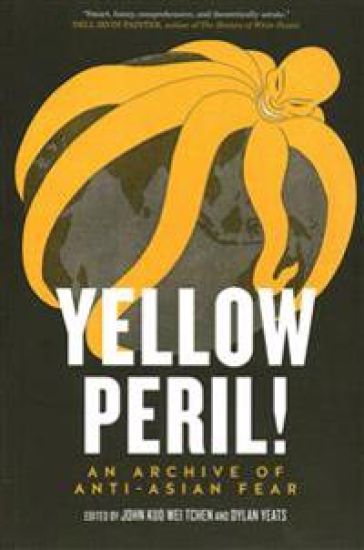
Yellow Peril!

Yellow Peril!

Dylan Yeats; John Kuo Wei Tchen

Verso Books
2014
nidottu
The "yellow peril" is one of the oldest and most pervasive racist ideas in Western culture-dating back to the birth of European colonialism during the Enlightenment. Yet while Fu Manchu looks almost quaint today, the prejudices that gave him life persist in modern culture. Yellow Peril! is the first comprehensive repository of anti-Asian images and writing, and it surveys the extent of this iniquitous form of paranoia.Written by two dedicated scholars and replete with paintings, photographs, and images drawn from pulp novels, posters, comics, theatrical productions, movies, propagandistic and pseudo-scholarly literature, and a varied world of pop culture ephemera, this is both a unique and fascinating archive and a modern analysis of this crucial historical formation.
Lost and Found

Lost and Found

Karen L. Ishizuka; John Kuo Wei Tchen; Roger Daniels

University of Illinois Press
2006
nidottu
For decades, a fog of governmental cover-ups, euphemisms, and societal silence kept the victims the mass incarceration of Americans of Japanese descent during World War II from understanding their experiences. The Japanese American National Museum mounted a critically acclaimed exhibition with the twin goals of educating the general public and encouraging former inmates to come to grips with and tell their own history. Combining heartfelt stories with first-rate scholarship, Lost and Found reveals the complexities of a people reclaiming the past. Author/curator Karen L. Ishizuka, a third-generation Japanese American, deftly blends official history with community memory to frame the historical moment of recovery within its cultural legacy. Detailing the interactive strategy that invited visitors to become part of the groundbreaking exhibition, Ishizuka narrates the processes of revelation and reclamation that unfolded as former internees and visitors alike confronted the experience of the camps. She also analyzes how the dual act of recovering-and recovering from-history necessitates private and public mediation between remembering and forgetting, speaking out and remaining silent.
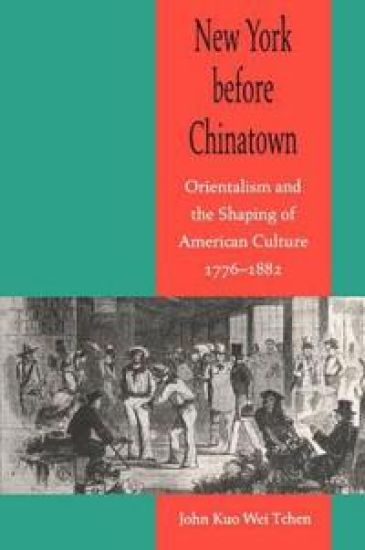
New York before Chinatown

New York before Chinatown

John Kuo Wei Tchen

Johns Hopkins University Press
2001
pokkari
From George Washington's desire (in the heat of the Revolutionary War) for a proper set of Chinese porcelains for afternoon tea, to the lives of Chinese-Irish couples in the 1830s, to the commercial success of Chang and Eng (the "Siamese Twins"), to rising fears of "heathen Chinee," New York before Chinatown offers a provocative look at the role Chinese people, things, and ideas played in the fashioning of American culture and politics. Piecing together various historical fragments and anecdotes from the years before Chinatown emerged in the late 1870s, historian John Kuo Wei Tchen redraws Manhattan's historical landscape and broadens our understanding of the role of port cultures in the making of American identities. Tchen tells his story in three parts. In the first, he explores America's fascination with Asia as a source of luxury items, cultural taste, and lucrative trade. In the second, he explains how Chinese, European-Americans in Yellowface, and various caricatures became objects of curiosity in the expansive commercial marketplace. In the third part, Tchen focuses on how Americans' attitude toward the Chinese changed from fascination to demonization, leading to the passage of the Chinese Exclusion Acts beginning in 1882.
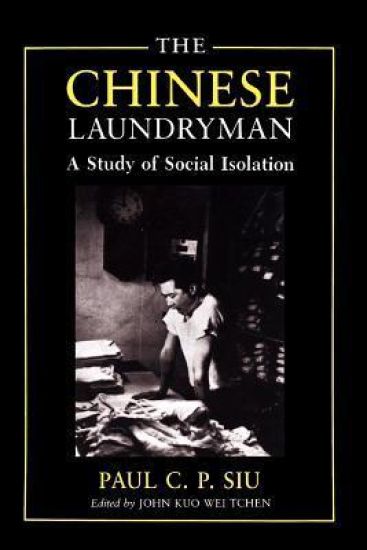
The Chinese Laundryman

The Chinese Laundryman

Paul C.P. Siu; John Kuo Wei Tchen

New York University Press
1988
pokkari
Chinese hand laundries have been a fixture of America's urban landscape for over one hundred years. Yet little is publicly known about the workings of this familiar institution which originated shortly after Chinese immigrants had started to arrive in some numbers in California in the 1850s. At that time the Chinese worked in a wide range of occupations, hand laundries being one of them. But with the faltering of the Western economy and as European immigration to the United States mounted, the tide of anti-Chinese sentiment swelled, which culminated in violent evictions of the Chinese from West Coast cities and in the imposition of the Chinese Exclusion Act of 1882. The laundry became one of the few occupations in which Chinese were able to continue to work. This book is the definitive scholarly study of Chinese laundries and of those who worked in them in the United States. Sio's work, researched in the 1930s, was completed as a dissertation in 1953 at the University of Chicago's School of Sociology. It is an intimate insider's look at the life and work of Chinese hand laundry workers in Chicago, and is one of the most insightful participant observation studies of this kind. Dr. Siu, himself the son of a laundryman, introduces in it the key sociological concept of the "sojourner" and explores the whole nature of immigrant economies. Considered a classic work by students of overseas Chinese and Asian American studies, The Chinese Laundryman is also a landmark in the study of ethnic occupations and in the social and cultural history of the immigrant in America. Vividly descriptive and highly readable, the book will appeal to anyone interested in the ethnic and the urban experience in America.