Kirjailija
John L. Bell
Kirjat ja teokset yhdessä paikassa: 39 kirjaa, julkaisuja vuosilta 1996-2024, suosituimpien joukossa Så som på jorden : sånger från Wild Goose Resource Group inom Iona Community. Vertaile teosten hintoja ja tarkista saatavuus suomalaisista kirjakaupoista.
Mukana myös kirjoitusasut: John L Bell
39 kirjaa
Kirjojen julkaisuhaarukka 1996-2024.
Stories should stand by themselves, especially true stories. For the author or the teller to add a personal note by way of ‘My own perspective is … ‘ or ‘The moral of this tale is …’ prohibits the story from resonating with the experience of the reader or the hearer. All the stories in And Then She Said are true. They come from real life, they involve real people. All they need is to be read, not explained. Including people of many nations, cultures and circumstances, these stories encompass everything from suspected smuggling of pornography to harbouring an alleged enemy in an occupied nation; from being the unlikely confidante of a dying boy to drinking coffee with a convicted murderer; from discovering faith in the face of tragedy to identifying the hidden source of sacrificial generosity.
'John Bell of the Iona Community has been for many years one of the most recognized voices on BBC Radio 4's Thought for the Day, where his cogent and penetrating topical contributions reach an audience well beyond the churches.' Justin Welby, Archbishop of Canterbury The Apostle's creed proclaims that Jesus Christ was 'born of the Virgin Mary, suffered under Pontius Pilate'. But these statements, separated by only a comma, tell us very little about the One in whom 'the fulness of God' lived and breathed! In four provocative and compelling sessions: Advent: A time for the kids? The life omitted Unspoken in Advent A life of risk John Bell writes vividly of the people Jesus met; the things he said; the controversy he caused and the affection he had for the marginalised and for women in particular. Urging us to grasp more fully the great implications of the Incarnation, The Life in the Comma liberates us to celebrate Christmas as never before. TO ACCOMPANY THIS COURSE BOOK Filmed on location by Monkeynut in an enchanting Georgian country house, The Life in the Comma video (in addition to the usual audio CD download) invites us to join John, Bishop Smitha Prasadam, and writer Lauren Windle as they discuss the themes of the course. COMPLETE LIST OF THE LIFE IN THE COMMA PRODUCTS Course book including transcript of video and access to video/audio downloads (paperback 978 1 91584 341 8) Course book including transcript of video and access to video/audio downloads (eBook 978 1 91584 342 5) Participants' book including transcript of video: pack of 5 (paperback 978 1 91584 345 6) Participants' book including transcript of video (eBook 978 1 91584 344 9) Audio book of discussion to support THE LIFE IN THE COMMA (audio digital download 978 1 91584 340 1) Video of discussion to support THE LIFE IN THE COMMA (available only via the publisher's website)
The Life in the Comma: Deepening Our Understanding of Jesus
John L. Bell
SPCK PUBLISHING
2024
pokkari
'John Bell of the Iona Community has been for many years one of the most recognized voices on BBC Radio 4's Thought for the Day, where his cogent and penetrating topical contributions reach an audience well beyond the churches.' Justin Welby, Archbishop of Canterbury The Apostle's creed proclaims that Jesus Christ was 'born of the Virgin Mary, suffered under Pontius Pilate'. But these statements, separated by only a comma, tell us very little about the One in whom 'the fulness of God' lived and breathed! In four provocative and compelling sessions: Advent: A time for the kids? The life omitted Unspoken in Advent A life of risk John Bell writes vividly of the people Jesus met; the things he said; the controversy he caused and the affection he had for the marginalised and for women in particular. Urging us to grasp more fully the great implications of the Incarnation, The Life in the Comma liberates us to celebrate Christmas as never before. TO ACCOMPANY THIS COURSE BOOK Filmed on location by Monkeynut in an enchanting Georgian country house, The Life in the Comma video (in addition to the usual audio CD download) invites us to join John, Bishop Smitha Prasadam, and writer Lauren Windle as they discuss the themes of the course. COMPLETE LIST OF THE LIFE IN THE COMMA PRODUCTS Course book including transcript of video and access to video/audio downloads (paperback 978 1 91584 341 8) Course book including transcript of video and access to video/audio downloads (eBook 978 1 91584 342 5) Participants' book including transcript of video: pack of 5 (paperback 978 1 91584 345 6) Participants' book including transcript of video (eBook 978 1 91584 344 9) Audio book of discussion to support THE LIFE IN THE COMMA (audio digital download 978 1 91584 340 1) Video of discussion to support THE LIFE IN THE COMMA (available only via the publisher's website)
From a black Jesus to a great lake of beer; the Highland clearances to Protestant iconoclasm; the pandemic to paedophilia … just a sample of the wide-ranging issues covered in this collection of short broadcast pieces and longer festival seminars. And through them all – faith, hope, life and love. John Bell is a member of the Iona Community and of the Wild Goose Resource Group. He travels widely, broadcasts occasionally and grows potatoes in his front garden.
This Element is an exposition of second- and higher-order logic and type theory. It begins with a presentation of the syntax and semantics of classical second-order logic, pointing up the contrasts with first-order logic. This leads to a discussion of higher-order logic based on the concept of a type. The second Section contains an account of the origins and nature of type theory, and its relationship to set theory. Section 3 introduces Local Set Theory (also known as higher-order intuitionistic logic), an important form of type theory based on intuitionistic logic. In Section 4 number of contemporary forms of type theory are described, all of which are based on the so-called 'doctrine of propositions as types'. We conclude with an Appendix in which the semantics for Local Set Theory - based on category theory - is outlined.
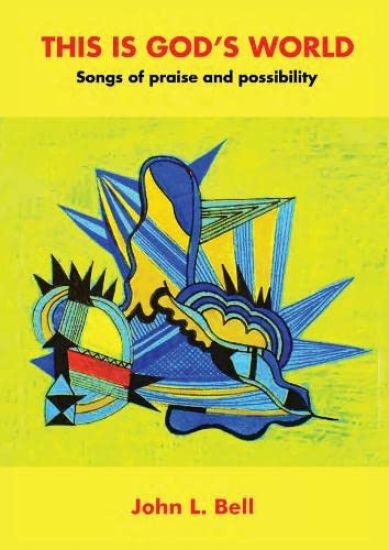
Nineteen songs that are singable, road tested and gutsy. They include ancient words, familiar tunes, biblical poetry and global testimony, with themes from mission to mourning and the sacraments to the environment, enabling us to sing urgently and authentically in expression of perennial concerns and pressing issues of today.
The Continuous, the Discrete and the Infinitesimal in Philosophy and Mathematics
John L. Bell
Springer Nature Switzerland AG
2020
nidottu
This book explores and articulates the concepts of the continuous and the infinitesimal from two points of view: the philosophical and the mathematical. The first section covers the history of these ideas in philosophy. Chapter one, entitled ‘The continuous and the discrete in Ancient Greece, the Orient and the European Middle Ages,’ reviews the work of Plato, Aristotle, Epicurus, and other Ancient Greeks; the elements of early Chinese, Indian and Islamic thought; and early Europeans including Henry of Harclay, Nicholas of Autrecourt, Duns Scotus, William of Ockham, Thomas Bradwardine and Nicolas Oreme. The second chapter of the book covers European thinkers of the sixteenth and seventeenth centuries: Galileo, Newton, Leibniz, Descartes, Arnauld, Fermat, and more. Chapter three, 'The age of continuity,’ discusses eighteenth century mathematicians including Euler and Carnot, and philosophers, among them Hume, Kant and Hegel.Examining the nineteenth and earlytwentieth centuries, the fourth chapter describes the reduction of the continuous to the discrete, citing the contributions of Bolzano, Cauchy and Reimann. Part one of the book concludes with a chapter on divergent conceptions of the continuum, with the work of nineteenth and early twentieth century philosophers and mathematicians, including Veronese, Poincaré, Brouwer, and Weyl.Part two of this book covers contemporary mathematics, discussing topology and manifolds, categories, and functors, Grothendieck topologies, sheaves, and elementary topoi. Among the theories presented in detail are non-standard analysis, constructive and intuitionist analysis, and smooth infinitesimal analysis/synthetic differential geometry.No other book so thoroughly covers the history and development of the concepts of the continuous and the infinitesimal.
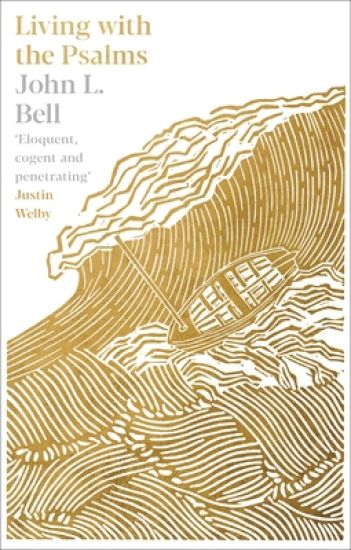
Developed during his teaching ministry around the world, this book is the fruit of a lifetime's engagement with the Psalms. As a broadcaster and writer, John is loved for being entirely genuine and, in the words of Archbishop Justin Welby, 'his cogent and penetrating contributions reach an audience well beyond the churches'. Here John explores the psalms as they impinge on daily life, drawing on stories and personal testimonies in order to help readers grieve, or rejoice, or draw encouragement from this most extraordinary and fascinating collection of sacred poems and songs. 'John Bell of the Iona Community has been for many years one of the most recognized voices on BBC Radio 4's Thought for the Day, where his cogent and penetrating topical contributions reach an audience well beyond the churches.' - Justin Welby, Archbishop of Canterbury
The Continuous, the Discrete and the Infinitesimal in Philosophy and Mathematics
John L. Bell
Springer Nature Switzerland AG
2019
sidottu
This book explores and articulates the concepts of the continuous and the infinitesimal from two points of view: the philosophical and the mathematical. The first section covers the history of these ideas in philosophy. Chapter one, entitled ‘The continuous and the discrete in Ancient Greece, the Orient and the European Middle Ages,’ reviews the work of Plato, Aristotle, Epicurus, and other Ancient Greeks; the elements of early Chinese, Indian and Islamic thought; and early Europeans including Henry of Harclay, Nicholas of Autrecourt, Duns Scotus, William of Ockham, Thomas Bradwardine and Nicolas Oreme. The second chapter of the book covers European thinkers of the sixteenth and seventeenth centuries: Galileo, Newton, Leibniz, Descartes, Arnauld, Fermat, and more. Chapter three, 'The age of continuity,’ discusses eighteenth century mathematicians including Euler and Carnot, and philosophers, among them Hume, Kant and Hegel.Examining the nineteenth and earlytwentieth centuries, the fourth chapter describes the reduction of the continuous to the discrete, citing the contributions of Bolzano, Cauchy and Reimann. Part one of the book concludes with a chapter on divergent conceptions of the continuum, with the work of nineteenth and early twentieth century philosophers and mathematicians, including Veronese, Poincaré, Brouwer, and Weyl.Part two of this book covers contemporary mathematics, discussing topology and manifolds, categories, and functors, Grothendieck topologies, sheaves, and elementary topoi. Among the theories presented in detail are non-standard analysis, constructive and intuitionist analysis, and smooth infinitesimal analysis/synthetic differential geometry.No other book so thoroughly covers the history and development of the concepts of the continuous and the infinitesimal.
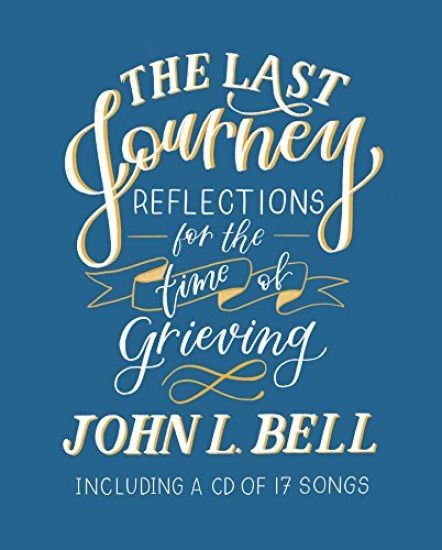
The need to express grief, to sing our sorrow, is as old as humanity. The book of Psalms, side by side with expressions of deepest praise, contains cries of unfathomable despair. Both are not only acceptable to God, but essential for our mental and spiritual health. In The Last Journey, John Bell explores the myriad emotions that accompany loss, offering us a way to grieve, to search through the struggle before us – and perhaps enabling us to find the courage to face the world with a renewed sense of hope.
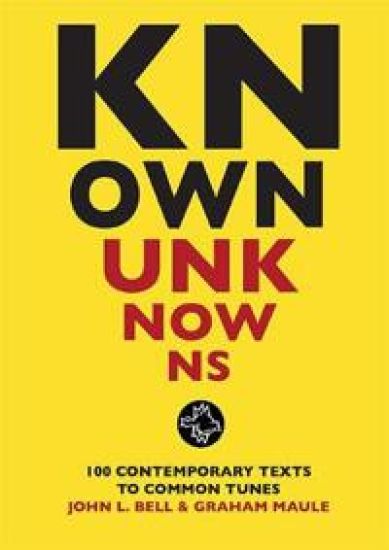
Singing a new song is not an optional extra, but a faithful response to a divine command. This command is the opening phrase of Psalms 96 and 98. And, St John the Divine says, this is what the saints in heaven are doing all the time. But, on earth, things are not so easy. Sometimes it’s because the latest new song in the old hymnbook is two centuries old. Or the congregation has been told by some sadist that it ‘doesn’t sing well’. Or sometimes the organist can only play what s/he hears on the radio. Or the guitarist can do anything, as long as it’s only three major chords. However, even in such dire straits, the divine command has to be obeyed. So what if we kept familiar tunes – hymn tunes or folk tunes – and set words to them in 21st-century idioms? What if we gave some ancient psalms a makeover, replaced threadbare wedding and funeral songs or dealt with the things that people actually talk about when they’re not in church? And what if most of the suggested tunes were so well known that – even if musicians took the huff – people could still sing the verses on their own? What if you looked under the covers of this book and began to upset the quiet of the place in which you are presently standing by beginning to hum? This book amounts to a modest proposal from the Wild Goose Resource Group on how to make the most of minimal congregational song resources in an accessible and resilient way.
What we sing shapes what we believe - this is an incontrovertible truth as regards the song of the Church. It has led many Westerners to believe that Jesus was a silent baby (Away In A Manger) and a docile child (Once In Royal David's City). It has suggested that militarism is an apt metaphor for discipleship (Onward Christian Soldiers) and this misconception is closely allied to decay (Abide With Me). It has also led to the assumption that, as regards religion, 'the West is the best' (O'er Those Gloomy Hills of Darkness, etc). This is not to discount the value of these and other favourite texts. It is, rather, to suggest that the songs we sing reflect the theology of our times, and theology is always in process because God is always on the move. The songs in this collection are not the antidote but rather a supplement both to traditional hymnody and to the narrow spectrum of biblical and emotional content in much praise and worship material. They are songs intended, as the title (which comes from the words of Jesus) suggests, to liberate us from limited horizons. Hence there are: songs which shun dated, churchy language and instead embrace contemporary speech; songs which prove that the southern hemisphere has more to offer than Kumbaya; songs which take the world seriously, because God takes it seriously; songs which allow worship to be more than predictable praise; songs which challenge the dominance of a performance mentality because they are meant for all to sing. Because we have never set out to provide peerless performances of flawless music, we hope that this album will not just be something to listen to, but may encourage all of God's people to sing.
Boken inneholder sanger og liturgier fra Iona-felleskapet i Skottland. Et flertall av melodiene er skotske eller irske folketoner. Sangene er skrevet for folkevrimmel og gatestøv, og feirer at Jesus er midt i blant oss.
This third edition, now available in paperback, is a follow up to the author's classic Boolean-Valued Models and Independence Proofs in Set Theory,. It provides an exposition of some of the most important results in set theory obtained in the 20th century: the independence of the continuum hypothesis and the axiom of choice. Aimed at graduate students and researchers in mathematics, mathematical logic, philosophy, and computer science, the third edition has been extensively updated with expanded introductory material, new chapters, and a new appendix on category theory. It covers recent developments in the field and contains numerous exercises, along with updated and increased coverage of the background material. This new paperback edition includes additional corrections and, for the first time, will make this landmark text accessible to students in logic and set theory.
This is the second volume of John L. Bell's 'Thoughts For The Day', augmented by three extended essays, 'Indebting the future', 'The love of God and global warming' and 'The beast that is in us'. For seven years, John has been a contributor to Radio 4's Thought For The Day, attempting - as the project demands - to offer a religious perspective on m
A sequel to two collections of short songs ("Come All You People" and "There Is One Among Us") for use in worship. It is suitable for small choirs, social justice enthusiasts, multiculturalists and those who regard themselves a global Christian.
One of the most remarkable recent occurrences in mathematics is the refounding, on a rigorous basis, of the idea of infinitesimal quantity, a notion which played an important role in the early development of the calculus and mathematical analysis. In this new edition basic calculus, together with some of its applications to simple physical problems, are presented through the use of a straightforward, rigorous, axiomatically formulated concept of 'zero-square', or 'nilpotent' infinitesimal - that is, a quantity so small that its square and all higher powers can be set, literally, to zero. The systematic employment of these infinitesimals reduces the differential calculus to simple algebra and, at the same time, restores to use the “infinitesimal” methods figuring in traditional applications of the calculus to physical problems - a number of which are discussed in this book. This edition also contains an expanded historical and philosophical introduction.
For four years, John Bell has been a contributor to Radio 4's "Thought for the Day", attempting - as the project demands - to offer a religious perspective on matters of current social and international importance. Sometimes affirming, sometimes controversial but always contemporary, these short reflections represent the prickly interface between faith and politics from the perspective of a Christian believer.