Kirjojen hintavertailu. Mukana 12 294 324 kirjaa ja 12 kauppaa.

Kirjailija

John L. Culliney

Kirjat ja teokset yhdessä paikassa: 5 kirjaa, julkaisuja vuosilta 1999-2018, suosituimpien joukossa Islands in a Far Sea. Vertaile teosten hintoja ja tarkista saatavuus suomalaisista kirjakaupoista.

5 kirjaa

Kirjojen julkaisuhaarukka 1999-2018.

The Fractal Self

The Fractal Self

John L. Culliney; David Jones

University of Hawai'i Press
2018
nidottu
Our universe, science reveals, began in utter simplicity, then evolved into burgeoning complexity. Starting with subatomic particles, dissimilar entities formed associations—binding, bonding, growing, branching, catalyzing, cooperating—as “self” joined “other” following universal laws with names such as gravity, chemical attraction, and natural selection. Ultimately life arose in a world of dynamic organic chemistry, and complexity exploded with wondrous new potential.Fast forward to human evolution, and a tension that had existed for billions of years now played out in an unprecedented arena of conscious calculation and cultural diversity. Cooperation interleaving with competition; intimacy oscillating with integrity—we dwell in a world where yin meets yang in human affairs on many levels. In The Fractal Self, John Culliney and David Jones uncover surprising intersections between science and philosophy. Connecting evidence from evolutionary science with early insights of Daoist and Buddhist thinkers, among others, they maintain that sagely behavior, envisioned in these ancient traditions, represents a pinnacle of human achievement emerging out of our evolutionary heritage. They identify an archetype, “the fractal self,” a person in any walk of life who cultivates a cooperative spirit. A fractal self is a sage in training, who joins others in common cause, leads from within, and achieves personal satisfaction in coordinating smooth performance of the group, team, or institution in which he or she is embedded. Fractal selves commonly operate with dedication and compassionate practice in the service of human society or in conserving our planet.But the competitive side of human nature is susceptible to greed and aggression. Self-aggrandizement, dictatorial power, and ego-driven enforcement of will are the goals of those following a self-serving path—individuals the authors identify as antisages. Terrorist leaders are an especially murderous breed, but aggrandizers can be found throughout business, religion, educational institutions, and governments. Humanity has reached an existential tipping point: will the horizon already in view expand with cooperative progress toward godlike emergent opportunities or contract in the thrall of corrupt oligarchs and tribal animosities? We have brought ourselves to a chaotic edge between immense promise and existential danger and are even now making our greatest choice.

The Fractal Self

The Fractal Self

John L. Culliney; David Jones

University of Hawai'i Press
2017
sidottu
Our universe, science reveals, began in utter simplicity, then evolved into burgeoning complexity. Starting with subatomic particles, dissimilar entities formed associations—binding, bonding, growing, branching, catalyzing, cooperating—as “self” joined “other” following universal laws with names such as gravity, chemical attraction, and natural selection. Ultimately life arose in a world of dynamic organic chemistry, and complexity exploded with wondrous new potential.Fast forward to human evolution, and a tension that had existed for billions of years now played out in an unprecedented arena of conscious calculation and cultural diversity. Cooperation interleaving with competition; intimacy oscillating with integrity—we dwell in a world where yin meets yang in human affairs on many levels. In The Fractal Self, John Culliney and David Jones uncover surprising intersections between science and philosophy. Connecting evidence from evolutionary science with early insights of Daoist and Buddhist thinkers, among others, they maintain that sagely behavior, envisioned in these ancient traditions, represents a pinnacle of human achievement emerging out of our evolutionary heritage. They identify an archetype, “the fractal self,” a person in any walk of life who cultivates a cooperative spirit. A fractal self is a sage in training, who joins others in common cause, leads from within, and achieves personal satisfaction in coordinating smooth performance of the group, team, or institution in which he or she is embedded. Fractal selves commonly operate with dedication and compassionate practice in the service of human society or in conserving our planet.But the competitive side of human nature is susceptible to greed and aggression. Self-aggrandizement, dictatorial power, and ego-driven enforcement of will are the goals of those following a self-serving path—individuals the authors identify as antisages. Terrorist leaders are an especially murderous breed, but aggrandizers can be found throughout business, religion, educational institutions, and governments. Humanity has reached an existential tipping point: will the horizon already in view expand with cooperative progress toward godlike emergent opportunities or contract in the thrall of corrupt oligarchs and tribal animosities? We have brought ourselves to a chaotic edge between immense promise and existential danger and are even now making our greatest choice.

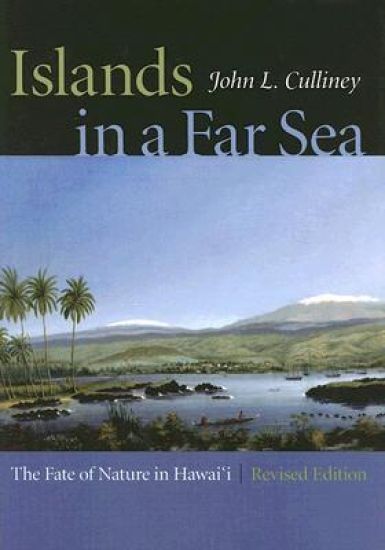
Islands in a Far Sea

Islands in a Far Sea

John L. Culliney

University of Hawai'i Press
2005
sidottu
First published in 1988, ""Islands in a Far Sea"" offers a comprehensive environmental history of Hawai'i. This thoroughly revised edition begins with an up-to-date account of the geological formation and shaping of the Islands, their colonization by plants and animals, and the patterns of ecology and evolution that unfolded in nurturing seas and on breath-taking landscapes. This book tells the story of human interaction with Hawai'i's native landscapes and rich biological heritage. The author's accessible language allows readers to grasp basic geological and biological principles and to understand the perhaps surprising vulnerability of Hawaiian ecosystems - which have coevolved with volcanoes - to human impact. ""Islands in a Far Sea"" includes many well-documented historical examples of such impacts, featuring growth and greed, fears and foibles as humans confronted endemic nature in Hawai'i. Citing a large array of sources, the author makes it possible for interested readers to probe more deeply the changes in natural systems that have ensued on all of the Hawaiian Islands. To date the result has been the tragic reduction of a unique and benign biota. However, the book holds out hope that current efforts to protect what is left of Hawai'i's flora and fauna in their remaining wild settings may yet succeed.
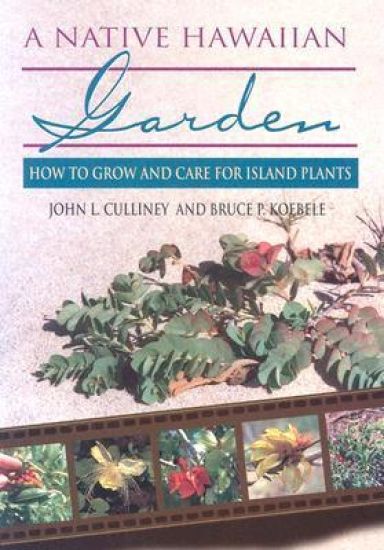
A Native Hawaiian Garden

A Native Hawaiian Garden

John L. Culliney; Bruce P. Koebele

University of Hawai'i Press
1999
nidottu
Hawai‘i is home to some of the rarest plants in the world, many of them now threatened by extinction. Despite a benign and nurturing climate, native species are declining almost everywhere in the Islands. Human-introduced pests, the spread of competing alien plants, wildfires, urban and agricultural development, and other disturbances of modern life are eliminating native species at an alarming pace. In fact, 38 percent of all plants on the U.S. endangered species list are native Hawaiian plants.A Native Hawaiian Garden is an effort to help stem the tide. Until recent years, few people attempted to raise native plants in their gardens, in schoolyards and parks, or around public buildings. But this situation is changing as essential information about raising native plants becomes more readily available. A Native Hawaiian Garden offers the most in-depth treatment yet on cultivating and propagating native Hawaiian plants. Following an overview of Hawaiian natural history and conservation, the book treats 63 species (many for the first time), giving detailed information on all stages of gardening: from preparing seeds for germination to the care and tending of the young plants in the landscape. Habitats where the plants are most likely to thrive are also described, as well as the uses that native Hawaiians made of the plants. Over 90 color photographs enhance the book.A Native Hawaiian Garden has much to offer professional horticulturists, landscapers, and botanists, and gives reason to hope that more spaces around housing developments, shopping malls, and other commercial buildings will soon include native plants. But the book will prove especially valuable to those gardeners who wish to grow and nurture something truly Hawaiian in their own backyards. Among the many rewards of growing natives, the authors make clear, is the opportunity to contribute your own experiences and findings to a vital preservation effort.