Kirjojen hintavertailu. Mukana 12 595 353 kirjaa ja 12 kauppaa.

Kirjailija

John L. Jackson Jr.

Kirjat ja teokset yhdessä paikassa: 6 kirjaa, julkaisuja vuosilta 2001-2016, suosituimpien joukossa Televised Redemption. Vertaile teosten hintoja ja tarkista saatavuus suomalaisista kirjakaupoista.

6 kirjaa

Kirjojen julkaisuhaarukka 2001-2016.

Televised Redemption

Televised Redemption

Carolyn Moxley Rouse; John L. Jackson Jr.; Marla F. Frederick

New York University Press
2016
sidottu
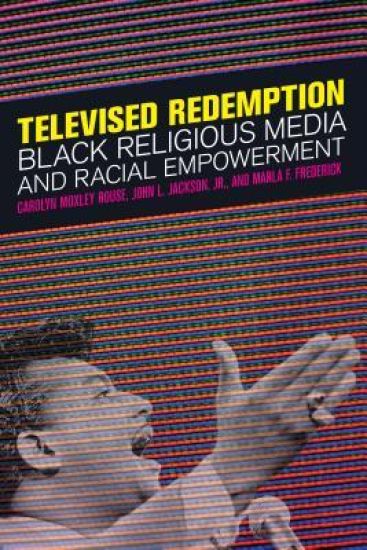
How Black Christians, Muslims, and Jews have used media to prove their equality, not only in the eyes of God but in society. The institutional structures of white supremacy—slavery, Jim Crow laws, convict leasing, and mass incarceration—require a commonsense belief that black people lack the moral and intellectual capacities of white people. It is through this lens of belief that racial exclusions have been justified and reproduced in the United States. Televised Redemption argues that African American religious media has long played a key role in humanizing the race by unabashedly claiming that blacks are endowed by God with the same gifts of goodness and reason as whites—if not more, thereby legitimizing black Americans' rights to citizenship. If racism is a form of perception, then religious media has not only altered how others perceive blacks, but has also altered how blacks perceive themselves. Televised Redemption argues that black religious media has provided black Americans with new conceptual and practical tools for how to be in the world, and changed how black people are made intelligible and recognizable as moral citizens. In order to make these claims to black racial equality, this media has encouraged dispositional changes in adherents that were at times empowering and at other times repressive. From Christian televangelism to Muslim periodicals to Hebrew Israelite radio, Televised Redemption explores the complicated but critical redemptive history of African American religious media.
Televised Redemption

Televised Redemption

Carolyn Moxley Rouse; John L. Jackson Jr.; Marla F. Frederick

New York University Press
2016
pokkari
How Black Christians, Muslims, and Jews have used media to prove their equality, not only in the eyes of God but in society. The institutional structures of white supremacy—slavery, Jim Crow laws, convict leasing, and mass incarceration—require a commonsense belief that black people lack the moral and intellectual capacities of white people. It is through this lens of belief that racial exclusions have been justified and reproduced in the United States. Televised Redemption argues that African American religious media has long played a key role in humanizing the race by unabashedly claiming that blacks are endowed by God with the same gifts of goodness and reason as whites—if not more, thereby legitimizing black Americans' rights to citizenship. If racism is a form of perception, then religious media has not only altered how others perceive blacks, but has also altered how blacks perceive themselves. Televised Redemption argues that black religious media has provided black Americans with new conceptual and practical tools for how to be in the world, and changed how black people are made intelligible and recognizable as moral citizens. In order to make these claims to black racial equality, this media has encouraged dispositional changes in adherents that were at times empowering and at other times repressive. From Christian televangelism to Muslim periodicals to Hebrew Israelite radio, Televised Redemption explores the complicated but critical redemptive history of African American religious media.
Real Black

Real Black

John L. Jackson Jr.

University of Chicago Press
2005
sidottu
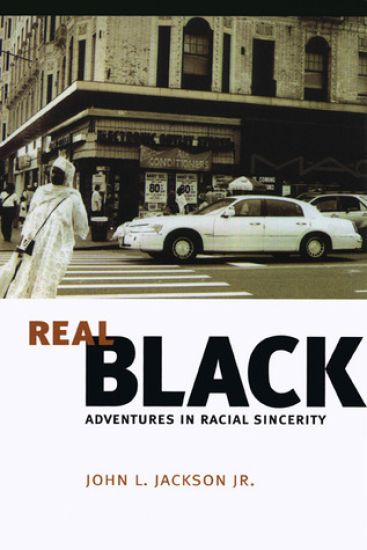
New York's urban neighborhoods are full of young would-be emcees who aspire to "keep it real" and restaurants like Sylvia's famous soul food eatery that offer a taste of "authentic" black culture. In these and other venues, authenticity is considered the best way to distinguish the real from the phony, the genuine from the fake. But in "Real Black", John L. Jackson Jr. proposes a new model for thinking about these issues - racial sincerity. Jackson argues that authenticity caricatures identity as something imposed on people, imprisoning them within stereotypes: an African American high school student who excels in the classroom, for instance, might be dismissed as "acting white." Sincerity, on the other hand, as Jackson defines it, imagines authenticity as an incomplete measuring stick, an analytical model that attempts to deny people agency in their search for identity. Drawing on more than ten years of ethnographic research in and around New York City, Jackson offers a kaleidoscope of subjects and stories that directly and indirectly address how race is negotiated in today's world - including tales of book-vending numerologists, urban conspiracy theorists, corrupt police officers, mixed-race neo-Nazis, and gospel choirs forbidden to catch the Holy Ghost. Jackson records and retells their interconnected sagas, all the while attempting to reconcile these stories with his own crisis of identity and authority as an anthropologist terrified by fieldwork. Finding ethnographic significance where mere mortals see only bricks and mortar, his invented alter ego, Anthroman, takes to the streets, showing how race is defined and debated, imposed and confounded every single day.
Real Black

Real Black

John L. Jackson Jr.

University of Chicago Press
2005
nidottu
New York's urban neighborhoods are full of young would-be emcees who aspire to "keep it real" and restaurants like Sylvia's famous soul food eatery that offer a taste of "authentic" black culture. In these and other venues, authenticity is considered the best way to distinguish the real from the phony, the genuine from the fake. But in "Real Black", John L. Jackson Jr. proposes a new model for thinking about these issues - racial sincerity. Jackson argues that authenticity caricatures identity as something imposed on people, imprisoning them within stereotypes: an African American high school student who excels in the classroom, for instance, might be dismissed as "acting white." Sincerity, on the other hand, as Jackson defines it, imagines authenticity as an incomplete measuring stick, an analytical model that attempts to deny people agency in their search for identity. Drawing on more than ten years of ethnographic research in and around New York City, Jackson offers a kaleidoscope of subjects and stories that directly and indirectly address how race is negotiated in today's world - including tales of book-vending numerologists, urban conspiracy theorists, corrupt police officers, mixed-race neo-Nazis, and gospel choirs forbidden to catch the Holy Ghost. Jackson records and retells their interconnected sagas, all the while attempting to reconcile these stories with his own crisis of identity and authority as an anthropologist terrified by fieldwork. Finding ethnographic significance where mere mortals see only bricks and mortar, his invented alter ego, Anthroman, takes to the streets, showing how race is defined and debated, imposed and confounded every single day.
Harlemworld

Harlemworld

John L. Jackson Jr.

University of Chicago Press
2003
nidottu
Harlem is one of the most famous neighbourhoods in the world - an historic symbol of both black cultural achievement and of the rigid boundaries separating the rich from the poor. But as this book shows, Harlem is far more culturally and economically diverse than its caricature suggests: through extensive fieldwork and interviews, John L. Jackson reveals a variety of social networks and class stratifications, and explores how African Americans interpret and perform different class identities in their everyday behaviour.
Harlemworld

Harlemworld

John L. Jackson Jr.

University of Chicago Press
2001
sidottu
Harlem is the historical centre of black culture and one of the most famous neighbourhoods in the world. Just the mention of its name brings to mind images of Langston Hughes, Billie Holiday, Duke Ellington and W.E.B. Du Bois. As a contemporary black enclave in northern Manhattan, it is also a common symbolic marker for the hard and fast boundaries separating the rich from the poor in our cities. Harlem is thought of as the quintessential black slum. But, as John L. Jackson, Jr. points out in this new book, Harlem is far more culturally and economically diverse than its caricature suggests. Many experts believe that black America consists of two geographically distinct populations: a neglected underclass living in hopeless urban poverty, and a more successful suburban middle class of college graduates and thriving professionals. Through extensive fieldwork and interviews with denizens of Harlem, Jackson explodes these presumptions. "Harlemworld" probes the everyday interactions of African Americans with their black coworkers, acquaintances, friends, neighbours and relatives. Jackson shows how their social networks are often more class stratified and varied than many social analysts believe. He proves that a socially and geographically bifurcated class model no longer works as the only guide to understanding black America. Ultimately, "Harlemworld" demonstrates how African Americans embody and interpret different class identities through their own behaviours and their assessments of each other. For the men and women of Harlem, racial identities are not simply inhabited, but enacted. At any given time, the way Harlemites speak, dress, walk or even stand can be linked to particular class positions within a hierarchy of socioeconomic possibilities. In Harlem, intraracial differences, be they embodied through dialect or fashion, striding gaits or slouching postures, are largely defined in folk theories that link social identities to everyday activities. Jackson argues that race in black America is something that African Americans practice - sometimes purposefully, sometimes inadvertently - as they navigate the class-variegated landscapes of their worlds.