

Kirjailija
John L. Kelley
Kirjat ja teokset yhdessä paikassa: 17 kirjaa, julkaisuja vuosilta 1975-2021, suosituimpien joukossa General Topology. Vertaile teosten hintoja ja tarkista saatavuus suomalaisista kirjakaupoista.
17 kirjaa
Kirjojen julkaisuhaarukka 1975-2021.
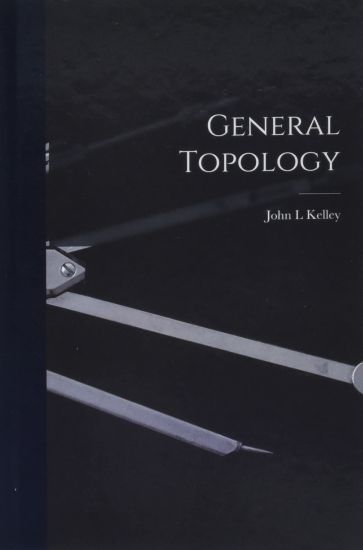



This comprehensive text for beginning graduate-level students immediately found a significant audience upon its initial 1955 publication, and it remains a highly worthwhile and relevant book for students of topology and for professionals in many areas. "The clarity of the author's thought and the carefulness of his exposition make reading this book a pleasure." – Bulletin of the American Mathematical Society.
Finite Dimensional Vector Spaces: University Series in Undergraduate Mathematics
Paul R. Halmos; John L. Kelley
Literary Licensing, LLC
2013
nidottu
Finite Dimensional Vector Spaces: University Series in Undergraduate Mathematics
Paul R. Halmos; John L. Kelley
Literary Licensing, LLC
2013
sidottu
""Finite Dimensional Vector Spaces"" is a comprehensive and accessible textbook written by renowned mathematician Paul R. Halmos. The book is part of the ""University Series in Undergraduate Mathematics"" and is designed for undergraduate students who are studying linear algebra. The book covers the fundamental concepts of finite-dimensional vector spaces, including linear transformations, matrices, determinants, and eigenvalues. It also includes advanced topics such as inner product spaces, orthogonal projections, and the spectral theorem. The text is written in a clear and concise style, with numerous examples and exercises throughout to help students understand the material. Halmos also includes historical and philosophical remarks to provide context and motivation for the topics covered. Overall, ""Finite Dimensional Vector Spaces"" is an essential resource for any undergraduate student studying linear algebra or anyone interested in the mathematical foundations of vector spaces.This scarce antiquarian book is a facsimile reprint of the old original and may contain some imperfections such as library marks and notations. Because we believe this work is culturally important, we have made it available as part of our commitment for protecting, preserving, and promoting the world's literature in affordable, high quality, modern editions, that are true to their original work.
Linear Topological Spaces is a comprehensive book on the theory of topological vector spaces, written by John L. Kelley. The book covers a wide range of topics including the basic concepts of topology, linear algebra, and functional analysis. It provides a rigorous treatment of the subject matter, with detailed proofs and examples. The book begins with a discussion of topological spaces and their properties, followed by a detailed study of linear algebra and its applications in topological vector spaces. It then moves on to cover the theory of Banach spaces and Hilbert spaces, as well as the theory of dual spaces and the Hahn-Banach theorem. The book also covers the theory of locally convex spaces and the topological properties of linear operators. The book is written in a clear and concise style, making it accessible to both graduate students and researchers in mathematics and physics.Additional Contributors Are W. F. Donoghue, Jr., Kenneth R. Lucas. B. J. Pettis, Ebbe Thue Poulsen, G. Baley Price, Wendy Robertson, W. R. Scott, And Kennan T. Smith.This scarce antiquarian book is a facsimile reprint of the old original and may contain some imperfections such as library marks and notations. Because we believe this work is culturally important, we have made it available as part of our commitment for protecting, preserving, and promoting the world's literature in affordable, high quality, modern editions, that are true to their original work.
The Structure of the Real Number System
Leon Warren Cohen; Gertrude Ehrlich; John L. Kelley
Literary Licensing, LLC
2012
nidottu
The Structure of the Real Number System
Leon Warren Cohen; Gertrude Ehrlich; John L. Kelley
Literary Licensing, LLC
2012
sidottu
The Structure Of The Real Number System is a book written by Leon Warren Cohen. It provides a comprehensive and detailed analysis of the real number system. The book is divided into several chapters, each of which covers a specific aspect of the real number system. The first chapter introduces the concept of real numbers and their properties, such as completeness and density. The second chapter covers the construction of the real number system using Dedekind cuts, while the third chapter discusses the topological properties of the real line. The fourth chapter delves into the algebraic structure of the real number system, including fields, ordered fields, and archimedean fields. The fifth chapter explores the analytic properties of the real number system, such as continuity, differentiability, and integration. The final chapter discusses the historical development of the real number system and its importance in mathematics. Overall, The Structure Of The Real Number System is a valuable resource for anyone interested in understanding the fundamental properties and structures of the real number system.Additional Editor Is Paul R. Halmos. The University Series In Undergraduate Mathematics.This scarce antiquarian book is a facsimile reprint of the old original and may contain some imperfections such as library marks and notations. Because we believe this work is culturally important, we have made it available as part of our commitment for protecting, preserving, and promoting the world's literature in affordable, high quality, modern editions, that are true to their original work.
Lectures in Projective Geometry: The University Series in Undergraduate Mathematics
Abraham Seidenberg; John L. Kelley; Paul R. Halmos
Literary Licensing, LLC
2012
nidottu

Lectures in Projective Geometry: The University Series in Undergraduate Mathematics
Abraham Seidenberg; John L. Kelley; Paul R. Halmos
Literary Licensing, LLC
2012
sidottu
Lectures in Projective Geometry is a comprehensive textbook written by Abraham Seidenberg as part of the University Series in Undergraduate Mathematics. The book is designed to serve as a guide for undergraduate students studying projective geometry, a branch of mathematics that deals with the properties of figures that remain unchanged under projective transformations. The book consists of a series of lectures that cover the fundamental concepts of projective geometry, including projective planes, projective spaces, projective transformations, and duality. The author provides a clear and concise explanation of each topic, accompanied by numerous examples and exercises to help students develop their understanding of the subject.The book is divided into six main sections, each of which covers a different aspect of projective geometry. The first section introduces the basic concepts of projective geometry, including the projective plane, projective space, and homogeneous coordinates. The second section covers projective transformations, including the cross-ratio and harmonic sets. The third section discusses projective duality, while the fourth section covers conics and quadrics. The fifth section focuses on algebraic geometry, and the final section covers the application of projective geometry to computer graphics.Overall, Lectures in Projective Geometry is an essential textbook for undergraduate students studying mathematics, computer science, or engineering. The book provides a thorough introduction to the principles of projective geometry and is an excellent resource for anyone seeking to deepen their understanding of this fascinating branch of mathematics.This scarce antiquarian book is a facsimile reprint of the old original and may contain some imperfections such as library marks and notations. Because we believe this work is culturally important, we have made it available as part of our commitment for protecting, preserving, and promoting the world's literature in affordable, high quality, modern editions, that are true to their original work.
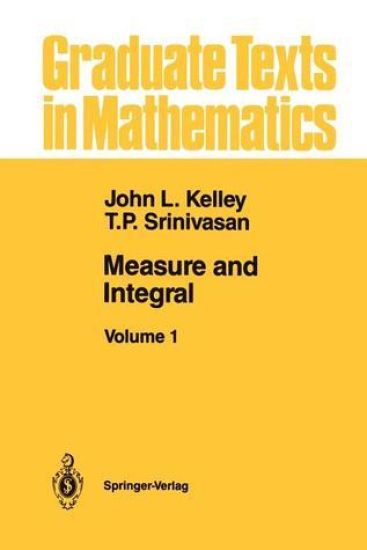
This is a systematic exposition of the basic part of the theory of mea sure and integration. The book is intended to be a usable text for students with no previous knowledge of measure theory or Lebesgue integration, but it is also intended to include the results most com monly used in functional analysis. Our two intentions are some what conflicting, and we have attempted a resolution as follows. The main body of the text requires only a first course in analysis as background. It is a study of abstract measures and integrals, and comprises a reasonably complete account of Borel measures and in tegration for R Each chapter is generally followed by one or more supplements. These, comprising over a third of the book, require some what more mathematical background and maturity than the body of the text (in particular, some knowledge of general topology is assumed) and the presentation is a little more brisk and informal. The material presented includes the theory of Borel measures and integration for ~n, the general theory of integration for locally compact Hausdorff spaces, and the first dozen results about invariant measures for groups. Most of the results expounded here are conventional in general character, if not in detail, but the methods are less so. The following brief overview may clarify this assertion.

The current political trend toward a drastically reduced government role in the economy and civil society begs a thorough discussion of the recent history of the free market movement in the United States. By providing a history of the political revitalization of classical liberalism since the 1960s, Bringing the Market Back In makes a significant step in understanding this discussion. When the market liberals came to power with the election of Ronald Reagan, they failed to translate their economic theories into dramatic political change. Although market liberals had developed remarkable intellectual strengths by 1980, the political movement to roll back the state was still in its infancy. The Gingrich Revolution of 1994 suggests that a better test of market liberalism's political feasibility may come in the last half of the 1990's. Moving beyond the political polemics so common in the arena of contemporary economic policy, Kelley grounds his study in the little-known archival materials from the Libertarian Party and personal collections from the Hoover Institution Archives.
This is a systematic exposition of the basic part of the theory of mea sure and integration. The book is intended to be a usable text for students with no previous knowledge of measure theory or Lebesgue integration, but it is also intended to include the results most com monly used in functional analysis. Our two intentions are some what conflicting, and we have attempted a resolution as follows. The main body of the text requires only a first course in analysis as background. It is a study of abstract measures and integrals, and comprises a reasonably complete account of Borel measures and in tegration for R Each chapter is generally followed by one or more supplements. These, comprising over a third of the book, require some what more mathematical background and maturity than the body of the text (in particular, some knowledge of general topology is assumed) and the presentation is a little more brisk and informal. The material presented includes the theory of Borel measures and integration for ~n, the general theory of integration for locally compact Hausdorff spaces, and the first dozen results about invariant measures for groups. Most of the results expounded here are conventional in general character, if not in detail, but the methods are less so. The following brief overview may clarify this assertion.
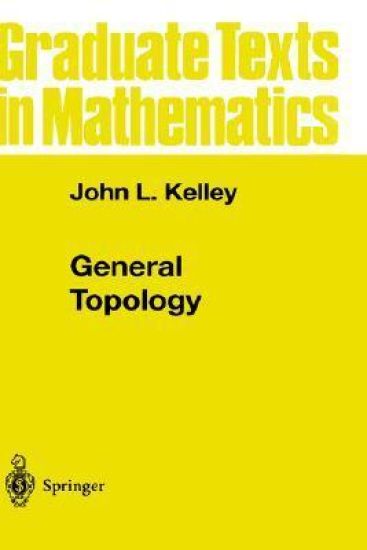
This classic book is a systematic exposition of general topology. It is especially intended as background for modern analysis. Based on lectures given at the University of Chicago, the University of California and Tulane University, this book is intended to be a reference and a text. As a reference work, it offers a reasonably complete coverage of the area, and this has resulted in a more extended treatment than would normally be given in a course. As a text, however, the exposition in the eariler chapters proceeds at a more pedestrian pace. A preliminary chapter covers those topics requisite to the main body of work.