Kirjojen hintavertailu. Mukana 12 390 323 kirjaa ja 12 kauppaa.

Kirjailija

John L Roberts

Kirjat ja teokset yhdessä paikassa: 9 kirjaa, julkaisuja vuosilta 1997-2017, suosituimpien joukossa Partnerships for Sustainable Development in Small States. Vertaile teosten hintoja ja tarkista saatavuus suomalaisista kirjakaupoista.

Mukana myös kirjoitusasut: John L. Roberts

9 kirjaa

Kirjojen julkaisuhaarukka 1997-2017.

Trauma and the Ontology of the Modern Subject
Recent scholarship has inquired into the socio-historical, discursive genesis of trauma. Trauma and the Ontology of the Modern Subject, however, seeks what has not been actualized in trauma studies – that is, how the necessity and unassailable intensity of trauma is fastened to its historical emergence. We must ask not only what trauma means for the individual person’s biography, but also what it means to be the historical subject of trauma. In other words, how does being human in this current period of history implicate one’s lived possibilities that are threatened, and perhaps framed, through trauma? Foucauldian sensibilities inform a critical and structural analysis that is hermeneutically grounded. Drawing on the history of ideas and on Lacan’s work in particular, John L. Roberts argues that what we mean by trauma has developed over time, and that it is intimately tied with an ontology of the subject; that is to say, what it is to be, and means to be human. He argues that modern subjectivity – as articulated by Heidegger, Levinas, and Lacan – is structurally traumatic, founded in its finitude as self-withdrawal in time, its temporal self-absence becoming the very conditions for agency, truth and knowledge. The book also argues that this fractured temporal horizon – as an effect of an interrupting Otherness or alterity – is obscured through the discourses and technologies of the psy-disciplines (psychiatry, psychology, and psychotherapy). Consideration is given to social, political, and economic consequences of this concealment.Trauma and the Ontology of the Modern Subject will be of enduring interest to psychoanalysts and psychotherapists as well as scholars of philosophy and cultural studies.
Trauma and the Ontology of the Modern Subject
Recent scholarship has inquired into the socio-historical, discursive genesis of trauma. Trauma and the Ontology of the Modern Subject, however, seeks what has not been actualized in trauma studies – that is, how the necessity and unassailable intensity of trauma is fastened to its historical emergence. We must ask not only what trauma means for the individual person’s biography, but also what it means to be the historical subject of trauma. In other words, how does being human in this current period of history implicate one’s lived possibilities that are threatened, and perhaps framed, through trauma? Foucauldian sensibilities inform a critical and structural analysis that is hermeneutically grounded. Drawing on the history of ideas and on Lacan’s work in particular, John L. Roberts argues that what we mean by trauma has developed over time, and that it is intimately tied with an ontology of the subject; that is to say, what it is to be, and means to be human. He argues that modern subjectivity – as articulated by Heidegger, Levinas, and Lacan – is structurally traumatic, founded in its finitude as self-withdrawal in time, its temporal self-absence becoming the very conditions for agency, truth and knowledge. The book also argues that this fractured temporal horizon – as an effect of an interrupting Otherness or alterity – is obscured through the discourses and technologies of the psy-disciplines (psychiatry, psychology, and psychotherapy). Consideration is given to social, political, and economic consequences of this concealment.Trauma and the Ontology of the Modern Subject will be of enduring interest to psychoanalysts and psychotherapists as well as scholars of philosophy and cultural studies.
The Big Divide

The Big Divide

John L. Roberts; Ibukunoluwa Ibitoye

Commonwealth Secretariat
2012
nidottu
This report provides a comprehensive assessment of progress on the Millennium Development Goals (MDGs) from a small states perspective. The authors compare the performance of 46 small island developing states (SIDS) with 10 benchmark states, illuminating achievements and highlighting areas in which countries are falling behind.The data, 2000–2010, shows that despite their many commonalities, a 'big divide' separates these countries across the range of MDG economic, social and environmental indicators. The report also highlights aspects of the MDG system that are not well attuned to the interests of small states, and recommends how these issues can be resolved. The analysis and recommendations presented in this study will be very useful in the context of on-going international discussions on the MDGs in the light of their conclusion in 2015, and in consideration of successor goals.
Partnerships for Sustainable Development in Small States

Partnerships for Sustainable Development in Small States

Cletus I Springer; John L Roberts

Commonwealth Secretariat
2011
nidottu
Partnerships for Sustainable Development in Small States examines measures through which small states can work together with the international community to strengthen their ability to pursue economic and social development. Due to their size and vulnerability, national practices alone would leave these countries unable to cope with the pressing challenges they face in areas such as climate change, sustainable manufacturing and renewable energy technologies. In chapter one, development planning specialist Cletus I Springer examines the scope for effective partnerships and reviews the progress that has been made nationally, regionally and internationally. In chapter two, John L Roberts, Associate Professor at the University of Mauritius, highlights the need for new partnerships and notes new trends, such as the greater use of technology, that can be developed to address challenges more effectively.
The Jacobite Wars

The Jacobite Wars

John L Roberts

Polygon at Edinburgh University Press
2002
nidottu
The Jacobite Wars is a detailed exploration of the Jacobite military campaigns of 1715 and 1745, set against the background of Scottish political, religious and constitutional history. The author has written a clear and demythologised account of the military campaigns waged by the Jacobites against the Hanoverian monarchs. He draws on the work of recent historians who have come to emphasise the political significance of the rebellions (which had been dismissed by earlier historians), showing the danger faced by the Hanoverian regime during those years of political and religious turbulence. The Jacobite rebellions of 1715 and 1745 occurred within the context of the 1707 Act of Union, acquiring the trappings of a national crusade to restore Scotland's independence. James Edward Stuart promised consistently to break the Union between Scotland and England if he became King. The rebellions also had great religious significance: the Jacobite cause was committed to restoring a Catholic dynasty to the throne and was therefore supported by the small number of Catholics in the country, and also the Episcopalians, who were together set against the Presbyterians. The failure of the rebellions, culminating in the Battle of Culloden, coincided with the national identity of Scotland becoming associated with Presbyterianism and North Britain. John L. Roberts presents the view that the political vulnerability of Hanoverians would explain the strength of Government reaction to the 1745 rebellion, especially in the Scottish Highlands, and the ferocity of its retribution, which has long been lamented in popular Scottish culture. The Jacobite Wars will appeal to anyone with an interest in the military history of this key period in Scotland's past.
Clan, King and Covenant

Clan, King and Covenant

John L Roberts

Edinburgh University Press
2000
nidottu
Clan, King and Covenant explores the turbulent history of the Highlands during the seventeenth century. The signing of the National Covenant in 1638 first challenged the powers of Charles I in Scotland, but it was only when Alisdair MacDonald joined Montrose in raising the Royalist clans that the country erupted into civil war. Central to the conflict was the ancient enmity between the MacDonalds and the Campbells, Earls of Argyll, as clan Donald attempted to reclaim their ancestral lands in Argyll. There followed a whirlwind year of spectacular victories for Montrose in the name of the King as the Highland clans emerged upon the national stage, before his campaign subsided into eventual defeat. However it was only after the Restoration of Charles II that a bitter and protracted struggle broke out between Church and Crown, after Bishops were reappointed to the national Church. Political and religious tensions mounted with the acession of James VII of Scotland (James II of England) as a Catholic king ruling over a predominantly Presbyterian people. It reached a climax in the outbreak of the Highland War, when Viscount Dundee won a devastating victory at Killiecrankie on behalf of James VII over the Presbyterian forces of Lowland Scotland, but at the cost of his own life. Subsequently the Crown imposed an uneasy peace upon the Highlands, after the cold-blooded plotting of 'murder under trust' culminated in the Glencoe Massacre. Condoned by William of Orange, few events in the blood-stained history of the Highland clans have quite the dreadful resonance of this act, carried out cynically as a matter of public policy. Also available by the same author: Lost Kingdoms and Feuds, Forays and Rebellions (both Edinburgh University Press)
Feuds, Forays and Rebellions

Feuds, Forays and Rebellions

John L Roberts

Edinburgh University Press
1999
nidottu
Feuds, Forays and Rebellions is a history of the Highland Clans over the hundred and fifty years after the MacDonalds, Lords of the Isles, forfeited the Earldom of Ross in 1475. It describes the fragmentation of Clan Donald and its vassal kindreds as they resisted the impact of central authority, by James IV and his successors. Only by service to the Crown did the other leading families in the Highlands and Western Isles flourish and prosper until James VI of Scotland imposed apeace of sorts after the Union of the Crowns in 1603. Key Features *Clear but comprehensive account of a complex period in Highland history *Charts the fortunes of all the major Highland clans *Sufficiently detailed and authoritative to be used as a valuable reference book *Written in a lucid and entertaining style
Lost Kingdoms

Lost Kingdoms

John L Roberts

Edinburgh University Press
1997
nidottu
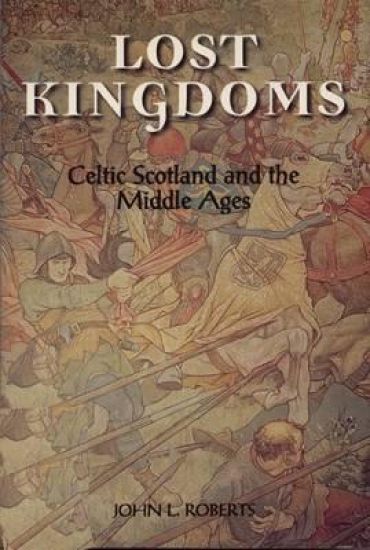
Lucid and entertaining, this book follows the history of Celtic Scotland from the ancient kingdoms of the Picts and Scots to the downfall of Clan Donald at the end of the fifteenth century. The roles played by Somerled and his descendants, the Canmore kings, Edward I as the 'Hammer of the Scots', and Robert the Bruce, are recounted, along with the impact of the Wars of Scottish Independence, and their aftermath in the North. It was only in the Western Highlands of Scotland that Celtic society survived in quasi-independence as the Lordship of the Isles, until its final forfeiture in 1493. John L Roberts adds academic accuracy to his gift for storytelling in this hugely enjoyable and scholarly history.