Kirjojen hintavertailu. Mukana 12 152 606 kirjaa ja 12 kauppaa.

Kirjailija

John L. Steckley

Kirjat ja teokset yhdessä paikassa: 8 kirjaa, julkaisuja vuosilta 2004-2021, suosituimpien joukossa The Eighteenth-Century Wyandot. Vertaile teosten hintoja ja tarkista saatavuus suomalaisista kirjakaupoista.

8 kirjaa

Kirjojen julkaisuhaarukka 2004-2021.

De Religione

De Religione

John L. Steckley

University of Oklahoma Press
2021
nidottu
De Religione, the longest-surviving text in the Huron, or Wendat, language, was written in the seventeenth century to explain the nature of Christianity to the Iroquois people, as well as to justify the Jesuits' missionary work among American Indians. In this first annotated edition of De Religione, linguist and anthropologist John L. Steckley presents the original Huron text side by side with an English translation.The Huron language, now extinct, was spoken originally by Huron Indians, who were settled in present-day southern Ontario. One group went to Quebec and another was later removed to the western United States, first to Kansas and then to Oklahoma. In the early 1670s, the author of De Religione, likely a Jesuit priest named Phillipe Pierson, chose to write his doctrine in Huron because it was a language understood by all five Iroquois nations: Mohawk, Oneida, Onondaga, Cayuga, and Seneca. For today's readers, the text offers valuable insight into how the missionaries actually communicated with American Indians.Amplified by Steckley's in-depth introduction and his fully annotated translation, De Religione provides a firsthand account of Catholic missionization among the Iroquois during the colonial period.
Forty Narratives in the Wyandot Language

Forty Narratives in the Wyandot Language

John L. Steckley

McGill-Queen's University Press
2020
nidottu
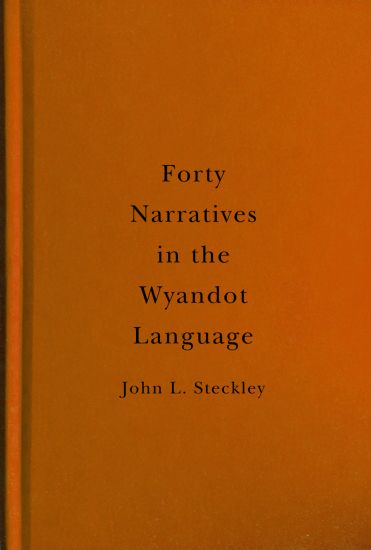
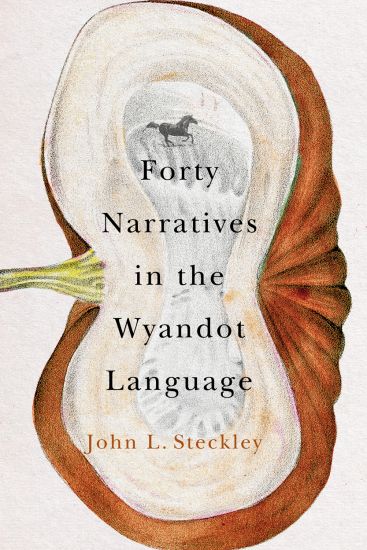
In 1911-1912, French-Canadian anthropologist Marius Barbeau spent a year recording forty texts in the Wyandot language as spoken by native speakers in Oklahoma. Though he intended to return and complete his linguistic study, he never did. More than a century later Forty Narratives in the Wyandot Language continues Barbeau's work. John Steckley provides an engaging analysis and fresh translation of the texts in order to preserve the traditional language and cultural heritage of the Wyandot or Wendat people. Leveraging four decades of studying the dialects of Wyandot and Wendat and his role as tribal linguist for the Wyandotte Nation, the author corrects errors in Barbeau's earlier text while adding personal anecdotes to provide readers with a unique comparative work. The stories in this collection, largely drawn from the traditional folklore of the Wyandot people and told in a language that has been dormant for decades, act as a time capsule for traditional tales, Indigenous history, humour, and Elder knowledge. Steckley's new translation not only aids Wyandot peoples of Oklahoma, Kansas, and Michigan in reclaiming their language but also gives researchers worldwide a rich, up-to-date reference for linguistic study. A significant literary record of a people and a language, Forty Narratives in the Wyandot Language is a major contribution to the preservation and revitalization of an Indigenous language in North America.
Forty Narratives in the Wyandot Language

Forty Narratives in the Wyandot Language

John L. Steckley

McGill-Queen's University Press
2020
sidottu
In 1911-1912, French-Canadian anthropologist Marius Barbeau spent a year recording forty texts in the Wyandot language as spoken by native speakers in Oklahoma. Though he intended to return and complete his linguistic study, he never did. More than a century later Forty Narratives in the Wyandot Language continues Barbeau's work. John Steckley provides an engaging analysis and fresh translation of the texts in order to preserve the traditional language and cultural heritage of the Wyandot or Wendat people. Leveraging four decades of studying the dialects of Wyandot and Wendat and his role as tribal linguist for the Wyandotte Nation, the author corrects errors in Barbeau's earlier text while adding personal anecdotes to provide readers with a unique comparative work. The stories in this collection, largely drawn from the traditional folklore of the Wyandot people and told in a language that has been dormant for decades, act as a time capsule for traditional tales, Indigenous history, humour, and Elder knowledge. Steckley's new translation not only aids Wyandot peoples of Oklahoma, Kansas, and Michigan in reclaiming their language but also gives researchers worldwide a rich, up-to-date reference for linguistic study. A significant literary record of a people and a language, Forty Narratives in the Wyandot Language is a major contribution to the preservation and revitalization of an Indigenous language in North America.
Indian Agents

Indian Agents

John L. Steckley

Peter Lang Publishing Inc
2016
sidottu
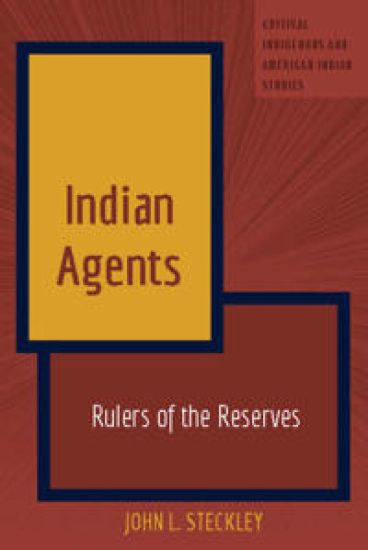
Canadians are beginning to learn about the negative effects of residential schools on Aboriginal people in Canada. More hidden in the written record, but bearing a similar powerfully destructive role, are Indian Agents, who were with very few exceptions White men who ‘ruled the reserves’ in Canada from the 1870s to the 1960s. This book is the first to present a discussion of Indian Agents in general. It provides an introductory look at the control Indian Agents exercised over Aboriginal communities throughout the period in question. The primary intent is to spark discussion in Indigenous studies courses. This book is built upon a discussion of the lives and impact of five Indian Agents: Hayter Reed, William Morris Graham, John McIver, William Halliday, and Fred Hall. However, the practices and views of 39 other Indian Agents are interwoven throughout the text. Although there was a readily detectable sameness in the way that Indian Agent power was imposed on Aboriginal communities based on the institutional racism of the Indian Agent System, one of the points to be made is that not all Indian Agents were the same. Some were more oppressive than others. Also frequently pointed out is the fact that Aboriginal peoples were not merely helpless victims to Indian Agent control, but resisted that control, sometimes successfully. The book concludes with a chapter comparing the Indian Agent System in Canada, with similar systems in the United States, Australia, and New Zealand.
The Eighteenth-Century Wyandot

The Eighteenth-Century Wyandot

John L. Steckley

Wilfrid Laurier University Press
2015
nidottu
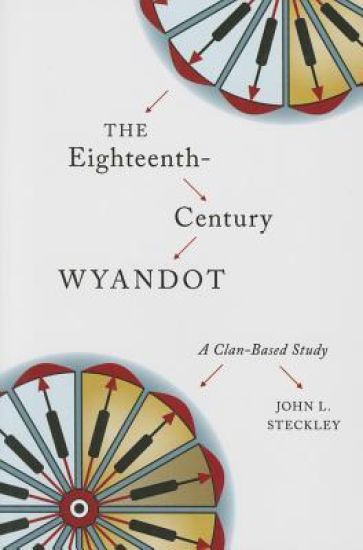
The Wyandot were born of two Wendat peoples encountered by the French in the first half of the seventeenth century - the otherwise named Petun and Huron - and their history is fragmented by their dispersal between Quebec, Michigan, Kansas, and Oklahoma. This book weaves these fragmented histories together, with a focus on the mid-eighteenth century. Author John Steckley claims that the key to consolidating the stories of the scattered Wyandot lies in their clan structure. Beginning with the half century of their initial diaspora, as interpreted through the political strategies of five clan leaders, and continuing through the eighteenth century and their shared residency with Jesuit missionaries - notably, the distinct relationships different clans established with them - Steckley reveals the resilience of the Wyandot clan structure. He draws upon rich but previously ignored sources - including baptismal, marriage, and mortuary records, and a detailed house-to-house census compiled in 1747, featuring a list of male and female elders - to illustrate the social structure of the people, including a study of both male and female leadership patterns. A recording of the 1747 census as well as translated copies of letters sent between the Wyandot and the French is included in an appendix.
The Eighteenth-Century Wyandot

The Eighteenth-Century Wyandot

John L. Steckley

Wilfrid Laurier University Press
2014
sidottu
The Wyandot were born of two Wendat peoples encountered by the French in the first half of the seventeenth century - the otherwise named Petun and Huron - and their history is fragmented by their dispersal between Quebec, Michigan, Kansas, and Oklahoma. This book weaves these fragmented histories together, with a focus on the mid-eighteenth century. Author John Steckley claims that the key to consolidating the stories of the scattered Wyandot lies in their clan structure. Beginning with the half century of their initial diaspora, as interpreted through the political strategies of five clan leaders, and continuing through the eighteenth century and their shared residency with Jesuit missionaries - notably, the distinct relationships different clans established with them - Steckley reveals the resilience of the Wyandot clan structure. He draws upon rich but previously ignored sources - including baptismal, marriage, and mortuary records, and a detailed house-to-house census compiled in 1747, featuring a list of male and female elders - to illustrate the social structure of the people, including a study of both male and female leadership patterns. A recording of the 1747 census as well as translated copies of letters sent between the Wyandot and the French is included in an appendix.
Words of the Huron

Words of the Huron

John L. Steckley

Wilfrid Laurier University Press
2007
nidottu
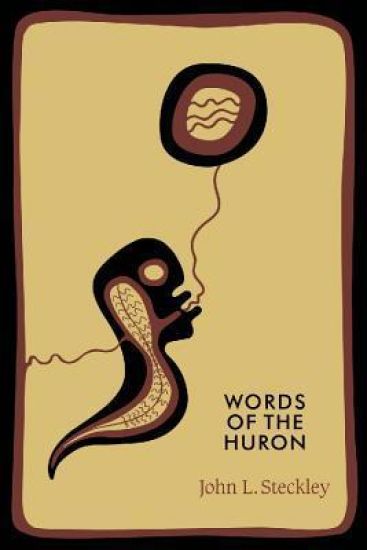
Words of the Huron is an investigation into seventeenth-century Huron culture through a kind of linguistic archaeology of a language that died midway through the twentieth century. John L. Steckley explores a range of topics, including: the construction of longhouses and wooden armour; the use of words for trees in village names; the social anthropological standards of kinship terms and clans; Huron conceptualizing of European-borne disease; the spirit realm of orenda; Huron nations and kinship groups; relationship to the environment; material culture; and the relationship between the French missionaries and settlers and the Huron people. Steckley's source material includes the first dictionary of any Aboriginal language, Recollect Brother Gabriel Sagard's Huron phrasebook, published in 1632, and the sophisticated Jesuit missionary study of the language from the 1620s to the 1740s, beginning with the work of Father Jean de Brébeuf. The only book of its kind, Words of the Huron will spark discussion among scholars, students, and anyone interested in North American archaeology, Native studies, cultural anthropology, and seventeenth-century North American history.
De Religione

De Religione

John L. Steckley

University of Oklahoma Press
2004
sidottu
De Religione, the longest-surviving text in the Huron, or Wendat, language, was written in the seventeenth century to explain the nature of Christianity to the Iroquois people, as well as to justify the Jesuits' missionary work among American Indians. In this first annotated edition of De Religione, linguist and anthropologist John L. Steckley presents the original Huron text side by side with an English translation.The Huron language, now extinct, was spoken originally by Huron Indians, who were settled in present-day southern Ontario. One group went to Quebec and another was later removed to the western United States, first to Kansas and then to Oklahoma. In the early 1670s, the author of De Religione, likely a Jesuit priest named Phillipe Pierson, chose to write his doctrine in Huron because it was a language understood by all five Iroquois nations: Mohawk, Oneida, Onondaga, Cayuga, and Seneca. For today's readers, the text offers valuable insight into how the missionaries actually communicated with American Indians.Amplified by Steckley's in-depth introduction and his fully annotated translation, De Religione provides a firsthand account of Catholic missionization among the Iroquois during the colonial period.