Kirjailija
John L. Sullivan
Kirjat ja teokset yhdessä paikassa: 14 kirjaa, julkaisuja vuosilta 1980-2024, suosituimpien joukossa Podcasting in a Platform Age. Vertaile teosten hintoja ja tarkista saatavuus suomalaisista kirjakaupoista.
Mukana myös kirjoitusasut: John L Sullivan
14 kirjaa
Kirjojen julkaisuhaarukka 1980-2024.
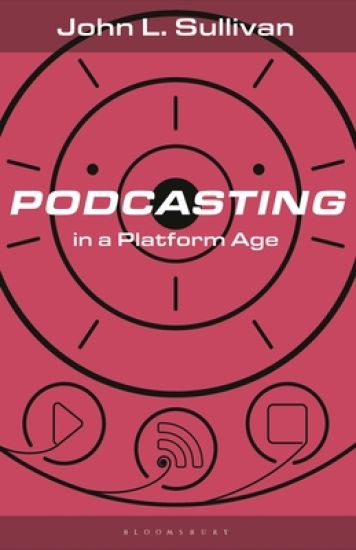
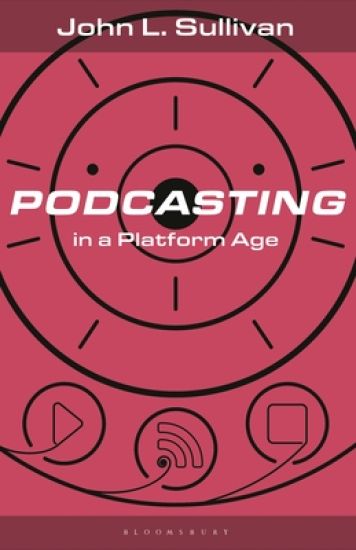
Podcasting in a Platform Age explores the transition underway in podcasting by considering how the influx of legacy and new media interest in the medium is injecting professional and corporate logics into what had been largely an amateur media form. Many of the most high-profile podcasts today, however, are produced by highly-skilled media professionals, some of whom are employees of media corporations. Legacy radio and new media platform giants like Google, Apple, Amazon, and Spotify are also making big (and expensive) moves in the medium by acquiring content producers and hosting platforms. This book focuses on three major aspects of this transformation: formalization, professionalization, and monetization. Through a close read of online and press discourse, analysis of podcasts themselves, participant observations at podcast trade shows and conventions, and interviews with industry professionals and individual podcasters, John Sullivan outlines how the efforts of industry players to transform podcasting into a profitable medium are beginning to challenge the very definition of podcasting itself.
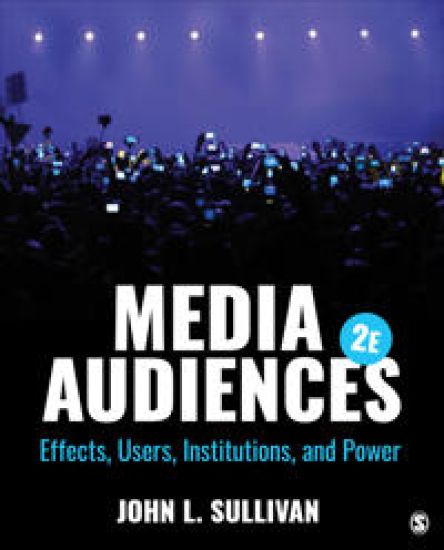
Whether we are watching TV, surfing the Internet, listening to our iPods, or reading a novel, we all engage with media as an audience. . Despite the widespread use of this term in our popular culture, the meaning of "audience" is complex, and it has undergone significant historical shifts as new forms of mediated communication have developed from print, telegraphy, and radio to film, television, and the Internet. Media Audiences: Effects, Users, Institutions, and Power 2nd Edition explores the concept of media audiences from four broad perspectives: as "victims" of mass media, as market constructions and commodities, as users of media, and as producers and subcultures of mass media. The goal of the text is for students to be able to think critically about the role and status of media audiences in contemporary society, reflecting on their relative power in relation to institutional media producers.
Life and Reminiscences of a 19th Century Gladiator
Dudley A. Sargent; John L. Sullivan
Hansebooks
2020
nidottu
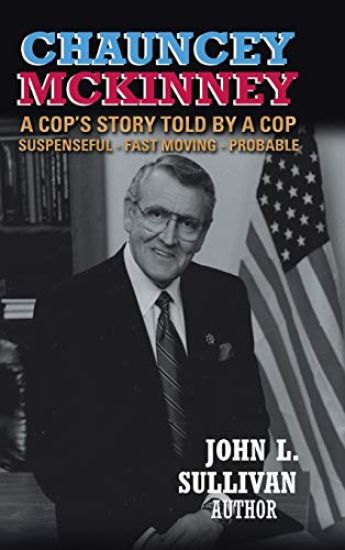
When the public sees a uniformed police officer, they see-in most cases-an individual who is a highly trained, brave, and dedicated public servant. What catches the eye is the shiny side of the badge and uniform. What is not so evident to the casual observer is the dark side of the badge, hidden behind the careful visage of justice and honor. The dark side of the badge is closest to the heart and is seldom seen by civilians. The dark side of the badge is symbolic of the endless pain and suffering officers witness and have personally experienced. The officer carries with him the never-ending incidents and images of man's inhumanity to his fellow man, haunting him like a ghost down every dark alley. Violent incidents leave physical and mental scars as police officers play witness to the human drama. They are confronted by personal risk while wearing the badge. Chauncey McKinney is a fictional account of just one police officer trying to make a positive difference while facing the dangers and harsh conditions associated with law enforcement. Although this book is fiction, it's inspired by actual incidents that are well within reason in this dangerous and sometimes heartbreaking profession.
This book traces the formation of ETA (Euskadi ta Askatasuna) and the tensions created by its combination and aims: socialism and Basque nationalism. The Basque Nationalist movement emerged in the late nineteenth century as a response to the rapid transformation of Basque society by industrialisation. The influx of Spanish-speaking workers to Basque territories seemed to threaten the stability of basque society. Gradually the immigrants became absorbed into the radical struggle, with the creation of illegal trade unions and the need to resist the Franco regimne by whatever means. Over the next half century Basque consicousness developed until the radical nationalist organisation ETA was formed in 1959.
With Malice toward Some
George E. Marcus; John L. Sullivan; Elizabeth Theiss-Morse; Sandra L. Wood
Cambridge University Press
1995
sidottu
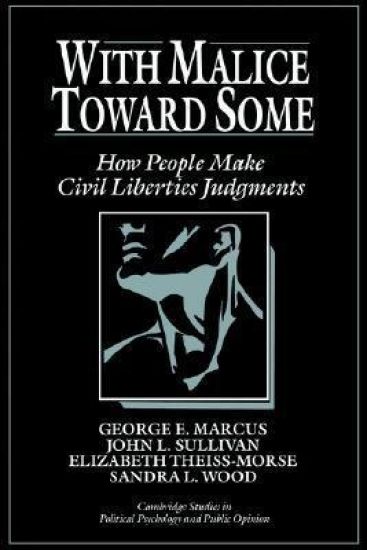
With Malice toward Some: How People Make Civil Liberties Judgments addresses an issue integral to democratic societies: how people faced with a complex variety of considerations decide whether or not to tolerate extremist groups. Relying on several survey-experiments, Marcus, Sullivan, Theiss-Morse, and Wood identify and compare the impact on decision making of contemporary information, long-standing predispositions, and enduring values and beliefs. Citizens react most strongly to information about a group’s violations of behavioral norms and information about the implications for democracy of the group’s actions. The authors conclude that democratic citizens should have a strong baseline of tolerance yet be attentive to and thoughtful about current information.
With Malice toward Some
George E. Marcus; John L. Sullivan; Elizabeth Theiss-Morse; Sandra L. Wood
Cambridge University Press
1995
pokkari
With Malice toward Some: How People Make Civil Liberties Judgments addresses an issue integral to democratic societies: how people faced with a complex variety of considerations decide whether or not to tolerate extremist groups. Relying on several survey-experiments, Marcus, Sullivan, Theiss-Morse, and Wood identify and compare the impact on decision making of contemporary information, long-standing predispositions, and enduring values and beliefs. Citizens react most strongly to information about a group’s violations of behavioral norms and information about the implications for democracy of the group’s actions. The authors conclude that democratic citizens should have a strong baseline of tolerance yet be attentive to and thoughtful about current information.
Political Tolerance and American Democracy
John L. Sullivan; James Piereson; George E. Marcus
University of Chicago Press
1993
nidottu
This path-breaking book reconceptualizes our understanding of political tolerance as well as of its foundations. Previous studies, the authors contend, overemphasized the role of education in explaining the presence of tolerance, while giving insufficient weight to personality and ideological factors. With an innovative methodology for measuring levels of tolerance more accurately, the authors are able to explain why particular groups are targeted and why tolerance is an inherently political concept. Far from abating, the degree of intolerance in America today is probably as great as it ever was; it is the targets of intolerance that have changed.
A presentation and critique of the use of multiple measures of theoretical concepts to assess both validity, using the multirait-multimethod matrix, and reliablity, using multiple indicators with a path analytic framework.