Kirjojen hintavertailu. Mukana 12 595 353 kirjaa ja 12 kauppaa.

Kirjailija

John Law

Kirjat ja teokset yhdessä paikassa: 53 kirjaa, julkaisuja vuosilta 1984-2025, suosituimpien joukossa The End of the Experiment?. Vertaile teosten hintoja ja tarkista saatavuus suomalaisista kirjakaupoista.

53 kirjaa

Kirjojen julkaisuhaarukka 1984-2025.

The End of the Experiment?

The End of the Experiment?

Andrew Bowman; Julie Froud; Sukhdev Johal; John Law; Adam Leaver; Mick Moran; Karel Williams

Manchester University Press
2014
nidottu
For thirty years, the British economy has repeated the same old experiment of subjecting everything to competition and market because that is what works in the imagination of central government. This book demonstrates the repeated failure of that experiment by detailed examination of three sectors: broadband, food supply and retail banking. The book argues for a new experiment in social licensing whereby the right to trade in foundational activities would be dependent on the discharge of social obligations in the form of sourcing, training and living wages.Written by a team of researchers and policy advocates based at the Centre for Research on Socio Cultural Change, this book combines rigour and readability, and will be relevant to practitioners, policy makers, academics and engaged citizens.

Buses and Trams Around Leeds

Buses and Trams Around Leeds

John Law

AMBERLEY PUBLISHING
2024
nidottu
The history of affordable public transport in the Yorkshire city of Leeds began in 1871, when horses began pulling trams around the city. Leeds Corporation purchased the network in 1893 and electrification followed soon afterwards. The system expanded, but finally ceased operations in 1959. Leeds was also an early pioneer of trolleybuses, with a route to Farnley Moor Top opening in 1911. Two further routes later opened, as feeders to the tram system, bringing Leeds City Tramways into Otley and Burley-in-Wharfedale. Unlike nearby Bradford, the Leeds trolleybuses ceased running quite early, giving way to motorbuses in 1928. Since that year, motorbuses have served the city’s streets and suburbs. Leeds City Transport continued to run a large fleet until becoming part of West Yorkshire PTE in 1974. Privatisation saw most of the services become part of Firstbus, the dominant operator in the city today. Over the years, there have been many other companies running buses into Leeds. These are also featured within these pages, which contain the best of the author’s collection of photographs taken over many years.
Railways of the Eastern Counties Since 1970
Over more than fifty years, the railways of the Eastern Counties have seen a great number of changes. In the early 1970s, many stations, even some of the smaller ones, had a resident diesel shunter for moving empty carriages or servicing the goods yard. First generation diesel multiple units ran most of the secondary lines, with locomotive-hauled expresses being used on the InterCity routes and the Harwich boat trains. Today, modern electric trains speed northwards to Norwich and Kings Lynn, while comfortable diesel units serve the cross-country routes. New electric or bi-mode sets are now operating on other lines. Semaphore signalling has mostly given way to centralised colour light systems.
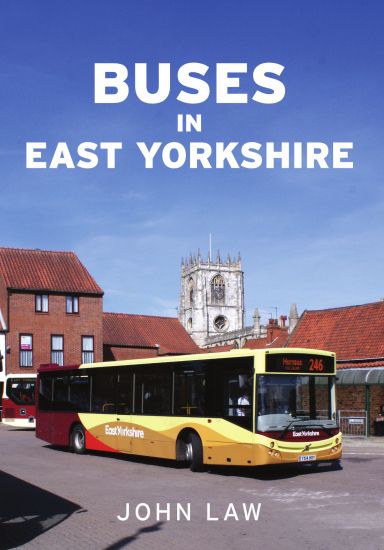
Buses in East Yorkshire

Buses in East Yorkshire

John Law

AMBERLEY PUBLISHING
2023
nidottu
Kingston upon Hull Corporation Transport set about replacing its trams with trolleybuses in the 1930s, but the war meant that trams did not finish until 1945. Motorbuses took over all operations in 1965. The fine blue and white buses of the municipality were a feature of the city until 1994, when the stripes of the Stagecoach Group began to be applied. The area’s other major operator, East Yorkshire Motor Services, can trace its history back to 1919, though the name was not registered until 1926. The company’s buses were soon to be found throughout the East Riding, with the double-deck vehicles easily recognisable due to having specially profiled roofs to pass through Beverley Bar. EYMS became part of the National Bus Company and was later purchased by its management team. It soon became the UK’s largest independent. The company was sold to the Go-Ahead Group in 2018. Today, the smart and modern fleet can be seen throughout the county and beyond. A few other operators have been seen in East Yorkshire, with Lincolnshire Road Car serving Goole and crossing the Humber Bridge. Various small independent companies have also featured, most notable of which was Connor & Graham of Easington.
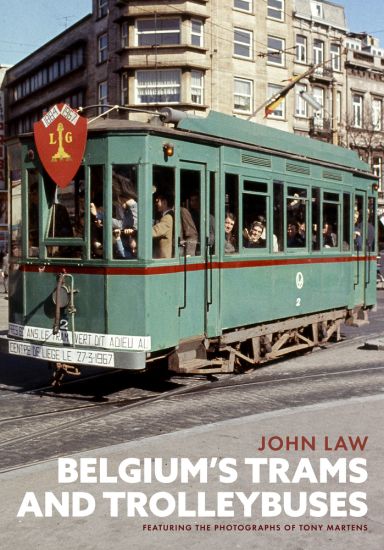
Belgium's Trams and Trolleybuses

Belgium's Trams and Trolleybuses

John Law

AMBERLEY PUBLISHING
2022
nidottu
Like most European countries, Belgium’s main towns and cities developed their own tramway networks. Those that survive today include Brussels, Gent, Antwerpen and Charleroi. In the 1960s both French-speaking Liège and Verviers lost their tramways, though there is a desire in Liège to see it return. In addition to the city systems, there was a rural network of mainly metre gauge tramways throughout the country known as the Vicinal. Tony Martens, though born in Belgium, lived in the UK for most of his life, but started revisiting the country in the 1960s, photographing most of the surviving operations. John Law’s first visit to the country was in 1971, accompanying Tony in Brussels, where the last of the Vicinal routes were still operating and four-wheeled trams were running on the city streets. John has been returning to Belgium on a regular basis ever since. Sadly, Tony Martens passed away in early 2019. Fortunately, John Law was able to gain access to Tony’s slide collection and, along with his own photographic work, has tapped into this archive to bring you a photographic history of Belgium’s trams and trolleybuses from the mid-1960s to the present day.
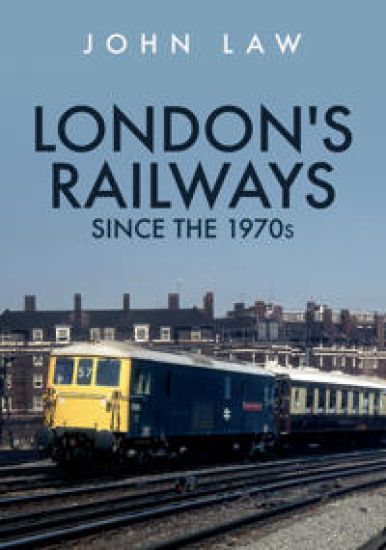
London's Railways Since the 1970s

London's Railways Since the 1970s

John Law

Amberley Publishing
2021
nidottu
Though British Rail had dispensed with steam locomotives by 1968, the greatest changes to the capital’s railways occurred afterwards. In the early years of the 1970s much of the network was run down and some parts not expected to survive. Non-corridor passenger stock, all painted in drab blue, dominated suburban services. Inter-city routes had loco-hauled stock in blue and grey. Many lines were still controlled by semaphore signals. Much needed investment came in the form of electrification, with, for example, the Great Northern route. The famous InterCity 125 became the standard train for the longer distance services. Over the last fifty years London has seen great changes in its railway network. Some lines have closed, like Broad Street, but when this has occurred it is usually to facilitate improvements nearby. New rolling stock has transformed passenger services – who would have thought that five-car trains would be running on a rejuvenated North London Line, once the haunt of the old class 501 units? John Law has been living in the South East since 1970, with much of his time spent working on the railway. He took an enormous amount of photographs over those years, sometimes in places inaccessible to the public. In this book he takes us to the major terminals, the far-flung branches and the many depots. He shows us vanished scenes and the latest developments, including those on the London Underground and the Dockland Light Railway.
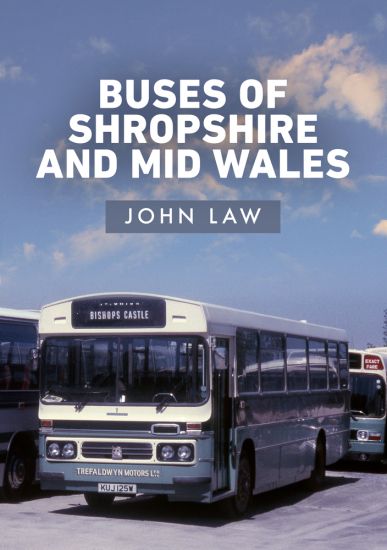
Buses of Shropshire and Mid Wales

Buses of Shropshire and Mid Wales

John Law

Amberley Publishing
2021
nidottu
Two large bus companies once ruled this rural part of the United Kingdom. Midland Red had the territory around Shrewsbury and Eastern Shropshire, while Crosville operated from Oswestry to Aberystwyth and all the places in between. Prior to privatisation both companies were split, with Midland Red North and Crosville Wales taking over. These eventually became part of British Bus and were later incorporated into Deutsche Bahn-owned Arriva. Despite the domination of the big boys, there has always been room for the independent sector and even today a good number of small firms running bus services can be found. Minsterley Motors, Owen’s Coaches, Lloyd’s of Machynlleth and Tanat Valley are just a few of the present-day operators. Names from the past include Vagg’s Coaches, Mid Wales Motorways and Williamsons, plus a host of others. John Law has been photographing the buses of the area since the early 1970s and has built up a vast collection, the best and most interesting of which are included here. He takes us to Llanrhaedr-yn-Mochnant, Bishops Castle, Knockin Heath and Stiperstones, as well as the major towns on his journey through this fascinating area.
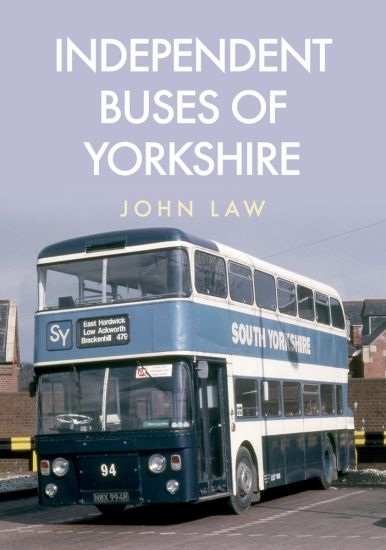
Independent Buses of Yorkshire

Independent Buses of Yorkshire

John Law

Amberley Publishing
2020
nidottu
Britain’s biggest county, Yorkshire, was particularly affected by the period of deregulation. Many independents have fallen by the wayside over the years but others have come to take their places. The blue buses of Samuel Ledgard of Leeds, the red ones of Connor & Graham in Hull and the delightful colours of Felix Motors of Hatfield may now be only memories, yet there are still plenty of other small businesses providing bus services within the boundaries of Yorkshire. These vary from Powells providing buses in industrial South Yorkshire to Reliance Motor Services running out from York to the rural north. John Law was born and bred in Yorkshire and has been photographing the bus scene there since the 1960s, often focusing on the independent firms that have flourished throughout the county over the years. In this book he has chosen the best of his collection, featuring a variety of photographs to illustrate the independent bus sector in the great county of Yorkshire.
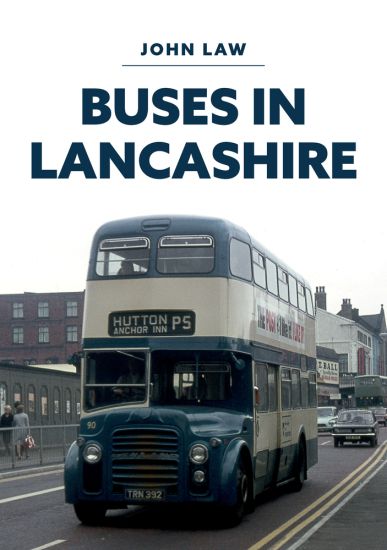
Buses in Lancashire

Buses in Lancashire

John Law

Amberley Publishing
2019
nidottu
The boundaries of the current county of Lancashire were established in 1974 when the Furness district was lost to the newly formed Cumbria. Meanwhile Merseyside and Greater Manchester gobbled up much of the southern portion of the original county. However, some parts of the former West Riding of Yorkshire were gained. The major bus operator was, for many years, Ribble Motor Services. After sale it became part of the Stagecoach Group, though the East Lancashire operations were sold on to Blazefield, which later went to Transdev. Back in the 1970s many municipalities in Lancashire operated their own buses and these provided a great variety of vehicles and liveries. Most of the council-owned companies were eventually sold off leaving just one – Blackpool – with its large bus fleet and a modern tram system. Until the 1986 deregulation of the bus industry, there were very few independents running stage services in the county. There were just Fishwick’s smart green buses around Leyland, Preston and Chorley. This company ceased trading in 2015, but others have entered the market, such as Pilkington’s in the Accrington area. John Law has been photographing the county’s buses since 1974, building up a massive collection of images. He has put together the best and most interesting of these within this book.
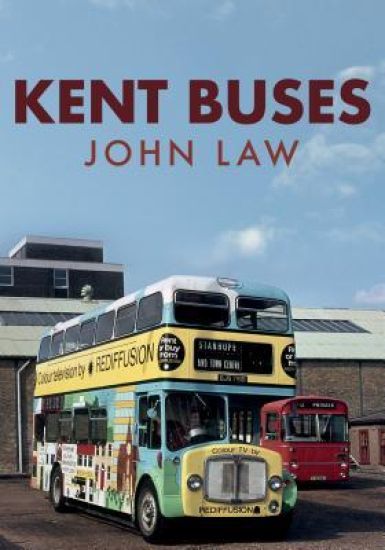
Kent Buses

Kent Buses

John Law

Amberley Publishing
2019
nidottu
By 1970, the boundaries of the county of Kent had been finalised, with parts, including Bexley, Bromley and Erith, being lost to Greater London. The capital’s red buses were still to be found in Dartford; otherwise the rest of west Kent was the territory of London Country Bus Services. The centre of the county, including the Medway towns and Maidstone, was where one could find Maidstone & District’s mainly Leyland fleet. Maidstone was also home to the last municipal operator in Kent, finally ceasing in 1992. Beyond Faversham and Ashford was the East Kent Road Car Company, with a fleet of predominantly AEC vehicles. Privatisation saw London Country’s operations become Kentish Bus, which was later to be taken over by Arriva. The same fate befell Maidstone & District, while East Kent was sold into the hands of Stagecoach. Very few independent operators ran bus services in Kent in the 1970s, but deregulation and council tendering meant that the smaller concerns were able to enter the fray. Many fell by the wayside, but several still run buses in Kent today, adding to the variety of vehicles and liveries to be found in the county. John Law has been photographing the Kentish bus scene since the early years of the 1970s and has amassed a vast archive of pictures, the best and most interesting of which are displayed here.
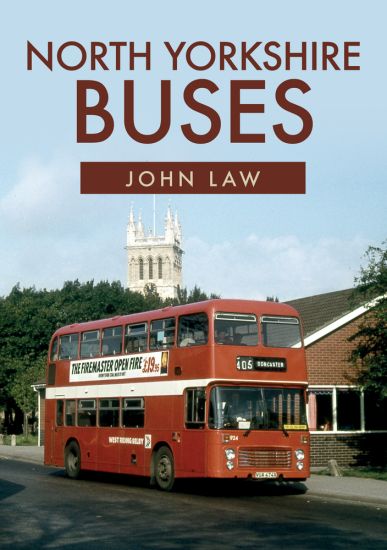
North Yorkshire Buses

North Yorkshire Buses

John Law

Amberley Publishing
2019
nidottu
North Yorkshire has long been the meeting point of many major bus operators. United Automobile Services dominated the north, West Riding Automobile Services the south; West Yorkshire Road Car had services in Harrogate and the city of York, while East Yorkshire Motor Services came into York and Scarborough from its home territory. Privatisation and takeovers meant that municipal transport disappeared from North Yorkshire, but the result was that the county is today served by the country’s four largest bus groups – Stagecoach, Arriva, First and Transdev. Until recently Britain’s largest independent, East Yorkshire Motor Services, now part of the Go Ahead Group, also still operates into the county. There have been many smaller companies over the years providing public transport to the Yorkshire public, though some have vanished. Nevertheless, there is still a great variety of independents to be found. John Law has been photographing the county’s bus scene over many years and has amassed a vast collection of images, the best of which are presented here – from trams and trolleybuses to today’s low-floor buses.
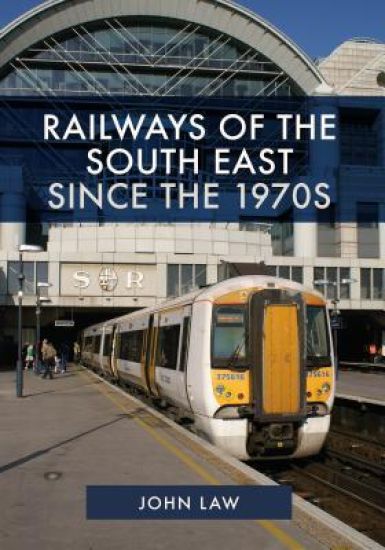
Railways of the South East Since the 1970s
John Law moved to South East London in 1970 and joined British Rail four years later. Starting at the lowest grade, he soon became a guard at Grove Park and then moved to Victoria, where he often worked the boat trains and the prestigious British Pullmans of the Venice-Simplon Orient Express. Moving through the grades, he worked at London Bridge and other stations in the central area of the capital. In later years he became a site manager with Network Rail, before retiring in 2009. During all those years, he carried a camera and took photographs of the railways of Kent, East Sussex and South East London. He was able to capture views from locations that were inaccessible to the general public, building up a huge collection of images showing the variety of rolling stock, signalling and the changing scene of those years.
The Company of Mississipi - La Compagnie Du Mississipi
Report by John Law on the establishment of the General Bank and the system he invented, a system guaranteed by the exploitation of Louisiana's wealth under the direction of the Mississippi Company. In addition, two anonymous letters describe Louisiana and the story of her discovery.Rapport par john law sur la mise en place de la banque generale et du systeme qu'il a invent , systeme garanti par l'exploitation des richesses de Louisiane sous la direction de la Compagnie du Mississipi. En compl ment, deux lettres anonymes d crivent la Louisiane et l'histoire de sa d couverte.
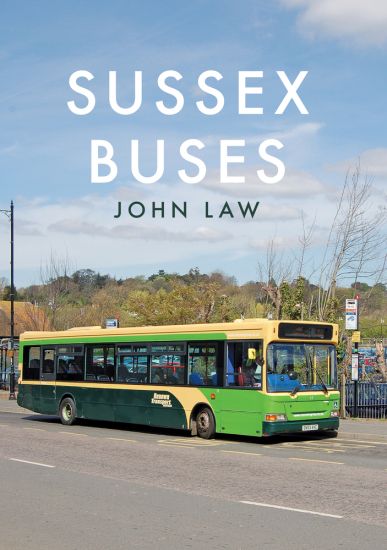
Sussex Buses

Sussex Buses

John Law

AMBERLEY PUBLISHING
2018
nidottu
Southdown Motor Services, a subsidiary of the British Electric Traction Company, once dominated the county of Sussex, with a history dating back to 1915. The National Bus Company took over in 1969 and the company was split up in the 1980s, with the Brighton and much of the East Sussex areas becoming ‘Brighton & Hove’, bringing back memories of the former Tilling Group operator of a similar name. Brighton Corporation also ran buses in that town, as did neighbouring Eastbourne, both with fascinating fleets, though both concerns are no longer operating. The northern part of what is now West Sussex was the territory of London Country, particularly around East Grinstead and Crawley. In East Sussex, Maidstone & District ran most of the services around Hastings. Today Stagecoach and the Go Ahead Group are the principal bus operators in Sussex, with their operations supplemented by various small, but interesting, independents. John Law has been photographing the Sussex bus scene since the early 1970s and presents here a wonderful selection of his photographs, bringing back memories of vanished operators and vehicles.