Kirjojen hintavertailu. Mukana 12 595 353 kirjaa ja 12 kauppaa.

Kirjailija

John Lee Clark

Kirjat ja teokset yhdessä paikassa: 8 kirjaa, julkaisuja vuosilta 2009-2024, suosituimpien joukossa Deaf American Poetry - an Anthology. Vertaile teosten hintoja ja tarkista saatavuus suomalaisista kirjakaupoista.

8 kirjaa

Kirjojen julkaisuhaarukka 2009-2024.

Touch the Future

Touch the Future

John Lee Clark

WW NORTON CO
2024
nidottu
Born Deaf into an ASL-speaking family and blind by adolescence, John Lee Clark learned to embrace the possibilities of his tactile world. He is on the frontlines of the Protactile movement, which gave birth to an unprecedented language and way of life based on physical connection. In a series of paradigm-shifting essays, Clark reports on seismic developments within the DeafBlind community and challenges the limitations of sighted and hearing norms. In "Against Access", he interrogates the prevailing advocacy for "accessibility" that re-creates a shadow of a hearing-sighted experience, and in "Tactile Art", he describes his relationship to visual art and breathtaking encounters with tactile sculpture. He offers a brief history of the term "DeafBlind", distills societal discrimination against DeafBlind people into "Distantism", sheds light on the riches of online community and advocates for "Co-Navigation", a new way of exploring the world together without a traditional guide. Touch the Future brims with passion, energy, humour and imagination as Clark takes us by the hand and welcomes us into the exciting landscape of Protactile communication. A distinct language of taps, signs and reciprocal contact, Protactile emerged from the inadequacies of ASL—a visual language even when pressed into someone’s hand—with the power to upend centuries of DeafBlind isolation. As warm and witty as he is radical and inspiring, Clark encourages us—disabled and non-disabled alike—to reject stigma and discover the ways we are connected. Touch the Future is a dynamic appeal to rethink the meanings of disability, access, language and inclusivity, and to reach for a future we can create together.

Touch the Future

Touch the Future

John Lee Clark

WW NORTON CO
2023
sidottu
Born Deaf into an ASL-speaking family and blind by adolescence, John Lee Clark learned to embrace the possibilities of his tactile world. He is on the frontlines of the Protactile movement, which gave birth to an unprecedented tactile language and a way of life based on physical connection. In a series of paradigm-shifting essays, Clark reports on seismic developments within the DeafBlind community. In “Against Access”, he interrogates the prevailing advocacy for “accessibility” that re-creates a shadow of a hearing-sighted experience. In the National Magazine Award–winning “Tactile Art”, he describes his relationship to visual art and encounters with tactile sculpture. He advocates for “Co-Navigation”, a new way of guiding that respects DeafBlind agency, and offers a brief history of the term “DeafBlind”. As warm and witty as he is radical and inspiring, Clark welcomes readers into the exciting Protactile landscape and celebrates the hidden knowledge that can be gained through touch.
How to Communicate

How to Communicate

John Lee Clark

WW NORTON CO
2023
nidottu
Formally restless and relentlessly instructive, How to Communicate is a dynamic journey through language, community, and the unfolding of an identity. Poet John Lee Clark pivots from inventive forms inspired by the Braille slate to sensuous prose poems to incisive erasures that find new narratives in nineteenth-century poetry. Calling out the limitations of the literary canon, Clark includes pathbreaking translations from American Sign Language and Protactile, a language built on touch. How to Communicate embraces new linguistic possibilities that emanate from Clark’s unique perspective and his connection to an expanding, inclusive activist community. Amid the astonishing task of constructing a new canon, the poet reveals a radically commonplace life. He explores grief and the vagaries of family, celebrates the small delights of knitting and visiting a museum, and, once, encounters a ghost in a gas station. Counteracting the assumptions of the sighted and hearing world with humor and grace, Clark finds beauty in the revelations of communicating through touch: “All things living and dead cry out to me / when I touch them.” A rare work of transformation and necessary discovery, How to Communicate is a brilliant debut that insists on the power of poetry.
How to Communicate

How to Communicate

John Lee Clark

WW NORTON CO
2022
sidottu
Formally restless and relentlessly instructive, How to Communicate is a dynamic journey through language, community, and the unfolding of an identity. Poet John Lee Clark pivots from inventive forms inspired by the Braille slate to sensuous prose poems to incisive erasures that find new narratives in nineteenth-century poetry. Calling out the limitations of the literary canon, Clark includes pathbreaking translations from American Sign Language and Protactile, a language built on touch. How to Communicate embraces new linguistic possibilities that emanate from Clark’s unique perspective and his connection to an expanding, inclusive activist community. Amid the astonishing task of constructing a new canon, the poet reveals a radically commonplace life. He explores grief and the vagaries of family, celebrates the small delights of knitting and visiting a museum, and, once, encounters a ghost in a gas station. Counteracting the assumptions of the sighted and hearing world with humor and grace, Clark finds beauty in the revelations of communicating through touch: “All things living and dead cry out to me / when I touch them.” A rare work of transformation and necessary discovery, How to Communicate is a brilliant debut that insists on the power of poetry.
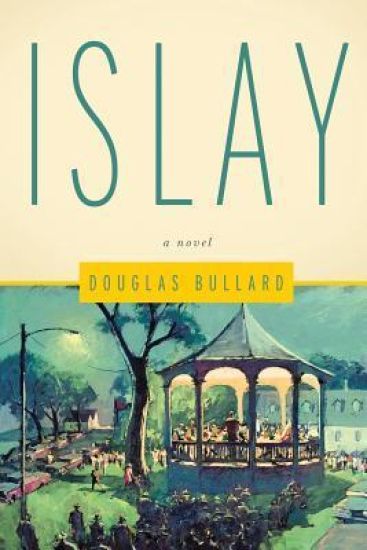
Islay

Islay

Douglas Bullard; John Lee Clark

Gallaudet University Press,U.S.
2013
nidottu
This new edition of Deaf writer Douglas Bullard's classic utopian novel Islay, first published in 1986, promises to entertain contemporary audiences with its bold vision of the Deaf American Dream. Islay tells the story of Lyson Sulla, a Deaf man entirely despondent of the feeling that "the hearing think deaf means dumb," who sets out to establish a sovereign Deaf state on an island called Islay. The novel charts Sulla's quest across the nation to rally support and recruit citizens, and his subsequent efforts to become elected the new state's governor. Along the way, he encounters a cast of colorful Deaf and hearing characters, among them a rival who also has his sights set on the island, a minister, a bowling alley owner, even a family of peddlers. Bullard paints his characters, protagonists and antagonists alike, with humorous but ever-honest strokes, showing the true nature of their ambitions. This unapologetic frankness, set in a unique blend of classic satire and direct, down-to-earth expression of ASL ingeniously rendered on the page, is sure to challenge and amuse all lovers of thought-provoking utopian fiction.
Deaf American Poetry - an Anthology

Deaf American Poetry - an Anthology

John Lee Clark

Gallaudet University Press,U.S.
2009
nidottu
"The Deaf poet is no oxymoron," declares editor John Lee Clark in his introduction to Deaf American Poetry: An Anthology. The 95 poems by 35 Deaf American poets in this volume more than confirm his point. From James Nack's early metered narrative poem "The Minstrel Boy" to the free association of Kristi Merriweather's contemporary "It Was His Movin' Hands Be Tellin' Me," these Deaf poets display mastery of all forms prevalent during the past two centuries. Beyond that, E. Lynn Jacobowitz's "In Memoriam: Stephen Michael Ryan" exemplifies a form unique to Deaf American poets, the transliteration of verse originally created in American Sign Language. This anthology showcases for the first time the best works of Deaf poets throughout the nation's history -- John R. Burnet, Laura C. Redden, George M. Teegarden, Agatha Tiegel Hanson, Loy E. Golladay, Robert F. Panara, Mervin D. Garretson, Clayton Valli, Willy Conley, Raymond Luczak, Christopher Jon Heuer, Pamela Wright-Meinhardt, and many others. Each of their poems reflects the sensibilities of their times, and the progression of their work marks the changes that deaf Americans have witnessed through the years. In "The Mute's Lament," John Carlin mourns the wonderful things that he cannot hear, and looks forward to heaven where "replete with purest joys/My ears shall be unsealed, and I shall hear." In sharp contrast, Mary Toles Peet, who benefitted from being taught by Deaf teachers, wrote "Thoughts on Music" with an entirely different attitude. She concludes her account of the purported beauty of music with the realization that "the music of my inward ear/Brings joy far more intense." Clark tracks these subtle shifts in awareness through telling, brief biographies of each poet. By doing so, he reveals in Deaf American Poetry how "the work of Deaf poets serves as a prism through which Deaf people can know themselves better and through which the rest of the world can see life in a new light."