Kirjojen hintavertailu. Mukana 12 171 171 kirjaa ja 12 kauppaa.
Kirjailija
John Lewis
Kirjat ja teokset yhdessä paikassa: 129 kirjaa, julkaisuja vuosilta 1851-2026, suosituimpien joukossa A Word on Words. Vertaile teosten hintoja ja tarkista saatavuus suomalaisista kirjakaupoista.
John Lewis authored the language textbook "A Graduated English-Welsh Spelling Book" in the 19th century. The purpose of the book is to assist Welsh speakers in learning English spelling and enhancing their written English abilities. The book is laid out in a series of graduated courses that start with simple English vocabulary and work their way up to more difficult terms and expressions. Each lesson provides a list of vocabulary along with their Welsh equivalents, exercises to help with spelling and pronunciation, and a pronunciation guide. English grammatical rules are explained and given instances in both Welsh and English in the book's section on the subject. Verb tenses, sentence construction, and other language-related issues are all covered in this section. Welsh speakers who want to get better at English and English speakers who want to study Welsh can both benefit from this useful tool.
The book "" A Graduated English-Welsh Spelling Book "" has been considered important throughout the human history, and so that this work is never forgotten we have made efforts in its preservation by republishing this book in a modern format for present and future generations. This whole book has been reformatted, retyped and designed. These books are not made of scanned copies and hence the text is clear and readable.
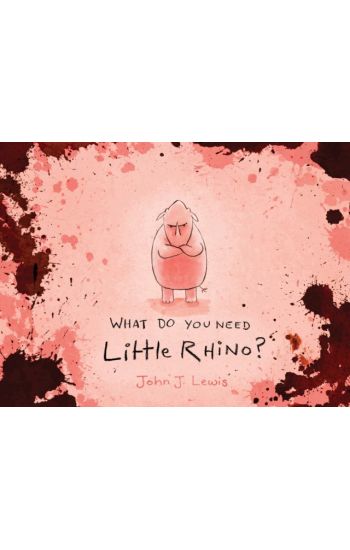
A delightful story for younger children about a Little Rhino who gets really mad but can’t explain why. In the end, everything works out just as it should! What Do You Need, Little Rhino? shows children how to find comfort when everything gets too much.
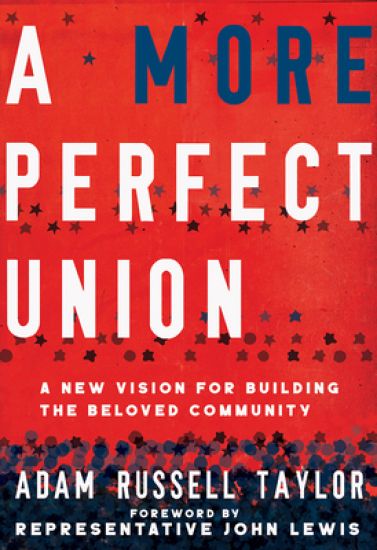
America is at a pivotal crossroads. The soul of our nation is at stake and in peril. A new public narrative is needed to unite Americans around common values and to counter the increasing discord and acrimony in our politics and culture. The process of healing and creating a more perfect union in our nation must start now. The moral vision of Martin Luther King Jr.'s beloved community, which animated and galvanized the civil rights movement of the 1950s and 1960s, provides a hopeful way forward. In A More Perfect Union, Adam Russell Taylor, president of Sojourners, reimagines a contemporary version of the beloved community that will inspire and unite Americans across generations, geographic and class divides, racial and gender differences, faith traditions, and ideological leanings. In the beloved community, neither privilege nor punishment is tied to race, gender, religion, sexual orientation, or economic status, and everyone is able to realize their full potential and thrive. Building the beloved community requires living out a series of commitments, such as true equality, radical welcome, transformational interdependence, E Pluribus Unum (out of many, one), environmental stewardship, nonviolence, and economic equity. By building the beloved community we unify the country around a shared moral vision that transcends ideology and partisanship, tapping into our most sacred civic and religious values, enabling our nation to live up to its best ideals and realize a more perfect union.
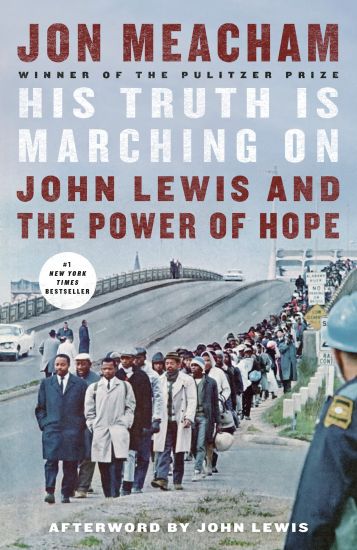
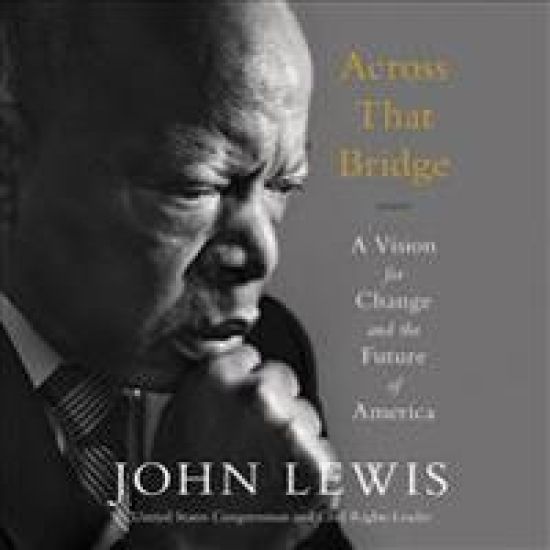
#1 NEW YORK TIMES BESTSELLER - An intimate and revealing portrait of civil rights icon and longtime U.S. congressman John Lewis, linking his life to the painful quest for justice in America from the 1950s to the present--from the Pulitzer Prize-winning author of The Soul of America NAMED ONE OF THE BEST BOOKS OF THE YEAR BY THE WASHINGTON POST AND COSMOPOLITAN John Lewis, who at age twenty-five marched in Selma, Alabama, and was beaten on the Edmund Pettus Bridge, was a visionary and a man of faith. Drawing on decades of wide-ranging interviews with Lewis, Jon Meacham writes of how this great-grandson of a slave and son of an Alabama tenant farmer was inspired by the Bible and his teachers in nonviolence, Reverend James Lawson and Martin Luther King, Jr., to put his life on the line in the service of what Abraham Lincoln called "the better angels of our nature." From an early age, Lewis learned that nonviolence was not only a tactic but a philosophy, a biblical imperative, and a transforming reality. At the age of four, Lewis, ambitious to become a minister, practiced by preaching to his family's chickens. When his mother cooked one of the chickens, the boy refused to eat it--his first act, he wryly recalled, of nonviolent protest. Integral to Lewis's commitment to bettering the nation was his faith in humanity and in God--and an unshakable belief in the power of hope. Meacham calls Lewis "as important to the founding of a modern and multiethnic twentieth- and twenty-first-century America as Thomas Jefferson and James Madison and Samuel Adams were to the initial creation of the Republic itself in the eighteenth century." A believer in the injunction that one should love one's neighbor as oneself, Lewis was arguably a saint in our time, risking limb and life to bear witness for the powerless in the face of the powerful. In many ways he brought a still-evolving nation closer to realizing its ideals, and his story offers inspiration and illumination for Americans today who are working for social and political change.
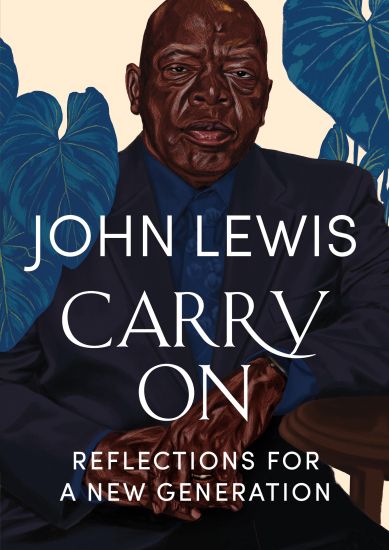
Congressman John Lewis was a paragon of the Civil Rights Movement and political leadership for decades. A hero we won't soon forget, Lewis was a beacon of hope and a model of humility whose invocation to "good trouble" continues to inspire millions across our nation. In his last months on earth, even while battling cancer, he dedicated time to share his memories, beliefs, and advice-exclusively immortalized in these pages-as a message to the generations to come.Organized by topic ranging from justice, courage, faith, and forgiveness to the pandemic, mentorship, immigration, and many more besides, Carry On collects the late Congressman's thoughts for readers to draw on whenever they are in need of guidance. John Lewis had great confidence in our future, even as he died in the midst of one of our country's most challenging years to date. With this book, we can continue to learn from his perseverance, dedication, profound insight, and unwavering ability to see the good in life, and live up to the legacy he has left us.
A Sarah Mills Hodge Fund publicationBorn to Jewish immigrants, Julius Rosenwald rose to lead Sears, Roebuck & Company and turn it into the world’s largest retailer. Born into slavery, Booker T. Washington became the founding principal of Tuskegee Institute. In 1912 the two men launched an ambitious program to partner with black communities across the segregated South to build public schools for African American children. This watershed moment in the history of philanthropy—one of the earliest collaborations between Jews and African Americans—drove dramatic improvement in African American educational attainment and fostered the generation who became the leaders and foot soldiers of the civil rights movement.Of the original 4,978 Rosenwald schools built between 1917 and 1937 across fifteen southern and border states, only about 500 survive. While some have been repurposed and a handful remain active schools, many remain unrestored and at risk of collapse. To tell this story visually, Andrew Feiler drove more than twenty-five thousand miles, photographed 105 schools, and interviewed dozens of former students, teachers, preservationists, and community leaders in all fifteen of the program states.A Better Life for their Children includes eighty-five duotone images that capture interiors and exteriors, schools restored and yet-to-be restored, and portraits of people with unique, compelling connections to these schools. Brief narratives written by Feiler accompany each photograph, telling the stories of Rosenwald schools’ connections to the Trail of Tears, the Great Migration, the Tuskegee Airmen, Brown v. Board of Education, embezzlement, murder, and more. Beyond the photographic documentation, A Better Life for Their Children includes essays from three prominent voices. Congressman John Lewis, who attended a Rosenwald school in Alabama, provides an introduction; preservationist Jeanne Cyriaque has penned a history of the Rosenwald program; and Brent Leggs, director of African American Cultural Heritage at the National Trust for Historic Preservation, has written a plea for preservation that serves as an afterword.
Strategic management is very well documented in business books and in the literature, but that does not make the task any easier. Because formulating and implementing strategy is so taxing, and the environmental signals are so intangible, strategic planning is a responsibility that is easy to avoid. The solution proposed in this book is a project management framework to advance organizational strategy. In this book, you’ll find not only a description of how use the project management framework to advance strategic management, but also a case study that illustrates the positive impact.
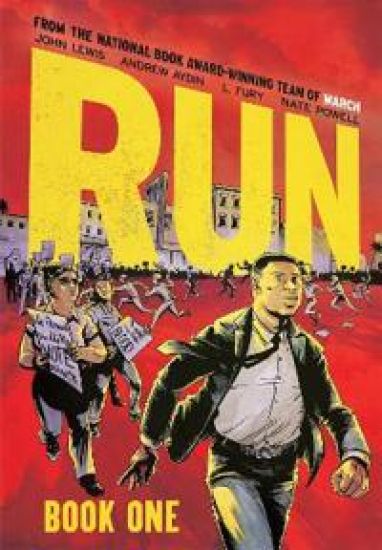
First you march, then you run. From the #1 bestselling, award–winning team behind March comes the first book in their new, groundbreaking graphic novel series, Run: Book One “Run recounts the lost history of what too often follows dramatic change—the pushback of those who refuse it and the resistance of those who believe change has not gone far enough. John Lewis’s story has always been a complicated narrative of bravery, loss, and redemption, and Run gives vivid, energetic voice to a chapter of transformation in his young, already extraordinary life.” –Stacey Abrams “In sharing my story, it is my hope that a new generation will be inspired by Run to actively participate in the democratic process and help build a more perfect Union here in America.” –Congressman John Lewis To John Lewis, the civil rights movement came to an end with the signing of the Voting Rights Act in 1965. But that was after more than five years as one of the preeminent figures of the movement, leading sit–in protests and fighting segregation on interstate busways as an original Freedom Rider. It was after becoming chairman of SNCC (the Student Nonviolent Coordinating Committee) and being the youngest speaker at the March on Washington. It was after helping organize the Mississippi Freedom Summer and the ensuing delegate challenge at the 1964 Democratic National Convention. And after coleading the march from Selma to Montgomery on what became known as “Bloody Sunday.” All too often, the depiction of history ends with a great victory. But John Lewis knew that victories are just the beginning. In Run: Book One, John Lewis and longtime collaborator Andrew Aydin reteam with Nate Powell—the award–winning illustrator of the March trilogy—and are joined by L. Fury—making an astonishing graphic novel debut—to tell this often overlooked chapter of civil rights history.
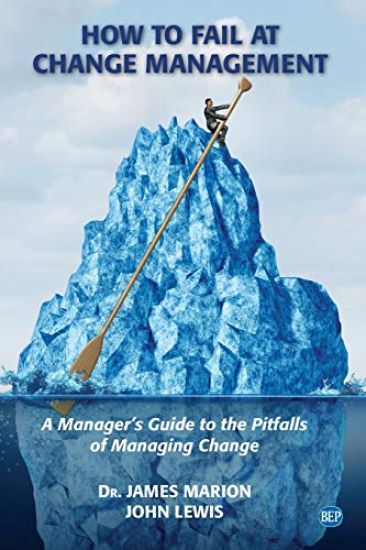
Change management efforts often fail. Business case studies are littered with examples of failed change management efforts. Why this is so is a mystery, given the many change management models in existence, the highly paid executives equipped with degrees from top-tier schools, and that millions of dollars spent in pursuit of change.Successful change management need not be a mystery, but perhaps change management success is best learned from failed attempts at change that seemed reasonable at the time according to theory—but proved to be bad ideas in retrospect. This book presents notable examples of attempts by experienced managers to implement bad ideas that lead to failed change so that change managers are better equipped to avoid common pitfalls in managing change.
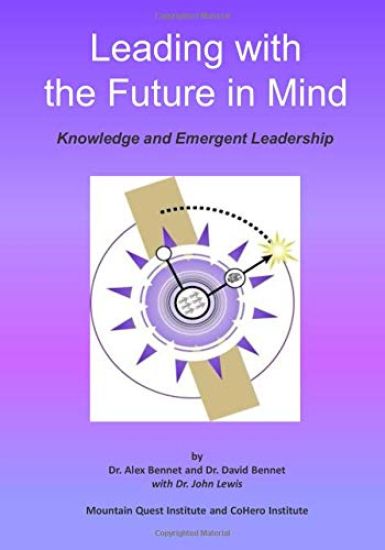
A tour de force for the Future of Leadership ...We exist in a new reality, a global world where the individuated power of the mind/brain offers possibilities beyond our imagination. It is within this framework that thought leading emerges, and when married to our collaborative nature, makes the impossible an everyday occurrence. Leading with the Future in Mind, building on profound insights unleashed by recent findings in neuroscience, provides a new view that converges leadership, knowledge and learning for individual and organizational advancement.This book provides a research-based tour de force for the future of leadership. Moving from the leadership of the past, for the few at the top, using authority as the explanation, we now find leadership emerging from all levels of the organization, with knowledge as the explanation. The future will be owned by the organizations that understand and can master the relationships between knowledge and leadership. Being familiar with the role of a knowledge worker is not the same as understanding the role of a knowledge leader. As the key ingredient, collaboration is much more than "getting along"; it embraces and engages. Knowledge and leadership, a quality of organizations, have always been in relationship. However, the significant mental growth emerging throughout the 20th century-where individuals at all levels began to expand their capacity to learn-and the expansion of the capacity for social knowledge in the interconnected world of the 21st century has propelled humanity into a new age. Knowledge-and the responsibility for how that knowledge is used-sits squarely on the shoulders of leadership at all levels. The nature of the organization has moved beyond the factory and process metaphor, and is now understood as an intelligent complex adaptive system (ICAS). Leading with the Future in Mind covers the essentials of working, learning, and leading in an ICAS, covering knowledge and complexity, but also passion and spiritual energy. As social creatures living in an entangled world, our brains are linked together. We are in continuous interaction with those around us, and the brain is continuously changing in response. Wrapped in the mantle of collaborative leadership and engaging our full resources-physical, mental, emotional and spiritual-we open the door to possibilities. We are dreaming the future together.
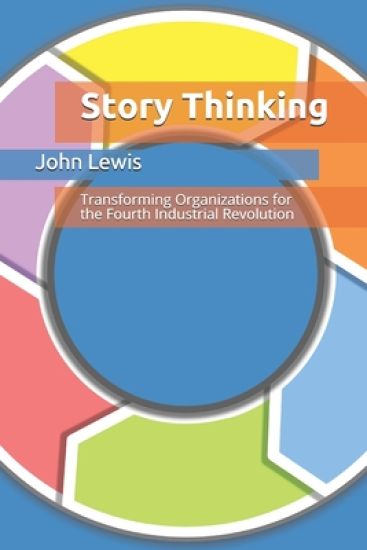
This book is about the major organizational challenges related to the Fourth Industrial Revolution (4IR), and ways for visionary leaders to begin addressing them now by rethinking traditional views of change, learning, and leadership. This is not another book about the gloom and doom associated with predicted job losses due to robots and artificial intelligence (AI). Instead, this is a solutions-based book that provides a new way of thinking about the organization, called Story Thinking.The first industrial revolution was based on steam and mechanical production. The second revolution was based on electricity and assembly lines. The third revolution was based on computing and online workflow. All three of these technological advancements completely changed the underlying approaches towards business. But the next revolution will be even more profound. The fourth revolution is primarily based on intelligence and digital connectivity. This will move us beyond building a workforce around the technology-the workforce will also be competing with the technology. Successful organizations will need to do more than just adopt smarter tools-they will need to adopt smarter ways of thinking beyond current memorized prescriptive change models.Within the second industrial revolution, we became accustomed to saying that everything happens within a process-and the framework of "process" became our mental model of work. Now, in the fourth industrial revolution, we will need to understand that the framework of "story" must become our mental model of work. Storytelling is based on a sensemaking pattern for how we should talk-but Story Thinking is based on this sensemaking pattern for how we should work.
For courses in Java Programming. A comprehensive, cohesive, and seamless exploration of Java programming Java Foundations is a comprehensive textbook for introductory programming sequences. The versatile layout supports a two-or three-semester sequence and introduces students to the world of programming–from basic programming concepts to the design and implementation of complex data structures. Inspired by the success of their industry-leading text, Java Software Solutions, authors Lewis, DePasquale, and Chase build a solid framework for lasting comprehension. The 5th Edition is updated to keep the content fully up-to-speed while incorporating changes from user feedback. The biggest change in this edition is the overhaul of the graphical content to fully embrace the JavaFX platform, which has replaced Swing as the supported technology for graphics and Graphical User Interfaces (GUIs) in Java. The switch over to the new approach simplifies GUI development and provides better opportunities to discuss object-oriented programming.
Designed for the introductory computing and computer science course, the student-friendly Computer Science Illuminated, Seventh Edition provides students with a solid foundation for further study, and offers non-majors a complete introduction to computing. Fully revised and updated, the Seventh Edition of this best-selling text retains the accessibility and in-depth coverage of previous editions, while incorporating all-new material on cutting-edge issues in computer science. Authored by the award-winning team Nell Dale and John Lewis, the text provides a unique and innovative layered approach, moving through the levels of computing from an organized, language-neutral perspective. New & Key Features of the Seventh Edition: • NEW & REVISED - Includes new and enhanced content on: o Cloud Computing in Chapter 15 o Big Data in Chapter 12 o Smart Speakers in the home in Chapter 13 o Computer and System Security in Chapter 17 • NEW – Includes all new content in Chapter 6, Low-Level Programming Languages and Pseudocode, with updated examples using the Pep/9 machine • UPDATED – Ethical Issues at the end of each chapter have been updated to delve into current issues and trends, while new Did You Know boxes and updated biographical sketches reflect the latest information in the field • UPDATED – Aligns more broadly to the AP Computer Science Principles curriculum Introductory programming chapters are available on Navigate 2 for Python, SQL, Java, C++, JavaScript, Visual Basic, NET, Ruby, Perl, Alice, and Pascal
Young Kate, or The Rescue is a novel created in 1844 set in now West Virginia's Kanawha River Valley in 1798. The French and Indian War and the Revolutionary War had been fought. The previously contested area was now developing and a new frontier had opened up to the west. But not all was well as there were those who wished to exploit these lands.