Kirjojen hintavertailu. Mukana 12 390 323 kirjaa ja 12 kauppaa.
Kirjailija
John Locke
Kirjat ja teokset yhdessä paikassa: 624 kirjaa, julkaisuja vuosilta 1789-2026, suosituimpien joukossa The Clarendon Edition of the Works of John Locke: Some Thoughts Concerning Education. Vertaile teosten hintoja ja tarkista saatavuus suomalaisista kirjakaupoista.
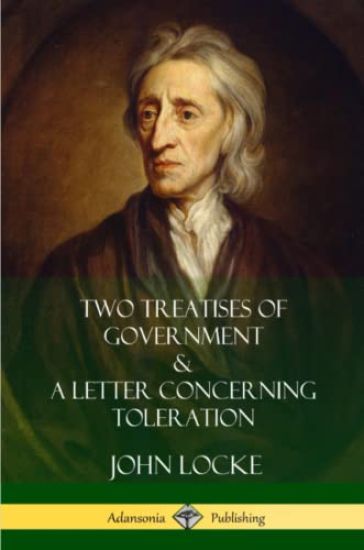
Three of John Locke's finest works, which expound political and religious ideas revolutionary in their time, are presented together in this printing. When Dutch monarch William of Orange ascended to the English throne in the Glorious Revolution of 1688, burning questions over the best form of governance for England were prominent among the intelligentsia of the era. It was a time when England grappled with incremental transition from monarchy to early forms of democracy and voting. In the first treatise of government Locke proceeds to attack and dissect his prominent contemporary Robert Filmer, who was broadly in favour of absolute monarchy under the principle of divine right. The allusions to the Biblical Adam, wherein the monarch can be intimated as a continuation of the first man ever created, are debunked by Locke who asserts that God never asserted that one man had province to rule over all other human beings.
Three of John Locke's finest works, which expound political and religious ideas revolutionary in their time, are presented together in this printing. When Dutch monarch William of Orange ascended to the English throne in the Glorious Revolution of 1688, burning questions over the best form of governance for England were prominent among the intelligentsia of the era. It was a time when England grappled with incremental transition from monarchy to early forms of democracy and voting. In the first treatise of government Locke proceeds to attack and dissect his prominent contemporary Robert Filmer, who was broadly in favour of absolute monarchy under the principle of divine right. The allusions to the Biblical Adam, wherein the monarch can be intimated as a continuation of the first man ever created, are debunked by Locke who asserts that God never asserted that one man had province to rule over all other human beings.
A Letter Concerning Toleration by John Locke and translated by William Popple. A Letter Concerning Toleration by John Locke was originally published in 1689. Its initial publication was in Latin, though it was immediately translated into other languages. Locke's work appeared amidst a fear that Catholicism might be taking over England, and responds to the problem of religion and government by proposing religious toleration as the answer. This "letter" is addressed to an anonymous "Honored Sir": this was actually Locke's close friend Philipp van Limborch, who published it without Locke's knowledge.
An Essay Concerning Human Understanding by John Locke. An Essay Concerning Human Understanding is a work by John Locke concerning the foundation of human knowledge and understanding. It first appeared in 1689 (although dated 1690) with the printed title An Essay Concerning Humane Understanding. He describes the mind at birth as a blank slate (tabula rasa, although he did not use those actual words) filled later through experience. The essay was one of the principal sources of empiricism in modern philosophy, and influenced many enlightenment philosophers, such as David Hume and George Berkeley. An Inquiry into the understanding, pleasant and useful. Since it is the understanding that sets man above the rest of sensible beings, and gives him all the advantage and dominion which he has over them; it is certainly a subject, even for its nobleness, worth our labour to inquire into. The understanding, like the eye, whilst it makes us see and perceive all other things, takes no notice of itself; and it requires art and pains to set it at a distance and make it its own object. But whatever be the difficulties that lie in the way of this inquiry; whatever it be that keeps us so much in the dark to ourselves; sure I am that all the light we can let in upon our minds, all the acquaintance we can make with our own understandings, will not only be very pleasant, but bring us great advantage, in directing our thoughts in the search of other things.
The Second Treatise of Civil Government by John Locke. Two Treatises of Government: In the Second Treatise Locke develops a number of notable themes. It begins with a depiction of the state of nature, wherein individuals are under no obligation to obey one another but are each themselves judge of what the law of nature requires. It also covers conquest and slavery, property, representative government, and the right of revolution. The Latter Is an Essay Concerning The True Original, Extent, and End of Civil Government) is a work of political philosophy published anonymously in 1689 by John Locke. The First Treatise attacks patriarchalism in the form of sentence-by-sentence refutation of Robert Filmer's Patriarcha, while the Second Treatise outlines Locke's ideas for a more civilized society based on natural rights and contract theory. 'Reader, thou hast here the beginning and end of a discourse concerning government; what fate has otherwise disposed of the papers that should have filled up the middle, and were more than all the rest, it is not worth while to tell thee. These, which remain, I hope are sufficient to establish the throne of our great restorer, our present King William; to make good his title, in the consent of the people, which being the only one of all lawful governments, he has more fully and clearly, than any prince in Christendom; and to justify to the world the people of England, whose love of their just and natural rights, with their resolution to preserve them, saved the nation when it was on the very brink of slavery and ruin.'
Classic Books Library presents this brand new edition of John Locke's "Second Treatise of Government," published in 1689. This is one of two political works that Locke wrote articulating standards for a government-ruled society. Preceded by "The First Treatise," which refutes the concept of 'patriarchalism' as presented by Sir Robert Filmer (1680), "The Second Treatise" describes a model for a civil state. Here he identifies what he refers to as natural law, suggesting that individuals in society are governed by natural law and have rights to uphold those laws for the protection of themselves and their property. In Locke's theory, an all-ruling, sovereign government is replaced with one that serves its people and is subject to alteration should its functions become disengaged from that purpose. Locke (1632-1704) was a British philosopher and physician. He is associated with developing political philosophy and epistemological theories, the most significant being empiricism, and is often referred to as the 'Father' of liberalism.
The Thing's Incredible is a sweeping revisionist history of the founding of Weird Tales, one of the most influential and entertaining pulp magazines of them all. Its first two years (1923-24) was a period of tumult and controversy unequalled in the pulps, before or since, an experience so painful to its creators that they immediately banished their memories to secrecy, their code of silence suppressing the story for almost a century. Here at last is the true saga, the unraveling of the many twisted threads which have bound the creation of Weird Tales in mystery.Who were Henneberger and Lansinger, the co-founders, and what circuitous chain of events brought about their doomed destiny? How did the first editor, the outspoken and uncontrollable Edwin Baird, become the wild man of the pulps? What dark secrets lay buried in second editor Farnsworth Wright's haunted past that he never dared speak of? What was the significance of the constantly mutating "reorganization" that united two legends, world-famous magician Houdini and horror author H.P. Lovecraft, into a grand nexus of weird? How did Henneberger lose control of his slow-motion disaster of a magazine? And how did an all-out war behind the scenes lead to the long peace of the Wright years?This is the epic story of the challenges in establishing a radical, new magazine in the early 1920s--and not just any magazine, but the immortal Weird Tales.
The Thing's Incredible is a sweeping revisionist history of the founding of Weird Tales, one of the most influential and entertaining pulp magazines of them all. Its first two years (1923-24) was a period of tumult and controversy unequalled in the pulps, before or since, an experience so painful to its creators that they immediately banished their memories to secrecy, their code of silence suppressing the story for almost a century. Here at last is the true saga, the unraveling of the many twisted threads which have bound the creation of Weird Tales in mystery.Who were Henneberger and Lansinger, the co-founders, and what circuitous chain of events brought about their doomed destiny? How did the first editor, the outspoken and uncontrollable Edwin Baird, become the wild man of the pulps? What dark secrets lay buried in second editor Farnsworth Wright's haunted past that he never dared speak of? What was the significance of the constantly mutating "reorganization" that united two legends, world-famous magician Houdini and horror author H.P. Lovecraft, into a grand nexus of weird? How did Henneberger lose control of his slow-motion disaster of a magazine? And how did an all-out war behind the scenes lead to the long peace of the Wright years?This is the epic story of the challenges in establishing a radical, new magazine in the early 1920s--and not just any magazine, but the immortal Weird Tales.
Locke's two groundbreaking treatises regarding sound methods of governance are united in this complete edition. At the time these treatises were written, English politics had undergone decades of upheaval in the wake of the English Civil War. When Dutch monarch William of Orange ascended to the English throne in the Glorious Revolution of 1688, burning questions over the best form of governance for England were prominent in the intelligentsia of the era. It was a time when England grappled with its incremental transition from monarchy to early forms of democracy and right to vote, where dynastic monarchy and religious theory still held considerable power over the formation of the state. Lauded as a classic of political philosophy, the treatises by Locke are a common requirement in various educational courses concerning political science and philosophy to this day.
Locke's two groundbreaking treatises regarding sound methods of governance are united in this complete edition. At the time these treatises were written, English politics had undergone decades of upheaval in the wake of the English Civil War. When Dutch monarch William of Orange ascended to the English throne in the Glorious Revolution of 1688, burning questions over the best form of governance for England were prominent in the intelligentsia of the era. It was a time when England grappled with its incremental transition from monarchy to early forms of democracy and right to vote, where dynastic monarchy and religious theory still held considerable power over the formation of the state. Lauded as a classic of political philosophy, the treatises by Locke are a common requirement in various educational courses concerning political science and philosophy to this day.
Second Treatise of Government by John Locke. In the Second Treatise Locke develops a number of notable themes. It begins with a depiction of the state of nature, wherein individuals are under no obligation to obey one another but are each themselves judge of what the law of nature requires. It also covers conquest and slavery, property, representative government, and the right of revolution. Locke defines the state of nature thus: To properly understand political power and trace its origins, we must consider the state that all people are in naturally. That is a state of perfect freedom of acting and disposing of their own possessions and persons as they think fit within the bounds of the law of nature. People in this state do not have to ask permission to act or depend on the will of others to arrange matters on their behalf. The natural state is also one of equality in which all power and jurisdiction is reciprocal and no one has more than another. It is evident that all human beings-as creatures belonging to the same species and rank and born indiscriminately with all the same natural advantages and faculties-are equal amongst themselves. They have no relationship of subordination or subjection unless God (the lord and master of them all) had clearly set one person above another and conferred on him an undoubted right to dominion and sovereignty. Reader, thou hast here the beginning and end of a discourse concerning government; what fate has otherwise disposed of the papers that should have filled up the middle, and were more than all the rest, it is not worth while to tell thee. These, which remain, I hope are sufficient to establish the throne of our great restorer, our present King William; to make good his title, in the consent of the people, which being the only one of all lawful governments, he has more fully and clearly, than any prince in Christendom; and to justify to the world the people of England, whose love of their just and natural rights, with their resolution to preserve them, saved the nation when it was on the very brink of slavery and ruin. If these papers have that evidence, I flatter myself is to be found in them, there will be no great miss of those which are lost, and my reader may be satisfied without them: for I imagine, I shall have neither the time, nor inclination to repeat my pains, and fill up the wanting part of my answer, by tracing Sir Robert again, through all the windings and obscurities, which are to be met with in the several branches of his wonderful system.
The 18th century was a wealth of knowledge, exploration and rapidly growing technology and expanding record-keeping made possible by advances in the printing press. In its determination to preserve the century of revolution, Gale initiated a revolution of its own: digitization of epic proportions to preserve these invaluable works in the largest archive of its kind. Now for the first time these high-quality digital copies of original 18th century manuscripts are available in print, making them highly accessible to libraries, undergraduate students, and independent scholars.The Age of Enlightenment profoundly enriched religious and philosophical understanding and continues to influence present-day thinking. Works collected here include masterpieces by David Hume, Immanuel Kant, and Jean-Jacques Rousseau, as well as religious sermons and moral debates on the issues of the day, such as the slave trade. The Age of Reason saw conflict between Protestantism and Catholicism transformed into one between faith and logic -- a debate that continues in the twenty-first century.++++The below data was compiled from various identification fields in the bibliographic record of this title. This data is provided as an additional tool in helping to insure edition identification: ++++British LibraryT112897Also issued as part of: 'The works of John Locke Esq; In three volumes, ' London: printed for John Churchill, and Sam. Manship, 1714.London: printed for E. Curll, 1714. iv,20p.; 2
The 18th century was a wealth of knowledge, exploration and rapidly growing technology and expanding record-keeping made possible by advances in the printing press. In its determination to preserve the century of revolution, Gale initiated a revolution of its own: digitization of epic proportions to preserve these invaluable works in the largest archive of its kind. Now for the first time these high-quality digital copies of original 18th century manuscripts are available in print, making them highly accessible to libraries, undergraduate students, and independent scholars.Delve into what it was like to live during the eighteenth century by reading the first-hand accounts of everyday people, including city dwellers and farmers, businessmen and bankers, artisans and merchants, artists and their patrons, politicians and their constituents. Original texts make the American, French, and Industrial revolutions vividly contemporary.++++The below data was compiled from various identification fields in the bibliographic record of this title. This data is provided as an additional tool in helping to insure edition identification: ++++National Library of WalesN022259Dublin: printed by William M'Kenzie, 1794. vi, 2],304p.; 8
The 18th century was a wealth of knowledge, exploration and rapidly growing technology and expanding record-keeping made possible by advances in the printing press. In its determination to preserve the century of revolution, Gale initiated a revolution of its own: digitization of epic proportions to preserve these invaluable works in the largest archive of its kind. Now for the first time these high-quality digital copies of original 18th century manuscripts are available in print, making them highly accessible to libraries, undergraduate students, and independent scholars.The Age of Enlightenment profoundly enriched religious and philosophical understanding and continues to influence present-day thinking. Works collected here include masterpieces by David Hume, Immanuel Kant, and Jean-Jacques Rousseau, as well as religious sermons and moral debates on the issues of the day, such as the slave trade. The Age of Reason saw conflict between Protestantism and Catholicism transformed into one between faith and logic -- a debate that continues in the twenty-first century.++++The below data was compiled from various identification fields in the bibliographic record of this title. This data is provided as an additional tool in helping to insure edition identification: ++++Bodleian Library (Oxford)T180141With an initial advertisement leaf and an additional titlepage which reads: 'The reasonableness of Christianity, as delivered in the scriptures .. The fifth edition', London, 1731.London: printed for A. Bettesworth and C. Hitch; J. Pemberton; and E. Symon, 1736. 2],292p.; 8
The 18th century was a wealth of knowledge, exploration and rapidly growing technology and expanding record-keeping made possible by advances in the printing press. In its determination to preserve the century of revolution, Gale initiated a revolution of its own: digitization of epic proportions to preserve these invaluable works in the largest archive of its kind. Now for the first time these high-quality digital copies of original 18th century manuscripts are available in print, making them highly accessible to libraries, undergraduate students, and independent scholars.Delve into what it was like to live during the eighteenth century by reading the first-hand accounts of everyday people, including city dwellers and farmers, businessmen and bankers, artisans and merchants, artists and their patrons, politicians and their constituents. Original texts make the American, French, and Industrial revolutions vividly contemporary.++++The below data was compiled from various identification fields in the bibliographic record of this title. This data is provided as an additional tool in helping to insure edition identification: ++++British LibraryT175280Dublin: printed by and for Sarah Cotter; and J. Sheppard, 1766. 2], iii, 3],331, 1]p.; 12
The 18th century was a wealth of knowledge, exploration and rapidly growing technology and expanding record-keeping made possible by advances in the printing press. In its determination to preserve the century of revolution, Gale initiated a revolution of its own: digitization of epic proportions to preserve these invaluable works in the largest archive of its kind. Now for the first time these high-quality digital copies of original 18th century manuscripts are available in print, making them highly accessible to libraries, undergraduate students, and independent scholars.The Age of Enlightenment profoundly enriched religious and philosophical understanding and continues to influence present-day thinking. Works collected here include masterpieces by David Hume, Immanuel Kant, and Jean-Jacques Rousseau, as well as religious sermons and moral debates on the issues of the day, such as the slave trade. The Age of Reason saw conflict between Protestantism and Catholicism transformed into one between faith and logic -- a debate that continues in the twenty-first century.++++The below data was compiled from various identification fields in the bibliographic record of this title. This data is provided as an additional tool in helping to insure edition identification: ++++John Rylands University Library of ManchesterN025684London: printed for H. Woodfall, A. Millar, J. Beecroft, J. and F. Rivington, J. Whiston, and 18 others in London], 1768. 4v., plate: port.; 4
The 18th century was a wealth of knowledge, exploration and rapidly growing technology and expanding record-keeping made possible by advances in the printing press. In its determination to preserve the century of revolution, Gale initiated a revolution of its own: digitization of epic proportions to preserve these invaluable works in the largest archive of its kind. Now for the first time these high-quality digital copies of original 18th century manuscripts are available in print, making them highly accessible to libraries, undergraduate students, and independent scholars.The Age of Enlightenment profoundly enriched religious and philosophical understanding and continues to influence present-day thinking. Works collected here include masterpieces by David Hume, Immanuel Kant, and Jean-Jacques Rousseau, as well as religious sermons and moral debates on the issues of the day, such as the slave trade. The Age of Reason saw conflict between Protestantism and Catholicism transformed into one between faith and logic -- a debate that continues in the twenty-first century.++++The below data was compiled from various identification fields in the bibliographic record of this title. This data is provided as an additional tool in helping to insure edition identification: ++++John Rylands University Library of ManchesterN025684London: printed for H. Woodfall, A. Millar, J. Beecroft, J. and F. Rivington, J. Whiston, and 18 others in London], 1768. 4v., plate: port.; 4