

Kirjailija
John Locke
Kirjat ja teokset yhdessä paikassa: 625 kirjaa, julkaisuja vuosilta 1789-2026, suosituimpien joukossa The Clarendon Edition of the Works of John Locke: Some Thoughts Concerning Education. Vertaile teosten hintoja ja tarkista saatavuus suomalaisista kirjakaupoista.
625 kirjaa
Kirjojen julkaisuhaarukka 1789-2026.


Versuch ber den menschlichen Verstand - 2. Band ist ein unver nderter, hochwertiger Nachdruck der Originalausgabe aus dem Jahr 1795. Hansebooks ist Herausgeber von Literatur zu unterschiedlichen Themengebieten wie Forschung und Wissenschaft, Reisen und Expeditionen, Kochen und Ern hrung, Medizin und weiteren Genres. Der Schwerpunkt des Verlages liegt auf dem Erhalt historischer Literatur. Viele Werke historischer Schriftsteller und Wissenschaftler sind heute nur noch als Antiquit ten erh ltlich. Hansebooks verlegt diese B cher neu und tr gt damit zum Erhalt selten gewordener Literatur und historischem Wissen auch f r die Zukunft bei.
John Locke argues that all men are created equal in the state of nature by God. In his seminal essay Second Treatise of Government he outlines an entire theory of civil society. Locke explores a number of themes such as conquest and slavery, property, representative government, and the right of revolution. He argues that the protection of life, liberty, and property can be achieved by a parliamentary process that protects, not violates, one's rights.
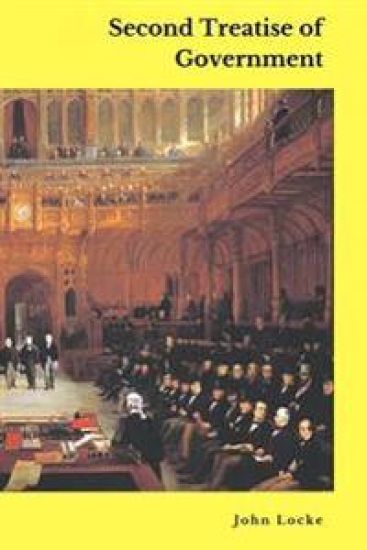
John Locke argues that all men are created equal in the state of nature by God. In his seminal essay Second Treatise of Government he outlines an entire theory of civil society. Locke explores a number of themes such as conquest and slavery, property, representative government, and the right of revolution. He argues that the protection of life, liberty, and property can be achieved by a parliamentary process that protects, not violates, one's rights.


Second Treatise of Government and A Letter Concerning Toleration
John Locke
Oxford University Press
2016
nidottu
'Man being born...to perfect freedom...hath by nature a power...to preserve his property, that is, his life, liberty and estate.' Locke's Second Treatise of Government (1689) is one of the great classics of political philosophy, widely regarded as the foundational text of modern liberalism. In it Locke insists on majority rule, and regards no government as legitimate unless it has the consent of the people. He sets aside people's ethnicities, religions, and cultures and envisages political societies which command our assent because they meet our elemental needs simply as humans. His work helped to entrench ideas of a social contract, human rights, and protection of property as the guiding principles for just actions and just societies. Published in the same year, A Letter Concerning Toleration aimed to end Christianity's wars of religion and called for the separation of church and state so that everyone could enjoy freedom of conscience. In this edition of these two major works, Mark Goldie considers the contested nature of Locke's reputation, which is often appropriated by opposing political and religious ideologies. ABOUT THE SERIES: For over 100 years Oxford World's Classics has made available the widest range of literature from around the globe. Each affordable volume reflects Oxford's commitment to scholarship, providing the most accurate text plus a wealth of other valuable features, including expert introductions by leading authorities, helpful notes to clarify the text, up-to-date bibliographies for further study, and much more.
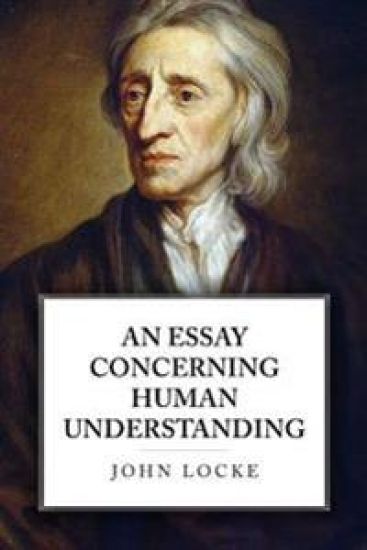
An Essay Concerning Human Understanding
John Locke
Createspace Independent Publishing Platform
2016
nidottu
An Essay Concerning Humane Understanding, Volume II
John Locke
Createspace Independent Publishing Platform
2016
nidottu

An Essay Concerning Humane Understanding, Volume I
John Locke
Createspace Independent Publishing Platform
2016
nidottu

An Essay Concerning Humane Understanding, Volume II
John Locke
Createspace Independent Publishing Platform
2016
nidottu
John Locke was one of the greatest Enlightenment thinkers. In the second volume of An Essay Concerning Humane Understanding, Locke lays out the view that every idea originates from sensation or reflection. Locke advances a systematic argument for the existence of God through which he writes, "...our reason leads us to the knowledge of this certain and evident truth, that there is an eternal, most powerful, and most knowing being; which whether any one will please to call God, it matters not " Alacrity Press is proud to make this work of classic political theory, An Essay Concerning Humane Understanding, Volume II by John Locke available to modern readers.
An Essay Concerning Humane Understanding, Volume I
John Locke
Createspace Independent Publishing Platform
2016
nidottu
A Letter Concerning Toleration John Locke Translated by William Popple A Letter Concerning Toleration by John Locke was originally published in 1689. Its initial publication was in Latin, though it was immediately translated into other languages. Locke's work appeared amidst a fear that Catholicism might be taking over England, and responds to the problem of religion and government by proposing religious toleration as the answer. This "letter" is addressed to an anonymous "Honored Sir": this was actually Locke's close friend Philipp van Limborch, who published it without Locke's knowledge. One of the founders of Empiricism, Locke develops a philosophy that is contrary to the one expressed by Thomas Hobbes in Leviathan, in supporting toleration for various Christian denominations. Hobbes did allow for individuals to maintain their own religious beliefs as long as they outwardly expressed those of the state, however, and it has been argued that his rejection of Catholic Imperialism was the ultimate basis for Locke's rejection of government's interest in spiritual salvation.
The Second Treatise of Civil Government
John Locke
Createspace Independent Publishing Platform
2016
nidottu
The Second Treatise of Civil Government John Locke King James II of England (VII of Scotland) was overthrown in 1688 by a union of Parliamentarians and stadtholder of the Dutch Republic William III of Oranje-Nassau (William of Orange), who as a result ascended the English throne as William III of England. This is known as the Glorious Revolution, also called the Revolution of 1688. Locke claims in the "Preface" to the Two Treatises that its purpose is to justify William III's ascension to the throne, though Peter Laslett suggests that the bulk of the writing was instead completed between 1679

The Romance of Engineering
John Locke; Charles Joseph Tilden; Robert Hebert Quick
Palala Press
2016
sidottu