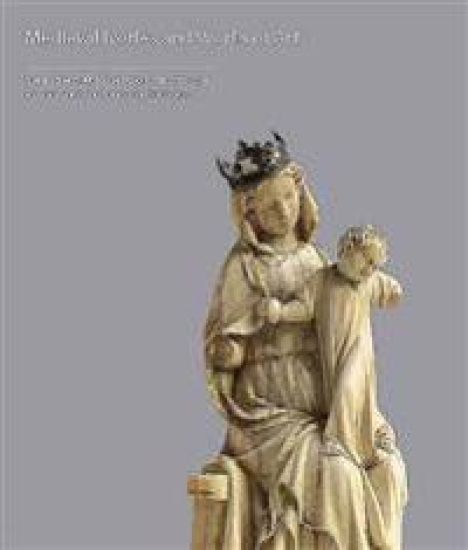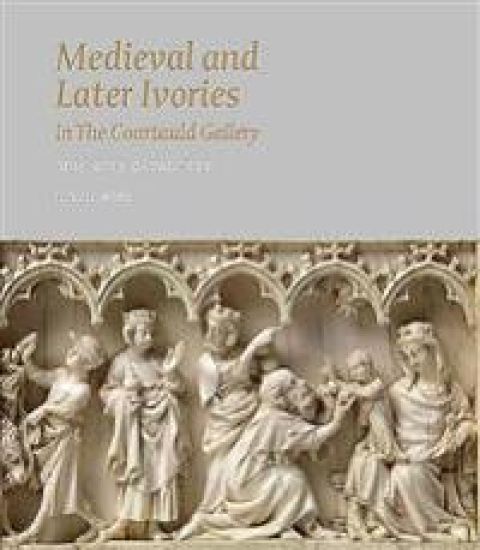
Medieval and Later Ivories in the Courtauld Gallery
John Lowden
Paul Holberton Publishing
2013
sidottu
In 1966 Mark Gambier Parry bequeathed to the Courtauld Gallery the art collection formed by his grandfather Thomas Gambier Parry, who died in 1888. In addition to important paintings, Renaissance glass and ceramics, and Islamic metalwork, this included 28 medieval and Renaissance ivories. Since 1967 about half of the ivories have been on permanent display at The Courtauld, yet they have remained largely unknown, even to experts. This catalogue is the first publication dedicated solely to the collection. There are examples of the highest quality of ivory carving, both secular and religious in content, and a number of the objects are of outstanding interest. They are a revealing tribute to the perceptive eye of Thomas Gambier Parry, a distinguished Victorian collector and Gothic Revival artist responsible for a number of richly painted church interiors in England, such as the Eastern part of the nave ceiling, and the octagon, at Ely Cathedral. The earliest objects in date, probably late 11th century, are the group of walrus ivory plaquettes set into the sides and lids of a casket, portraying the Apostles and Christ in Majesty surrounded by the symbols of the Evangelists. The style leaves little doubt that they should be associated with a group of portable altars at Kloster Melk in Austria. A gap of some two centuries separates the casket panels from the next important object – the central portion of an ivory triptych, containing a Deesis group of Christ enthroned between angels holding instruments of the Passion in the upper register, and the Virgin and Child between candle-bearing angels below. The style of the ivory relates it securely to the atelier of the Soissons Diptych in the Victoria & Albert Museum. The Gambier-Parry fragment employs bold cutting of the frame to accentuate the three-dimensional quantities of the relief. Somewhat later in date, towards the middle of the 14th century, is a complete diptych of the Crucifixion and Virgin with angels, the faces of which Gambier-Parry described as “worthy of Luini”. The extraordinary foreshortening of the swooning Virgin’s head can happily be paralleled to a diptych in the Schoolmeesters Collection, Liège, by the “aterlie aux visages caractérisés”, as named by Raymond Koechlin. The Gambier- Parry diptych, must rank with the finest productions of the workshop.