Kirjojen hintavertailu. Mukana 12 657 676 kirjaa ja 12 kauppaa.

Kirjailija

John M. Findlay

Kirjat ja teokset yhdessä paikassa: 7 kirjaa, julkaisuja vuosilta 1992-2023, suosituimpien joukossa Parallel Destinies. Vertaile teosten hintoja ja tarkista saatavuus suomalaisista kirjakaupoista.

Mukana myös kirjoitusasut: John M Findlay

7 kirjaa

Kirjojen julkaisuhaarukka 1992-2023.

The Mobilized American West, 1940–2000

The Mobilized American West, 1940–2000

John M. Findlay

University of Nebraska Press
2023
sidottu
In the years between 1940 and 2000, the American Far West went from being a relative backwater of the United States to a considerably more developed, modern, and prosperous region-one capable of influencing not just the nation but the world. By the dawn of the twenty-first century, the population of the West had multiplied more than four times since 1940, and western states had transitioned from rural to urban, becoming the most urbanized section of the country. Massive investment, both private and public, in the western economy had produced regional prosperity, and the tourism industry had undergone massive expansion, altering the ways Americans identified with the West. In The Mobilized American West, 1940–2000, John M. Findlay presents a historical overview of the American West in its decades of modern development. During the years of U.S. mobilization for World War II and the Cold War, the West remained a significant, distinct region even as its development accelerated rapidly and, in many ways, it became better integrated into the rest of the country. By examining events and trends that occurred in the West, Findlay argues that a distinctive, region-wide political culture developed in the western states from a commitment to direct democracy, the role played by the federal government in owning and managing such a large amount of land, and the way different groups of westerners identified with and defined the region. While illustrating western distinctiveness, Findlay also aims to show how, in its sustaining mobilization for war, the region became tethered to the entire nation more than ever before, but on its own terms. Findlay presents an innovative approach to viewing the American West as a region distinctive of the United States, one that occasionally stood ahead of, at odds with, and even in defiance of the nation.
Atomic Frontier Days

Atomic Frontier Days

John M. Findlay; Bruce W. Hevly

University of Washington Press
2015
sidottu
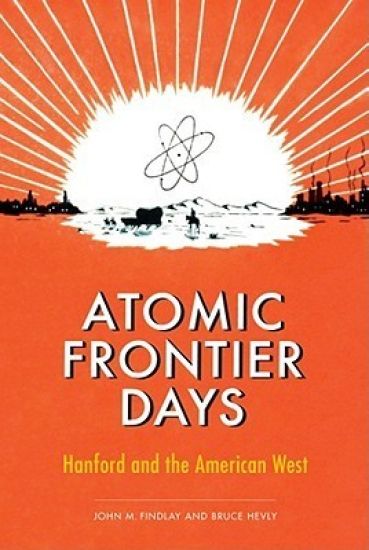
Outstanding Title by Choice MagazineOn the banks of the Pacific Northwest's greatest river lies the Hanford nuclear reservation, an industrial site that appears to be at odds with the surrounding vineyards and desert. The 586-square-mile compound on the Columbia River is known both for its origins as part of the Manhattan Project, which made the first atomic bombs, and for the monumental effort now under way to clean up forty-five years of waste from manufacturing plutonium for nuclear weapons. Hanford routinely makes the news, as scientists, litigants, administrators, and politicians argue over its past and its future.It is easy to think about Hanford as an expression of federal power, a place apart from humanity and nature, but that view distorts its history. Atomic Frontier Days looks through a wider lens, telling a complex story of production, community building, politics, and environmental sensibilities. In brilliantly structured parallel stories, the authors bridge the divisions that accompany Hanford's headlines and offer perspective on today's controversies. Influenced as much by regional culture, economics, and politics as by war, diplomacy, and environmentalism, Hanford and the Tri-Cities of Richland, Pasco, and Kennewick illuminate the history of the modern American West.
Parallel Destinies

Parallel Destinies

John M. Findlay; Kenneth S. Coates

University of Washington Press
2015
sidottu
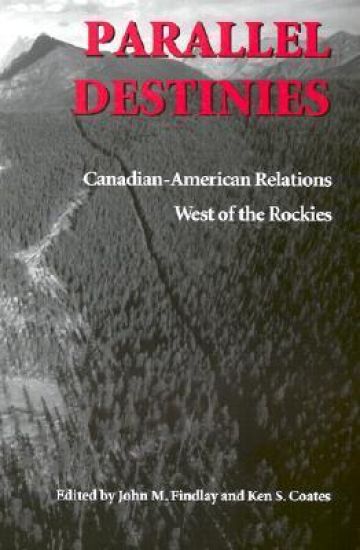
The Canadian West and the American Northwest offer a valuable setting for considering issues of borders and borderlands. The regions contain certain similarities, and during the first half of the nineteenth century they were even grouped together as a distinct political and economic unit, called the "Oregon Country" by Americans and the "Columbia Department" of the Hudson's Bay Company by the British.The essays in this volume -- which grew out of a conference commemorating the Oregon Treaty of 1846 -- view the boundary between Canada and the United States as a dividing line and also as a regional backbone, with people on each side of the border having key experiences and attitudes in common. In their eloquence and scope, they illustrate how historical study of Canadian-American relations in the West calls into question the parameters of the nation-state.The border has not had a single constant meaning; rather, its significance has changed over time and varied from group to group. The essays in Part One concern the movement of peoples and capital across a relatively permeable boundary during the nineteenth century. Many people in this era--especially Natives, miners, immigrants, and capitalists--did not regard the international boundary as particularly important. Part Two considers how the United States and Canada took pains to strengthen and enforce the international boundary during the twentieth century. In this era, the nation-state became more assertive about defining and defending the borderline. Part Three offers considerations of the distinctions, both real and imagined, that emerged during the nineteenth and twentieth centuries between Canada and the United States. Its essays examine different schools of history, divergent ideas toward wilderness, and the influence of anti-Americanism on Canadians' view of national development in North America.
Atomic Frontier Days

Atomic Frontier Days

John M. Findlay; Bruce W. Hevly

University of Washington Press
2011
pokkari
Outstanding Title by Choice MagazineOn the banks of the Pacific Northwest's greatest river lies the Hanford nuclear reservation, an industrial site that appears to be at odds with the surrounding vineyards and desert. The 586-square-mile compound on the Columbia River is known both for its origins as part of the Manhattan Project, which made the first atomic bombs, and for the monumental effort now under way to clean up forty-five years of waste from manufacturing plutonium for nuclear weapons. Hanford routinely makes the news, as scientists, litigants, administrators, and politicians argue over its past and its future.It is easy to think about Hanford as an expression of federal power, a place apart from humanity and nature, but that view distorts its history. Atomic Frontier Days looks through a wider lens, telling a complex story of production, community building, politics, and environmental sensibilities. In brilliantly structured parallel stories, the authors bridge the divisions that accompany Hanford's headlines and offer perspective on today's controversies. Influenced as much by regional culture, economics, and politics as by war, diplomacy, and environmentalism, Hanford and the Tri-Cities of Richland, Pasco, and Kennewick illuminate the history of the modern American West.
Active Vision

Active Vision

John M Findlay; Iain D Gilchrist

Oxford University Press
2003
nidottu
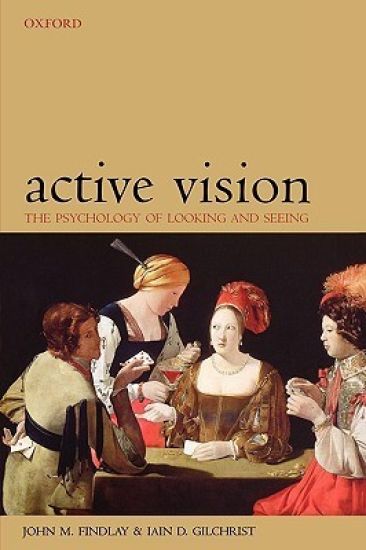
More than one third of the human brain is devoted to the processes of seeing - vision is after all the main way in which we gather information about the world. But human vision is a dynamic process during which the eyes continually sample the environment. Where most books on vision consider it as a passive activity, this book is unique in focusing on vision as an 'active' process. It goes beyond most accounts of vision where the focus is on seeing, to provide an integrated account of seeing AND looking. The book starts by pointing out the weaknesses in our traditional approaches to vision and the reason we need this new approach. It then gives a thorough description of basic details of the visual and oculomotor systems necessary to understand active vision. The book goes on to show how this approach can give a new perspective on visual attention, and how the approach has progressed in the areas of visual orienting, reading, visual search, scene perception and neuropsychology. Finally, the book summarises progress by showing how this approach sheds new light on the old problem of how we maintain perception of a stable visual world. Written by two leading vision scientists, this book will be valuable for vision researchers and psychology students, from undergraduate level upwards.
Parallel Destinies

Parallel Destinies

John M. Findlay; Kenneth S. Coates

University of Washington Press
2002
pokkari
The Canadian West and the American Northwest offer a valuable setting for considering issues of borders and borderlands. The regions contain certain similarities, and during the first half of the nineteenth century they were even grouped together as a distinct political and economic unit, called the "Oregon Country" by Americans and the "Columbia Department" of the Hudson's Bay Company by the British.The essays in this volume -- which grew out of a conference commemorating the Oregon Treaty of 1846 -- view the boundary between Canada and the United States as a dividing line and also as a regional backbone, with people on each side of the border having key experiences and attitudes in common. In their eloquence and scope, they illustrate how historical study of Canadian-American relations in the West calls into question the parameters of the nation-state.The border has not had a single constant meaning; rather, its significance has changed over time and varied from group to group. The essays in Part One concern the movement of peoples and capital across a relatively permeable boundary during the nineteenth century. Many people in this era--especially Natives, miners, immigrants, and capitalists--did not regard the international boundary as particularly important. Part Two considers how the United States and Canada took pains to strengthen and enforce the international boundary during the twentieth century. In this era, the nation-state became more assertive about defining and defending the borderline. Part Three offers considerations of the distinctions, both real and imagined, that emerged during the nineteenth and twentieth centuries between Canada and the United States. Its essays examine different schools of history, divergent ideas toward wilderness, and the influence of anti-Americanism on Canadians' view of national development in North America.
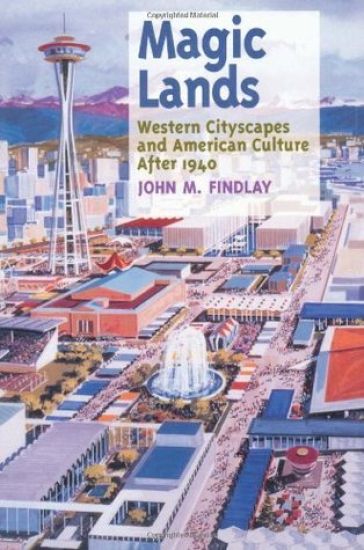
Magic Lands

Magic Lands

John M. Findlay

University of California Press
1992
pokkari
The American West conjures up images of pastoral tranquility and wide open spaces, but by 1970 the Far West was the most urbanized section of the country. Exploring four intriguing cityscapes - Disneyland, Stanford Industrial Park, Sun City, and the 1962 Seattle World's Fair - John Findlay shows how each created a sense of cohesion and sustained people's belief in their superior urban environment. This first book-length study of the urban West after 1940 argues that Westerners deliberately tried to build cities that differed radically from their eastern counterparts. In 1954, Walt Disney began building the world's first theme park, using Hollywood's movie-making techniques. The creators of Stanford Industrial Park were more hesitant in their approach to a conceptually organized environment, but by the mid-1960s the Park was the nation's prototypical 'research park' and the intellectual downtown for the high-technology region that became Silicon Valley. In 1960, on the outskirts of Phoenix, Del E. Webb built Sun City, the largest, most influential retirement community in the United States. Another innovative cityscape arose from the 1962 Seattle World's Fair and provided a futuristic, somewhat fanciful vision of modern life. These four became 'magic lands' that provided an antidote to the apparent chaos of their respective urban milieus. Exemplars of a new lifestyle, they are landmarks on the changing cultural landscape of postwar America.