Kirjojen hintavertailu. Mukana 12 595 353 kirjaa ja 12 kauppaa.
Kirjailija
John M. Perkins
Kirjat ja teokset yhdessä paikassa: 23 kirjaa, julkaisuja vuosilta 1993-2024, suosituimpien joukossa Called to Community. Vertaile teosten hintoja ja tarkista saatavuus suomalaisista kirjakaupoista.
Eberhard Arnold; Dietrich Bonhoeffer; Joan Chittister; Dorothy Day; Fyodor Dostoyevsky; Richard J. Foster; Jonathan Wilson-Hartgrove; David Janzen; Søren Kierkegaard; C. S. Lewis; Chiara Lubich; Thomas Merton; Henri J. M. Nouwen; John M. Perkins; Eugene H. Peterson; Christine D. Pohl; Howard A. Snyder; Mother Teresa; Saint Benedict; Jeremiah Barker; Amy Carmichael; Hans Denck; Andreas Ehrenpreis; Thomas R Kelly; Penelope Lawson; Juan Mateos; Kathleen Norris; Thomas E Powers; Peter Riedemann; Christopher C Smith; Ulrich Stadler
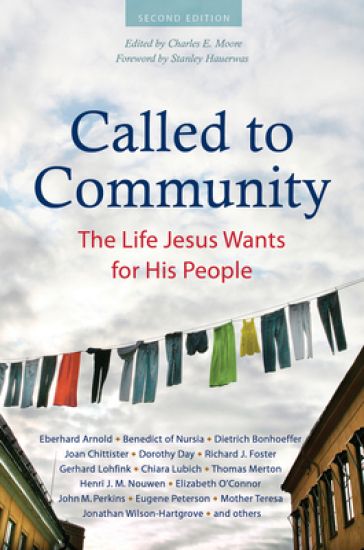
Fifty-two readings on living in intentional Christian community to spark group discussion.Gold Medal Winner, 2017 Illumination Book Awards, Christian LivingSilver Medal Winner, 2017 Benjamin Franklin Award in Religion, Independent Book Publishers AssociationWhy, in an age of connectivity, are our lives more isolated and fragmented than ever? And what can be done about it? The answer lies in the hands of God’s people. Increasingly, today’s Christians want to be the church, to follow Christ together in daily life. From every corner of society, they are daring to step away from the status quo and respond to Christ’s call to share their lives more fully with one another and with others. As they take the plunge, they are discovering the rich, meaningful life that Jesus has in mind for all people, and pointing the church back to its original calling: to be a gathered, united community that demonstrates the transforming love of God.Of course, such a life together with others isn’t easy. The selections in this volume are, by and large, written by practitioners—people who have pioneered life in intentional community and have discovered in the nitty-gritty of daily life what it takes to establish, nurture, and sustain a Christian community over the long haul.Whether you have just begun thinking about communal living, are already embarking on sharing life with others, or have been part of a community for many years, the pieces in this collection will encourage, challenge, and strengthen you. The book’s fifty-two chapters can be read one a week to ignite meaningful group discussion.Contributors include: John F. Alexander, Eberhard Arnold, J. Heinrich Arnold, Johann Christoph Arnold, Alden Bass, Benedict of Nursia, Christoph Friedrich Blumhardt, Leonardo Boff, Dietrich Bonhoeffer, Joan Chittister, Stephen B. Clark, Andy Crouch, Dorothy Day, Anthony de Mello, Elizabeth Dede, Catherine de Hueck Doherty, Fyodor Dostoyevsky, Jenny Duckworth, Friedrich Foerster, Richard J. Foster, Jodi Garbison, Arthur G. Gish, Helmut Gollwitzer, Adele J Gonzalez, Stanley Hauerwas, Joseph H. Hellerman, Roy Hession, David Janzen, Rufus Jones, Emmanuel Katongole, Arthur Katz, Søren Kierkegaard, C. Norman Kraus, C.S. Lewis, Gerhard Lohfink, Ed Loring, Chiara Lubich, George MacDonald, Thomas Merton, Hal Miller, José P. Miranda, Jürgen Moltmann, Charles E. Moore, Henri J. M. Nouwen, Elizabeth O’Connor, John M. Perkins, Eugene H.Peterson, Christine D. Pohl, Chris Rice, Basilea Schlink, Howard A. Snyder, Mother Teresa, Thomas à Kempis, Elton Trueblood, and Jonathan Wilson-Hartgrove.
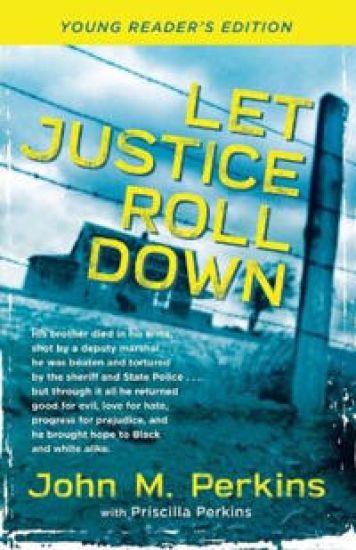
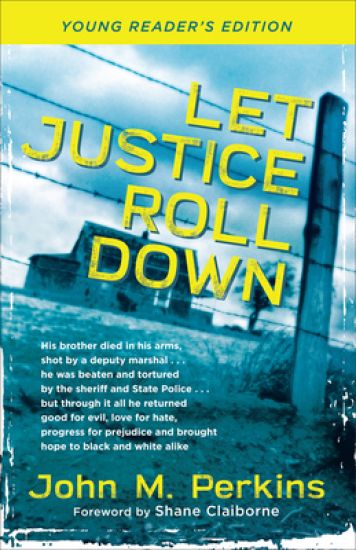
His brother died in his arms, shot by a deputy marshal. He was beaten and tortured by the sheriff and state police. But through it all, he returned good for evil, love for hate, and progress for prejudice, and he brought hope to black and white alike. The story of John Perkins is a gripping portrayal of what happens when faith thrusts a person into the midst of a struggle against racism, oppression, and injustice. It is about the costs of discipleship--the jailings, the floggings, the despair, the sacrifice. And it is about the transforming work of faith that allowed John to respond to such overwhelming indignities with miraculous compassion, vision, and hope.Perhaps more now than ever, young people need to read his story. This youth edition of the book Christianity Today named as one of the top fifty books that have shaped evangelicals will inspire a new generation to seek justice, love mercy, and walk humbly with God in the face of radical social change.
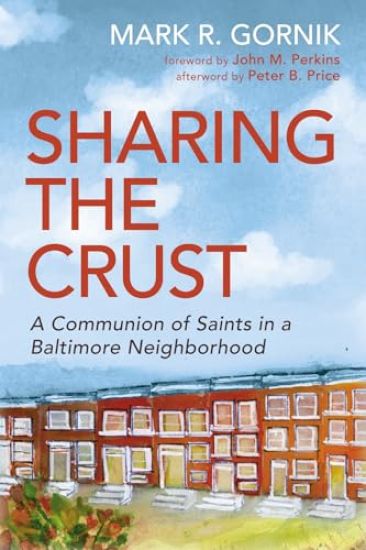
In Sharing the Crust, Mark Gornik tells the story of an unbreakable love through the life and witness of Allan Tibbels and a communion of saints in the Sandtown neighborhood of Baltimore. Sharing the Crust is about the power of small changes, "the little way," and the hard work of peacemaking in a divided world. It is about the meaning of companionship in this life and the life to come, of who we are to one another. A refreshingly complex story of ministry, church life, and community development, Sharing the Crust is a witness to faith, hope, and love for our times.
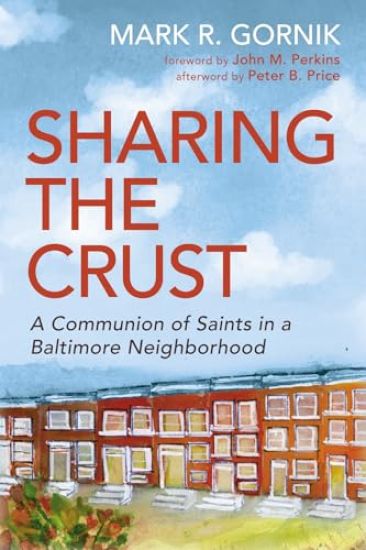
In Sharing the Crust, Mark Gornik tells the story of an unbreakable love through the life and witness of Allan Tibbels and a communion of saints in the Sandtown neighborhood of Baltimore. Sharing the Crust is about the power of small changes, "the little way,"; and the hard work of peacemaking in a divided world. It is about the meaning of companionship in this life and the life to come, of who we are to one another. A refreshingly complex story of ministry, church life, and community development, Sharing the Crust is a witness to faith, hope, and love for our times.
Voc acreditaria que a amizade a chave para mudar o mundo?Quando perguntam ao dr. John Perkins, uma das vozes crist s mais eloquentes da sociedade norte-americana, como fazer a diferen a no mundo, ele habitualmente responde: "Sejam amigos. Primeiramente de Deus, depois dos outros - todo tipo de 'outros' que voc possa imaginar. Porque a verdade mais simples, poderosa, estonteante e explosiva O mundo transformado uma amizade por vez".Ao conhecer a trajet ria de vida do dr. Perkins, suas afirma es sobre o poder da amizade adquirem import ncia n o apenas maior como tamb m surpreendente: pobreza, racismo, perdas e toda a sorte de infelicidades n o tiveram o poder de mascarar a verdade essencial de que Deus nos ama, est pr ximo e conectado conosco. Ele um amigo especial que nos ensina a fazer outros amigos.Em O poder da amizade, o autor compartilha suas experi ncias de vida, explora hist rias b blicas e apresenta perfis de v rias de suas pr prias amizades pessoais, inspirando leitores e leitoras a imaginarem a possibilidade de uma realidade diferente da atual, cuja fragmenta o, isolamento e desconfian a m tua nos afastam de Deus e do pr ximo. Quero falar sobre amizade no n vel da alma. Acho que esse o tipo de amizade que Deus planejou que tiv ssemos, com ele e uns com os outros. o nico tipo de amizade que curar as feridas da alma.
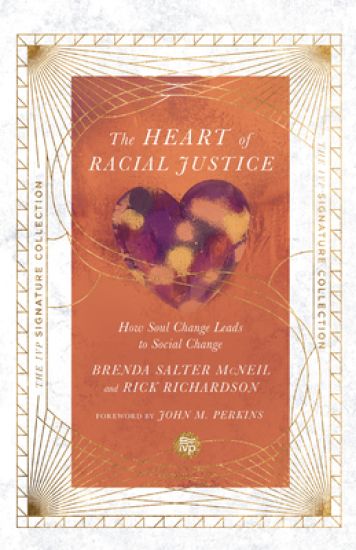
Racial and ethnic hostility is one of the most pervasive problems the church faces. It hinders our effectiveness as one body of believers. It damages our witness. Why won't this problem just go away? Because it is a spiritual battle. In response, we must employ spiritual weapons—prayer, repentance, forgiveness. In this book Brenda Salter McNeil and Rick Richardson provide a model of racial reconciliation, social justice, and spiritual healing that creates both individual and communal transformation. Read this book if you want to learn how to use your faith as a force for change, not as a smoke screen for self-protectionembrace your true self and renounce false racial identitiesreceive and extend forgiveness as an act of racial reconciliationexperience personal transformation through the healing of painful racial memoriesengage in social action by developing ongoing crosscultural partnerships This classic is now part of the IVP Signature Collection, which features special editions of iconic books in celebration of the seventy-fifth anniversary of InterVarsity Press. It includes a list of definitions and a discussion and activity guide for groups. A new companion Bible study is also available.
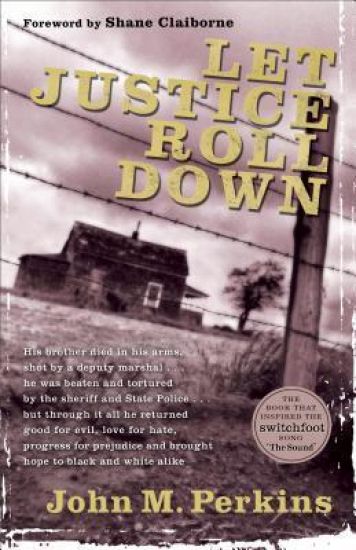
His brother died in his arms, shot by a deputy marshall. He was beaten and tortured by the sheriff and state police. But through it all he returned good for evil, love for hate, progress for prejudice and brought hope to black and white alike. The story of John Perkins is no ordinary story. Rather, it is a gripping portrayal of what happens when faith thrusts a person into the midst of a struggle against racism, oppression and injustice. It is about the costs of discipleship--the jailings, the floggings, the despair, the sacrifice. And it is about the transforming work of faith that allowed John to respond to such overwhelming indignities with miraculous compassion, vision and hope.
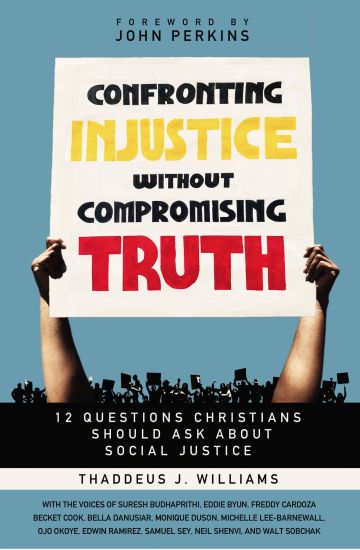
God does not suggest, he commands that we do justice.Social justice is not optional for the Christian. All injustice affects others, so talking about justice that isn't social is like talking about water that isn't wet or a square with no right angles. But the Bible's call to seek justice is not a call to superficial, kneejerk activism. We are not merely commanded to execute justice, but to "truly execute justice." The God who commands us to seek justice is the same God who commands us to "test everything" and "hold fast to what is good."Drawing from a diverse range of theologians, sociologists, artists, and activists, Confronting Injustice without Compromising Truth, by Thaddeus Williams, makes the case that we must be discerning if we are to "truly execute justice" as Scripture commands. Not everything called "social justice" today is compatible with a biblical vision of a better world. The Bible offers hopeful and distinctive answers to deep questions of worship, community, salvation, and knowledge that ought to mark a uniquely Christian pursuit of justice. Topics addressed include:RacismSexualitySocialismCulture WarAbortionTribalismCritical TheoryIdentity PoliticsConfronting Injustice without Compromising Truth also brings in unique voices to talk about their experiences with these various social justice issues, including:Michelle-Lee BarnwallSuresh BudhaprithiEddie ByunFreddie CardozaBecket CookBella DanusiarMonique DusonOjo OkeyeEdwin RamirezSamuel SeyNeil ShenviWalt SobchakIn Confronting Injustice without Compromising Truth, Thaddeus Williams transcends our religious and political tribalism and challenges readers to discover what the Bible and the example of Jesus have to teach us about justice. He presents a compelling vision of justice for all God's image-bearers that offers hopeful answers to life's biggest questions.
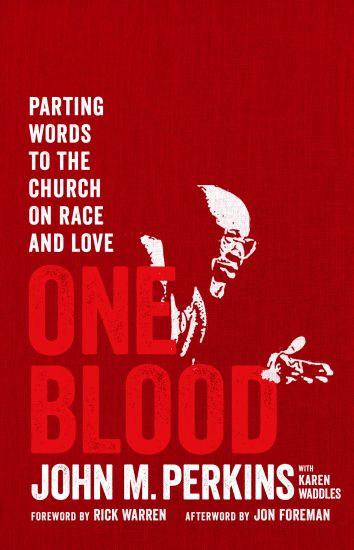
Dr. Perkins' final manifesto on race, faith, and reconciliation We are living in historic times. Not since the civil rights movement of the 60s has our country been this vigorously engaged in the reconciliation conversation. There is a great opportunity right now for culture to change, to be a more perfect union. However, it cannot be done without the church, because the faith of the people is more powerful than any law government can enact. The church is the heart and moral compass of a nation. To turn a country away from God, you must sideline the church. To turn a nation to God, the church must turn first. Racism won't end in America until the church is reconciled first. Then--and only then--can it spiritually and morally lead the way. Dr. John M. Perkins is a leading civil rights activist today. He grew up in a Mississippi sharecropping family, was an early pioneer of the civil rights movement, and has dedicated his life to the cause of racial equality. In this, his crowning work, Dr. Perkins speaks honestly to the church about reconciliation, discipleship, and justice... and what it really takes to live out biblical reconciliation. He offers a call to repentance to both the white church and the black church. He explains how band-aid approaches of the past won't do. And while applauding these starter efforts, he holds that true reconciliation won't happen until we get more intentional and relational. True friendships must happen, and on every level. This will take the whole church, not just the pastors and staff. The racial reconciliation of our churches and nation won't be done with big campaigns or through mass media. It will come one loving, sacrificial relationship at a time. The gospel and all that it encompasses has always traveled best relationally. We have much to learn from each other and each have unique poverties that can only be filled by one another. The way forward is to become "wounded healers" who bandage each other up as we discover what the family of God really looks like. Real relationships, sacrificial love between actual people, is the way forward. Nothing less will do.
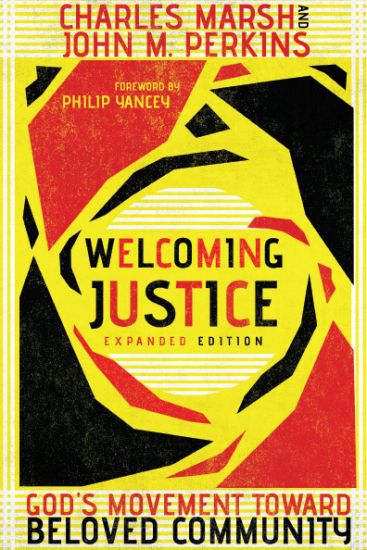
We have seen progress in recent decades toward Martin Luther King Jr.'s dream of beloved community. But this is not only because of the activism and sacrifice of a generation of civil rights leaders. It happened because God was on the move. Historian and theologian Charles Marsh partners with veteran activist John Perkins to chronicle God's vision for a more equitable and just world. Perkins reflects on his long ministry and identifies key themes and lessons he has learned, and Marsh highlights the legacy of Perkins's work in American society. Together they show how abandoned places are being restored, divisions are being reconciled, and what individuals and communities are doing now to welcome peace and justice. Now updated to reflect on current social realities, this book reveals ongoing lessons for the continuing struggle for a just society. Come, discover your part in the beloved community. There is unfinished work still to do.
Stephanie Sadaa; John M. Perkins; Sarah Williams; Mark Schloneger; Angela Franks; Clare Stober; Daniel Way; Michael Egnor; Reuben Zimmerman; Nicanor Austriaco; Augustine of Hippo; Teresa de Cartagena
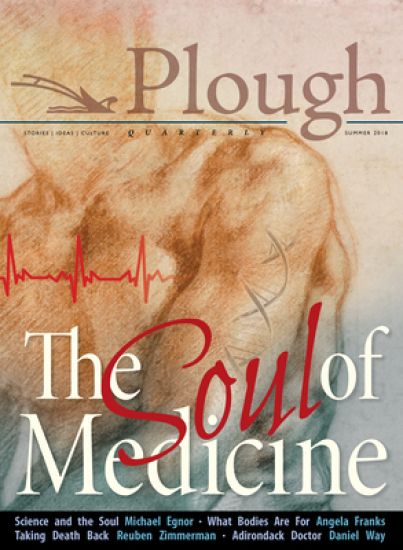
We need a vision of how medicine might serve the good of the whole human person: the body’s health, but also the health of that “piece of divinity in us.” Medicine, so long as you don’t need it, is a tangential part of life, just one more profession among others. Until that is, a loved one suffers an accident or falls sick. Then, suddenly, medicine is quite literally, a matter of life or death. Medicine is also big business. Doctors have been reclassified as “service providers,” and patients are “clients.” Such commercialism breeds false incentives and inequalities, even in nations. We need a vision of how medicine might serve the good of the whole human person: the body’s health, but also the health of that “piece of divinity in us.” We need love and reverence for humans as they are, not humans as technology may someday engineer them to be. Jesus, the healer from Nazareth, showed what it means to love the imperfect, the frail, the average. The glory of the medical profession is that it is dedicated to these works of mercy. In today’s money-driven healthcare industry, such tasks are often poorly rewarded. Yet they’re at the heart of medicine’s original mission. Also in this issue: original poetry by Suzanne Harlan Heyd; reviews of new books by Barbara Ehrenreich, Ryan T. Anderson, Beth Macy, and David R. Montgomery and Anne Biklé; and art by Tim Lowly, Michelangelo, Julian Peters, Wanjin Gim, Scott Goldsmith, Jan Mostaert, Suleiman Mansour, Cécile Massie, Peter Doig, Erin Hanson, and Jason Landsel. Plough Quarterly features stories, ideas, and culture for people eager to put their faith into action. Each issue brings you in-depth articles, interviews, poetry, book reviews, and art to help you put Jesus’ message into practice and find common cause with others.
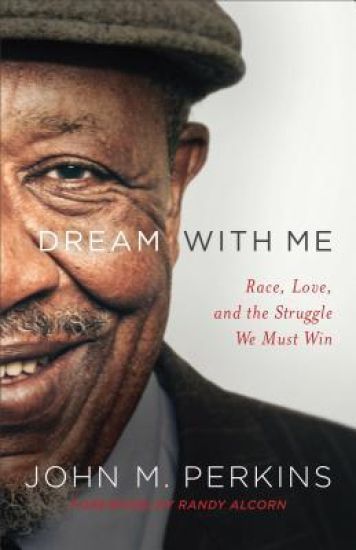
According to recent surveys and studies, race relations in the United States are the worst they've been since the 1990s, and many would argue that life for most minorities has not significantly improved since the civil rights era of the 1960s. For so many, the dream of true equality has dissolved into a reality of prejudice, fear, and violence as a way of life.John M. Perkins has been there from the beginning. Raised by his sharecropping grandparents, Perkins fled Mississippi in 1947 after his brother was fatally shot by a police officer. He led voter registration efforts in 1964, worked for school desegregation in 1967, and was imprisoned and tortured in 1970. Through it all, he has remained determined to seek justice and reconciliation based in Christ's redemptive work. "Justice is something that every generation has to strive for," he says. And despite the setbacks of recent years, Perkins finds hope in the young people he has met all across the nation who are hard at work, bringing about reconciliation in God's name and offering acceptance to all. Dream with Me is his look back at a life devoted to seeking justice for all God's people, as well as a look forward to what he sees as a potentially historic breakthrough for people of every race.
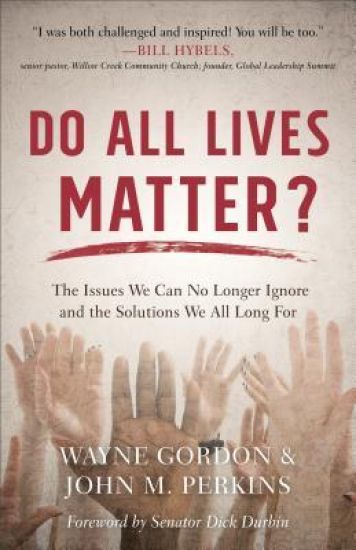
Something is wrong in our society. Deeply wrong. The belief that all lives matter is at the heart of our founding documents--but we must admit that this conviction has never truly reflected reality in America. Movements such as Black Lives Matter have arisen in response to recent displays of violence and mistreatment, and some of us defensively answer back, "All lives matter." But do they? Really?This book is an exploration of that question. It delves into history and current events, into Christian teaching and personal stories, in order to start a conversation about the way forward. Its raw but hopeful words will help move us from apathy to empathy and from empathy to action.We cannot do everything. But we can each do something.
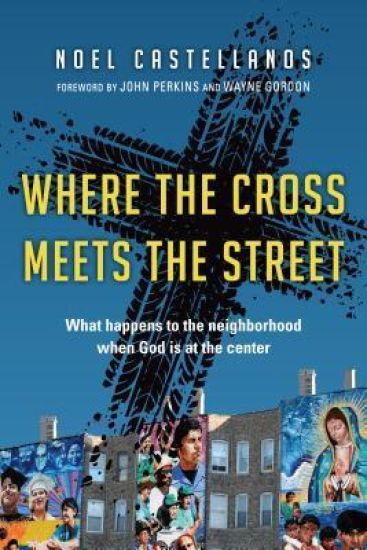
Missio Alliance Essential Reading List The cross means more than we've let it mean. Proclaiming the gospel and forming the faithful: these are the most practiced disciplines of the evangelical church. As central as these disciplines are, however, they are only part of the story. And as Christian Community Development Association CEO Noel Castellanos has learned over a lifetime of ministry and mission, the neglect of the gospel's full implications for the world has contributed to the erosion of communities and the languishing of poor and other marginalized people. In Where the Cross Meets the Street Castellanos shows the strengths and limitations of a narrowly focused church and broadens our imaginations to embrace a gospel that proclaims Christ and forms disciples. This life-giving gospel also demonstrates compassion, confronts injustice and restores individuals and communities to wholeness. This is the whole work of the cross; this is the privilege of those who follow the Word made flesh.
Already with decades of experience speaking prophetically into the charged racial climate of the American south, John Perkins began to see a need for organized thinking and collaborative imagination about how the church engages urban ministry. And so the Christian Community Development Association (CCDA) was born, with Wayne Gordon an immediate and enthusiastic participant. Nearly thirty years later CCDA?s eight key components of community development still set the bar for how churches, parachurches and nonprofits engage cities with the whole gospel. RelocationReconciliationRedistributionLeadership DevelopmentListening to the CommunityChurch-Based DevelopmentA Wholistic Approach to MinistryEmpowerment In Making Neighborhoods Whole Perkins and Gordon revisit these eight commitments and how they've played out in real communities, even as they scan the horizon of urban ministry to set a new tone. With profiles of longstanding and emerging community development ministries, they guide a new conversation and empower disciples of Jesus to seek the welfare of their cities to the glory of God.
His brother died in his arms, shot by a deputy marshal. He was beaten and tortured by the sheriff and state police. But through it all he returned good for evil, love for hate, progress for prejudice, and brought hope to black and white alike. The story of John Perkins is no ordinary story. Rather, it is a gripping portrayal of what happens when faith thrusts a person into the midst of a struggle against racism, oppression, and injustice. It is about the costs of discipleship--the jailings, the floggings, the despair, the sacrifice. And it is about the transforming work of faith that allowed John to respond to such overwhelming indignities with miraculous compassion, vision, and hope.