Kirjailija
John M Synge
Kirjat ja teokset yhdessä paikassa: 29 kirjaa, julkaisuja vuosilta 1986-2025, suosituimpien joukossa Aran Islands. Vertaile teosten hintoja ja tarkista saatavuus suomalaisista kirjakaupoista.
Mukana myös kirjoitusasut: John M. Synge
29 kirjaa
Kirjojen julkaisuhaarukka 1986-2025.
Famous poet and novelist John M. Synge recounts his travels to the Aran Islands in 1906 - a group of small yet culturally significant isles off the west coast of Ireland. Notable for their history, which stretches back thousands of years, it was with this in mind that Synge conducted his travels of the islands. He attempts to catalog the unique culture of the isolated islands, noting how the peoples adapted to the rugged and adverse climate. Although Synge - a cultured, literate Irishman - thought the people simple, he had the greatest respect for their adept use of boats. Already the winds of change beckon the younger members of the Aran community; Michael, realizing that there is no future on the bleak and grey isles, departs to seek his fortune elsewhere. Synge couples these accounts with observations of the primitive culture; there were no wheeled vehicles on the Aran Isles at the time, and many of the residents only spoke traditional Irish, rather than the dominant English.
Famous poet and novelist John M. Synge recounts his travels to the Aran Islands in 1906 - a group of small yet culturally significant isles off the west coast of Ireland. Notable for their history, which stretches back thousands of years, it was with this in mind that Synge conducted his travels of the islands. He attempts to catalog the unique culture of the isolated islands, noting how the peoples adapted to the rugged and adverse climate. Although Synge - a cultured, literate Irishman - thought the people simple, he had the greatest respect for their adept use of boats. Already the winds of change beckon the younger members of the Aran community; Michael, realizing that there is no future on the bleak and grey isles, departs to seek his fortune elsewhere. Synge couples these accounts with observations of the primitive culture; there were no wheeled vehicles on the Aran Isles at the time, and many of the residents only spoke traditional Irish, rather than the dominant English.
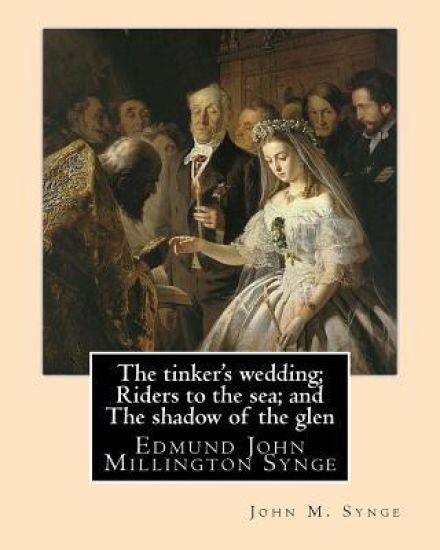
The tinker's wedding; Riders to the sea; and The shadow of the glen. By: John M. Synge: The Tinker's Wedding is a two-act play by the Irish playwright
John M. Synge
Createspace Independent Publishing Platform
2017
nidottu

Deirdre of the sorrows, a play (1910). By: John M. Synge: Edmund John Millington Synge (16 April 1871 - 24 March 1909) was an Irish playwright, poet,
John M. Synge
Createspace Independent Publishing Platform
2017
nidottu
Deirdre of the Sorrows is a three-act play written by Irish playwright John Millington Synge, first performed at the Abbey Theatre by the Irish National Theatre Society in 1910. The play is based on Irish mythology, in particular the myths concerning Deirdre and Conchobar. The work was unfinished at the author's death in 1909, but was completed by William Butler Yeats and Synge's fianc e, Molly Allgood. Plot synopsis edit] Act I: Lavarcham's house on Slieve Fuadh. Conchubor, the aging High King of Ulster, has charged Lavarcham to raise the child Deirdre to be his queen when she comes of age. Lavarcham finds that the now-beautiful Deirdre is a willful young woman, without interest in marrying an old man. Conchubor comes to Slieve Fuadh to bring Deirdre to his palace, Emain Macha, ignoring her pleas to remain in the countryside for another year. After he leaves, Naoise, son of Usna, and his brothers come to the cottage seeking Deirdre, and she tells them of her summons. Deirdre is aware of a prophecy that she will be the doom of the sons of Usna; nonetheless she asks Naoise to take her away from Ulster. He agrees, and Ainnle weds them in an impromptu ceremony. Act II: Alban. Deirdre and the sons of Usna have lived happily on a remote island for seven years. Fergus arrives bearing an offer of peace from Conchubor, and asks Deirdre and Naoise to return with him to Emain Macha. Lavarcham warns Deirdre not to accept, and Owen, a spy in the service of Conchubor, intimidates Deirdre with suggestions that death awaits Naoise in Ulster. Naoise tells Fergus that he plans to live the rest of his life with Deirdre in Alban, but Deirdre convinces him to accept Conchubor's offer, reasoning that it is better to die young, at the peak of their love, than to grow old and live in the shadow of their past happiness. Act III: A tent near Emain. Lavarcham arrives at Conchubor's tent and tries to convince him to give up his pursuit of Deirdre, claiming that she has grown old and lost her beauty. His soldiers arrive and contradict her claims, and he leaves just before Deirdre and Naoise enter. They discuss the possibility of their impending deaths until Conchubor returns. Deirdre nearly convinces him to put aside past grievances and let them live in peace when the sound of a battle between Conchubor's men and Naoise's brothers reaches them. Conchubor and Naoise go to join the fray and Naoise is killed. Fergus and his men arrive, enraged by the king's treachery, and set Emain Macha ablaze. Lavarcham tries to convince Deirdre to flee Ulster, and Conchubor tries to take her to a different castle, but she stays and mourns her dead lover and his brothers. In the end, Deirdre takes Naoise's dagger, stabs herself, and falls into his open grave, leaving Conchubor with nothing.... Edmund John Millington Synge (16 April 1871 - 24 March 1909) was an Irish playwright, poet, prose writer, travel writer and collector of folklore. He was a key figure in the Irish Literary Revival and was one of the co-founders of the Abbey Theatre. He is best known for his play The Playboy of the Western World, which caused riots in Dublin during its opening run at the Abbey Theatre. Although he came from a privileged Anglo-Irish background, Synge's writings are mainly concerned with the world of the Roman Catholic peasants of rural Ireland and with what he saw as the essential paganism of their world view. Synge developed Hodgkin's disease, a metastatic cancer that was then untreatable. He died several weeks short of his 38th birthday as he was trying to complete his last play, Deirdre of the Sorrows.


Collection of articles and narratives about travelling in counties Wicklow and Kerry. Originally published in 1912
Collection of articles and narratives about travelling in counties Wicklow and Kerry. Originally published in 1912
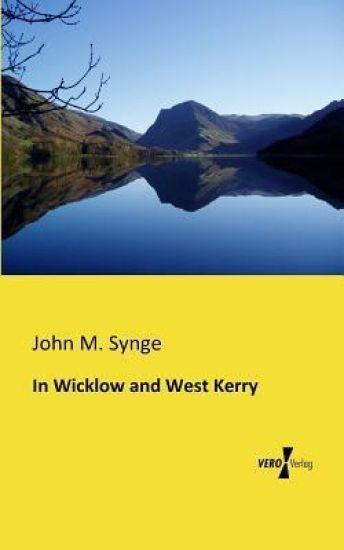
Riders to the Sea and The Aran Islands (Selected Passages): Notes and Introduction by Robert Walsh
John M. Synge
Independently Published
2019
nidottu
What differentiates this edition from others is-Three chapters presenting the two works of John M. Synge placed in the biographical and literary context of the author.-A chapter providing a detailed reading and analysis of the play Riders to the Sea.-A further chapter analysing the relation between the play and the prose work and how they interact.-The selection of passages from the Aran Islands aims at highlighting the relation between the play and the prose work.-Copious footnotes and a glossary of Anglo-Irish terms used in both works.-An ample bibliographyConsidered by many to be the masterpiece of the Irish playwright John M. Synge Riders to the Sea, a one act play, is a dense tragedy where the supernatural and spiritual dimensions interact and sometimes enter into conflict with stark realism. The primary inspiration for this play was Synge's stay on the windswept Aran Islands and the prose work, The Aran Islands, was the literary outcome of this experience. This edition of Riders to the Sea is published together with selected passages from The Aran Islands and has the aim of highlighting the relation between Synge's experience and the spirit of play. The one act tragedy Riders to the Sea and the prose work The Aran Islands are inseparable. The play cannot be fully understood without reference to prose work. They both breathe the same spirit, they complement each other; one was inspired by the other, one is a dramatization of the other. His experience on these islands allowed Synge to develop the necessary balance between inner experience and objective reality necessary for any work of art.The distinguishing characteristics of this edition are the three introductory chapters, ample notes and glossary. The first chapter places both works in their biographical and literary context. The second is a reading of the play drawing attention to the interplay of the natural and supernatural dimensions emerging from the creative use of symbolism overshadowed by a foreboding of death. The third highlights the relevance of the prose work to the play from both the spiritual and realistic dimensions of life.

The Tinkers Wedding; Riders to the Sea and the Shadow of the Glen
J. M. Synge; John M. Synge
Literary Licensing, LLC
2014
nidottu