

Kirjailija
John Macbeath
Kirjat ja teokset yhdessä paikassa: 25 kirjaa, julkaisuja vuosilta 1999-2026, suosituimpien joukossa Roadmakers and Roadmenders. Vertaile teosten hintoja ja tarkista saatavuus suomalaisista kirjakaupoista.
25 kirjaa
Kirjojen julkaisuhaarukka 1999-2026.
What has changed and what will change in the next decade? Reforming or Re-inventing Schools? revisits some of the key issues in school and system reform, with a reflection on developments in the English education system and internationally. It offers an insightful review and critique of education principles and their relationship to school practice, exploring some of the myths as well as examining the potential value of comparative data.Drawing on new evidence and interviews with a group of policy makers and academics on the British and international stages, this book asks: What do parents, children and ‘society’ want from a system of education?What motivates teachers to join the profession and why do such large numbers leave so soon?What are the roots of misunderstanding and mismanagement in provision, support and accountability?How do teachers communicate, support and exchange ideas with each other?How do we measure positive change?Examining the roots and conditions for growth, and comparing and contrasting the situation in the United Kingdom with innovative development taking place elsewhere in the rest of the world, Reforming or Re-inventing Schools? is an essential read for anyone interested in school and country performance at a national and international level.
What has changed and what will change in the next decade? Reforming or Re-inventing Schools? revisits some of the key issues in school and system reform, with a reflection on developments in the English education system and internationally. It offers an insightful review and critique of education principles and their relationship to school practice, exploring some of the myths as well as examining the potential value of comparative data.Drawing on new evidence and interviews with a group of policy makers and academics on the British and international stages, this book asks: What do parents, children and ‘society’ want from a system of education?What motivates teachers to join the profession and why do such large numbers leave so soon?What are the roots of misunderstanding and mismanagement in provision, support and accountability?How do teachers communicate, support and exchange ideas with each other?How do we measure positive change?Examining the roots and conditions for growth, and comparing and contrasting the situation in the United Kingdom with innovative development taking place elsewhere in the rest of the world, Reforming or Re-inventing Schools? is an essential read for anyone interested in school and country performance at a national and international level.
Strengthening the Connections between Leadership and Learning
John MacBeath; Neil Dempster; David Frost; Greer Johnson; Sue Swaffield
CRC Press Inc
2018
sidottu
Examining a decade of research and practice, this book makes the case for a radical reappraisal of leadership, learning, and their interrelationship in educational policy. Discussing whether policy direction is progressively constraining the professionalism and initiative of teachers and school leaders, it challenges conventional understanding and argues the case for thinking differently about the way to lead learning.Based on the Leadership for Learning (LfL) Project, the book clarifies, extends, and refines LfL principles and practices, and their contribution to ameliorating some of the difficult conditions encountered in the contemporary educational policy environment. It starts by discussing the direction and influence of current education policy and its subsequent consequences; chapters then move on to explore the framing values informing the LfL Projects, particularly focusing on what they imply for commitments to social justice, children’s rights and breadth in student learning, and considering how to create favourable conditions for learning.Identifying a disconnect between seminal principles and the nature of day-to-day practice, Strengthening the Connections between Leadership and Learning challenges school policy and practice at national and local levels. It is an essential read for postgraduate students, especially those studying leadership in education, as well as for teachers and policymakers in schools.
Strengthening the Connections between Leadership and Learning
John MacBeath; Neil Dempster; David Frost; Greer Johnson; Sue Swaffield
CRC Press Inc
2018
nidottu
Examining a decade of research and practice, this book makes the case for a radical reappraisal of leadership, learning, and their interrelationship in educational policy. Discussing whether policy direction is progressively constraining the professionalism and initiative of teachers and school leaders, it challenges conventional understanding and argues the case for thinking differently about the way to lead learning.Based on the Leadership for Learning (LfL) Project, the book clarifies, extends, and refines LfL principles and practices, and their contribution to ameliorating some of the difficult conditions encountered in the contemporary educational policy environment. It starts by discussing the direction and influence of current education policy and its subsequent consequences; chapters then move on to explore the framing values informing the LfL Projects, particularly focusing on what they imply for commitments to social justice, children’s rights and breadth in student learning, and considering how to create favourable conditions for learning.Identifying a disconnect between seminal principles and the nature of day-to-day practice, Strengthening the Connections between Leadership and Learning challenges school policy and practice at national and local levels. It is an essential read for postgraduate students, especially those studying leadership in education, as well as for teachers and policymakers in schools.
This best-selling book illustrates how schools can tell their own story. It draws on ground-breaking work with the National Union of Teachers to demonstrate a practical approach to identifying what makes a good school and the part that pupils, parents and teachers can play in school improvement. Its usefulness for and use by, classroom teachers to evaluate their practice will prove to be its greatest strength in an ever expanding effectiveness literature.
The French have a saying ‘plus ca change plus c’est la meme chose’. The English colloquial equivalent ‘same old same old’ conveys a sense of the inevitable, a reminder that if we haven’t learned the lessons of history we are doomed to repeat them. In over half a century, what have we learned about education, about schools as places for education, about learning and teaching and the relationship between them? What have we learned about policy making and the policy process? Has the growing impact of globalisation informed or constrained radical change? Written in an easily accessible style, and drawing on the author’s personal experiences of working in education as teacher, researcher, government adviser and consultant with international agencies, each chapter of the book illuminates deeper lying issues about the nature of schooling, learning, leadership, research, and the impact of globalisation on the lives of schools, teachers, children and families. This first-hand account, spanning fifty years, addresses key questions through seven different lenses: - policy making: ideology, insiders, outsiders and dissenting voices - research and the myths of scientific rigour- international agencies and agents provocateurs - academics conferring and the power of place - New enlightenment and a university for children- being and becoming a teacher, and the end of idealism - going to school: plus ca change? Each of the seven lenses offers a unique perspective of the education system, but all are drawn together to consider the greater implications for policy and practice in the UK and beyond. The book will be of value to teachers and school leaders, as well as to academics and students on education programmes.
The French have a saying ‘plus ca change plus c’est la meme chose’. The English colloquial equivalent ‘same old same old’ conveys a sense of the inevitable, a reminder that if we haven’t learned the lessons of history we are doomed to repeat them. In over half a century, what have we learned about education, about schools as places for education, about learning and teaching and the relationship between them? What have we learned about policy making and the policy process? Has the growing impact of globalisation informed or constrained radical change? Written in an easily accessible style, and drawing on the author’s personal experiences of working in education as teacher, researcher, government adviser and consultant with international agencies, each chapter of the book illuminates deeper lying issues about the nature of schooling, learning, leadership, research, and the impact of globalisation on the lives of schools, teachers, children and families. This first-hand account, spanning fifty years, addresses key questions through seven different lenses: - policy making: ideology, insiders, outsiders and dissenting voices - research and the myths of scientific rigour- international agencies and agents provocateurs - academics conferring and the power of place - New enlightenment and a university for children- being and becoming a teacher, and the end of idealism - going to school: plus ca change? Each of the seven lenses offers a unique perspective of the education system, but all are drawn together to consider the greater implications for policy and practice in the UK and beyond. The book will be of value to teachers and school leaders, as well as to academics and students on education programmes.
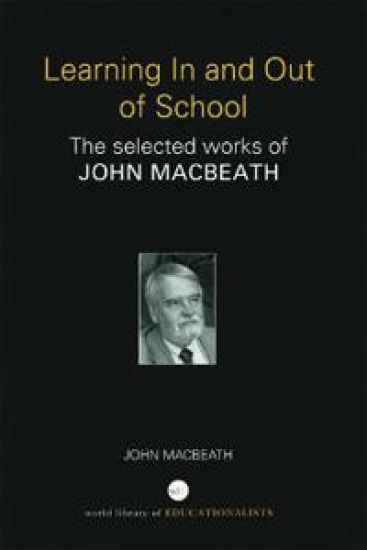
In the World Library of Educationalists series, international experts themselves compile career-long collections of what they judge to be their finest pieces - extracts from books, key articles, salient research findings, major theoretical and practical contributions - so the world can read them in a single manageable volume.John MacBeath has spent the last 30 years researching, thinking and writing about some of the key enduring issues in education. He has been involved in advising on policy both nationally and internationally, and has contributed books and articles across topics as diverse as the curriculum, the nature of schooling, homework, self evaluation, and leadership. In this book, John MacBeath brings together eight of his most influential writings including chapters from his best-selling books, articles from leading journals, and excerpts from his contributions to the press. Also included are examples of press responses to research reports and to controversial issues. Starting with a specially written Introduction, which gives an overview of John's career and contextualises his selection, the chapters cover topics such as: Developing Skills for life after school The Talent Enigma Schools on the Edge: responding to challenging circumstances Leadership as a Subversive Activity Do Schools have a Future?Through this book, readers can follow the themes and strands that John MacBeath has researched and written about over the last three decades and see his important contribution to the field of education.
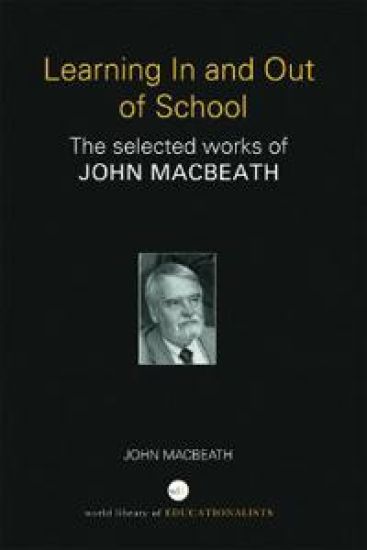
In the World Library of Educationalists series, international experts themselves compile career-long collections of what they judge to be their finest pieces - extracts from books, key articles, salient research findings, major theoretical and practical contributions - so the world can read them in a single manageable volume.John MacBeath has spent the last 30 years researching, thinking and writing about some of the key enduring issues in education. He has been involved in advising on policy both nationally and internationally, and has contributed books and articles across topics as diverse as the curriculum, the nature of schooling, homework, self evaluation, and leadership. In this book, John MacBeath brings together eight of his most influential writings including chapters from his best-selling books, articles from leading journals, and excerpts from his contributions to the press. Also included are examples of press responses to research reports and to controversial issues. Starting with a specially written Introduction, which gives an overview of John's career and contextualises his selection, the chapters cover topics such as: Developing Skills for life after school The Talent Enigma Schools on the Edge: responding to challenging circumstances Leadership as a Subversive Activity Do Schools have a Future?Through this book, readers can follow the themes and strands that John MacBeath has researched and written about over the last three decades and see his important contribution to the field of education.
Reinventing Schools, Reforming Teaching
John Bangs; John Macbeath; Maurice Galton
Routledge
2010
sidottu
What lessons can we learn from the relationship between policy-makers and schools over the life of the ‘New’ Labour and its predecessor Conservative government? What happened to ‘Education, Education, Education’ as it travelled from political vision to classroom practice? What are the lasting legacies of 13 years of a reforming Labour government? And what are the key messages for a coalition government?These are the questions addressed to the architects of educational reform, their critics and the prophets of better things to come. The 37 interviewees include ministers past and present, journalists, union officials, members of lobby groups and think tanks. Reinventing Schools, Reforming Teaching considers the impact of educational policies on those who have to translate political priorities into the day to day work of schools and classrooms. The authors argue that an evidence-informed view of policy-making has yet to be realised, graphically illustrating how many recent political decisions in education can be explained by the personal experiences, predilections and short-term needs of key decision-makers.The interviews, which explore the dynamics behind the creation of education policies, cover a wide range of themes and issues, including: policy-makers' attitudes to schools, the staff who work in them and the communities they serve the drivers of politicians' reform agendas and the constraints on radical reform the shaping and reshaping of curriculum and assessment the search for a more effective marriage between inspection and school self evaluation the relationship of academic research to policy making how a vision for teaching and teachers might be constructed for the 21st centuryContributions from leading figures including; David Puttnam, Kenneth Baker, Estelle Morris, Gillian Shepherd, Jim Knight, Pauline Perry, Michael Barber, Peter Mortimore, Judy Sebba, Paul Black, Mary James, Kevan Collins, David Hargreaves, Mike Tomlinson, David Berliner, Andreas Schleicher, Tim Brighouse, Conor Ryan, Keith Bartley, Michael Gove and Philippa Cordingley are woven in with the insights of teachers and headteachers such as Alasdair MacDonald and William Atkinson.The book's findings and proposals will be of interest not only to professional educators and those with an interest in the current and future state of education but to those interested in the process of policy-making itself.
Reinventing Schools, Reforming Teaching
John Bangs; John Macbeath; Maurice Galton
Routledge
2010
nidottu
What lessons can we learn from the relationship between policy-makers and schools over the life of the ‘New’ Labour and its predecessor Conservative government? What happened to ‘Education, Education, Education’ as it travelled from political vision to classroom practice? What are the lasting legacies of 13 years of a reforming Labour government? And what are the key messages for a coalition government?These are the questions addressed to the architects of educational reform, their critics and the prophets of better things to come. The 37 interviewees include ministers past and present, journalists, union officials, members of lobby groups and think tanks. Reinventing Schools, Reforming Teaching considers the impact of educational policies on those who have to translate political priorities into the day to day work of schools and classrooms. The authors argue that an evidence-informed view of policy-making has yet to be realised, graphically illustrating how many recent political decisions in education can be explained by the personal experiences, predilections and short-term needs of key decision-makers.The interviews, which explore the dynamics behind the creation of education policies, cover a wide range of themes and issues, including: policy-makers' attitudes to schools, the staff who work in them and the communities they serve the drivers of politicians' reform agendas and the constraints on radical reform the shaping and reshaping of curriculum and assessment the search for a more effective marriage between inspection and school self evaluation the relationship of academic research to policy making how a vision for teaching and teachers might be constructed for the 21st centuryContributions from leading figures including; David Puttnam, Kenneth Baker, Estelle Morris, Gillian Shepherd, Jim Knight, Pauline Perry, Michael Barber, Peter Mortimore, Judy Sebba, Paul Black, Mary James, Kevan Collins, David Hargreaves, Mike Tomlinson, David Berliner, Andreas Schleicher, Tim Brighouse, Conor Ryan, Keith Bartley, Michael Gove and Philippa Cordingley are woven in with the insights of teachers and headteachers such as Alasdair MacDonald and William Atkinson.The book's findings and proposals will be of interest not only to professional educators and those with an interest in the current and future state of education but to those interested in the process of policy-making itself.

Serena, oder: Wie Menschen ihre Schule verändern
Michael Schratz; Lars Bo Jakobsen; John Macbeath
StudienVerlag
2010
nidottu

Children, their World, their Education
Robin Alexander; Michael Armstrong; Julia Flutter; Linda Hargreaves; David Harrison; Wynne Harlen; Elizabeth Hartley-Brewer; Ruth Kershner; John MacBeath; Berry Mayall; Stephanie Northen; Gillian Pugh; Colin Richards; David Utting
Routledge
2009
sidottu
Children, their World, their Education is the definitive text for students, teachers, researchers, educational leaders and all who are interested in primary education. As the culmination of the Cambridge Primary Review, the most comprehensive enquiry into English primary education for half a century, its publication provoked instant and dramatic headlines. Widespread support from teachers and eminent public figures demonstrated that the book had identified the issues that really mattered. Ministerial unease showed that here were findings that politicians could not ignore.But Children, their World, their Education is much more than a report. It is an unrivalled educational compendium that systematically covers the issues that are central to the daily work of students, teachers and heads. For trainee teachers on undergraduate and postgraduate courses it effectively maps the territory of primary education and provides the context, information and insight which are essential to the development of classroom skill. Its vast range of carefully evaluated evidence makes it a core resource for those undertaking research and advanced study. Its direct engagement with the policy process during a period of unprecedented change makes it an indispensable tool for policy analysis. It places England’s education system in the global context, and combines evidence on recent developments with a vision of how primary education should be.Part 1 sets the scene and tracks primary education policy since the 1960s.Part 2 examines children’s development and learning, their needs and aspirations, and their lives in a diverse society and fragile world.Part 3 explores what goes on in schools, from the vital early years to educational aims and values, the curriculum, pedagogy and classroom practice, assessment, standards and school organisation.Part 4 deals with the system as a whole: educational ages and stages, the work and training of primary teachers, school leadership, local authorities, funding, governance and policy.Part 5 pulls everything together with 78 conclusions and 75 recommendations for policy and practice.Companion volume: The Cambridge Primary Review Research Surveys, edited by Robin Alexander with Christine Doddington, John Gray, Linda Hargreaves and Ruth Kershner. The Cambridge Primary Review is supported by Esmée Fairbairn Foundation: www.primaryreview.org.uk.

Children, their World, their Education
Robin Alexander; Michael Armstrong; Julia Flutter; Linda Hargreaves; David Harrison; Wynne Harlen; Elizabeth Hartley-Brewer; Ruth Kershner; John MacBeath; Berry Mayall; Stephanie Northen; Gillian Pugh; Colin Richards; David Utting
Routledge
2009
nidottu
Children, their World, their Education is the definitive text for students, teachers, researchers, educational leaders and all who are interested in primary education. As the culmination of the Cambridge Primary Review, the most comprehensive enquiry into English primary education for half a century, its publication provoked instant and dramatic headlines. Widespread support from teachers and eminent public figures demonstrated that the book had identified the issues that really mattered. Ministerial unease showed that here were findings that politicians could not ignore.But Children, their World, their Education is much more than a report. It is an unrivalled educational compendium that systematically covers the issues that are central to the daily work of students, teachers and heads. For trainee teachers on undergraduate and postgraduate courses it effectively maps the territory of primary education and provides the context, information and insight which are essential to the development of classroom skill. Its vast range of carefully evaluated evidence makes it a core resource for those undertaking research and advanced study. Its direct engagement with the policy process during a period of unprecedented change makes it an indispensable tool for policy analysis. It places England’s education system in the global context, and combines evidence on recent developments with a vision of how primary education should be.Part 1 sets the scene and tracks primary education policy since the 1960s.Part 2 examines children’s development and learning, their needs and aspirations, and their lives in a diverse society and fragile world.Part 3 explores what goes on in schools, from the vital early years to educational aims and values, the curriculum, pedagogy and classroom practice, assessment, standards and school organisation.Part 4 deals with the system as a whole: educational ages and stages, the work and training of primary teachers, school leadership, local authorities, funding, governance and policy.Part 5 pulls everything together with 78 conclusions and 75 recommendations for policy and practice.Companion volume: The Cambridge Primary Review Research Surveys, edited by Robin Alexander with Christine Doddington, John Gray, Linda Hargreaves and Ruth Kershner. The Cambridge Primary Review is supported by Esmée Fairbairn Foundation: www.primaryreview.org.uk.
`This is a well written and thoroughly researched book on an issue of vital importance. It places the experiences of individual teachers under pressure into the larger UK and worldwide context. Policy makers need to wake up to its messages' - Sara Bubb, Institute of Education, University of London What is it really like to be a teacher in today's demanding classrooms? Maurice Galton and John MacBeath spoke to teachers, parents and students in England, and compared their responses to similar inquiries in Asia, America, Australia and New Zealand. Their findings were disturbing. Teacher stress and workload were persistent themes in the four studies, with teachers frequently stretched to breaking point as they endeavour to 'make a difference' to their pupils' learning and welfare. Issues examined in the book include: - frustrations facing those trying to make inclusive education work in practice - effects of constantly changing policies on the staff required to implement them - loss of status within the teaching profession - reasons for teachers choosing to leave the profession - the consequences of staying on and fighting for what one believes in This fascinating read will be of interest to anyone involved in teaching, school leadership and educational policy.
`This is a well written and thoroughly researched book on an issue of vital importance. It places the experiences of individual teachers under pressure into the larger UK and worldwide context. Policy makers need to wake up to its messages' - Sara Bubb, Institute of Education, University of London What is it really like to be a teacher in today's demanding classrooms? Maurice Galton and John MacBeath spoke to teachers, parents and students in England, and compared their responses to similar inquiries in Asia, America, Australia and New Zealand. Their findings were disturbing. Teacher stress and workload were persistent themes in the four studies, with teachers frequently stretched to breaking point as they endeavour to 'make a difference' to their pupils' learning and welfare. Issues examined in the book include: - frustrations facing those trying to make inclusive education work in practice - effects of constantly changing policies on the staff required to implement them - loss of status within the teaching profession - reasons for teachers choosing to leave the profession - the consequences of staying on and fighting for what one believes in This fascinating read will be of interest to anyone involved in teaching, school leadership and educational policy.

Improving Learning How to Learn
Mary James; Robert McCormick; Paul Black; Patrick Carmichael; Mary-Jane Drummond; Alison Fox; John MacBeath; Bethan Marshall; David Pedder; Richard Procter; Sue Swaffield; Joanna Swann; Dylan Wiliam
Routledge
2007
sidottu
Learning how to learn is an essential preparation for lifelong learning. Whilst this is widely acknowledged by teachers, they have lacked a rich professional knowledge base from which they can teach their pupils how to learn. This book makes a major contribution to the creation of such a professional knowledge base for teachers by building on previous work associated with ‘formative assessment’ or ‘assessment for learning’ which has a strong evidence base, and is now being promoted nationally and internationally. However, it adds an important new dimension by reporting the conditions within schools, and across networks of schools, that are conducive to the promotion, in classrooms, of learning how to learn as an extension of assessment for learning. There is a companion book, Learning How to Learn in Classrooms: Tools for schools (also available from Routledge), which provides practical resources for those teachers looking to put into practice the principles covered in this book.
Improving Learning How to Learn
Mary James; Robert McCormick; Paul Black; Patrick Carmichael; Mary-Jane Drummond; Alison Fox; John MacBeath; Bethan Marshall; David Pedder; Richard Procter; Sue Swaffield; Joanna Swann; Dylan Wiliam
Routledge
2007
nidottu
Learning how to learn is an essential preparation for lifelong learning. Whilst this is widely acknowledged by teachers, they have lacked a rich professional knowledge base from which they can teach their pupils how to learn. This book makes a major contribution to the creation of such a professional knowledge base for teachers by building on previous work associated with ‘formative assessment’ or ‘assessment for learning’ which has a strong evidence base, and is now being promoted nationally and internationally. However, it adds an important new dimension by reporting the conditions within schools, and across networks of schools, that are conducive to the promotion, in classrooms, of learning how to learn as an extension of assessment for learning. There is a companion book, Learning How to Learn in Classrooms: Tools for schools (also available from Routledge), which provides practical resources for those teachers looking to put into practice the principles covered in this book.