Kirjojen hintavertailu. Mukana 12 595 353 kirjaa ja 12 kauppaa.

Kirjailija

John Marenbon

Kirjat ja teokset yhdessä paikassa: 20 kirjaa, julkaisuja vuosilta 1987-2026, suosituimpien joukossa Boethius. Vertaile teosten hintoja ja tarkista saatavuus suomalaisista kirjakaupoista.

20 kirjaa

Kirjojen julkaisuhaarukka 1987-2026.

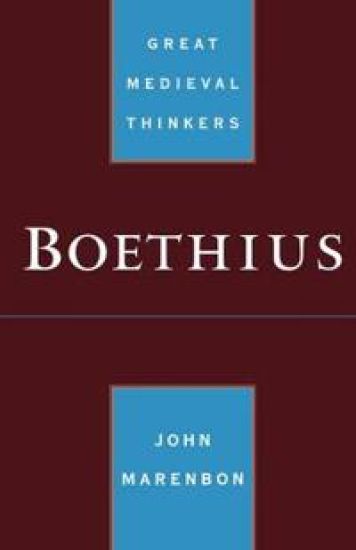
Boethius

Boethius

John Marenbon

Oxford University Press Inc
2003
nidottu
This book offers a brief, accessible introduction to the thought of Boethius. After a survey of Boethius's life and work, Marenbon explicates his theological method, and devotes separate chapters to his arguments about good and evil, fortune, fate and free will, and the problem of divine foreknowledge. Marenbon also traces Boethius's influence on the work of such thinkers as Aquinas and Duns Scotus.
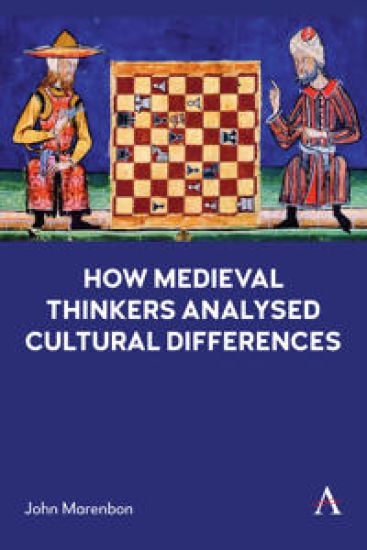
How Medieval Thinkers Analysed Cultural Differences
Medieval intellectuals were fascinated to compare their culture with others, often, though not always, looking at differences in religion. They did so using a number of different genres, among them dialogues between representatives of different ‘laws’ (i.e., religions), travellers’ stories, geographies, philosophical treatises and ethnographic reports. Historians have greatly underestimated the sophistication and variety of this facet of medieval intellectual life, because it does not fall neatly into one of our current subject divisions (such as history of philosophy or history of literature) and because anthropology and comparative religion are usually presumed to be modern disciplines, without medieval ancestors. The aim of this short book is to establish Cultural Comparisons as an area of medieval studies by looking at some of the outstanding texts, mainly from the twelfth to the fourteenth centuries. Although the main focus will be on Western European Christian writers, there will also be some discussion of cultural comparisons made by Jews and Muslims.
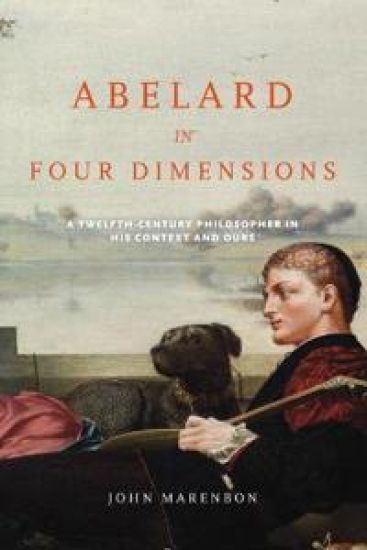
Abelard in Four Dimensions

Abelard in Four Dimensions

John Marenbon

UNIVERSITY OF NOTRE DAME PRESS
2022
sidottu
Abelard in Four Dimensions: A Twelfth-Century Philosopher in His Context and Ours by John Marenbon, one of the leading scholars of medieval philosophy and a specialist on Abelard's thought, originated from a set of lectures in the distinguished Conway Lectures in Medieval Studies series and provides new interpretations of central areas of Peter Abelard's philosophy and its influence. The four dimensions of Abelard to which the title refers are that of the past (Abelard's predecessors), present (his works in context), future (the influence of his thinking up to the seventeenth century), and the present-day philosophical culture in which Abelard's works are still discussed and his arguments debated. For readers new to Abelard, this book provides an introduction to his life and works along with discussion of his central ideas in semantics, ethics, metaphysics, and philosophy of religion. For specialists, the book contains new arguments about the authenticity and chronology of Abelard's logical work, fresh evidence about his relations with Anselm and Hugh of St. Victor, a new understanding of how he combines the necessity of divine action with human freedom, and reinterpretations of important passages in which he discusses semantics and metaphysics. For all historians of philosophy, it sets out and illustrates a new methodological approach, which can be used for any thinker in any period and will help to overcome the divisions between "historians" based in philosophy departments and scholars with historical or philological training.
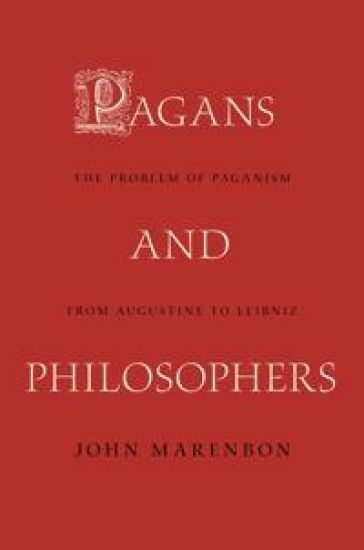
Pagans and Philosophers

Pagans and Philosophers

John Marenbon

Princeton University Press
2017
pokkari
From the turn of the fifth century to the beginning of the eighteenth, Christian writers were fascinated and troubled by the "Problem of Paganism," which this book identifies and examines for the first time. How could the wisdom and virtue of the great thinkers of antiquity be reconciled with the fact that they were pagans and, many thought, damned? Related questions were raised by encounters with contemporary pagans in northern Europe, Mongolia, and, later, America and China. Pagans and Philosophers explores how writers--philosophers and theologians, but also poets such as Dante, Chaucer, and Langland, and travelers such as Las Casas and Ricci--tackled the Problem of Paganism. Augustine and Boethius set its terms, while Peter Abelard and John of Salisbury were important early advocates of pagan wisdom and virtue. University theologians such as Aquinas, Scotus, Ockham, and Bradwardine, and later thinkers such as Ficino, Valla, More, Bayle, and Leibniz, explored the difficulty in depth. Meanwhile, Albert the Great inspired Boethius of Dacia and others to create a relativist conception of scientific knowledge that allowed Christian teachers to remain faithful Aristotelians. At the same time, early anthropologists such as John of Piano Carpini, John Mandeville, and Montaigne developed other sorts of relativism in response to the issue. A sweeping and original account of an important but neglected chapter in Western intellectual history, Pagans and Philosophers provides a new perspective on nothing less than the entire period between the classical and the modern world.
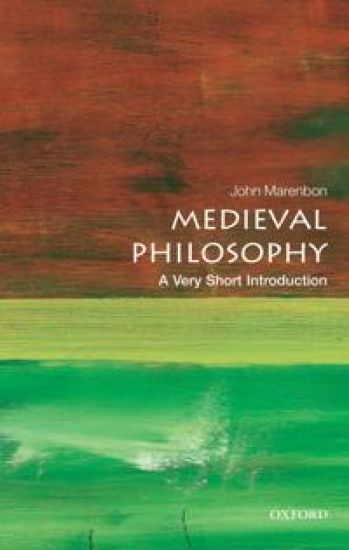
Medieval Philosophy

Medieval Philosophy

John Marenbon

Oxford University Press
2016
nidottu
For many of us, the term 'medieval philosophy' conjures up the figure of Thomas Aquinas, and is closely intertwined with religion. In this Very Short Introduction John Marenbon shows how medieval philosophy had a far broader reach than the thirteenth and fourteenth-century universities of Christian Europe, and is instead one of the most exciting and diversified periods in the history of thought. Introducing the coexisting strands of Christian, Muslim, and Jewish philosophy, Marenbon shows how these traditions all go back to the Platonic schools of late antiquity and explains the complex ways in which they are interlinked. Providing an overview of some of the main thinkers, such as Boethius, Abelard, al-Fârâbî, Avicenna, Maimonides, and Gersonides, and the topics, institutions and literary forms of medieval philosophy, he discusses in detail some of the key issues in medieval thought: universals; mind, body and mortality; foreknowledge and freedom; society and the best life. ABOUT THE SERIES: The Very Short Introductions series from Oxford University Press contains hundreds of titles in almost every subject area. These pocket-sized books are the perfect way to get ahead in a new subject quickly. Our expert authors combine facts, analysis, perspective, new ideas, and enthusiasm to make interesting and challenging topics highly readable.
Pagans and Philosophers

Pagans and Philosophers

John Marenbon

Princeton University Press
2015
sidottu
From the turn of the fifth century to the beginning of the eighteenth, Christian writers were fascinated and troubled by the "Problem of Paganism," which this book identifies and examines for the first time. How could the wisdom and virtue of the great thinkers of antiquity be reconciled with the fact that they were pagans and, many thought, damned? Related questions were raised by encounters with contemporary pagans in northern Europe, Mongolia, and, later, America and China. Pagans and Philosophers explores how writers--philosophers and theologians, but also poets such as Dante, Chaucer, and Langland, and travelers such as Las Casas and Ricci--tackled the Problem of Paganism. Augustine and Boethius set its terms, while Peter Abelard and John of Salisbury were important early advocates of pagan wisdom and virtue. University theologians such as Aquinas, Scotus, Ockham, and Bradwardine, and later thinkers such as Ficino, Valla, More, Bayle, and Leibniz, explored the difficulty in depth. Meanwhile, Albert the Great inspired Boethius of Dacia and others to create a relativist conception of scientific knowledge that allowed Christian teachers to remain faithful Aristotelians. At the same time, early anthropologists such as John of Piano Carpini, John Mandeville, and Montaigne developed other sorts of relativism in response to the issue. A sweeping and original account of an important but neglected chapter in Western intellectual history, Pagans and Philosophers provides a new perspective on nothing less than the entire period between the classical and the modern world.
Abelard in Four Dimensions

Abelard in Four Dimensions

John Marenbon

University of Notre Dame Press
2013
nidottu
Abelard in Four Dimensions: A Twelfth-Century Philosopher in His Context and Ours by John Marenbon, one of the leading scholars of medieval philosophy and a specialist on Abelard's thought, originated from a set of lectures in the distinguished Conway Lectures in Medieval Studies series and provides new interpretations of central areas of Peter Abelard's philosophy and its influence. The four dimensions of Abelard to which the title refers are that of the past (Abelard's predecessors), present (his works in context), future (the influence of his thinking up to the seventeenth century), and the present-day philosophical culture in which Abelard's works are still discussed and his arguments debated. For readers new to Abelard, this book provides an introduction to his life and works along with discussion of his central ideas in semantics, ethics, metaphysics, and philosophy of religion. For specialists, the book contains new arguments about the authenticity and chronology of Abelard's logical work, fresh evidence about his relations with Anselm and Hugh of St. Victor, a new understanding of how he combines the necessity of divine action with human freedom, and reinterpretations of important passages in which he discusses semantics and metaphysics. For all historians of philosophy, it sets out and illustrates a new methodological approach, which can be used for any thinker in any period and will help to overcome the divisions between "historians" based in philosophy departments and scholars with historical or philological training.
The Hellenistic Schools and Thinking about Pagan Philosophy in the Middle Ages: A Study of Second-Order Influence
'One theme central to the second-order influence of ancient on medieval philosophy is the contrast between the classical philosophers' paganism and the medieval writer's own Christian beliefs.' John Marenbon 'Second-order influence' is the way in which writers think about previous authors and texts. Central to the second-order influence of ancient philosophy in the Middle Ages are the questions raised for the medieval thinkers by the fact that the ancient philosophers were pagans. These were especially difficult with regard to the thinkers of the Hellenistic schools (Sceptics, Stoics, Epicureans), whose fundamental ideas are more obviously at odds with Christianity than those of Plato and Aristotle. But, contrary to widespread belief among scholars, the Hellenistic philosophers were not simply ignored or rejected in the Middle Ages. This study looks at their second-order influence, especially on Abelard (who has a remarkably sympathetic attitude to Epicureanism), John of Salisbury (a professed Academic sceptic), thirteenth-century authors such as Albert the Great, Aquinas and John of Wales and Dante. It shows how these thinkers devised sophisticated strategies to appreciate and use the wisdom of philosophers whose views on many matters were abhorrent. In the case of Dante, however, it argues that he cast the Epicureans into a new and antagonistic role, as adversaries of human immortality, in order to safeguard.
Stora boken om filosofi

Stora boken om filosofi

Will Buckingham; Douglas Burnham; Clive Hill; Peter J. King; John Marenbon; Marcus Weeks

Lind Co
2012
sidottu
Oavsett om du är ny inför ämnet, filosofistudent eller självutnämnd expert, är Stora boken om filosofi den perfekta guiden till över 2 000 år av tänkande. I kronologisk ordning får du läsa om hur olika problem och frågeställningar uppkommit och hur de besvarats genom historien. Här presenteras även människorna bakom de stora idéerna, från antikens naturfilosofer till dagens moderna tänkare, placerade i sitt sammanhang och med referenser till tidigare och senare idéer och personligheter. Med hjälp av tidslinjer, diagram och illustrationer, kortfattade citat och begripliga förklaringar av abstrakta begrepp utgör Stora boken om filosofi ett överskådligt verk om tänkandets historia.
Medieval Philosophy

Medieval Philosophy

John Marenbon

Routledge
2006
sidottu
This new introduction replaces Marenbon's best-selling editions Early Medieval Philosophy (1983) and Later Medieval Philosophy (1987) to present a single authoritative and comprehensive study of the period. It gives a lucid and engaging account of the history of philosophy in the Middle Ages, discussing the main writers and ideas, the social and intellectual contexts, and the important concepts used in medieval philosophy. Medieval Philosophy gives a chronological account which:treats all four main traditions of philosophy that stem from the Greek heritage of late antiquity: Greek Christian philosophy, Latin philosophy, Arabic philosophy and Jewish philosophy provides a series of 'study' sections for close attention to arguments and shorter 'interludes' that point to the wider questions of the intellectual context combines philosophical analysis with historical background includes a helpful detailed guide to further reading and an extensive bibliography All students of medieval philosophy, medieval history, theology or religion will find this necessary reading.
Medieval Philosophy

Medieval Philosophy

John Marenbon

Routledge
2006
nidottu
This new introduction replaces Marenbon's best-selling editions Early Medieval Philosophy (1983) and Later Medieval Philosophy (1987) to present a single authoritative and comprehensive study of the period. It gives a lucid and engaging account of the history of philosophy in the Middle Ages, discussing the main writers and ideas, the social and intellectual contexts, and the important concepts used in medieval philosophy. Medieval Philosophy gives a chronological account which:treats all four main traditions of philosophy that stem from the Greek heritage of late antiquity: Greek Christian philosophy, Latin philosophy, Arabic philosophy and Jewish philosophy provides a series of 'study' sections for close attention to arguments and shorter 'interludes' that point to the wider questions of the intellectual context combines philosophical analysis with historical background includes a helpful detailed guide to further reading and an extensive bibliography All students of medieval philosophy, medieval history, theology or religion will find this necessary reading.
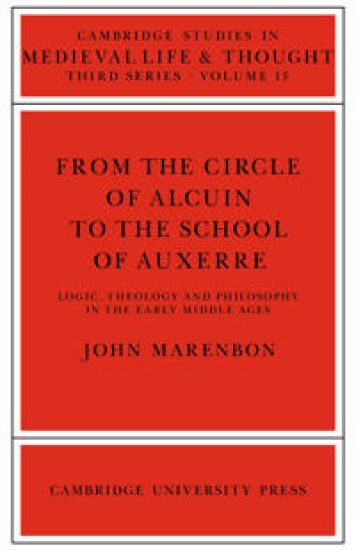
From the Circle of Alcuin to the School of Auxerre

From the Circle of Alcuin to the School of Auxerre

John Marenbon

Cambridge University Press
2006
pokkari
This study is the first modern account of the development of philosophy during the Carolingian Renaissance. In the late eighth century, Dr Marenbon argues, theologians were led by their enthusiasm for logic to pose themselves truly philosophical questions. The central themes of ninth-century philosophy - essence, the Aristotelian Categories, the problem of Universals - were to preoccupy thinkers throughout the Middle Ages. The earliest period of medieval philosophy was thus a formative one. This work is based on a fresh study of the manuscript sources. The thoughts of scholars such as Alcuin, Candidus, Fredegisus, Ratramnus of Corbie, John Scottus Eriugena and Heiric of Auxerre is examined in detail and compared with their sources; and a wide variety of evidence is used to throw light on the milieu in which these thinkers flourished. Full critical editions of an important body of early medieval philosophical material, much of it never before published, are included.
Le Temps, L'Eternite Et La Prescience de Boece a Thomas D'Aquin

Le Temps, L'Eternite Et La Prescience de Boece a Thomas D'Aquin

John Marenbon

Librarie Philosophique J. Vrin
2005
nidottu
Si Dieu prevoit toute chose, rien n'arrive sauf par necessite car il y a incompatibilite entre la certitude de la connaissance et la contingence. Une des reponses classiques est celle que la philosophie analytique nomme la solution boecienne ou de Thomas d'Aquin et qui repose sur l'idee que Dieu est atemporellement eternel. Dans ce livre, John Marenbon demontre que les theories de ces deux auteurs ne correspondent pas a cette solution dans le sens ou, selon eux, la connaissance est relative aux sujets connaissants. Deux chapitres sont consacres aux solutions du probleme de la prescience avec, pour guides, Pierre Abelard, Guillaume de Conches, Pierre Lombard, Guillaume d'Auxerre, et d'autres. Dans le chapitre final, l'auteur pose la question de savoir jusqu'a quel point les techniques de l'analyse pratiquee par la philosophie anglo-saxonne servent a decouvrir ce que les philosophes du Moyen Age ont veritablement pense.
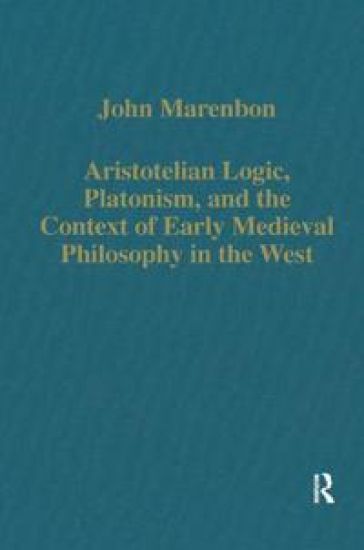
Aristotelian Logic, Platonism, and the Context of Early Medieval Philosophy in the West
Philosophy in the medieval Latin West before 1200 is often thought to have been dominated by Platonism. The articles in this volume question this view, by cataloguing, describing and investigating the tradition of Aristotelian logic in the period, examining its influence on authors usually placed within the Platonic tradition (Eriugena, Anselm, Gilbert of Poitiers), and also looking at some of the characteristics of early medieval Platonism. Abelard, the most brilliant logician of the age, is the main subject of three articles, and the book concludes with two more general discussions about how and why medieval philosophy should be studied.
The Philosophy of Peter Abelard

The Philosophy of Peter Abelard

John Marenbon

Cambridge University Press
1999
pokkari
This book offers a major reassessment of the philosophy of Peter Abelard (1079–1142) which argues that he was not, as usually presented, a predominantly critical thinker but a constructive one. By way of evidence the author offers new analyses of frequently discussed topics in Abelard's philosophy, and examines other areas such as the nature of substances and accidents, cognition, the definition of 'good' and 'evil', virtues and merit, and practical ethics in deatil for the first time. Part I discusses Abelard's life and works, and considers problems of chronology and canon (including the question of the authenticity of the correspondence with Heloise). Part II analyses Abelard's ontology, epistemology and semantics, showing how he tried to reconstruct the ideas he had learned from Aristotle, Porphyry and Boethius to fit his presumption that there is nothing which is not a particular. Part III analyses Abelard's ethical theory, showing that it is far wider and more sophisticated than has been believed.
The Philosophy of Peter Abelard

The Philosophy of Peter Abelard

John Marenbon

Cambridge University Press
1997
sidottu
This 1997 book offers a major reassessment of the philosophy of Peter Abelard (1079–1142) which argues that he was not, as usually presented, a predominantly critical thinker but a constructive one. By way of evidence the author offers analyses of frequently discussed topics in Abelard's philosophy, and examines other areas such as the nature of substances and accidents, cognition, the definition of 'good' and 'evil', virtues and merit, and practical ethics in detail. Part I discusses Abelard's life and works, and considers problems of chronology and canon (including the question of the authenticity of the correspondence with Heloise). Part II analyses Abelard's ontology, epistemology and semantics, showing how he tried to reconstruct the ideas he had learned from Aristotle, Porphyry and Boethius to fit his presumption that there is nothing which is not a particular. Part III analyses Abelard's ethical theory, showing that it is far wider and more sophisticated than has been believed.
Later Medieval Philosophy

Later Medieval Philosophy

John Marenbon

Routledge
1991
nidottu
This introduction to philosophy in the Latin West between 1150 and 1350 combines an historical approach, which concentrates on the sources, forms and backgrounds of the medieval works, with philosophical analysis of thirteenth and fourteenth-century writing in terms comprehensible to a modern reader. Part One looks at the intellectual and historical context of medieval thought. It examines the courses in the medieval universities; the methods of teaching; the forms of written work; the logical techniques used for argument and analysis; the translation and the availability of Ancient Greek, Arab and Jewish philosophical texts; the challenges the new material presented and the various ways in which Western thinkers responded to them. Part Two focuses on one important problem in later medieval thought: the nature of intellectual knowledge. It explains the arguments given by Aristotle, his antique commentators and the Arab philosophers Avicenna and Averroes, and traces how a series of Western thinkers, including Thomas Aquinas and William of Ockham, developed, modified or rejected them.
Later Medieval Philosophy

Later Medieval Philosophy

John Marenbon

Routledge
1987
sidottu
This introduction to philosophy in the Latin West between 1150 and 1350 combines an historical approach, which concentrates on the sources, forms and backgrounds of the medieval works, with philosophical analysis of thirteenth and fourteenth-century writing in terms comprehensible to a modern reader. Part One looks at the intellectual and historical context of medieval thought. It examines the courses in the medieval universities; the methods of teaching; the forms of written work; the logical techniques used for argument and analysis; the translation and the availability of Ancient Greek, Arab and Jewish philosophical texts; the challenges the new material presented and the various ways in which Western thinkers responded to them. Part Two focuses on one important problem in later medieval thought: the nature of intellectual knowledge. It explains the arguments given by Aristotle, his antique commentators and the Arab philosophers Avicenna and Averroes, and traces how a series of Western thinkers, including Thomas Aquinas and William of Ockham, developed, modified or rejected them.