Kirjailija
John Martin Fischer
Kirjat ja teokset yhdessä paikassa: 17 kirjaa, julkaisuja vuosilta 1995-2024, suosituimpien joukossa Our Stories. Vertaile teosten hintoja ja tarkista saatavuus suomalaisista kirjakaupoista.
17 kirjaa
Kirjojen julkaisuhaarukka 1995-2024.
In this collection of essays on the metaphysical issues pertaining to death, the meaning of life, and freedom of the will, John Martin Fischer argues (against the Epicureans) that death can be a bad thing for the individual who dies. He defends the claim that something can be a bad thing--a misfortune--for an individual, even if he never experiences it as bad (and even if he does not any longer exist). Fischer also defends the commonsense asymmetry in our attitudes toward death and prenatal nonexistence: we are indifferent to the time before we are born, but we regret that we do not live longer. Further, Fischer argues (against the immortality curmudgeons, such as Heidegger and Bernard Williams), that immortal life could be desirable, and shows how the defense of the (possible) badness of death and the (possible) goodness of immortality exhibit a similar structure; on Fischer's view, the badness of death and the goodness of life can be represented on spectra that display certain continuities. Building on Fischer's previous book, My Way a major aim of this volume is to show important connections between issues relating to life and death and issues relating to free will. More specifically, Fischer argues that we endow our lives with a certain distinctive kind of meaning--an irreducible narrative dimension of value--by exhibiting free will. Thus, in acting freely, we transform our lives so that our stories matter.
Four Views on Free Will
John Martin Fischer; Robert Kane; Derk Pereboom; Manuel Vargas
JOHN WILEY SONS INC
2024
nidottu
A lively and engaging debate between four representative views on free will, completely revised and updated with new perspectives Four Views on Free Will is a robust and careful debate about free will, how it interacts with determinism and indeterminism, and whether we have it or not. Providing the most up-to-date account of four major positions in the free will debate, the second edition of this classic text presents the opposing perspectives of renowned philosophers John Martin Fischer, Robert Kane, Derk Pereboom, and Manuel Vargas. Substantially revised throughout, this new volume contains eight in-depth chapters, almost entirely rewritten for the new edition, in which the authors state their different positions on the debate, offer insights into how their views have evolved over the past fifteen years, respond to recent critical literature in the field, and interact and engage with each other in dialogue. In the first four chapters the authors defend their distinctive views about free will: libertarianism, compatibilism, hard incompatibilism, and revisionism. The subsequent four chapters consist of direct replies by each of the authors to the other three. Offering a one-of-a-kind interactive conversation about the most recent work on the subject, Four Views on Free Will, Second Edition provides a balanced and enlightening discussion on all the key concepts and conflicts in the free will debate. Part of the acclaimed Great Debates in Philosophy series, it remains essential reading for undergraduate and graduate students, lecturers and scholars in philosophy, ethics, free will, philosophy of mind, political philosophy, law, and related subjects.
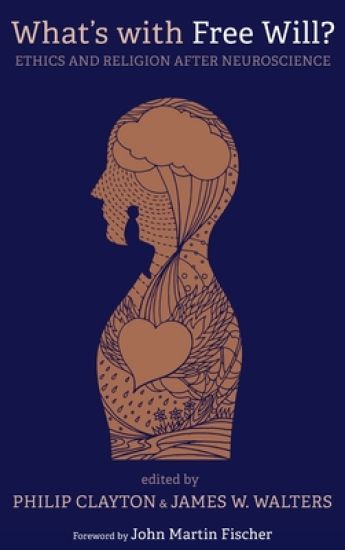
Are humans free, or are we determined by our genes and the world around us? The question of freedom is not only one of philosophy's greatest conundrums, but also one of the most fundamental questions of human existence. It's particularly pressing in societies like ours, where our core institutions of law, ethics, and religion are built around the belief in individual freedom. Can one still affirm human freedom in an age of science? And if free will doesn't exist, does it make sense to act as though it does? These are the issues that are presented, probed, and debated in the following chapters. A dozen experts―specialists in medicine, psychology, ethics, theology, and philosophy--grapple with the multiple and often profound challenges presented by today's brain science. After examining the arguments against traditional notions of free will, several of the authors champion the idea of a chastened but robust free will for today, one that allows us still to affirm the value of first-person experience.
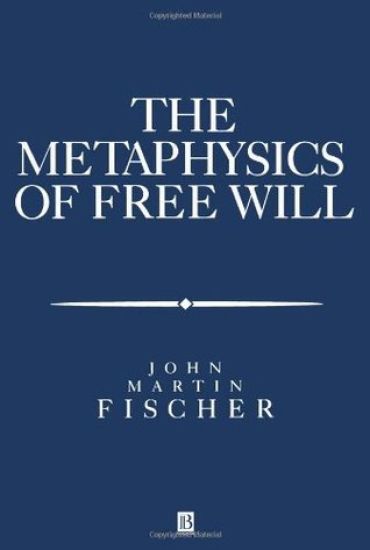
The Metaphysics of Free Will provides a through statement of the major grounds for skepticism about the reality of free will and moral responsibility. The author identifies and explains the sort of control that is associated with personhood and accountability, and shows how it is consistent with causal determinism. In so doing, out view of ourselves as morally responsible agents is protected against the disturbing changes posed by science and religion.
Should You Choose to Live Forever?
Stephen Cave; John Martin Fischer
TAYLOR FRANCIS LTD
2023
sidottu
In this book, Stephen Cave and John Martin Fischer debate whether or not we should choose to live forever. This ancient question is as topical as ever: while billions of people believe they will live forever in an otherworldly realm, billions of dollars are currently being poured into anti-ageing research in the hope that we will be able to radically extend our lives on earth. But are we wise to wish for immortality? What would it mean for each of us as individuals, for society, and for the planet?In this lively and accessible debate, the authors introduce the main arguments for and against living forever, along with some new ones. They draw on examples from myth and literature as well as new thought experiments in order to bring the arguments to life. Cave contends that the aspiring immortalist is stuck on the horns of a series of dilemmas, such as boredom and meaninglessness, or overpopulation and social injustice. Fischer argues that there is a vision of radically longer lives that is both recognizably human and desirable. This book offers both students and experienced philosophers a provocative new guide to a topic of perennial importance.Key Features:Gives a comprehensive overview of the main arguments for and against living foreverUses lively examples from myth, literature, and novel thought experimentsHighly accessible—avoiding jargon and assuming no prior knowledge—without sacrificing intellectual rigourIncludes helpful pedagogical features, including chapter summaries, an annotated reading list, a glossary, and clear examples
Should You Choose to Live Forever?
Stephen Cave; John Martin Fischer
TAYLOR FRANCIS LTD
2023
nidottu
In this book, Stephen Cave and John Martin Fischer debate whether or not we should choose to live forever. This ancient question is as topical as ever: while billions of people believe they will live forever in an otherworldly realm, billions of dollars are currently being poured into anti-ageing research in the hope that we will be able to radically extend our lives on earth. But are we wise to wish for immortality? What would it mean for each of us as individuals, for society, and for the planet?In this lively and accessible debate, the authors introduce the main arguments for and against living forever, along with some new ones. They draw on examples from myth and literature as well as new thought experiments in order to bring the arguments to life. Cave contends that the aspiring immortalist is stuck on the horns of a series of dilemmas, such as boredom and meaninglessness, or overpopulation and social injustice. Fischer argues that there is a vision of radically longer lives that is both recognizably human and desirable. This book offers both students and experienced philosophers a provocative new guide to a topic of perennial importance.Key Features:Gives a comprehensive overview of the main arguments for and against living foreverUses lively examples from myth, literature, and novel thought experimentsHighly accessible—avoiding jargon and assuming no prior knowledge—without sacrificing intellectual rigourIncludes helpful pedagogical features, including chapter summaries, an annotated reading list, a glossary, and clear examples
Are humans free, or are we determined by our genes and the world around us? The question of freedom is not only one of philosophy's greatest conundrums, but also one of the most fundamental questions of human existence. It's particularly pressing in societies like ours, where our core institutions of law, ethics, and religion are built around the belief in individual freedom. Can one still affirm human freedom in an age of science? And if free will doesn't exist, does it make sense to act as though it does? These are the issues that are presented, probed, and debated in the following chapters. A dozen experts―specialists in medicine, psychology, ethics, theology, and philosophy--grapple with the multiple and often profound challenges presented by today's brain science. After examining the arguments against traditional notions of free will, several of the authors champion the idea of a chastened but robust free will for today, one that allows us still to affirm the value of first-person experience.
The most recent addition to the Fundamentals of Philosophy series, John Martin Fischer's Death, Immortality, and Meaning in Life offers a brief yet in-depth introduction to the key philosophical issues and problems concerning death and immortality. Its engaging and accessible narrative is clearly organized into ten chapters that address meaning in life, death, the badness of death, time and death, ideas on immortality, near-death experiences, and extending life through medical technology.
Near-Death Experiences
John Martin Fischer; Benjamin Mitchell-Yellin
Oxford University Press Inc
2016
sidottu
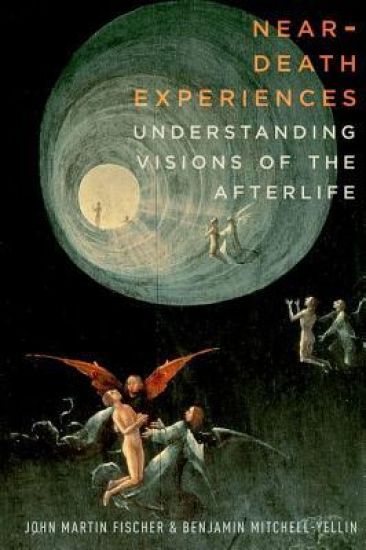
Near-death experiences offer a glimpse not only into the nature of death but also into the meaning of life. They are not only useful tools to aid in the human quest to understand death but are also deeply meaningful, transformative experiences for the people who have them. In a unique contribution to the growing and popular literature on the subject, philosophers John Martin Fischer and Benjamin Mitchell-Yellin examine prominent near-death experiences, such as those of Pam Reynolds, Eben Alexander and Colton Burpo. They combine their investigations with critiques of the narratives' analysis by those who take them to show that our minds are immaterial and heaven is for real. In contrast, the authors provide a blueprint for a science-based explanation. Focusing on the question of whether near-death experiences provide evidence that consciousness is separable from our brains and bodies, Fischer and Mitchell-Yellin give a naturalistic account of the profound meaning and transformative effects that these experiences engender in many. This book takes the reality of near-death experiences seriously. But it also shows that understanding them through the tools of science is completely compatible with acknowledging their profound meaning.
Our Fate is a collection of John Martin Fischer's previously published articles on the relationship between God's foreknowledge and human freedom. The book contains a new introductory essay that places all of the chapters in the book into a cohesive framework. The introductory essay also provides some new views about the issues treated in the book, including a bold and original account of God's foreknowledge of free actions in a causally indeterministic world. The focus of the book is a powerful traditional argument for the incompatibility of God's foreknowledge and human freedom to do otherwise. Fischer presents this argument (in various forms) and defends it against some of the most salient criticisms, especially Ockhamism. The incompatibilist's argument is driven by the fixity of the past, and, in particular, the fixity of God's prior beliefs about our current behavior. The author gives special attention to Ockhamism, which contends that God's prior beliefs are not "over-and-done-with" in the past, and are thus not subject to the intuitive idea of the fixity of the past. In the end, Fischer defends the argument for the incompatibility of God's foreknowledge and human freedom to do otherwise, but he further argues that this incompatibility need not entail the incompatibility of God's foreknowledge and human moral responsibility. Thus, through this collection of essays, Fischer develops a "semicompatibilist" view -- the belief that God's foreknowledge is entirely compatible with human moral responsibility, even if God's foreknowledge rules out freedom to do otherwise.
In this collection of essays -- a follow up to My Way and Our Stories -- John Martin Fischer defends the contention that moral responsibility is associated with "deep control". Fischer defines deep control as the middle ground between two untenable extreme positions: "superficial control" and "total control". Our freedom consists of the power to add to the given past, holding fixed the laws of nature, and therefore, Fischer contends, we must be able to interpret our actions as extensions of a line that represents the actual past. In "connecting the dots", we engage in a distinctive sort of self-expression. In the first group of essays in this volume, Fischer argues that we do not need genuine access to alterative possibilities in order to be morally responsible. Thus, the line need not branch off at crucial points (where the branches represent genuine metaphysical possibilities). In the remaining essays in the collection he demonstrates that deep control is the freedom condition on moral responsibility. In so arguing, Fischer contends that total control is too much to ask--it is a form of "metaphysical megalomania". So we do not need to "trace back" all the way to the beginning of the line (or even farther) in seeking the relevant kind of freedom or control. Additionally, he contends that various kinds of "superficial control"--such as versions of "conditional freedom" and "judgment-sensitivity" are too shallow; they don't trace back far enough along the line. In short, Fischer argues that, in seeking the freedom that grounds moral responsibility, we need to carve out a middle ground between superficiality and excessive penetration. Deep Control is the "middle way". Fischer presents a new argument that deep control is compatible not just with causal determinism, but also causal indeterminism. He thus tackles the luck problem and shows that the solution to this problem is parallel in important ways to the considerations in favor of the compatibility of causal determinism and moral responsibility.
In this collection of essays on the metaphysical issues pertaining to death, the meaning of life, and freedom of the will, John Martin Fischer argues (against the Epicureans) that death can be a bad thing for the individual who dies. He defends the claim that something can be a bad thing--a misfortune--for an individual, even if he never experiences it as bad (and even if he does not any longer exist). Fischer also defends the commonsense asymmetry in our attitudes toward death and prenatal nonexistence: we are indifferent to the time before we are born, but we regret that we do not live longer. Further, Fischer argues (against the immortality curmudgeons, such as Heidegger and Bernard Williams), that immortal life could be desirable, and shows how the defense of the (possible) badness of death and the (possible) goodness of immortality exhibit a similar structure; on Fischer's view, the badness of death and the goodness of life can be represented on spectra that display certain continuities. Building on Fischer's previous book, My Way a major aim of this volume is to show important connections between issues relating to life and death and issues relating to free will. More specifically, Fischer argues that we endow our lives with a certain distinctive kind of meaning--an irreducible narrative dimension of value--by exhibiting free will. Thus, in acting freely, we transform our lives so that our stories matter.
This is a selection of essays on moral responsibility that represent the major components of John Martin Fischer's overall approach to freedom of the will and moral responsibility. The collection exhibits the overall structure of Fischer's view and shows how the various elements fit together to form a comprehensive framework for analyzing free will and moral responsibility. The topics include deliberation and practical reasoning, freedom of the will, freedom of action, various notions of control, and moral accountability. The essays seek to provide a foundation for our practices of holding each other (and ourselves) morally and legally accountable for our behavior. A crucial move is the distinction between two kinds of control. According to Fischer, "regulative control" involves freedom to choose and do otherwise ("alternative possibilities"), whereas "guidance control" does not. Fischer contends that guidance control is all the freedom we need to be morally responsible agents. Further, he contends that such control is fully compatible with causal determinism. Additionally, Fischer argues that we do not need genuine access to alternative possibilities in order for there to be a legitimate point to practical reasoning. Fischer's overall framework contains an argument for the contention that guidance control, and not regulative control, is associated with moral responsibility, a sketch of a comprehensive theory of moral responsibility (that ties together responsibility for actions, omissions, consequences, and character), and an account of the value of moral responsibility. On this account, the value of exhibiting freedom (of the relevant sort) and thus being morally responsible for one's behavior is a species of the value of artistic self-expression.
Four Views on Free Will
John Martin Fischer; Robert Kane; Derk Pereboom; Manuel Vargas
Wiley-Blackwell (an imprint of John Wiley Sons Ltd)
2007
sidottu
Focusing on the concepts and interactions of free will, moral responsibility, and determinism, this text represents the most up-to-date account of the four major positions in the free will debate. Four serious and well-known philosophers explore the opposing viewpoints of libertarianism, compatibilism, hard incompatibilism, and revisionismThe first half of the book contains each philosopher's explanation of his particular view; the second half allows them to directly respond to each other's arguments, in a lively and engaging conversationOffers the reader a one of a kind, interactive discussionForms part of the acclaimed Great Debates in Philosophy series
This is a selection of essays on moral responsibility that represent the major components of John Martin Fischer's overall approach to freedom of the will and moral responsibility. The collection exhibits the overall structure of Fischer's view and shows how the various elements fit together to form a comprehensive framework for analyzing free will and moral responsibility. The topics include deliberation and practical reasoning, freedom of the will, freedom of action, various notions of control, and moral accountability. The essays seek to provide a foundation for our practices of holding each other (and ourselves) morally and legally accountable for our behavior. A crucial move is the distinction between two kinds of control. According to Fischer, "regulative control" involves freedom to choose and do otherwise ("alternative possibilities"), whereas "guidance control" does not. Fischer contends that guidance control is all the freedom we need to be morally responsible agents. Further, he contends that such control is fully compatible with causal determinism. Additionally, Fischer argues that we do not need genuine access to alternative possibilities in order for there to be a legitimate point to practical reasoning. Fischer's overall framework contains an argument for the contention that guidance control, and not regulative control, is associated with moral responsibility, a sketch of a comprehensive theory of moral responsibility (that ties together responsibility for actions, omissions, consequences, and character), and an account of the value of moral responsibility. On this account, the value of exhibiting freedom (of the relevant sort) and thus being morally responsible for one's behavior is a species of the value of artistic self-expression.
Responsibility and Control
John Martin Fischer; Ravizza Mark
Cambridge University Press
1999
pokkari
This book provides a comprehensive, systematic theory of moral responsibility. The authors explore the conditions under which individuals are morally responsible for actions, omissions, consequences, and emotions. The leading idea in the book is that moral responsibility is based on ‘guidance control’. This control has two components: the mechanism that issues in the relevant behavior must be the agent’s own mechanism, and it must be appropriately responsive to reasons. The book develops an account of both components. The authors go on to offer a sustained defense of the thesis that moral responsibility is compatible with causal determinism.