Kirjojen hintavertailu. Mukana 12 390 323 kirjaa ja 12 kauppaa.

Kirjailija

John McAleer

Kirjat ja teokset yhdessä paikassa: 11 kirjaa, julkaisuja vuosilta 2007-2025, suosituimpien joukossa Picturing India. Vertaile teosten hintoja ja tarkista saatavuus suomalaisista kirjakaupoista.

11 kirjaa

Kirjojen julkaisuhaarukka 2007-2025.

A Casebook of Crime

A Casebook of Crime

John McAleer; Andrew McAleer

Level Best - Historia
2025
pokkari
The Big Push and Legend of Sir Morleans' Lost Pearls When a distinguished London barrister confides in private detective Henry von Stray about the family secrets and legends of a Baroness-revered for her service as a spy on behalf of the Crown during the Great War-von Stray and his trusted companion Professor John Dilpate are forced to leave their comfortable Berkeley Street lodgings and take on what promises to be their most baffling and intriguing case yet. The Case of the Illustrious Banker An ingenious adversary has private detective Henry von Stray and his able collaborator in the detection of crime Professor John Dilpate, up against a nippy bit of work when Inspector Renyalds of Scotland Yard enlists them to unravel the puzzling mystery behind the locked-room murder of a notorious bank president. A Little Birdie Tells Von Stray When a beautiful young heiress of a high-ranking British official is found brutally murdered in a locked wine cellar, clutching a mysterious dying clue, private detective Henry von Stray and his trusted companion Professor John Dilpate must solve one impossible puzzle after another before they can execute von Stray's brilliant ruse to catch the ruthless killer. Von Stray and the Five-Fingered Fraudster A perchance encounter with a Special Agent of His Majesty's Customs Service results in private detective Henry von Stray and his colleague Professor John Dilpate suddenly finding themselves thrust into a race against time as they attempt to thwart the nefarious scheme of a criminal master-mind determined to outfox the Crown.
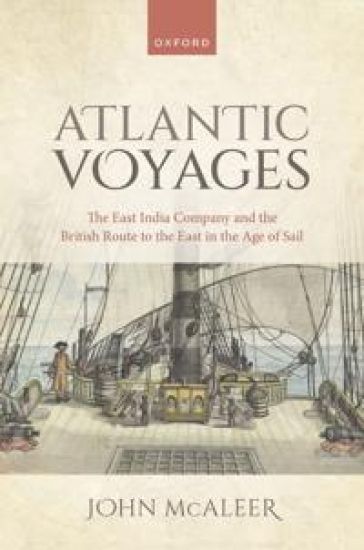
Atlantic Voyages

Atlantic Voyages

John McAleer

Oxford University Press
2023
sidottu
As he prepared to embark for India in 1774, Alexander Mackrabie's excitement at the sights to be seen and novelties to be experienced was palpable. Mackrabie's journey was conducted under the auspices of the London-based East India Company and was one of the many thousands of Company voyages that brought Europeans into contact with Asian countries and cultures, as well as numerous people and places along the way. Atlantic Voyages tells the story of travellers like Mackrabie as they navigated the waters of the Atlantic Ocean, reflecting on who and what they had left behind in Europe, looking forward to new challenges in Asia, and evaluating the sights and smells, sounds and tastes, hopes and expectations, fears and regrets, that regaled their senses and played on their minds as they sailed along the way. It charts the tension between tedium and terror on the one hand, and exhilaration and excitement on the other, attempting to understand the maritime space of the Atlantic as it was experienced by the people who traversed its waters. The lives of the people carried by East Indiamen were deeply affected by their Atlantic experiences. They confronted the reality of shipboard life: its seasickness and boredom, its cramped living conditions, its questionable dining fare, and its severely restricted privacy. They acclimatised to the rhythms of the ocean and the vicissitudes of the weather. They encountered rites of passage and ceremonies of initiation on the high seas. They prepared themselves for cultural disorientation and a host of unusual sights and sensations. And they wondered at the extraordinary beauty of the elements around them - the sea, the sky, the islands - and the strangeness of their inhabitants, human and animal alike. The ship's passage played a crucial role in shaping the responses and experiences of those individuals surrounded by its wooden walls. Their words bring to life this maritime journey, illuminate the experiences of the people who undertook it, and contribute to our understanding of the place of the Atlantic Ocean in wider histories of the East India Company and the British Empire in this period.
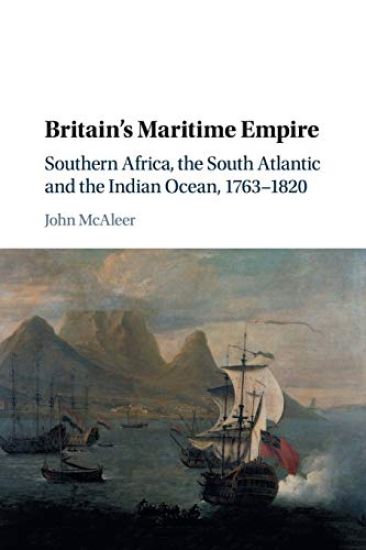
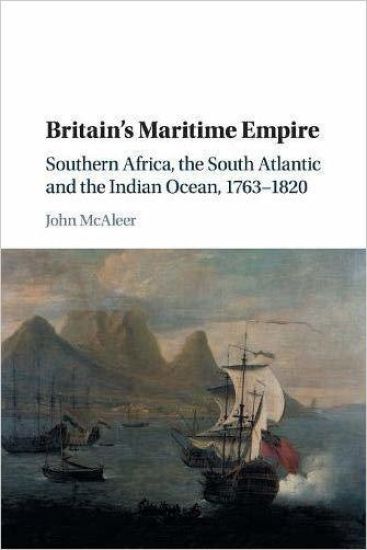
Britain's Maritime Empire

Britain's Maritime Empire

John McAleer

Cambridge University Press
2019
pokkari
A fascinating new study in which John McAleer explores the maritime gateway to Asia around the Cape of Good Hope and its critical role in the establishment, consolidation and maintenance of the British Empire in the late eighteenth and nineteenth centuries. Situated at the centre of a maritime chain that connected seas and continents, this gateway bridged the Atlantic and Indian Oceans, which, with its commercial links and strategic requirements, formed a global web that reflected the development of the British Empire in the period. The book examines how contemporaries perceived, understood and represented this area; the ways in which it worked as an alternative hub of empire, enabling the movement of people, goods, and ideas, as well as facilitating information and intelligence exchanges; and the networks of administration, security and control that helped to cement British imperial power.
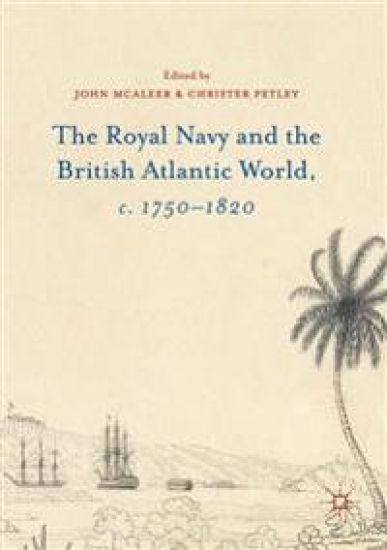
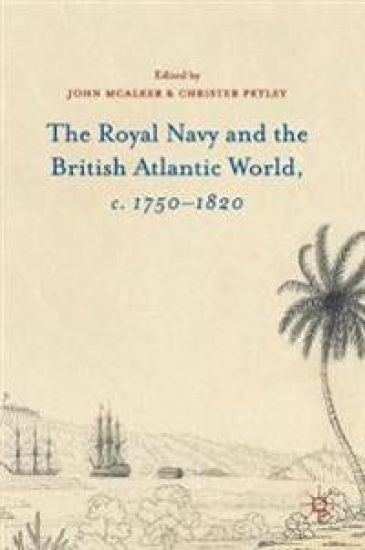
The Royal Navy and the British Atlantic World, c. 1750–1820
This book foregrounds the role of the Royal Navy in creating the British Atlantic in the eighteenth century. It outlines the closely entwined connections between the nurturing of naval supremacy, the politics of commercial protection, and the development of national and imperial identities – crucial factors in the consolidation and transformation of the British Atlantic empire. The collection brings together scholars working on aspects of the Royal Navy and the British Atlantic in order to gain a better understanding of the ways that the Navy protected, facilitated, and shaped the British-Atlantic empire in the era of war, revolution, counter-revolution, and upheaval between the beginning of the Seven Years War and the end of the conflict with Napoleonic France. Contributions question the limits – conceptually and geographically – of that Atlantic world, suggesting that, by considering the Royal Navy and the British Atlantic together, we can gain greater insights into Britain’s maritime history.
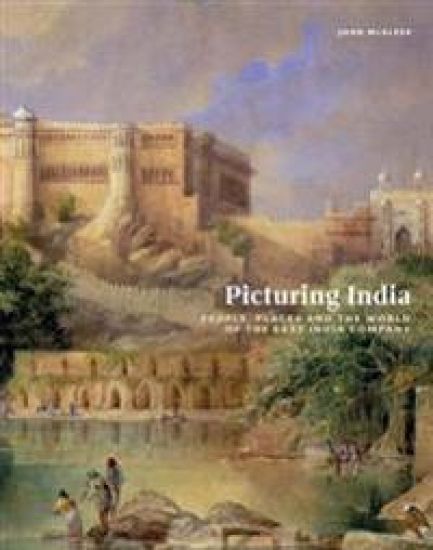
Picturing India

Picturing India

John McAleer

UNIVERSITY OF WASHINGTON PRESS
2017
sidottu
The British engagement with India was an intensely visual one. Images of the subcontinent, produced by artists and travelers in the eighteenth- and nineteenth-century heyday of the East India Company, reflect the increasingly important role played by the Company in Indian life. And they mirror significant shifts in British policy and attitudes toward India. The Company's story is one of wealth, power, and the pursuit of profit. It changed what people in Europe ate, what they drank, and how they dressed. Ultimately, it laid the foundations of the British Raj. Few historians have considered the visual sources that survive and what they tell us about the link between images and empire, pictures and power. This book draws on the unrivalled riches of the British Library—both visual and textual—to tell that history. It weaves together the story of individual images, their creators, and the people and events they depict. And, in doing so, it presents a detailed picture of the Company and its complex relationship with India, its people and cultures.
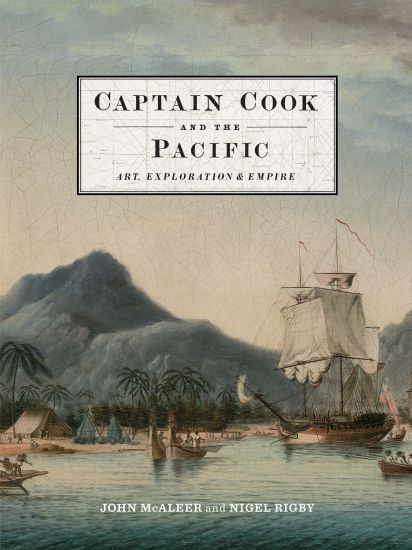
Captain Cook and the Pacific

Captain Cook and the Pacific

John McAleer; Nigel Rigby

Yale University Press
2017
sidottu
British Royal Navy Captain James Cook’s voyages of exploration across and around the Pacific Ocean were a marvel of maritime achievement, and provided the first accurate map of the Pacific. The expeditions answered key scientific, economic, and geographic questions, and inspired some of the most influential images of the Pacific made by Europeans. Now readers can immerse themselves in the adventure through the collections of London’s National Maritime Museum, which illuminate every aspect of the voyages: oil paintings of lush landscapes, scientific and navigational instruments, ship plans, globes, charts and maps, rare books and manuscripts, coins and medals, ethnographic material, and personal effects. Each artifact holds a story that sheds light on Captain Cook, the crews he commanded, and the effort’s impact on world history. Showcasing one of the richest resources of Cook-related material in the world, this publication invites readers to engage with the extraordinary voyages—manifested in material culture—and their continuing significance today. Published in association with the National Maritime Museum, Greenwich, LondonExhibition Schedule:National Maritime Museum, Greenwich, London (Permanent Gallery, opens fall 2018)
Britain's Maritime Empire

Britain's Maritime Empire

John McAleer

Cambridge University Press
2016
sidottu
A fascinating new study in which John McAleer explores the maritime gateway to Asia around the Cape of Good Hope and its critical role in the establishment, consolidation and maintenance of the British Empire in the late eighteenth and nineteenth centuries. Situated at the centre of a maritime chain that connected seas and continents, this gateway bridged the Atlantic and Indian Oceans, which, with its commercial links and strategic requirements, formed a global web that reflected the development of the British Empire in the period. The book examines how contemporaries perceived, understood and represented this area; the ways in which it worked as an alternative hub of empire, enabling the movement of people, goods, and ideas, as well as facilitating information and intelligence exchanges; and the networks of administration, security and control that helped to cement British imperial power.
The Royal Navy and the British Atlantic World, c. 1750–1820
This book foregrounds the role of the Royal Navy in creating the British Atlantic in the eighteenth century. It outlines the closely entwined connections between the nurturing of naval supremacy, the politics of commercial protection, and the development of national and imperial identities – crucial factors in the consolidation and transformation of the British Atlantic empire. The collection brings together scholars working on aspects of the Royal Navy and the British Atlantic in order to gain a better understanding of the ways that the Navy protected, facilitated, and shaped the British-Atlantic empire in the era of war, revolution, counter-revolution, and upheaval between the beginning of the Seven Years War and the end of the conflict with Napoleonic France. Contributions question the limits – conceptually and geographically – of that Atlantic world, suggesting that, by considering the Royal Navy and the British Atlantic together, we can gain greater insights into Britain’s maritime history.
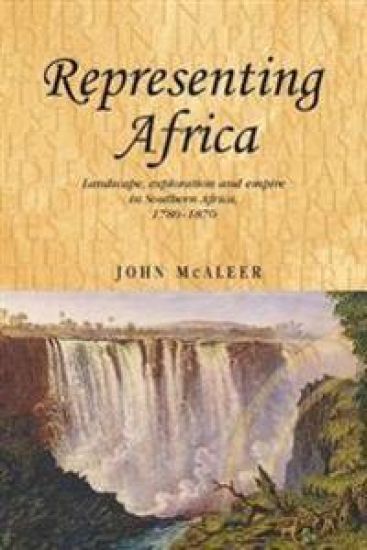
Representing Africa

Representing Africa

John McAleer

Manchester University Press
2010
sidottu
Southern Africa played a varied but vital role in Britain’s maritime and imperial stories: it was one of the most intricate pieces in the British imperial strategic jigsaw, and representations of southern African landscape and maritime spaces reflect its multifaceted position.Representing Africa examines the ways in which British travellers, explorers and artists viewed southern Africa in a period of evolving and expanding British interest in the region. Drawing on a wide range of archival sources, contemporary travelogues and visual images, many of which have not previously been published in this context, this book posits landscape as a useful prism through which to view changing British attitudes towards Africa.Richly illustrated, this book will be essential reading for scholars and students interested in British, African, imperial and exploration history, art history, and landscape and environment studies.