Kirjojen hintavertailu. Mukana 12 595 353 kirjaa ja 12 kauppaa.

Kirjailija

John McLevey

Kirjat ja teokset yhdessä paikassa: 4 kirjaa, julkaisuja vuosilta 2020-2021, suosituimpien joukossa Doing Computational Social Science. Vertaile teosten hintoja ja tarkista saatavuus suomalaisista kirjakaupoista.

4 kirjaa

Kirjojen julkaisuhaarukka 2020-2021.

Doing Computational Social Science

Doing Computational Social Science

John McLevey

SAGE Publications Ltd
2021
nidottu
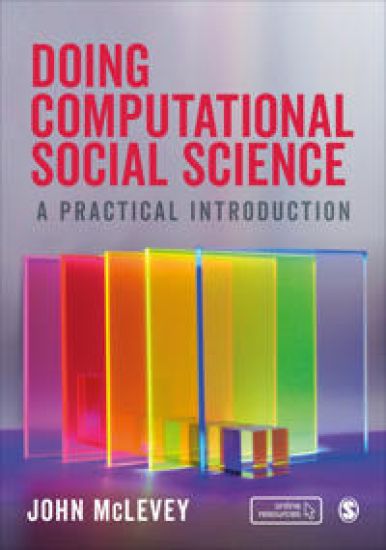
Computational approaches offer exciting opportunities for us to do social science differently. This beginner’s guide discusses a range of computational methods and how to use them to study the problems and questions you want to research. It assumes no knowledge of programming, offering step-by-step guidance for coding in Python and drawing on examples of real data analysis to demonstrate how you can apply each approach in any discipline. The book also: Considers important principles of social scientific computing, including transparency, accountability and reproducibility.Understands the realities of completing research projects and offers advice for dealing with issues such as messy or incomplete data and systematic biases.Empowers you to learn at your own pace, with online resources including screencast tutorials and datasets that enable you to practice your skills and get up to speed. For anyone who wants to use computational methods to conduct a social science research project, this book equips you with the skills, good habits and best working practices to do rigorous, high quality work.
Doing Computational Social Science

Doing Computational Social Science

John McLevey

SAGE Publications Ltd
2021
sidottu
Computational approaches offer exciting opportunities for us to do social science differently. This beginner’s guide discusses a range of computational methods and how to use them to study the problems and questions you want to research. It assumes no knowledge of programming, offering step-by-step guidance for coding in Python and drawing on examples of real data analysis to demonstrate how you can apply each approach in any discipline. The book also: Considers important principles of social scientific computing, including transparency, accountability and reproducibility.Understands the realities of completing research projects and offers advice for dealing with issues such as messy or incomplete data and systematic biases.Empowers you to learn at your own pace, with online resources including screencast tutorials and datasets that enable you to practice your skills and get up to speed. For anyone who wants to use computational methods to conduct a social science research project, this book equips you with the skills, good habits and best working practices to do rigorous, high quality work.
Industrial Development and Eco-Tourisms

Industrial Development and Eco-Tourisms

Mark C.J. Stoddart; Alice Mattoni; John McLevey

Springer Nature Switzerland AG
2021
nidottu
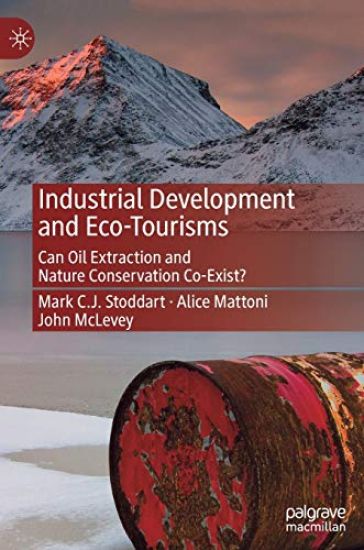
This book examines the “oil-tourism interface”, the broad range of direct and indirect contact points between offshore oil extraction and nature-based tourism. Offshore oil extraction and nature-based tourism are pursued as development paths across the North Atlantic region. Offshore oil promises economic benefits from employment and royalty payments to host societies, but is based on fossil fuel-intensive resource extraction. Nature-based tourism, instead, is based on experiencing natural environments and encountering wildlife, including whales, seals, or seabirds. They share social-ecological space, such as oceans, coastlines, cities and towns where tourism and offshore oil operations and offices are located. However, they rarely share cultural or political space, in terms of media coverage, public debate, or policy discussion that integrates both modes of development. Through a comparative analysis of Denmark, Iceland, Newfoundland and Labrador, Norway, and Scotland, this book offers important lessons for how coastal societies can better navigate relationships between resource extraction and nature-based tourism in the interests of social-ecological wellbeing.
Industrial Development and Eco-Tourisms

Industrial Development and Eco-Tourisms

Mark C.J. Stoddart; Alice Mattoni; John McLevey

Springer Nature Switzerland AG
2020
sidottu
This book examines the “oil-tourism interface”, the broad range of direct and indirect contact points between offshore oil extraction and nature-based tourism. Offshore oil extraction and nature-based tourism are pursued as development paths across the North Atlantic region. Offshore oil promises economic benefits from employment and royalty payments to host societies, but is based on fossil fuel-intensive resource extraction. Nature-based tourism, instead, is based on experiencing natural environments and encountering wildlife, including whales, seals, or seabirds. They share social-ecological space, such as oceans, coastlines, cities and towns where tourism and offshore oil operations and offices are located. However, they rarely share cultural or political space, in terms of media coverage, public debate, or policy discussion that integrates both modes of development. Through a comparative analysis of Denmark, Iceland, Newfoundland and Labrador, Norway, and Scotland, this book offers important lessons for how coastal societies can better navigate relationships between resource extraction and nature-based tourism in the interests of social-ecological wellbeing.