Kirjojen hintavertailu. Mukana 12 152 606 kirjaa ja 12 kauppaa.

Kirjailija

John McPhee

Kirjat ja teokset yhdessä paikassa: 38 kirjaa, julkaisuja vuosilta 1975-2026, suosituimpien joukossa The John McPhee Reader. Vertaile teosten hintoja ja tarkista saatavuus suomalaisista kirjakaupoista.

38 kirjaa

Kirjojen julkaisuhaarukka 1975-2026.

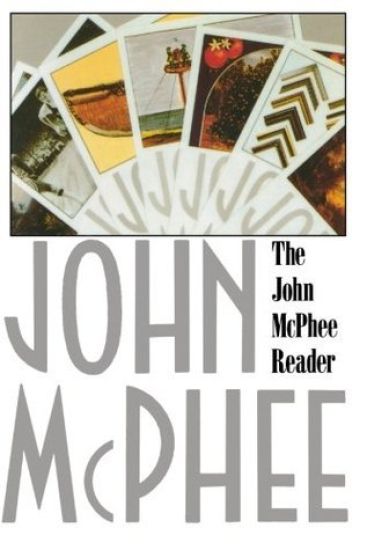
The John McPhee Reader

The John McPhee Reader

John McPhee

Farrar, Straus and Giroux
1982
nidottu
The John McPhee Reader, first published in 1976, is comprised of selections from the author's first twelve books. In 1965, John McPhee published his first book, A Sense of Where You Are; a decade later, he had published eleven others. His fertility, his precision and grace as a stylist, his wit and uncanny brilliance in choosing subject matter, his crack storytelling skills have made him into one of our best writers: a journalist whom L.E. Sissman ranked with Liebling and Mencken, who Geoffrey Wolff said "is bringing his work to levels that have no measurable limit," who has been called "a master craftsman" so many times that it is pointless to number them.
They're in the River (Picador Shorts)
A master chronicler of American life introduces us to the iconic and most curious American shad. A pithy, humorous, and illuminating standalone extract from John McPhee's twenty-sixth book, The Founding Fish.McPhee, himself a shad fisherman, recounts the fascinating life and ways of this great American wayfarer, most famous for its Odyssean journey as it leaves the ocean in crowds of millions, running heroic distances up America's rivers to spawn. McPhee introduces us to the habits and haunts of the American shad. We follow it along its spawning run, learning about its curious life cycle, biology, quirks, and mythology among fly fishermen. He opens with a tall tale about his long vigil with a giant roe shad on the line. Night falls, a crowd gathers on a nearby bridge to watch and still the fish refuses to roll over; however embellished, it's a comic story. He fishes and visits the laboratories of famous ichthyologists; he takes instruction in the making of shad darts from a master of the art; he delivers a moving treatise on the particular sound that is unique to every river. In the process, he creates a portrait of America's great waterways and of one of their most storied residents. They're in the River is part of the Picador Shorts series "Oceans, Rivers, and Streams" in which excerpts from beloved classics speak to our relationship with our water bodies, great and small.
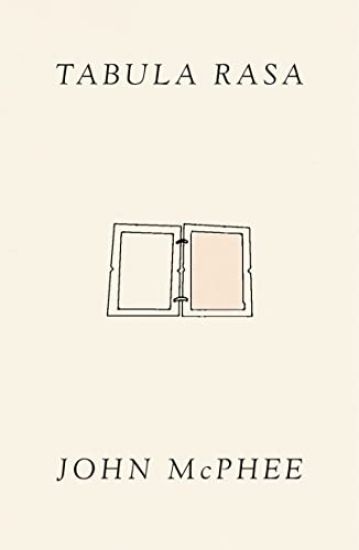
Tabula Rasa

Tabula Rasa

John McPhee

St Martin's Press
2024
nidottu
Over seven decades, John McPhee has set a standard for literary nonfiction. Assaying mountain ranges, bark canoes, experimental aircraft, the Swiss Army, geophysical hot spots, ocean shipping, shad fishing, dissident art in the Soviet Union, and an even wider variety of other subjects, he has consistently written narrative pieces of immaculate design. In Tabula Rasa, McPhee looks back at his career from the vantage point of his desk drawer, reflecting wryly upon projects he once planned to do but never got around to - people to profile, regions he meant to portray. There are so many examples that he plans to go on writing these vignettes, an ideal project for an old man, he says, and a “reminiscent montage” from a writing life. This volume includes, among other things, glimpses of a frosty encounter with Thornton Wilder, interrogative dinners with Henry Luce, the allure of western Spain, criteria in writing about science, fireworks over the East River as seen from Malcolm Forbes’s yacht, the evolving inclinations of the Tower of Pisa, the islands among the river deltas of central California, teaching in a pandemic, and persuading The New Yorker to publish an entire book on oranges. The result is a fresh survey of McPhee’s singular planet.
Tabula Rasa

Tabula Rasa

John McPhee

FARRAR, STRAUS GIROUX INC
2023
sidottu
A literary legend's engaging review of his career, stressing the work he never completed, and why. Over seven decades, John McPhee has set a standard for literary nonfiction. Assaying mountain ranges, bark canoes, experimental aircraft, the Swiss Army, geophysical hot spots, ocean shipping, shad fishing, dissident art in the Soviet Union, and an even wider variety of other subjects, he has consistently written narrative pieces of immaculate design. In Tabula Rasa, Volume 1, McPhee looks back at his career from the vantage point of his desk drawer, reflecting wryly upon projects he once planned to do but never got around to--people to profile, regions he meant to portray. There are so many examples that he plans to go on writing these vignettes, an ideal project for an old man, he says, and a "reminiscent montage" from a writing life. This first volume includes, among other things, glimpses of a frosty encounter with Thornton Wilder, interrogative dinners with Henry Luce, the allure of western Spain, criteria in writing about science, fireworks over the East River as seen from Malcolm Forbes's yacht, the evolving inclinations of the Tower of Pisa, the islands among the river deltas of central California, teaching in a pandemic, and persuading The New Yorker to publish an entire book on oranges. The result is a fresh survey of McPhee's singular planet.
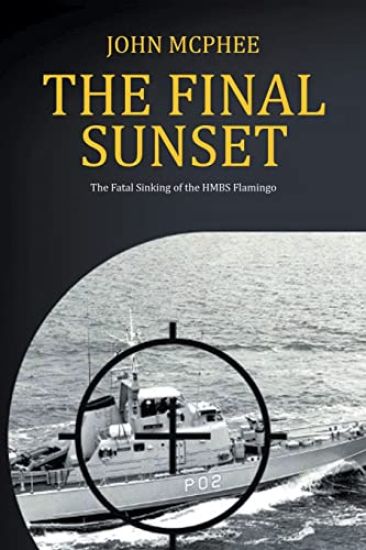
The Final Sunset

The Final Sunset

John McPhee

Page Publishing, Inc.
2022
pokkari
In the quiet still hours of the evening on May 10, 1980, a young nation faced its most crucial hour. Two Cuban MiGs were dispatched by Cuba's competent authority. Their ultimate destination Cay Santo Domingo a small cay in the southern hemisphere of the Bahamas. Their intended target: HMBS Flamingo, a one-hundred-and-four-foot Bahamian patrol vessel with two Cuban fishing vessels, Ferrocemento 54 and Ferrocemento 165, in tow.The remaining hours in the afternoon will unfold a tyranny of unsettling events resulting in the tragic loss of life and property for the Bahamas. The crises plunged the region into a geopolitical crisis and set in motion a cascading set of circumstances that will affect the young nation for the rest of its existence.Final Sunset is the riveting account of the fatal sinking of HMBS Flamingo by Cuban MIGs on May 10, 1980. It recounts the harrowing tale of heroism and survivorship. The gritty and unrelenting human will to make it home after their routine day took a most unfortunate turn on one of the darkest moments in Bahamian history.
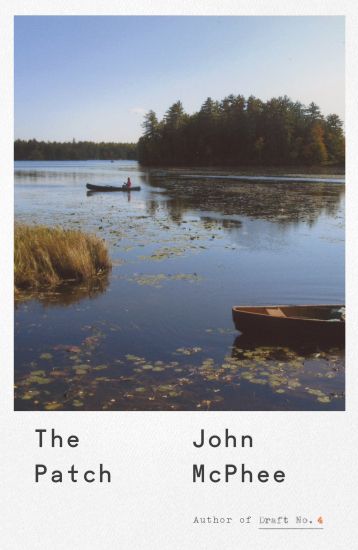
The Patch

The Patch

John McPhee

Farrar, Straus and Giroux
2018
sidottu
The Patch is the seventh collection of essays by the nonfiction master, all published by Farrar, Straus and Giroux. It is divided into two parts. Part 1, "The Sporting Scene," consists of pieces on fishing, football, golf, and lacrosse--from fly casting for chain pickerel in fall in New Hampshire to walking the linksland of St. Andrews at an Open Championship. Part 2, called "An Album Quilt," is a montage of fragments of varying length from pieces done across the years that have never appeared in book form--occasional pieces, memorial pieces, reflections, reminiscences, and short items in various magazines including The New Yorker. They range from a visit to the Hershey chocolate factory to encounters with Oscar Hammerstein, Joan Baez, and Mount Denali. Emphatically, the author's purpose was not merely to preserve things but to choose passages that might entertain contemporary readers. Starting with 250,000 words, he gradually threw out 75 percent of them, and randomly assembled the remaining fragments into "an album quilt." Among other things, The Patch is a covert memoir.
Draft No. 4

Draft No. 4

John McPhee

Farrar, Straus Giroux Inc
2018
nidottu
Draft No. 4 is a master class on the writer’s craft. In a series of playful, expertly wrought essays, John McPhee shares insights he has gathered over his career and has refined while teaching at Princeton University, where he has nurtured some of the most esteemed writers of recent decades. McPhee offers definitive guidance in the decisions regarding arrangement, diction, and tone that shape non fiction pieces, and he presents extracts from his work, subjecting them to wry scrutiny. In one essay, he considers the delicate art of getting sources to tell you what they might not otherwise reveal. In another, he discusses how to use flashback to place a bear encounter in a travel narrative while observing that “readers are not supposed to notice the structure. It is meant to be about as visible as someone’s bones.” The result is a vivid depiction of the writing process, from reporting to drafting to revising - and revising, and revising. Draft No. 4 is enriched by multiple diagrams and by personal anecdotes and charming reflections on the life of a writer. McPhee describes his enduring relationships with The New Yorker and Farrar, Straus and Giroux, and recalls his early years at Time magazine. Throughout, Draft No. 4 is enlivened by his keen sense of writing as a way of being in the world.
Silk Parachute

Silk Parachute

John McPhee

Farrar, Straus and Giroux
2011
nidottu
A WONDROUS NEW BOOK OF MCPHEE'S PROSE PIECES--IN MANY ASPECTS HIS MOST PERSONAL IN FOUR DECADES The brief, brilliant essay "Silk Parachute," which first appeared in The New Yorker a decade ago, has become John McPhee's most anthologized piece of writing. In the nine other pieces here--highly varied in length and theme--McPhee ranges with his characteristic humor and intensity through lacrosse, long-exposure view-camera photography, the weird foods he has sometimes been served in the course of his reportorial travels, a U.S. Open golf championship, and a season in Europe "on the chalk" from the downs and sea cliffs of England to the Maas valley in the Netherlands and the champagne country of northern France. Some of the pieces are wholly personal. In luminous recollections of his early years, for example, he goes on outings with his mother, deliberately overturns canoes in a learning process at a summer camp, and germinates a future book while riding on a jump seat to away games as a basketball player. But each piece--on whatever theme--contains somewhere a personal aspect in which McPhee suggests why he was attracted to write about the subject, and each opens like a silk parachute, lofted skyward and suddenly blossoming with color and form.
Uncommon Carriers

Uncommon Carriers

John McPhee

Farrar, Straus and Giroux
2007
nidottu
This is a book about people who drive trucks, captain ships, pilot towboats, drive coal trains, and carry lobsters through the air: people who work in freight transportation. John McPhee rides from Atlanta to Tacoma alongside Don Ainsworth, owner and operator of a sixty-five-foot, five-axle, eighteen-wheel chemical tanker carrying hazmats--in Ainsworth's opinion "the world's most beautiful truck," so highly polished you could part your hair while looking at it. He goes "out in the sort" among the machines that process a million packages a day at UPS Air's distribution hub at Louisville International Airport. And (among other trips) he travels up the "tight-assed" Illinois River on a towboat pushing a triple string of barges, the overall vessel being "a good deal longer than the Titanic," longer even than the Queen Mary 2. Uncommon Carriers is classic work by McPhee, in prose distinguished, as always, by its author's warm humor, keen insight, and rich sense of human character.
The Founding Fish

The Founding Fish

John McPhee

Farrar, Straus and Giroux
2003
nidottu
A natural study of the American shad traces its annual migrations and life cycle in both freshwater rivers and the ocean, focusing in particular on those living in the Delaware River and discussing issues related to tidal power and catch-and-release campaigns. Reprint. 40,000 first printing.
Annals of the Former World

Annals of the Former World

John McPhee

Farrar, Straus Giroux Inc
2000
nidottu
The Pulitzer Prize-winning view of the continent, across the fortieth parallel and down through 4.6 billion years Twenty years ago, when John McPhee began his journeys back and forth across the United States, he planned to describe a cross section of North America at about the fortieth parallel and, in the process, come to an understanding not only of the science but of the style of the geologists he traveled with. The structure of the book never changed, but its breadth caused him to complete it in stages, under the overall title "Annals of the Former World." Like the terrain it covers, "Annals of the Former World" tells a multilayered tale, and the reader may choose one of many paths through it. As clearly and succinctly written as it is profoundly informed, this is our finest popular survey of geology and a masterpiece of modern nonfiction. "Annals of the Former World "is the winner of the 1999 Pulitzer Prize for Nonfiction.
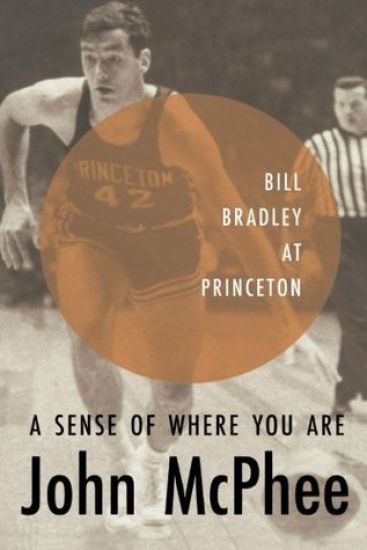
A Sense of Where You Are: Bill Bradley at Princeton

A Sense of Where You Are: Bill Bradley at Princeton

John McPhee

Farrar, Straus and Giroux
1999
nidottu
The first book from the legendary New Yorker writer John McPhee, tells about Bill Bradley when he was the best basketball player Princeton had ever seen. When John McPhee met Bill Bradley, both were at the beginning of their careers. In A Sense of Where You Are, McPhee delineates for the reader the training and techniques that made Bradley the extraordinary athlete he was, and this part of the book is a blueprint of superlative basketball. But athletic prowess alone would not explain Bradley's magnetism, which is in the quality of the man himself--his self-discipline, his rationality, and his sense of responsibility. Here is a portrait of Bradley as he was in college, before his time with the New York Knicks and his election to the U.S. Senate--a story that suggests the abundant beginnings of his professional careers in sport and politics.
Irons in the Fire

Irons in the Fire

John McPhee

Farrar, Straus and Giroux
1998
nidottu
An acclaimed collection of essays by "the dean of literary journalists" begins with a trip to Nevada, where the author discovers that cattle rustling is not just history, and describes a virgin forest in central New Jersey, a mountain of forty-million scrap tires, and more. Reprint. NYT.
The Ransom of Russian Art

The Ransom of Russian Art

John McPhee

Farrar, Straus and Giroux
1998
nidottu
John McPhee's The Ransom of Russian Art is a suspenseful, chilling, and fascinating report on a covert operation like no other. It offers unprecedented insight into Soviet culture at the brink of the Union's collapse. In the 1960s and 1970s, an American professor of Soviet economics forayed on his own in the Soviet Union, bought the work of underground "unofficial" artists, and brought it out himself or arranged to have it illegally shipped to the United States. Norton Dodge visited the apartments of unofficial artists in at least a dozen geographically scattered cities. By 1977, he had a thousand works of art. His ultimate window of interest involved the years from 1956 to 1986, and through his established contacts he eventually acquired another eight thousand works--by far the largest collection of its kind. McPhee investigates Dodge's clandestine activities in the service of dissident Soviet art, his motives for his work, and the fates of several of the artists whose lives he touched.
The Second John McPhee Reader

The Second John McPhee Reader

John McPhee

Farrar, Straus and Giroux
1996
nidottu
This second volume of "The John McPhee Reader" includes material from his eleven books published since 1975, including "Coming into the Country, Looking for a Ship, The Control of Nature," and the four books on geology that comprise "Annals of the Former World."