

Kirjailija
John Michell
Kirjat ja teokset yhdessä paikassa: 32 kirjaa, julkaisuja vuosilta 1999-2026, suosituimpien joukossa All That Glitters. Vertaile teosten hintoja ja tarkista saatavuus suomalaisista kirjakaupoista.
32 kirjaa
Kirjojen julkaisuhaarukka 1999-2026.




Traites Sur Les Aimans Artificiels (1752)
John Michell; John Canton
KESSINGER PUBLISHING, LLC
2009
pokkari
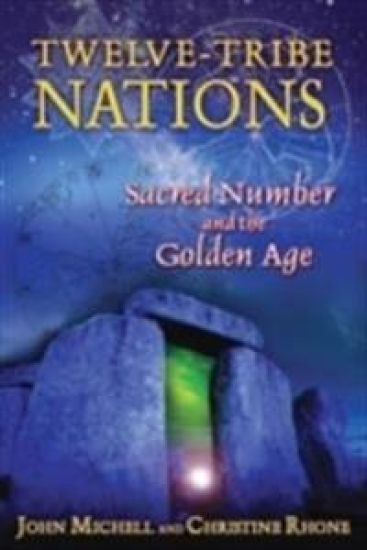
Throughout the world - in countries as far apart as China, Ireland, Iceland and Madgascar - there survive records and traditions of whole nations being divided into twelve tribes and twelve regions, each corresponding to one of the twelve signs of the zodiac and to one of the twelve months of the year. Best known are the twelve tribes of Israel under King Solomon, but there have been many others. Wherever they occur, they are associated with an ideal social order and a golden age of humanity.Exploring examples of these twelve-tribe societies, John Michell and Christine Rhone explain the blueprint for this organisational structure and look at the musical, mythological and astronomical enchantments that kept these societies in harmony with the cosmos. They, also, examine the astrological landscapes of classical Greece, the aligned St. Michael sanctuaries of Europe and the true site and function of the Temple in Jerusalem. They show that the sacred geography of these sites was part of an ancient code of knowledge that produced harmony between nature and humanity and is as relevant to our present and future as it was to our past.*Connects the zodiac, the twelve months of the year and the political divisions of ancient nations*Explores the sacred geography of ancient landscapes in Europe and IsraelOriginally published by Thames & Hudson, 1991

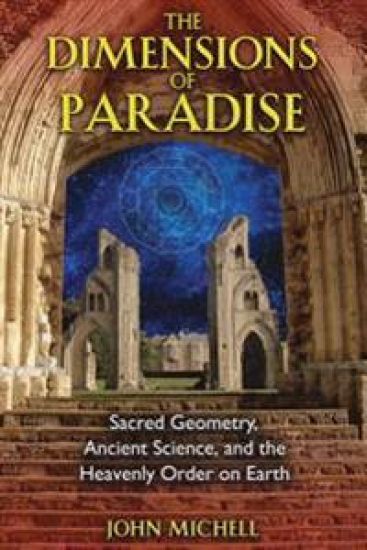
The priests of ancient Egypt preserved a geometrical canon, a numerical code of harmonies and proportions, that they applied to music, art, statecraft, and all the institutions of their civilization. Plato, an initiate in the Egyptian mysteries, said it was the instrument by which the ancients maintained high, principled standards of civilization and culture over thousands of years. In The Dimensions of Paradise, John Michell describes the results of a lifetime’s research, demonstrating how the same numerical code underlies sacred structures from ancient times to the Christian era. In the measurements of Stonehenge, the foundation plan of Glastonbury, Plato’s ideal city, and the Heavenly City of the New Jerusalem described in the vision of Saint John lie the science and cosmology on which the ancient world order was founded. The central revelation of this book is a structure of geometry and number representing the essential order of the heavens and functioning as a map of paradise.

A feast of extraordinary theories and personalities centred around the mysterious standing stones of antiquity. John Michell tells the incredible story of the amazing reactions, ancient and modern, to these prehistoric relics, whether astronomical, legendary, mystical or visionary.
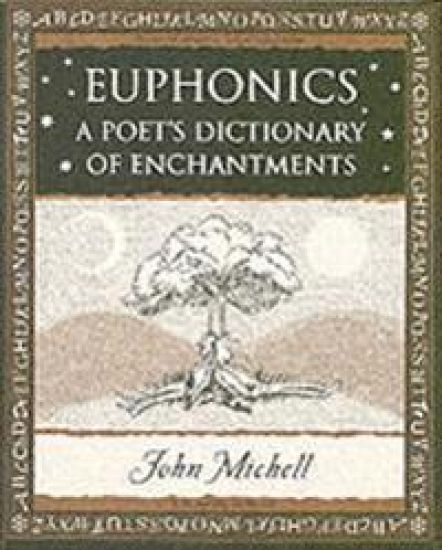
Do particular sounds have particular magical effects? Discussing this question, this book talks about the deadly daggers of D, the trivialising teasing taunts of T and the nagging nasal negatives associated with N. It is useful for orators, poets and sorcerers, and is humorously illustrated by "Guardian" cartoonist, Merrily Harpur.
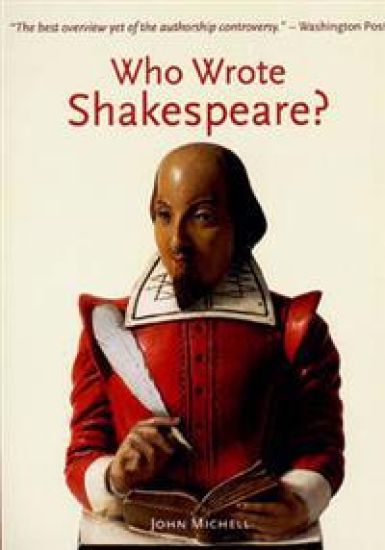
Was the famous poet and writer really a fraud and plagarist? Was his name really a pseudonym for a well-known contemporary figure? These questions have been debated since the 18th century. The facts about Shakespeare are surprisingly meagre, and contrast puzzlingly with the learned, courtly philosopher revealed in the sonnets and plays. Respected scholars and obsessive eccentrics have put forward many theories, suggesting that the works of Shakespeare were written by Francis Bacon, the Earl of Oxford, or Marlow. This is an investigation of the claims and counter-claims, reading like a series of detective stories. He lays out the evidence and the arguments for the various candidates, not forgetting Shakespeare himself, and provides a drily humorous commentary on the research and prejudices of their champions while adding insights of his own.