Kirjailija
John Morton
Kirjat ja teokset yhdessä paikassa: 32 kirjaa, julkaisuja vuosilta 1991-2026, suosituimpien joukossa Eclipse. Vertaile teosten hintoja ja tarkista saatavuus suomalaisista kirjakaupoista.
32 kirjaa
Kirjojen julkaisuhaarukka 1991-2026.
In the kitchen of an old Devon rectory, the daughter who stayed and the son who moved away make conversation with their current and former partners, the milkman, the postman, the care workers. They talk about the weather, the roads, the toaster, the bins. About anything except the simmering tensions between them, as their father lies mortally ill in the next room. Until the unspoken emotions and conflicts of years boil over. Eclipse is a painfully funny, acute and delicate play about our struggle to communicate, in the face of life and of death. And our infinite capacity for drinking tea. John Morton's award-winning TV series include People Like Us, Twenty Twenty Six, Twenty Twelve and W1A; this is his first stage play. It premieres at Chichester Festival Theatre, in the Minerva Theatre, in 2026.
An Attempt to Estimate the Effects of Protecting Duties on the Profits of Agriculture
John Morton; Joshua Trimmer
Antigonos Verlag
2025
nidottu
The Mechanics of Biological Materials
Manuel Elices; Gustavo Guinea; John Morton
TAYLOR FRANCIS LTD
2025
sidottu
This book introduces the mechanical principles governing the behaviour of a wide range of biological materials, which are materials produced by a biological system. The approach is systematic and based on one-dimensional (fibres), two-dimensional (membrane), and three-dimensional (bulk) biological materials. The essential mathematical tools are developed from first principles and applied to materials as diverse as spider silk, blood vessels, and bone. It offers a progressive introduction of mathematics and mechanics concepts and offers detailed solutions to numerous worked examples.• Provides an essential gateway to access complex treatises in the important and demanding models governing the observed behaviour of biological materials.• Teaches readers to exploit the wondrous properties found in nature in the development of biomimetic applications.• Offers a progressive introduction of mathematics and mechanics concepts.• Includes detailed solutions to numerous worked examples, case studies, and homework problems.The text is aimed at students of chemistry, materials engineering, and biology, who do not have a background in mechanics but wish to further their knowledge of the mechanics of biological materials.A solutions manual is available to qualifying adopting professors.
This is the second book in the Family of the Raj series. The first book covered the story of the O'Kinealy family from Co. Cavan in southern Ireland. James O'Kinealy emigrated to India arriving on 2nd February 1862 to join the Indian Civil Service. A graduate from Galway University where he had read science and engineering, he made his name as the prosecutor of the Wahabi Conspirators in 1869/70. He became a High Court Judge in the Bengal Judiciary. His eldest son Frederick studied medicine, joining the Indian Medical Service in 1891. He later became Surgeon General of Bengal and accompanied HRH Edward Prince of Wales as Chief Medical Officer to the tour party of 1921-22 to India and Burma. His detailed diaries of the tour are published for the first time.This second book is the biography of George Morton, the author's father. Born in 1893 of humble origin, he trained as an accountant with Deloitte, Plender and Griffiths, before enlisting in the 11th Royal Fusiliers in 1914. He fought his war in all the major battles of the Somme before being seriously wounded at the Battle of Boom Ravine on 17th February 1917. His letters to his sister tell the story of his experiences from the trenches; he survived 19 months when the average life of a subaltern was measured in weeks.After convalescing from his wounds, which included the loss of half of his right foot, he sailed to India in November 1919 to join Bird and Company in Calcutta, then the largest company in India employing over 100,000 people. His career progressed steadily, becoming chief accountant, before meeting and marrying, in September 1929, the author's mother and Frederick's daughter, Doreen O'Kinealy.Their life in India and the arrival of John and his two elder sisters are celebrated through a number of letters and photos including an account of three major treks into Sikkim and Tibet. George became senior partner in 1939 at the onset of war, becoming Chairman of the Bengal Chamber and Associated Chambers of Commerce, membership of the Indian Defence Council and most of the associated war production liaison groups. He served as Chairman of the Calcutta evacuees Committee, responsible for fielding, housing and feeding over 400,000 refugees from Burma during the first nine months of 1942. He was knighted in the February of that year.He retired in 1946 and was almost immediately recruited by the Foreign Office to serve General Clarke as a member of the Greek Economic Mission in Greece. Returning in April 1947 when the mission handed over its work to the US Porter Mission, he achieved his lifelong dream and established a farm in Ogbourne St. George. A director of several banks and firms in the city, he died of cancer on 13th April 1954, when the author was just seventeen. This book then, an account of his extraordinary life of service to India, completes the second part of a trilogy, A Family of the Raj. These two books cover almost the whole of the 99-year period of the RajA third book is under preparation covering the exploits of the author's father-in-law, Lieut. Colonel R.J.F.A. Lawder, a soldier and noted climber on the North West frontier, initially with the South Waziristan Scouts and later the Kumaon Rifles. It is programmed to be completed next year.

"Celebrate Winter" is a collection of entertaining stories by Olympic biathlete and U. S Ski Team member, John Morton, sharing insights and reflections of more than fifty-five years of competition and coaching.John Morton has attended ten Winter Olympic Games in various capacities: athlete, coach, team leader, chief of course and, most recently, enthusiastic fan of the U.S. Biathlon Team. He has written two previous books about Nordic skiing: Don't Look Back and A Medal of Honor.
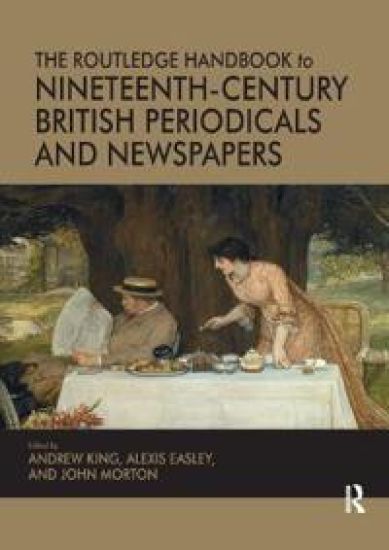
The Routledge Handbook to Nineteenth-Century British Periodicals and Newspapers
Andrew King; Alexis Easley; John Morton
Routledge
2019
nidottu
The 2017 winner of the Robert and Vineta Colby Scholarly Book PrizeProviding a comprehensive, interdisciplinary examination of scholarship on nineteenth-century British periodicals, this volume surveys the current state of research and offers researchers an in-depth examination of contemporary methodologies. The impact of digital media and archives on the field informs all discussions of the print archive. Contributors illustrate their arguments with examples and contextualize their topics within broader areas of study, while also reflecting on how the study of periodicals may evolve in the future. The Handbook will serve as a valuable resource for scholars and students of nineteenth-century culture who are interested in issues of cultural formation, transformation, and transmission in a developing industrial and globalizing age, as well as those whose research focuses on the bibliographical and the micro case study. In addition to rendering a comprehensive review and critique of current research on nineteenth-century British periodicals, the Handbook suggests new avenues for research in the twenty-first century."This volume's 30 chapters deal with practically every aspect of periodical research and with the specific topics and audiences the 19th-century periodical press addressed. It also covers matters such as digitization that did not exist or were in early development a generation ago. In addition to the essays, readers will find 50 illustrations, 54 pages of bibliography, and a chronology of the periodical press. This book gives seemingly endless insights into the ways periodicals and newspapers influenced and reflected 19th-century culture. It not only makes readers aware of problems involved in interpreting the history of the press but also offers suggestions for ways of untangling them and points the direction for future research. It will be a valuable resource for readers with interests in almost any aspect of 19th-century Britain. Summing Up: Highly recommended"- J. D. Vann, University of North Texas in CHOICE
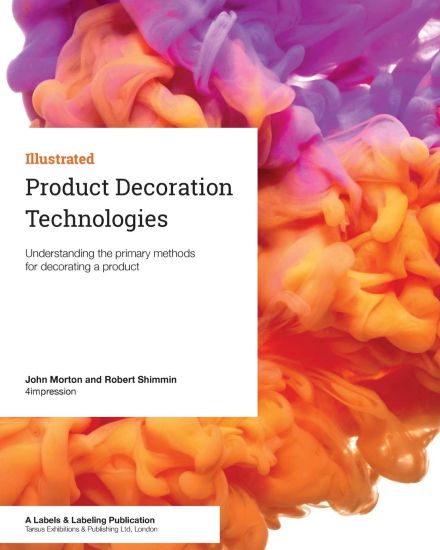
Product Decoration Technologies: Understanding the primary methods for decorating a product
John Morton
Tarsus Exhibitions and Publishing Ltd.
2018
nidottu
There are many different ways of decorating the wide range and variety of products found on supermarket shelves and in other types of retail outlets, from sports goods to garden centers or pharmaceutical chains. The aim in each case is to attract shoppers with the, often, highly colorful graphics and provide them with all the necessary information about the product, its contents and its use.No one product decoration solution however, can meet all the different packaging requirements. In some instances, a carton, pouch or sachet itself will be printed with visual information; in other cases, a separate label or sleeve is the main carrier of information. In many instances, it can often be unclear as to how a product has been decorated, or even by what process.This Label Academy book has set out to look below the surface and explore the wide variety of product decoration technologies in use today, highlighting their unique characteristics and help in their identification. As the chapters unfold the reader will gain a comprehensive insight into the whole decorative process as it relates to consumer packaging - from material selection, print and finishing technology, and finally to the application onto/or integration into the pack itself.The pros and cons of each decoration system are identified, but more importantly, the cost implications underpinning the selection of a particular decoration system are examined. The book provides a valuable and convenient reference source for label converters and package printers, industry suppliers, packaging buyers and many brands.Chapters include: Market overview Conventional direct printing Direct digital printing Pressure-sensitive labels Glue applied labels In-mold labels Sleeving Flexible packagingTotal applied costs
The Natural History of Northampton-Shire; With Some Account of the Antiquities. to Which Is Annex'd a Transcript of Doomsday-Book, So Far as It Relates to That County. by John Morton
John Morton
Gale Ecco, Print Editions
2018
sidottu
The 18th century was a wealth of knowledge, exploration and rapidly growing technology and expanding record-keeping made possible by advances in the printing press. In its determination to preserve the century of revolution, Gale initiated a revolution of its own: digitization of epic proportions to preserve these invaluable works in the largest archive of its kind. Now for the first time these high-quality digital copies of original 18th century manuscripts are available in print, making them highly accessible to libraries, undergraduate students, and independent scholars.Rich in titles on English life and social history, this collection spans the world as it was known to eighteenth-century historians and explorers. Titles include a wealth of travel accounts and diaries, histories of nations from throughout the world, and maps and charts of a world that was still being discovered. Students of the War of American Independence will find fascinating accounts from the British side of conflict. ++++The below data was compiled from various identification fields in the bibliographic record of this title. This data is provided as an additional tool in helping to insure edition identification: ++++British LibraryT147393London: printed for R. Knaplock, and R. Wilkin, 1712. 4], iv,551, 1],46, xp., plates: map; 2
Inside Shelby American is a firsthand account of the iconic sports car builder and racing team from John Morton, champion racer, and personal friend of Carroll Shelby. In the late 1950s, a young John Morton was transfixed with sports car racing. By 1962, his dreams had led him to enrolling in the Shelby School of High Performance Driving. In a bold moment after the last class, Morton asked Carroll Shelby if he might come to work for the newly formed Shelby American. The answer was “Yes, here's a broom.” Thus, ended Morton's college career and began his long racing career. Inside Shelby American is his personal account of a company overflowing with talent, from designer Pete Brock, to fabricator extraordinaire Phil Remington, to drivers like Dan Gurney, Ken Miles, Bob Bondurant, and Phil Hill. Their rides are equally captivating: AC Cobra, Mustang GT350, Ford GT, Daytona Coupe.More than just a historical account, Morton’s story is intertwined with the memories of other Shelby staffers of the period, revealing through historic photography and an untold perspective the rousing story of America’s most legendary racer and car builder.
The Decline of Christianity and the Rise of the Pastor/Priests in America
John Morton
WestBow Press
2017
pokkari
Label Embellishments and Special Applications: Exploring the techniques and processes used for adding decorative finishes and functionality to labels
Robert Shimmin; John Morton
Tarsus Exhibitions Publishing Ltd
2016
nidottu
The retail shelf is the frontline in the drive for brands and products to gain the attention of increasingly distracted consumers. Labels play a critical role. Not surprisingly, the demand to increase the visual appeal of labels is growing quickly. Label production technology is advancing rapidly to keep up and expanding the range of embellishment and decoration techniques available.This book explains in detail all current methods of label enhancement. It begins with a thorough review of the more traditional methods such as foiling, embossing and novel printing techniques, and introduces the new technologies and innovations.The use of smart materials, developments in multi-web manufacturing and the introduction of electronics in particular, are accelerating the evolution of the label as a more functional packaging component. These 'smart' and 'active' labels allow packaging to engage and interact with a wider range of human senses and smart devices. Their application, and the opportunity it presents, is covered in depth.Chapters include: Introduction and marketsFoil stamping processesHologramsEmbossingBronzing processInk metalizationIntaglio printingLaminationThermographySpecial effect inks, varnishes and coatingsLaser die-cuttingSmart, active and intelligent labelingLabel leaflets and multi-layer constructions
The Routledge Handbook to Nineteenth-Century British Periodicals and Newspapers
Andrew King; Alexis Easley; John Morton
Ashgate Publishing Limited
2016
sidottu
The 2017 winner of the Robert and Vineta Colby Scholarly Book PrizeProviding a comprehensive, interdisciplinary examination of scholarship on nineteenth-century British periodicals, this volume surveys the current state of research and offers researchers an in-depth examination of contemporary methodologies. The impact of digital media and archives on the field informs all discussions of the print archive. Contributors illustrate their arguments with examples and contextualize their topics within broader areas of study, while also reflecting on how the study of periodicals may evolve in the future. The Handbook will serve as a valuable resource for scholars and students of nineteenth-century culture who are interested in issues of cultural formation, transformation, and transmission in a developing industrial and globalizing age, as well as those whose research focuses on the bibliographical and the micro case study. In addition to rendering a comprehensive review and critique of current research on nineteenth-century British periodicals, the Handbook suggests new avenues for research in the twenty-first century."This volume's 30 chapters deal with practically every aspect of periodical research and with the specific topics and audiences the 19th-century periodical press addressed. It also covers matters such as digitization that did not exist or were in early development a generation ago. In addition to the essays, readers will find 50 illustrations, 54 pages of bibliography, and a chronology of the periodical press. This book gives seemingly endless insights into the ways periodicals and newspapers influenced and reflected 19th-century culture. It not only makes readers aware of problems involved in interpreting the history of the press but also offers suggestions for ways of untangling them and points the direction for future research. It will be a valuable resource for readers with interests in almost any aspect of 19th-century Britain. Summing Up: Highly recommended"- J. D. Vann, University of North Texas in CHOICE
Bulletin National Theatre Conference, V12, No. 1-4, 1950
Frederic McConnell; John Morton
Literary Licensing, LLC
2013
nidottu
Bulletin National Theatre Conference, V12, No. 1, March, 1950
Frederic McConnell; John Morton
Literary Licensing, LLC
2013
nidottu
Bulletin National Theatre Conference, V12, No. 2, June, 1950
Frederic McConnell; John Morton
Literary Licensing, LLC
2013
nidottu
Bulletin National Theatre Conference, V12, No. 4, December, 1950
Frederic McConnell; John Morton
Literary Licensing, LLC
2013
nidottu