Kirjojen hintavertailu. Mukana 12 595 353 kirjaa ja 12 kauppaa.

Kirjailija

John Mullarkey

Kirjat ja teokset yhdessä paikassa: 8 kirjaa, julkaisuja vuosilta 1999-2015, suosituimpien joukossa Refractions of Reality: Philosophy and the Moving Image. Vertaile teosten hintoja ja tarkista saatavuus suomalaisista kirjakaupoista.

8 kirjaa

Kirjojen julkaisuhaarukka 1999-2015.

Monet Changes Mediums

Monet Changes Mediums

Lisa Mullarkey; John Mullarkey

Calico
2015
sidottu
Join Becca and Logan as they travel back in time to La Havre, France, and meet Claude Monet It's 1856, and Monet has a lucrative business drawing caricatures in charcoal. Becca and Logan know Eug ne Boudin will inspire Monet to paint in oils and become a famous Impressionist. But Monet will not meet with him. If Monet and Boudin don't meet, the world will never enjoy Monet's masterpieces Can Becca and Logan make Monet change mediums? Aligned to Common Core Standards and correlated to state standards. Calico is an imprint of Magic Wagon, a division of ABDO.
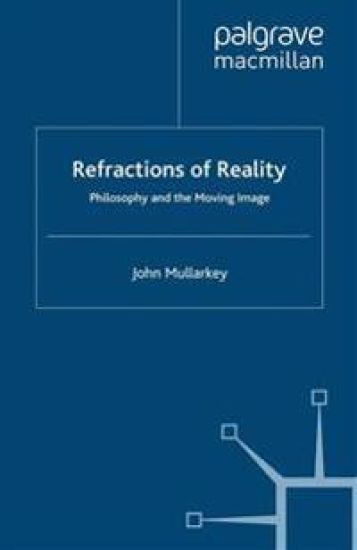
Refractions of Reality: Philosophy and the Moving Image
This is the first book to explore all central issues surrounding the relationship between the film-image and philosophy. It tackles the work of particular philosophers of film (Žižek, Deleuze and Cavell) as well as general philosophical positions (Cognitivist and Culturalist), and analyses the ability of film to teach and create philosophy.
Refractions of Reality: Philosophy and the Moving Image
This is the first book to explore all central issues surrounding the relationship between the film-image and philosophy. It tackles the work of particular philosophers of film (Žižek, Deleuze and Cavell) as well as general philosophical positions (Cognitivist and Culturalist), and analyses the ability of film to teach and create philosophy.
Refractions of Reality: Philosophy and the Moving Image
This is the first book to explore all central issues surrounding the relationship between the film-image and philosophy. It tackles the work of particular philosophers of film (Žižek, Deleuze and Cavell) as well as general philosophical positions (Cognitivist and Culturalist), and analyses the ability of film to teach and create philosophy.
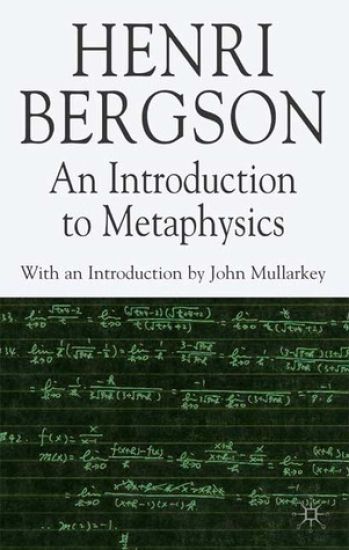
An Introduction to Metaphysics

An Introduction to Metaphysics

H. Bergson; John Mullarkey

Palgrave Macmillan
2007
nidottu
Henri Bergson is one of the truly great philosophers of the modernist period, and interest in his work is currently experiencing a major renaissance. This essential book contains Bergson's classic statement that to philosophize is to reverse the habitual directions of our thinking, and his claim that true empiricism amounts to true metaphysics.
Bergson and Philosophy

Bergson and Philosophy

John Mullarkey

University of Notre Dame Press
2000
sidottu
Various schools of philosophy over the last eighty years have tried to claim Henri Bergson as one of their own. In France he has been regarded primarily as an early phenomenologist. In the United States and Britain he is still regarded as a vitalist philosopher. This introductory study looks at Bergson's use of philosophical form and aims to dispel the view that Bergson ever stuck to one type of philosophy at all, be it vitalism or phenomenology. The claim of any one form of thought to the title of "first philosophy" is challenged by the idea of a Bergsonian metaphilosophy which states that, in a universe with no static foundations, there can never be first philosophies. In other words, if everything is changing, then this must be no less true of philosophy. In pursuit of this approach, John Mullarkey explores each of Bergson's seven major works from a metaphilosophical perspective. The first four chapters of Bergson and Philosophy examine each of these works against the background of current debate within its respective field—the metaphysics of space and time, the philosophy of mind, the philosophy of biology, and sociobiology. The remaining four chapters take a problem-based approach, examining the role of ethics, ontology, methodology, and metaphilosophy in Bergson's thought. This book is an important and lucid reassessment of an influential philosopher that sets his work in philosophical contexts.
Bergson and Philosophy

Bergson and Philosophy

John Mullarkey

University of Notre Dame Press
2000
nidottu
Various schools of philosophy over the last eighty years have tried to claim Henri Bergson as one of their own. In France he has been regarded primarily as an early phenomenologist. In the United States and Britain he is still regarded as a vitalist philosopher. This introductory study looks at Bergson's use of philosophical form and aims to dispel the view that Bergson ever stuck to one type of philosophy at all, be it vitalism or phenomenology. The claim of any one form of thought to the title of "first philosophy" is challenged by the idea of a Bergsonian metaphilosophy which states that, in a universe with no static foundations, there can never be first philosophies. In other words, if everything is changing, then this must be no less true of philosophy. In pursuit of this approach, John Mullarkey explores each of Bergson's seven major works from a metaphilosophical perspective. The first four chapters of Bergson and Philosophy examine each of these works against the background of current debate within its respective field—the metaphysics of space and time, the philosophy of mind, the philosophy of biology, and sociobiology. The remaining four chapters take a problem-based approach, examining the role of ethics, ontology, methodology, and metaphilosophy in Bergson's thought. This book is an important and lucid reassessment of an influential philosopher that sets his work in philosophical contexts.
Bergson and Philosophy

Bergson and Philosophy

John Mullarkey

Edinburgh University Press
1999
nidottu
Various schools of philosophy have tried to position the thought of Henri Bergson over the last eighty years. In France he has been regarded primarily as an early form of phenomenologist, in the United States and Britain he is still regarded as a vitalist philosopher. This introductory study looks instead at Bergson's use of philosophical form itself and aims to dispel the view that Bergson ever stuck to one type of philosophy at all, be it vitalism or phenomenology. The claim of any one form of thought to the title of 'first philosophy' is challenged by the idea of a Bergsonian metaphilosophy which states that, in a universe with no static foundations, there can never be first philosophies. In other words, if everything is changing, then this must be no less true of philosophy. In pursuit of this approach, John Mullarkey explores each of Bergson's seven major works from a metaphilosophical perspective. Taking each book in chronological order of publication, the first four chapters are devoted to examining one of Bergson's works against the background of current debate within its respective field - the metaphysics of space and time, the philosophy of mind, the philosophy of biology, and sociobiology. The remaining four chapters take a problem-based approach examining the role of ethics, ontology, methodology and metaphilosophy in Bergson's thought. This book is an important and lucid reassessment of an influential philosopher which sets his work in philosophical contexts appropriate to his thought. Key Features * Covers all major aspects of Bergson's thought and all his philosophical writings. * Places Bergson's work in its proper philosophical context between Continental and Analytical traditions. * Relates Bergson's ideas to contemporary philosophical debate, showingthe importance of his work to Thomas Nagel, Gilles Deleuze, Emmanuel Levinas, philosophy of mind, biology and ethics. * Written in a clear style which assumes no prior knowledge of Bergson.